Sorting Robotics
Sorting Robotics provides advanced automation and robotic solutions for the cannabis industry. Designed by ex-NASA engineers, their systems …
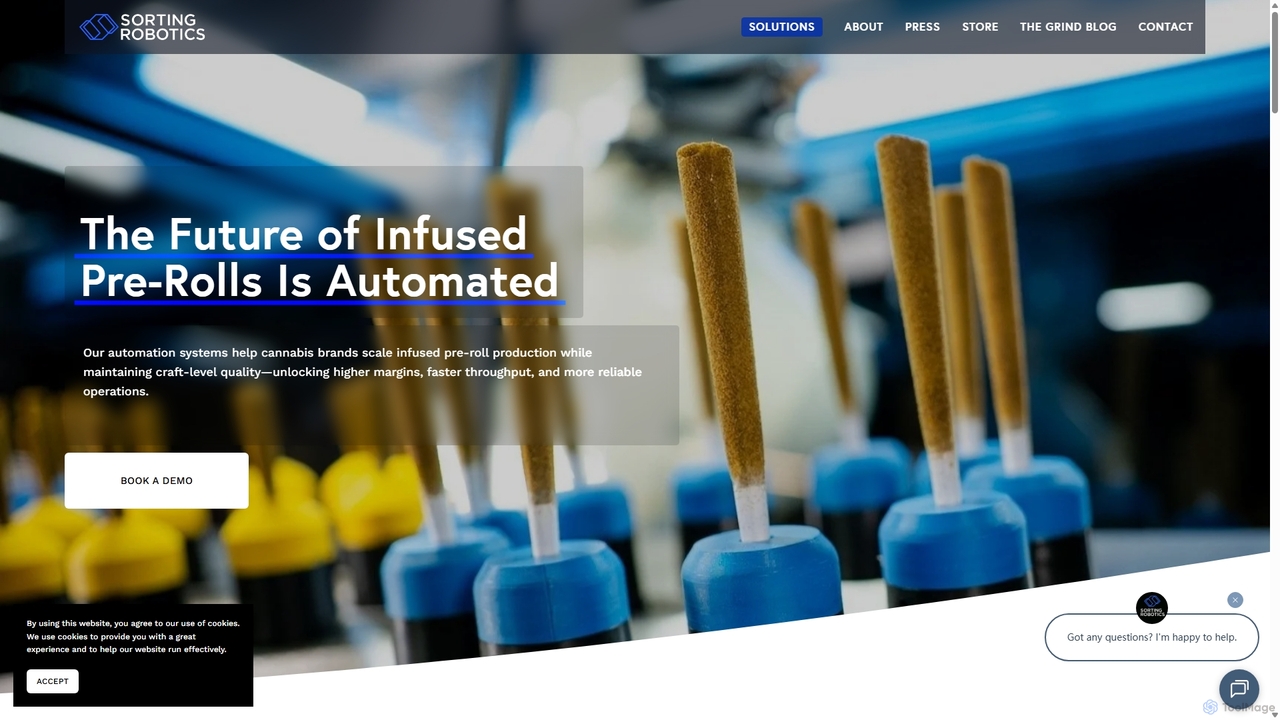
Sorting Robotics provides advanced automation and robotic solutions for the cannabis industry. Designed by ex-NASA engineers, their systems like Stardust, Jiko, and Jiko+ automate the production of infused pre-rolls, enabling brands to scale operations, ensure craft-level quality, and maximize profitability by reducing labor costs and waste.
About Industrial Ai
Industrial AI refers to the application of artificial intelligence technologies within industrial sectors such as manufacturing, energy, logistics, and infrastructure. These AI-powered tools leverage machine learning, computer vision, and predictive analytics to optimize operational efficiency, enhance product quality, and improve safety across complex industrial processes. By integrating intelligent systems with operational technology, Industrial AI drives smart automation and data-driven decision-making, extending beyond traditional robotics to encompass entire production ecosystems.
Core Features
- Predictive Maintenance: Analyzes sensor data to forecast equipment failures, enabling proactive repairs and minimizing costly downtime.
- Automated Quality Inspection: Utilizes computer vision to detect defects and anomalies in products or processes with high precision and speed.
- Process Optimization: Employs AI algorithms to fine-tune production parameters, reduce waste, and maximize throughput in real-time.
- Supply Chain & Logistics Intelligence: Optimizes inventory management, routing, and resource allocation for greater efficiency and resilience.
- Worker Safety & Monitoring: Uses AI to identify potential hazards, monitor safety protocols, and enhance human-machine collaboration in industrial environments.
Use Cases
Industrial AI is crucial for transforming traditional factories into smart facilities, optimizing energy grids, and streamlining complex logistics operations. It enables manufacturers to achieve higher levels of automation and precision, energy companies to manage resources more efficiently, and logistics providers to enhance delivery speed and accuracy.
How to Choose
When selecting Industrial AI solutions, consider their compatibility with existing operational technology (OT) and IT infrastructure, the robustness of their data security and privacy features, and their scalability to meet future growth. Evaluate the vendor's domain-specific expertise and the solution's ability to integrate seamlessly with diverse industrial equipment and data sources.

Industrial AiUse Cases
Predictive Maintenance for Production Lines
A manufacturing plant uses Industrial AI to monitor the health of critical machinery like CNC machines and assembly robots. By analyzing vibration, temperature, and performance data, the AI predicts potential component failures weeks in advance. This allows maintenance teams to schedule repairs during planned downtime, preventing unexpected breakdowns, reducing costly production interruptions, and extending equipment lifespan by up to 20%.
Automated Visual Quality Inspection
In an electronics assembly factory, Industrial AI-powered computer vision systems are deployed on the production line. These systems rapidly scan circuit boards and components for microscopic defects, misalignments, or missing parts that human inspectors might miss. This ensures consistent product quality, significantly reduces the rate of faulty products reaching customers, and accelerates the inspection process by over 50%.
Optimizing Energy Consumption in Industrial Facilities
A large chemical processing plant leverages Industrial AI to manage its energy usage. The AI analyzes real-time data from sensors across heating, ventilation, air conditioning (HVAC) systems, pumps, and lighting, alongside production schedules and external weather conditions. It then dynamically adjusts energy-intensive operations to minimize consumption during peak hours, leading to substantial reductions in energy costs and carbon footprint.
Intelligent Warehouse and Logistics Management
A global distribution center implements Industrial AI to optimize its warehouse operations. The AI system analyzes incoming orders, inventory levels, and robot movement patterns to dynamically assign storage locations, plan efficient picking routes for autonomous mobile robots (AMRs), and manage truck loading schedules. This reduces order fulfillment times, minimizes human error, and improves overall logistical throughput by 15-25%.
Real-time Process Control in Food & Beverage
In a beverage bottling plant, Industrial AI continuously monitors parameters such as fill levels, capping integrity, and label placement. Using sensor data and machine learning models, the AI identifies deviations from quality standards in real-time and automatically adjusts machinery settings or flags products for rejection. This ensures consistent product quality, reduces waste, and maintains compliance with strict food safety regulations.
Enhancing Worker Safety in Hazardous Environments
At a construction site or heavy industry facility, Industrial AI systems equipped with computer vision and IoT sensors monitor worker movements and equipment operation. The AI can detect if workers enter restricted zones, fail to wear personal protective equipment (PPE), or if machinery operates unsafely. It triggers immediate alerts to supervisors, preventing accidents and significantly improving workplace safety compliance.