ToolMage
Sign in

Best 36 3D Modeling AI tools for Design

Popular 3D Modeling AI tools in Design include ComfyUI, Sloyd, Aurora Solar, Zoo, Vagon, Ludo.ai, Dora, TRELLIS 3D AI, Asseter, and Kaedim3D, helping you work more efficiently.

Oneclick3d
Paid

Oneclick3d

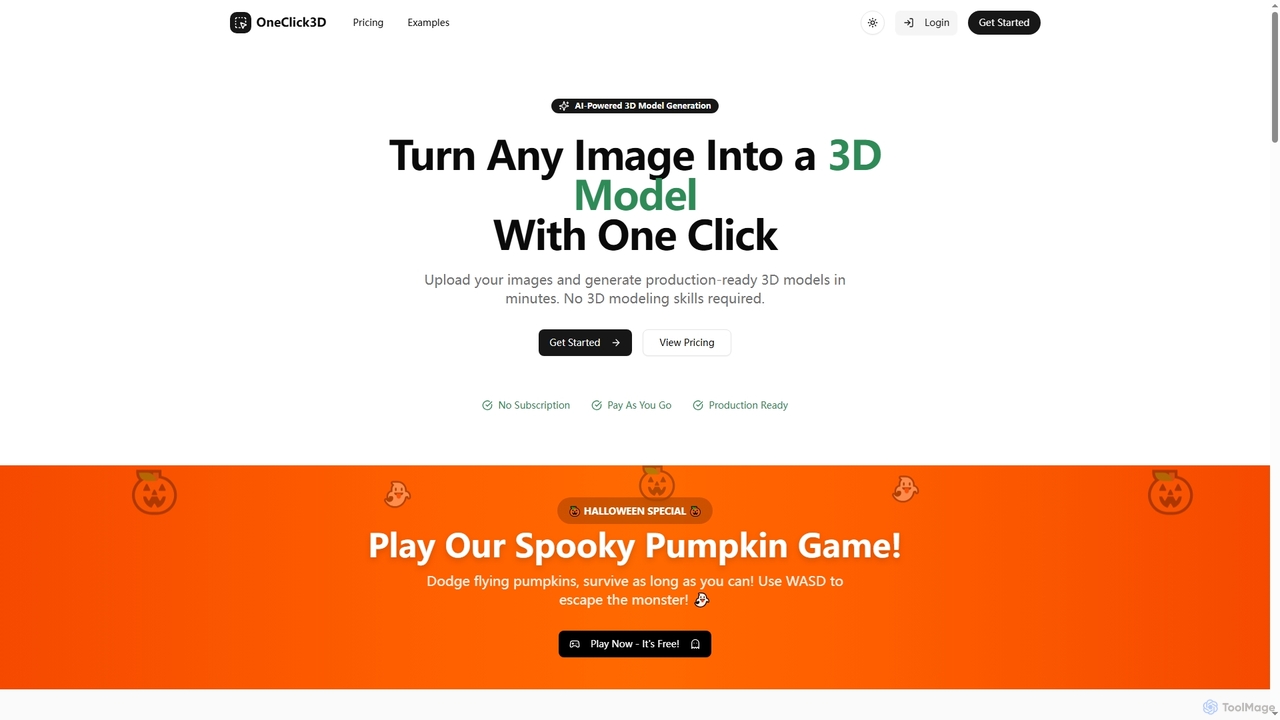
OneClick3D is an AI-powered tool that transforms images into production-ready 3D models in minutes. It requires no 3D modeling skills, supporting multiple export formats (GLB, FBX, OBJ, STL, USDZ) and PBR textures for professional results in game development, 3D printing, and Web3.

Image To 3D
Visits 6.2KFavorites 149Likes 139
Seed3D
Paid

Seed3D

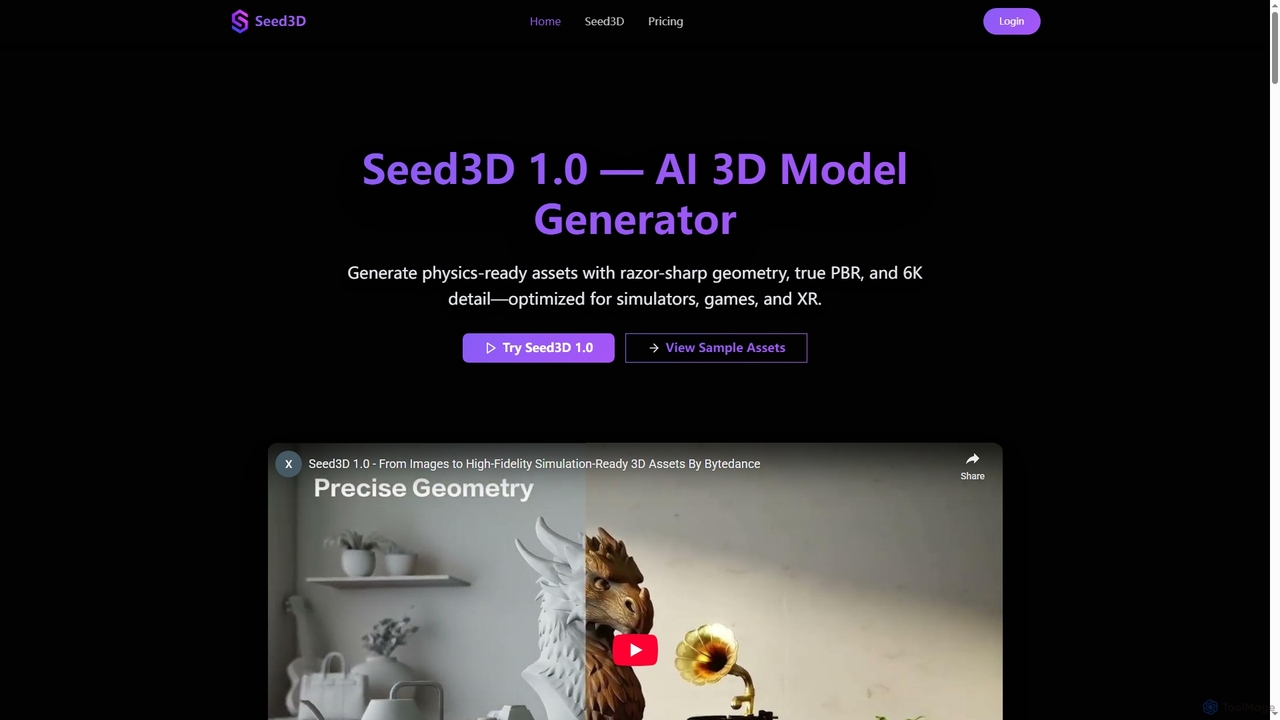
Seed3D is an AI-powered 3D model generator that creates high-fidelity, physics-ready 3D assets from a single image. It delivers razor-sharp geometry, true PBR materials, and 6K textures, optimized for simulators, games, and XR applications.

3D Modeling
Visits 4.1KFavorites 102Likes 101
3dify
Freemium

3dify

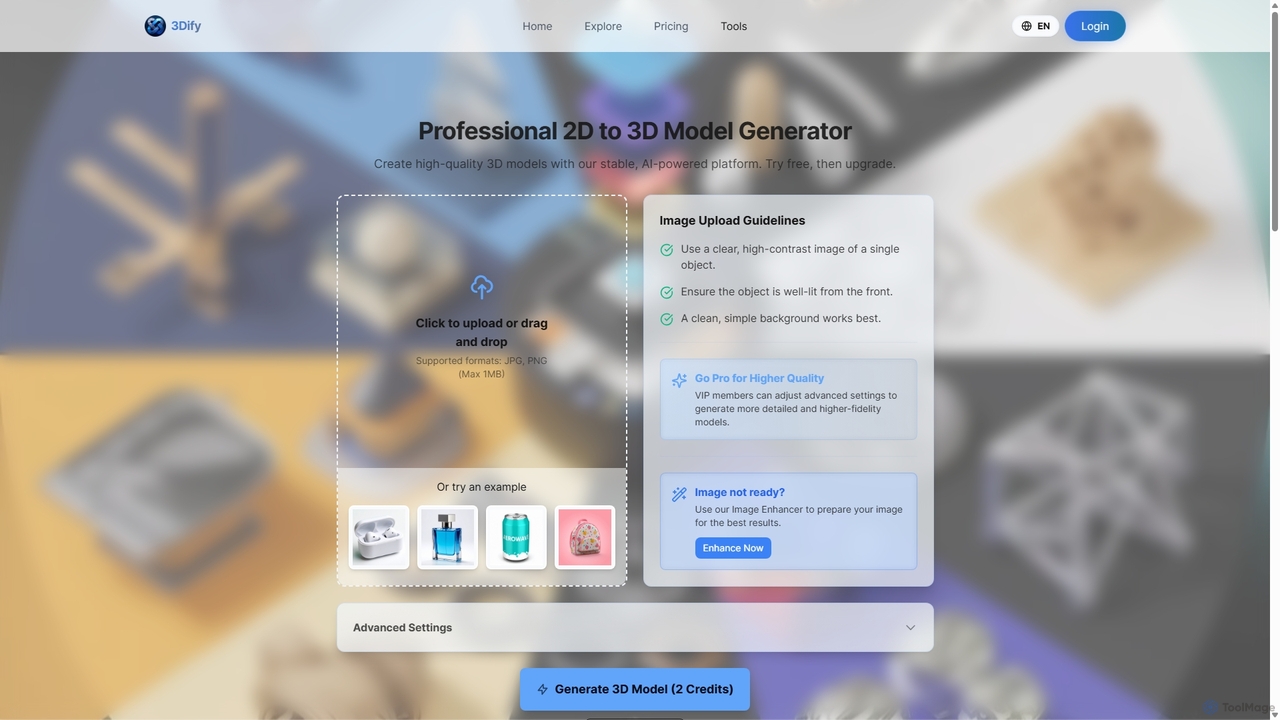
3dify is a professional AI-powered platform that transforms 2D images into high-quality 3D models. Designed for game developers, 3D artists, and designers, it offers a stable and efficient workflow to generate commercial-ready assets in minutes. The tool supports popular formats like GLB and PLY, features an integrated image enhancer, and provides a freemium model to get started.

Image To 3D
Visits 4.3KFavorites 109Likes 115
TRELLIS 3D AI
Freemium

TRELLIS 3D AI

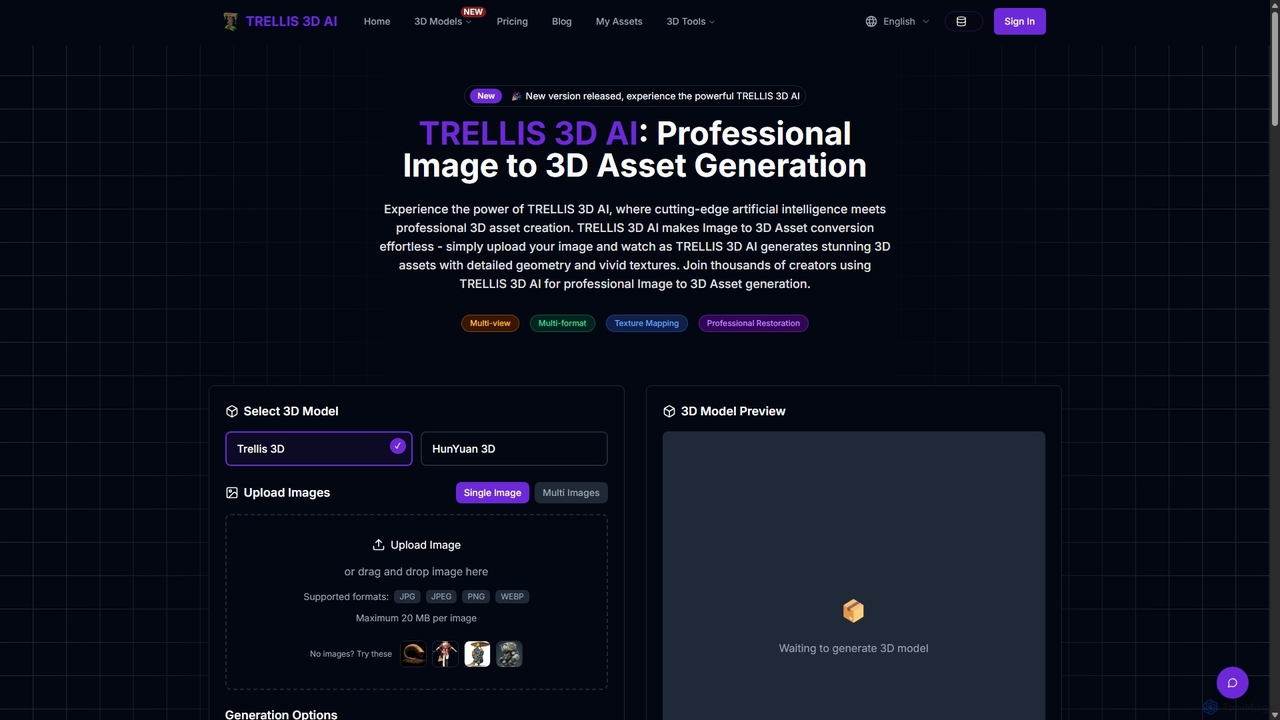
TRELLIS 3D AI is a cutting-edge tool that transforms 2D images into high-quality 3D assets in seconds. Using advanced AI technology, it generates detailed geometry and vivid textures from single or multiple images. It supports various export formats, making it ideal for game developers, 3D artists, and designers looking to accelerate their workflow and create professional-grade 3D models effortlessly.

Image To 3D
Visits 112.4KFavorites 123Likes 117
Zolak
Paid

Zolak

Zolak is an AI-powered 3D product visualization platform for e-commerce. It transforms online shopping with immersive experiences like real-time 3D configurators, AR product try-ons, and virtual showrooms. By allowing customers to realistically visualize and customize products, Zolak helps businesses increase conversion rates, boost average order value, and reduce returns, effectively bridging the gap between digital browsing and confident purchasing.

3D Modeling
Visits 10KFavorites 153Likes 153
Zoo
Freemium

Zoo

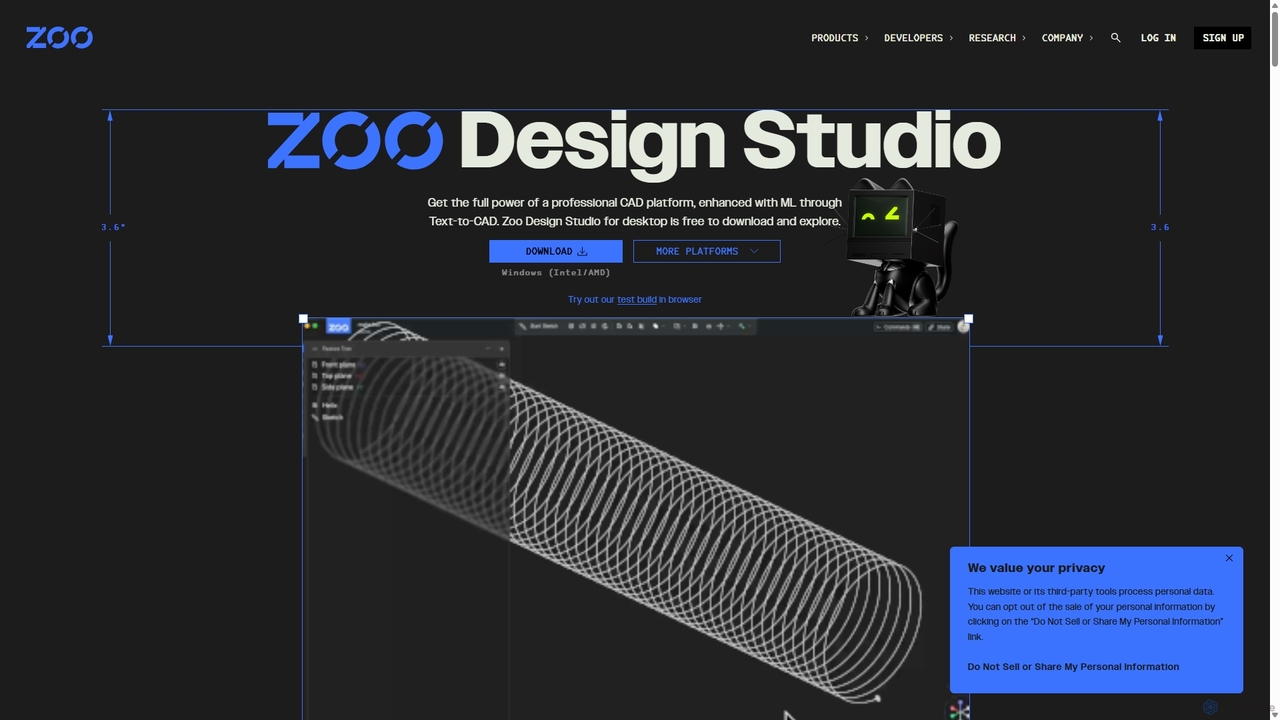
Zoo is a next-generation, AI-powered CAD platform featuring Text-to-CAD technology. It combines traditional 3D modeling with machine learning and programmatic design, enabling engineers and designers to create complex mechanical models from simple text prompts. Built on a high-performance, GPU-accelerated geometry engine, Zoo accelerates the entire design workflow from concept to manufacturing.

3D Modeling
Visits 341.8KFavorites 92Likes 86
ComfyUI
Free

ComfyUI

ComfyUI is a powerful, free, and open-source node-based graphical user interface for generative AI. It offers unparalleled control and flexibility for creating complex workflows to generate images, videos, 3D assets, and audio, designed for artists, developers, and researchers.

3D Modeling
Visits 3.3MFavorites 130Likes 132
Asseter
Freemium

Asseter

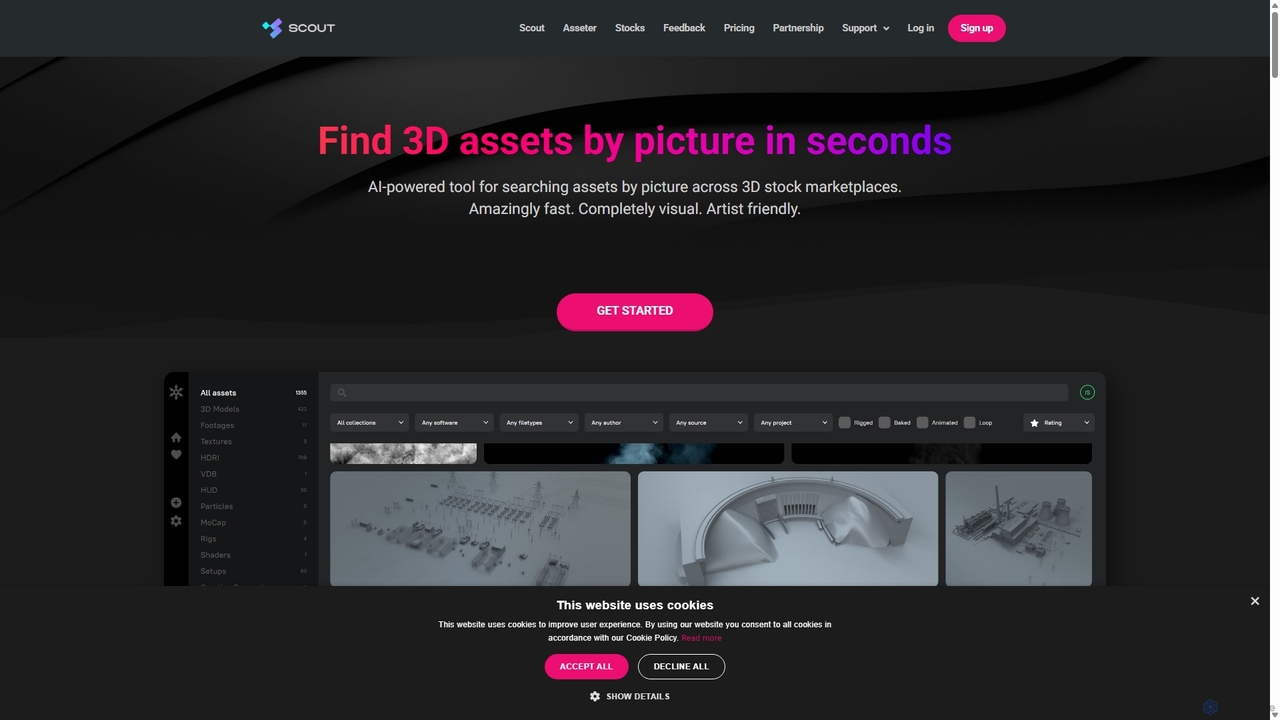
Asseter is an AI-powered Digital Asset Management (DAM) platform for CG artists and creative teams. It organizes and categorizes 3D models and media, featuring deep DCC software integration. It includes Scout, a unique visual search engine that finds 3D assets from stock marketplaces using just a picture, dramatically speeding up creative workflows.

Asset Management
Visits 51KFavorites 129Likes 102
WordCraft3D
Free

WordCraft3D

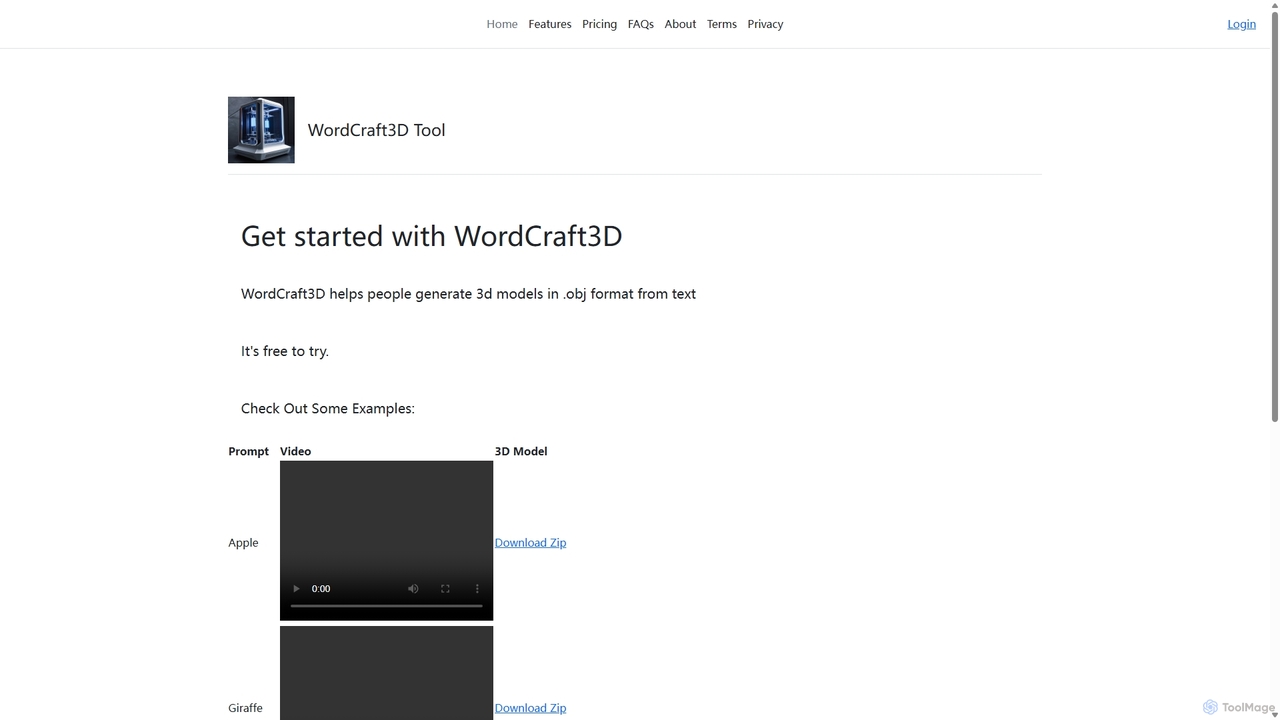
WordCraft3D is an AI-powered tool that generates 3D models in the standard .obj format from simple text descriptions. It's designed for game developers, 3D artists, and designers to rapidly prototype and create assets. The tool is currently free to use, allowing users to download models along with their material and texture files, and preview them with a rotating video.

Text To 3D
Visits 4.9KFavorites 119Likes 120
Tsquare AI
Paid

Tsquare AI

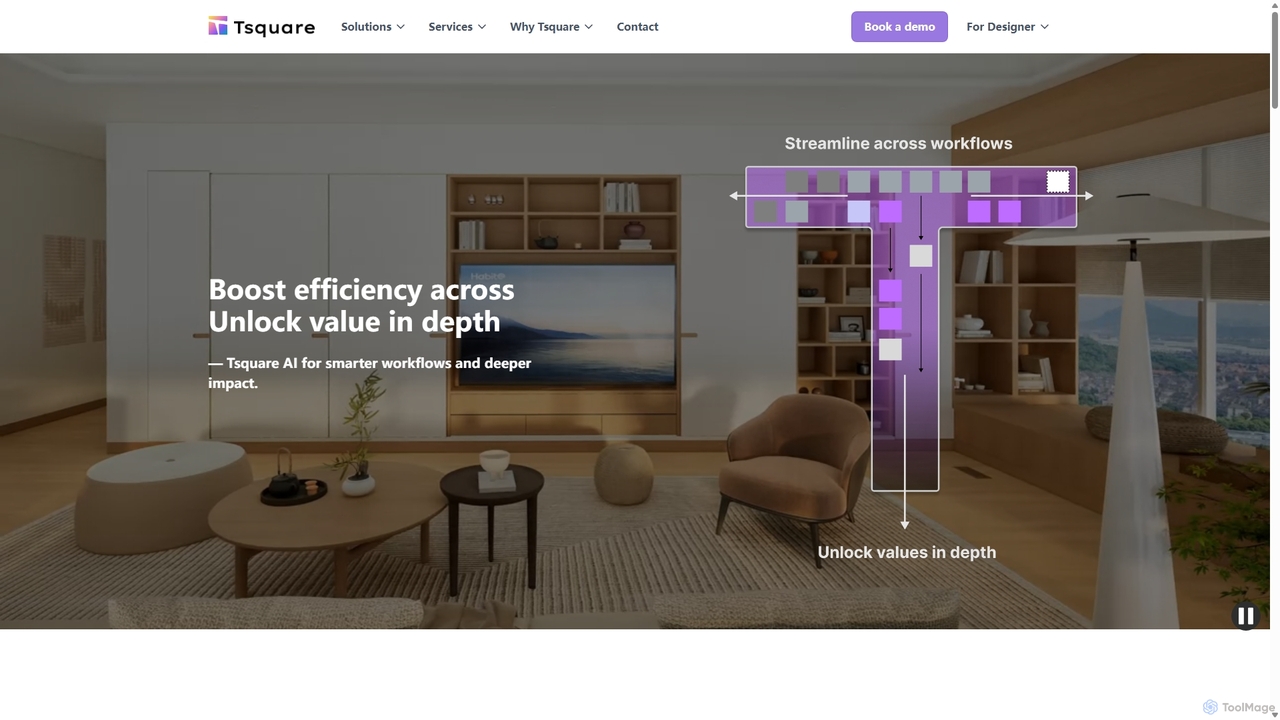
Tsquare AI is an AI-powered platform that transforms the sales journey for home improvement and design industries. It instantly converts 2D floor plans into fully furnished, interactive 3D spaces, enabling real-time product configuration, visualization, and automated quoting. This streamlines the design-to-sale process, enhances customer engagement, and boosts efficiency for sales teams and designers.

3D Modeling
Visits 4.2KFavorites 138Likes 118
Vagon
Paid

Vagon

Vagon is a high-performance cloud computing platform that provides users with powerful virtual desktops accessible from any device. It's designed for professionals like creatives, engineers, and developers to run demanding applications such as 3D rendering, video editing, and game development without needing expensive local hardware. Vagon offers scalable GPU, CPU, and storage options with a flexible pay-as-you-go model, enabling seamless remote work and collaboration.

Virtual Desktops
Visits 318KFavorites 125Likes 114
Kaedim3D
Paid

Kaedim3D

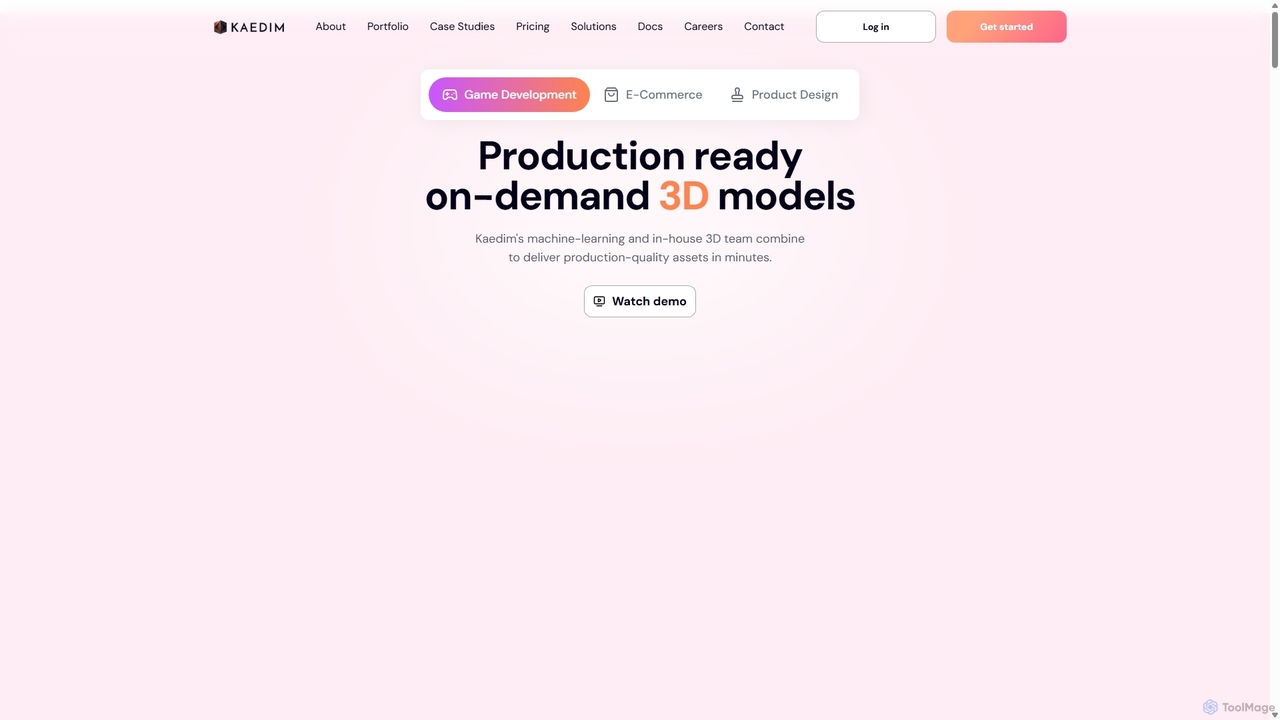
Kaedim3D is an AI-powered platform that accelerates 3D asset creation by transforming 2D images or text descriptions into production-ready 3D models. It combines machine learning with a team of in-house artists to deliver high-quality, optimized assets 10x faster for game development, e-commerce, and product design.

3D Modeling
Visits 42.1KFavorites 120Likes 138
Vizcom
Freemium

Vizcom

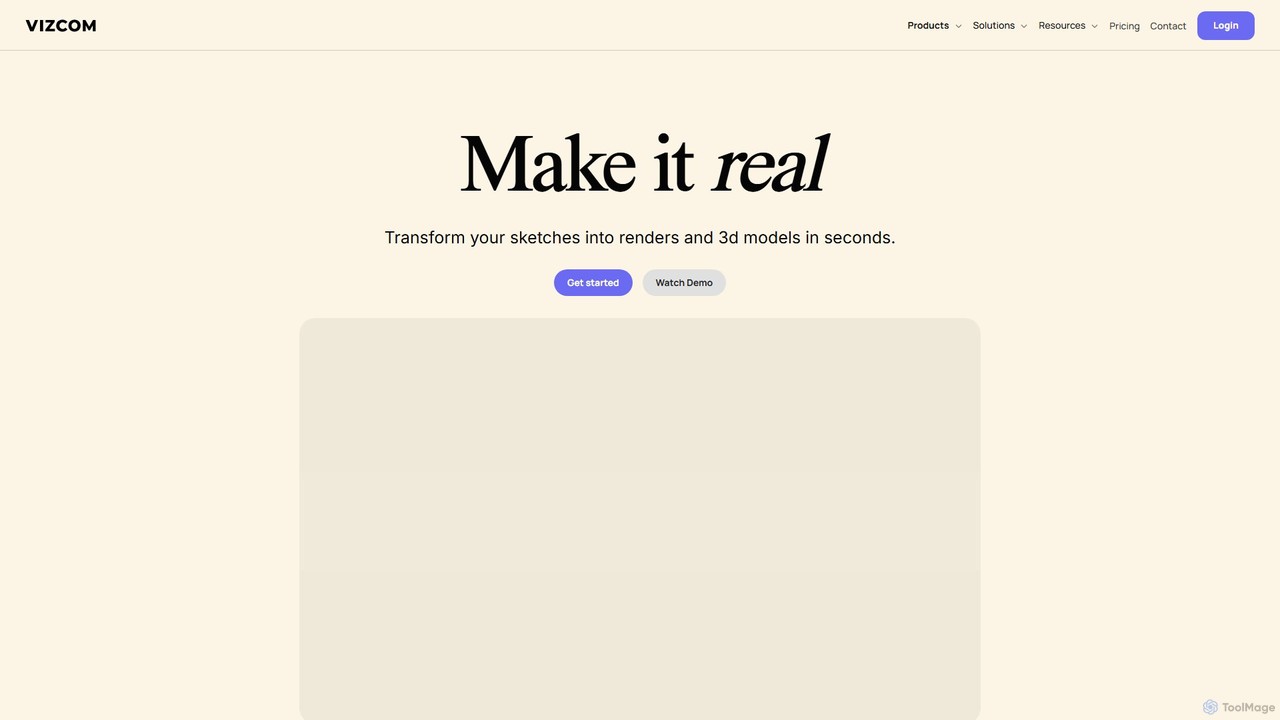
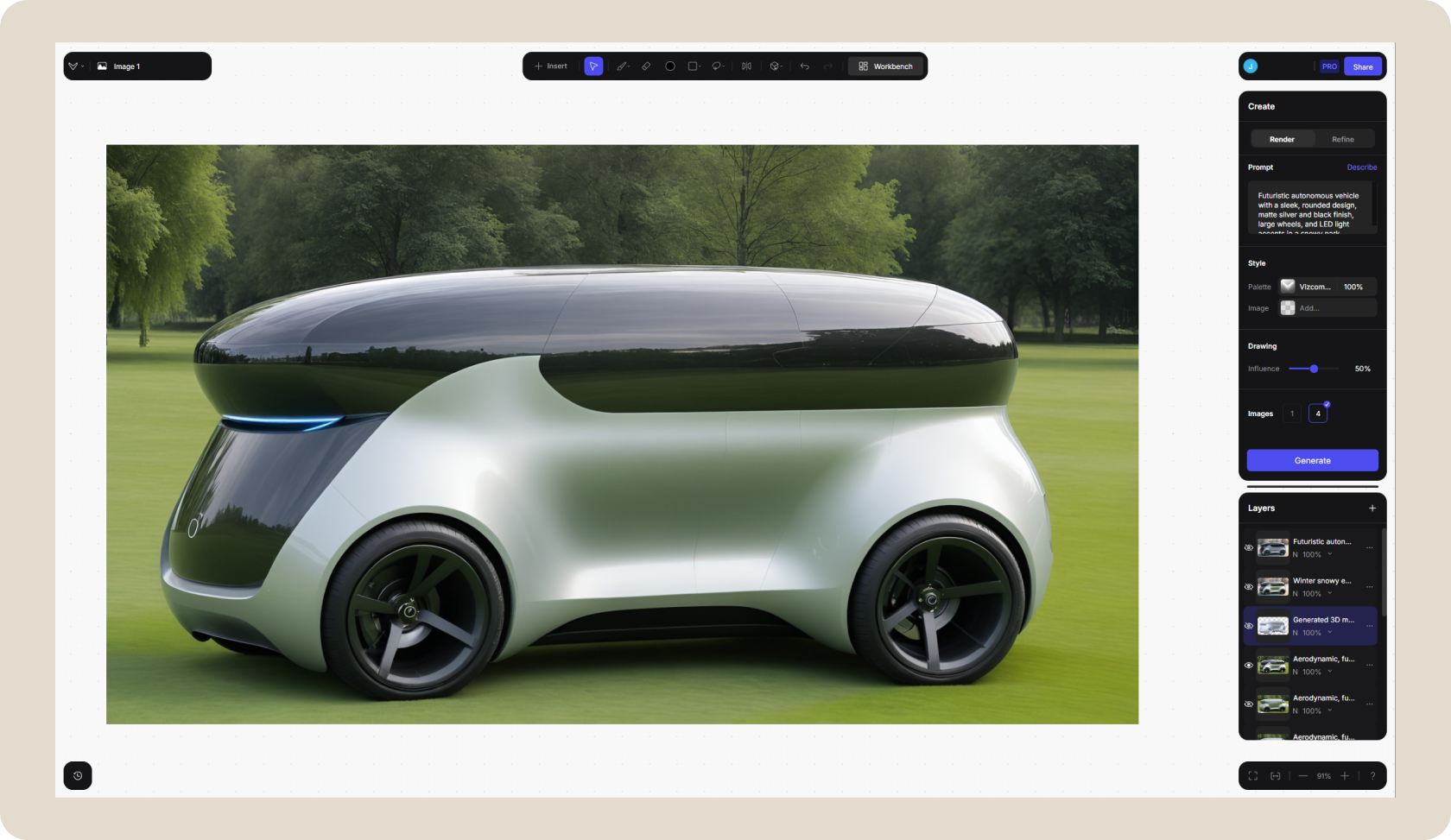
Vizcom is an AI-powered design platform that transforms your sketches into photorealistic renders and 3D models in seconds. It's built for designers, artists, and creative teams to accelerate the ideation and visualization process, enabling rapid exploration of countless design variations with intuitive tools and collaborative features.

Concept Art
Visits 19.5KFavorites 145Likes 128
appahead
Paid

appahead

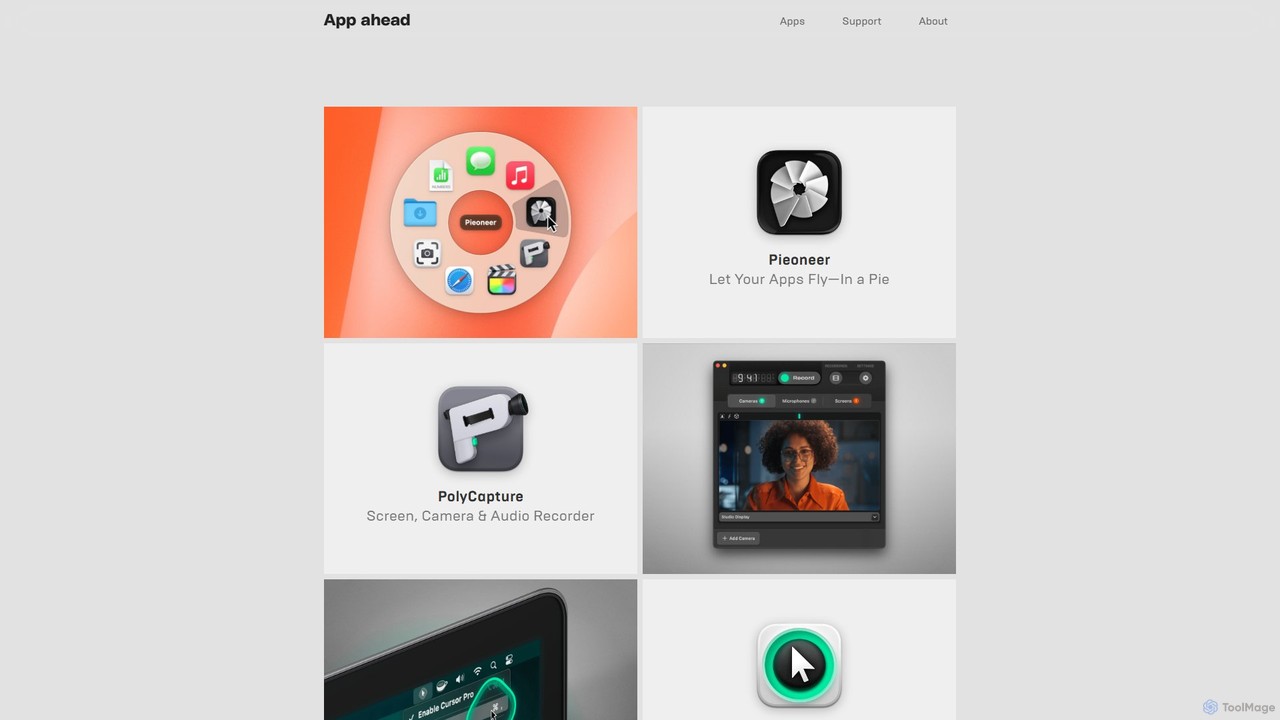
appahead is a premium software studio offering a suite of meticulously crafted applications for macOS, iOS, and visionOS. Focusing on productivity and creativity, the collection includes tools for screen recording, presentation enhancement, 3D scanning, and AI-powered transcription. Each app is designed with a strong emphasis on quality, user experience, and engineering excellence, providing powerful solutions for professionals and creators on Apple platforms.

Transcription
Visits 12.1KFavorites 119Likes 151
Magiscan
Freemium

Magiscan

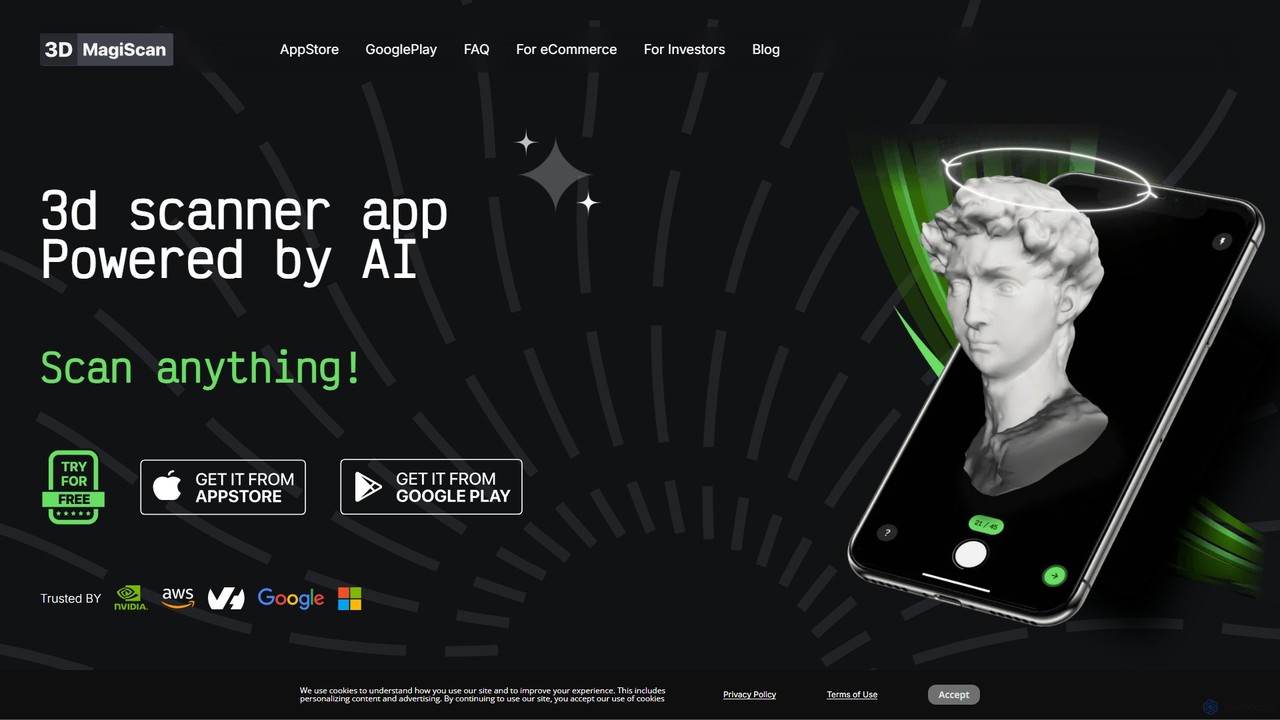
Magiscan is an AI-powered 3D scanner app for iOS and Android that transforms photos of real-world objects into high-quality 3D models. It offers multiple scanning modes, including photogrammetry and Lidar point cloud capture. With support for numerous export formats (GLB, OBJ, STL, etc.) and direct integration with NVIDIA Omniverse, it's a versatile tool for eCommerce, game development, AR/VR, and 3D artists. A free tier is available, with a premium subscription for advanced features and higher limits.

3D Scanning
Visits 7.3KFavorites 91Likes 92
mondial3d
Freemium

mondial3d

mondial3d is a powerful AI-driven platform for the rapid creation of high-quality 3D models and immersive environments. By leveraging advanced generative AI, it enables users to generate detailed 3D assets from simple text prompts or 2D images. It's tailored for game developers, architects, and designers, streamlining the 3D content creation pipeline and significantly reducing production time and costs.

Generative 3D
Visits 4.2KFavorites 137Likes 115
Blender Copilot
Paid

Blender Copilot

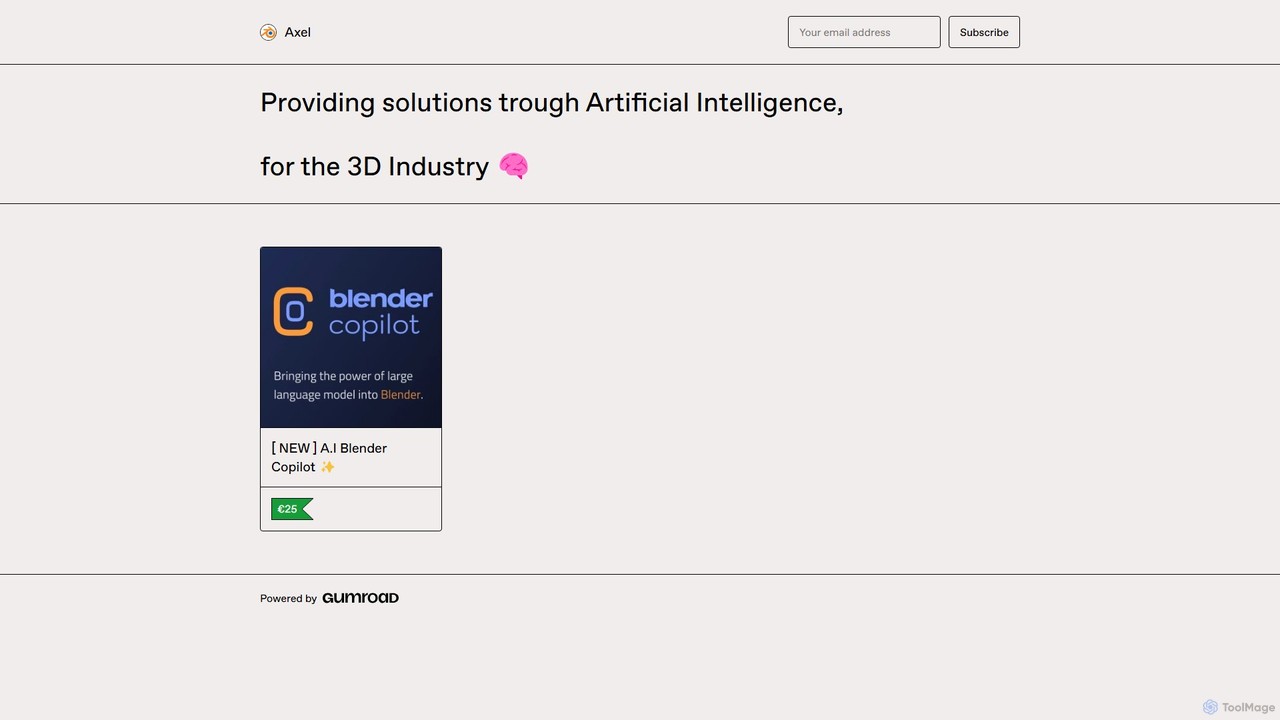
Blender Copilot is an AI-powered add-on for Blender that revolutionizes the 3D workflow. It acts as an intelligent assistant, automating tedious tasks like UV mapping, texture generation, and script creation, allowing artists to focus on their creative vision. It's designed to save time, boost productivity, and unlock new artistic possibilities for 3D modelers and game developers.

Generative Art
Visits 4.4KFavorites 112Likes 118
Ludo.ai
Freemium

Ludo.ai

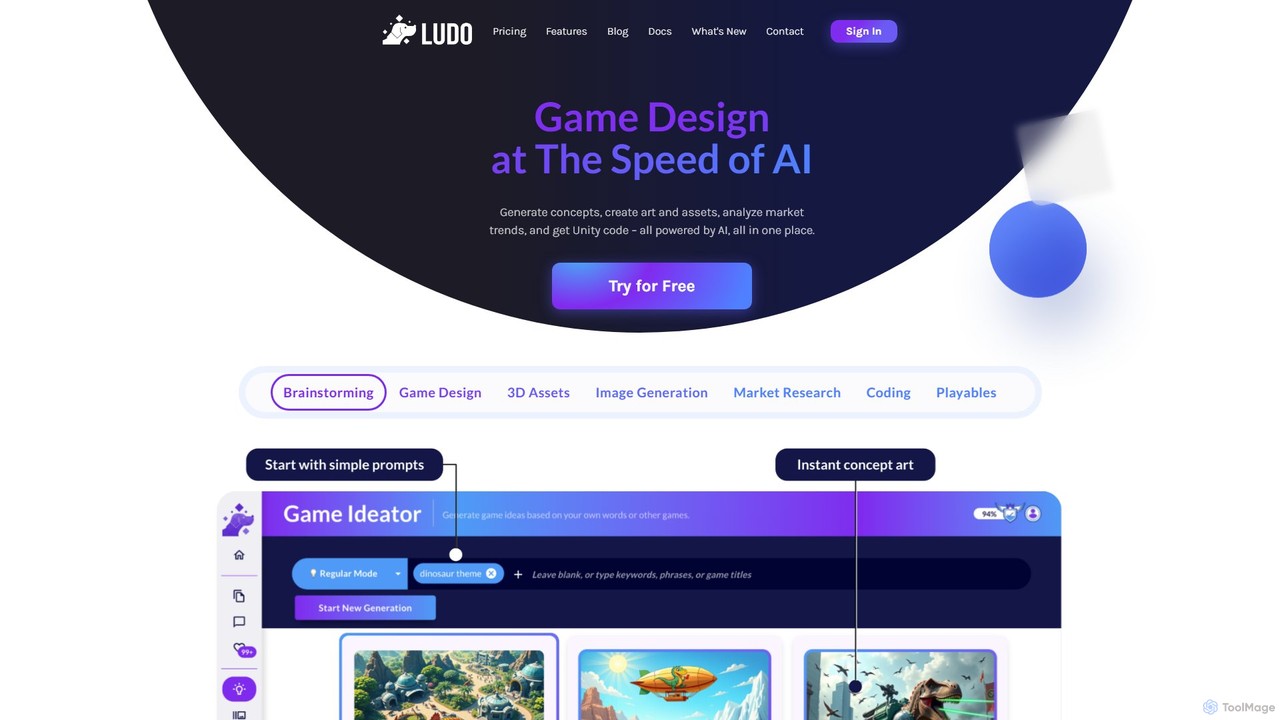
Ludo.ai is an all-in-one AI-powered platform designed to accelerate the game development process. It assists creators from initial brainstorming and concept generation to creating 2D/3D assets, market research, and even generating playable prototypes and code snippets. It's a unified ecosystem for game developers to build hit games faster.

Code Generation
Visits 274.7KFavorites 135Likes 137
Snowpixel
Paid

Snowpixel

Snowpixel is a versatile AI-powered creative suite that generates images, videos, music, and 3D models from text or image prompts. It stands out with its custom model training, allowing users to create content in their own unique style. It operates on a flexible, pay-as-you-go credit system with no subscriptions.

Music Generation
Visits 4.2KFavorites 114Likes 106
3dpresso
Freemium

3dpresso

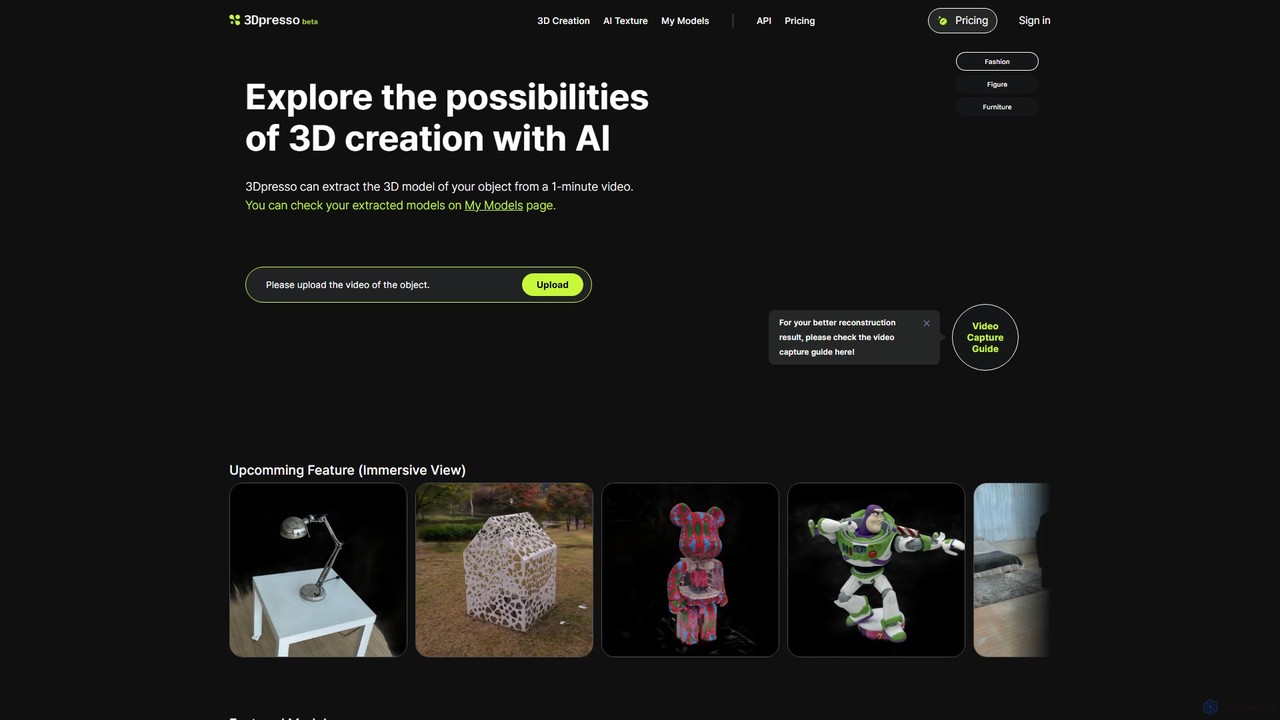
3dpresso is an AI-powered platform that transforms simple videos of real-world objects into high-quality 3D models. It also features a generative AI tool to change model textures using text prompts, making 3D creation fast and accessible for creators, designers, and developers.

Ai 3D Generator
Visits 15.6KFavorites 121Likes 128
Genie AI
Freemium

Genie AI

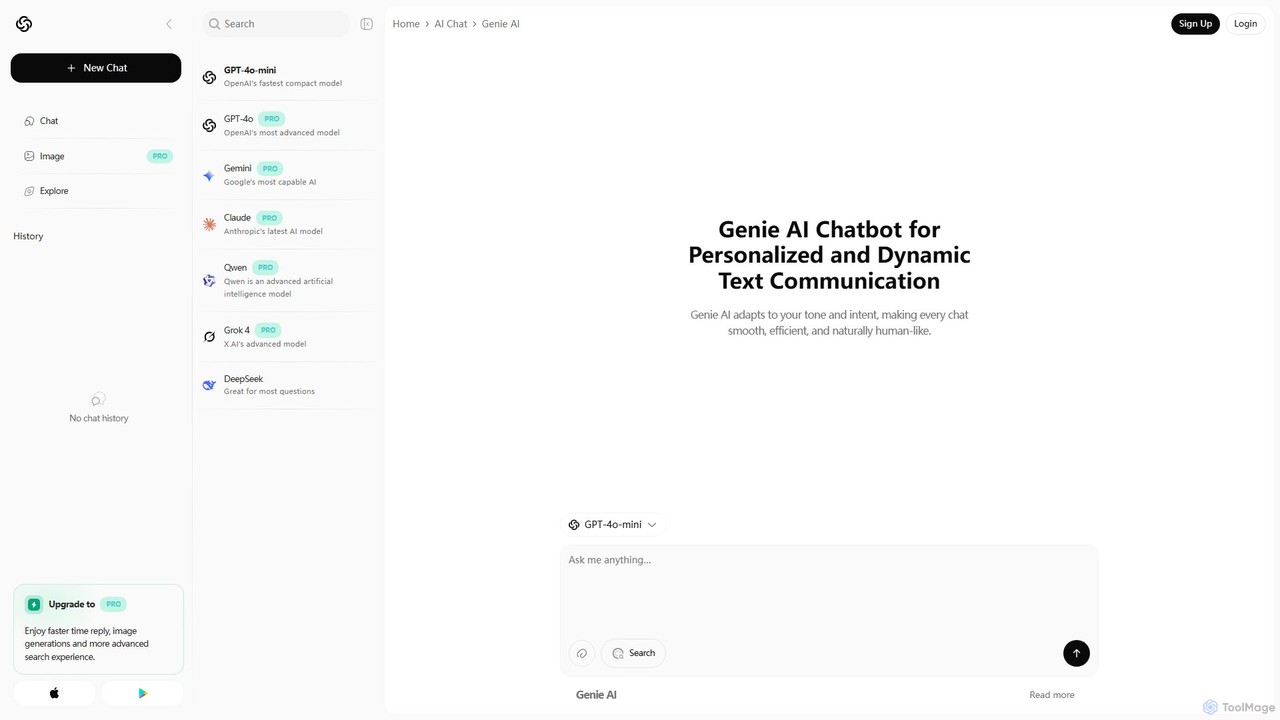
Genie AI is a versatile, multimodal AI assistant powered by GPT-4o. It integrates conversational AI, content creation, 3D model generation (via Luma), and business intelligence analytics (via Databricks) into a single, cross-platform interface. Designed for teams, creators, and knowledge workers to boost productivity.

Writing
Visits 41.5KFavorites 103Likes 110
Dora
Freemium

Dora

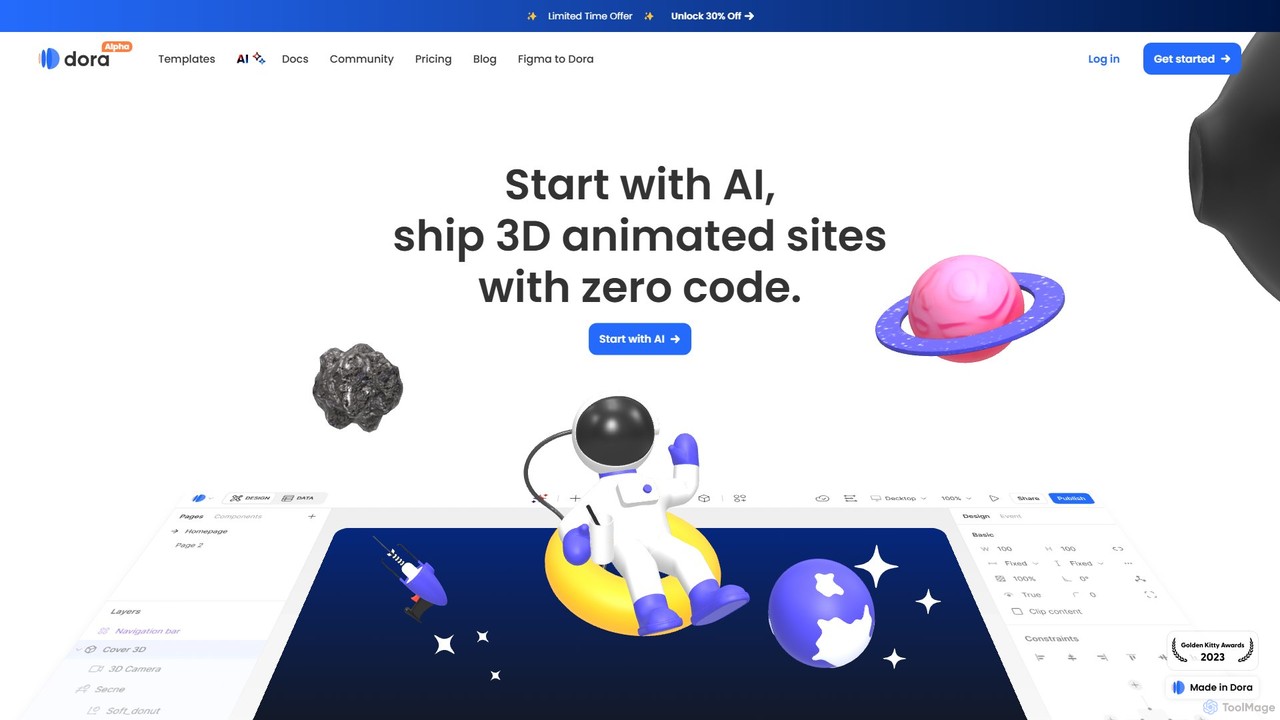
Dora is a revolutionary no-code AI website builder that empowers users to create and publish stunning 3D and animated websites from a single text prompt. It intelligently generates unique layouts, copy, and visuals tailored to your brand. With advanced features like a constraint-based layout system, keyframe animations, and 3D object import, Dora makes professional, interactive web design accessible to everyone, without needing to write a single line of code.

3D Modeling
Visits 230.2KFavorites 118Likes 123
zeg
Freemium

zeg

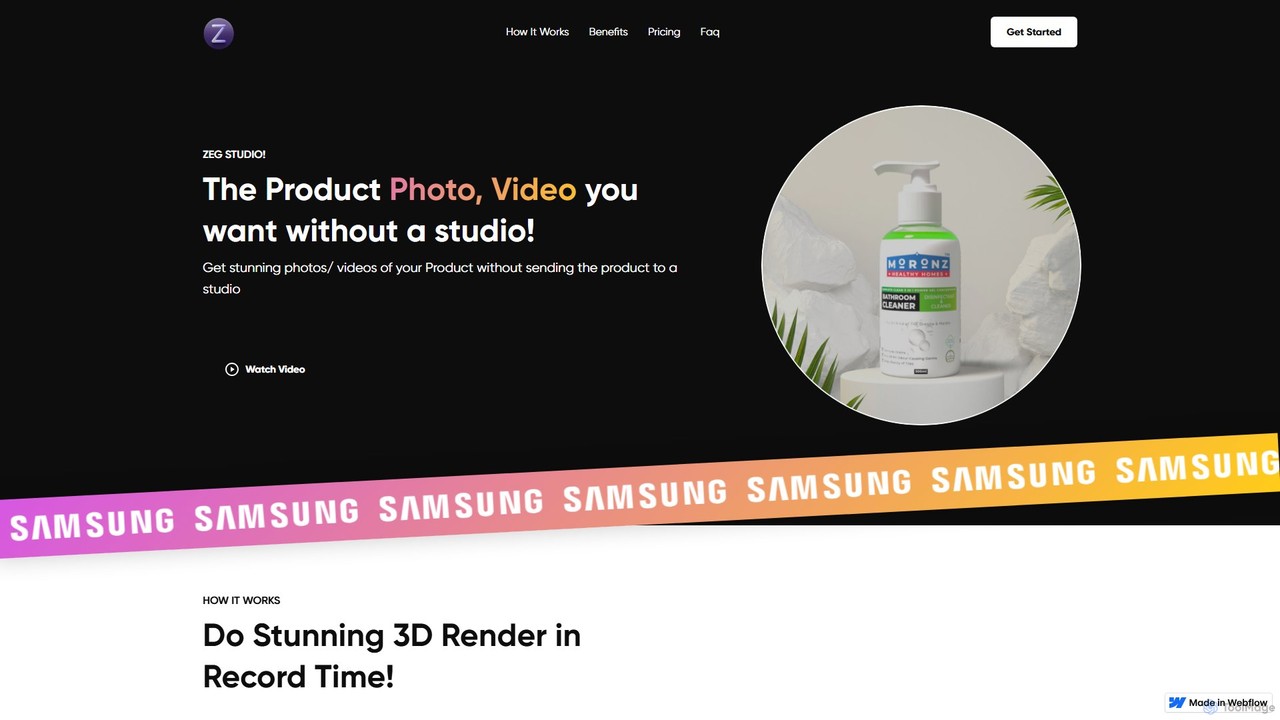
ZEG is an AI-powered platform that transforms simple product images into high-quality 3D models. Users can then create stunning, studio-grade product photos and videos using a web-based virtual studio, eliminating the need for physical photoshoots. It's ideal for e-commerce brands, especially in fashion and footwear, to generate marketing visuals quickly and cost-effectively.

3D Modeling
Visits 7.6KFavorites 181Likes 174
Zammy
Paid

Zammy

Zammy is an AI-powered platform that transforms 3D models into high-quality marketing content. It features a collaborative 3D editor and an AI workflow to rapidly generate videos and images, streamlining the process from design to promotion. Ideal for e-commerce, marketing, and design teams looking to accelerate their content creation and enhance product visualization.

3D Modeling
Visits 5.9KFavorites 127Likes 129

About 3D Modeling

AI 3D Modeling tools are a class of software that uses artificial intelligence to generate, modify, and optimize three-dimensional models. These tools typically leverage generative algorithms and machine learning to interpret text prompts, 2D images, or even video footage, automating the creation of complex geometry and textures. This technology significantly accelerates workflows in game development, product design, and virtual reality, enabling users to produce detailed digital assets with greater speed and less manual effort. They bridge the gap between conceptual ideas and tangible 3D representations.

Core Features

  • Text-to-3D Generation: Creates 3D models directly from descriptive text prompts, allowing for rapid ideation.
  • Image-to-3D Conversion: Transforms a single 2D image or a series of photos into a textured 3D object.
  • AI-Assisted Sculpting & Retopology: Provides intelligent suggestions and automates the process of refining model surfaces and optimizing mesh topology for performance.
  • Procedural Texturing: Generates realistic and complex surface materials (like wood, metal, or fabric) based on simple parameters or style inputs.
  • Style Transfer: Applies the artistic style of a source image to the texture and form of a 3D model.

Use Cases

These tools are widely used by game developers for rapid asset prototyping, architects for conceptual visualization, and product designers for creating initial mockups. They are also valuable for VFX artists, animators, and hobbyists in 3D printing who need to generate custom models quickly without deep expertise in traditional modeling software.

How to Choose

When selecting an AI 3D Modeling tool, consider the quality and detail of the generated models, the supported input types (text, image, video), and the available export formats (e.g., OBJ, FBX, glTF) for compatibility with your existing workflow. Also, evaluate the ease of use, the level of creative control offered for refining results, and the pricing model, whether it's subscription-based or pay-per-generation.

Featured tool rankings

3D Modeling use cases

1

Rapid Prototyping for Game Assets

A solo game developer needs to populate a game world with dozens of unique props like chests, barrels, and furniture. Instead of spending weeks manually modeling each item, they use a text-to-3D tool. By inputting prompts like "ornate wooden treasure chest with iron fittings" or "sci-fi glowing energy barrel," they can generate a variety of base models in minutes. This allows them to quickly test assets in the game engine, iterate on designs, and focus their time on gameplay mechanics rather than repetitive modeling tasks.

2

Conceptual Models for Architecture

An architect is in the early stages of designing a new building and needs to present multiple concepts to a client. They use an image-to-3D tool by uploading their initial 2D sketches of the building's facade. The AI generates rough 3D massing models that represent the form and scale of the different design options. These models can be quickly imported into visualization software to create simple renders, helping the client better understand the spatial qualities of each concept long before detailed CAD work begins.

3

Creating Custom 3D Printing Models

A hobbyist wants to 3D print a custom-designed miniature figure for a tabletop game but lacks advanced modeling skills. Using a text-to-3D tool, they describe the character in detail: "a dwarf warrior with a braided beard, holding a large axe, wearing plate armor." The AI generates a 3D model that matches the description. They can then make minor adjustments or regenerate variations until they are satisfied, and finally export the model as an STL file ready for their 3D printer. This process democratizes creation, enabling people without technical expertise to produce physical objects from their imagination.

4

Generating 3D Assets for E-commerce

An online furniture store wants to offer an augmented reality (AR) viewing experience for its products. Manually creating 3D models for their entire catalog is expensive and time-consuming. Instead, they use an image-to-3D service. By providing a set of high-quality photos of a chair from multiple angles, the AI reconstructs a detailed and accurately textured 3D model. This model can then be integrated into their website or app, allowing customers to virtually place the chair in their own homes before making a purchase, which can increase conversion rates and reduce returns.

5

Concept Art Exploration for Film and Animation

A concept artist working on a new animated series needs to design a unique alien creature. To explore a wide range of ideas quickly, they use a text-to-3D tool. They input various descriptive prompts like "bioluminescent jellyfish-like creature with six tentacles" and "crystalline insectoid with iridescent wings." The AI generates multiple 3D concepts for each prompt. The artist can then quickly rotate and view these models from all angles, select the most promising designs, and use them as a base for more detailed sculpting and painting in traditional 3D software, saving significant time in the initial ideation phase.

6

Optimizing 3D Scans with AI Retopology

A digital archivist uses a 3D scanner to capture a detailed model of a historical artifact. The raw scan data results in a very dense and messy mesh with millions of polygons, making it unsuitable for real-time viewing or use in VR. They use an AI tool with an automated retopology feature. The AI analyzes the high-poly model and intelligently creates a new, clean, and low-polygon mesh that preserves all the important details and contours. This optimized model is much more performant and can be easily used in interactive museum exhibits or educational applications.

3D Modeling FAQ

What is AI 3D Modeling?

AI 3D Modeling refers to the use of artificial intelligence algorithms to create, modify, or enhance three-dimensional digital models. Unlike traditional 3D modeling which relies entirely on manual artist input, AI tools can generate complex models from simple inputs like text descriptions (text-to-3D) or 2D images (image-to-3D). They can also automate tedious tasks such as texturing, optimizing mesh topology (retopology), and creating variations of an existing model. These tools act as powerful assistants or generators, accelerating the creative process for designers, artists, and engineers.

How to choose the right AI 3D Modeling tool?

Choosing the right tool depends on your specific needs. Consider the following factors:

  • Input Method: Do you need to generate models from text, images, or video? Ensure the tool supports your primary input format.
  • Output Quality & Style: Examine the portfolio of models generated by the tool. Does the level of detail and artistic style match your requirements (e.g., realistic, stylized, low-poly)?
  • Export Formats: Check for compatibility with your existing software pipeline. Common formats include OBJ, FBX, glTF, and STL for 3D printing.
  • Ease of Use vs. Control: Some tools are very simple but offer limited control, while others provide more parameters for fine-tuning the output. Choose based on your technical skill level and creative needs.
  • Cost: Evaluate the pricing model. Is it a monthly subscription, a pay-per-model system, or does it offer a free tier?
AI 3D Modeling vs. Traditional 3D Software: What's the difference?

The primary difference lies in the creation process. Traditional 3D software (like Blender, Maya, 3ds Max) is a manual toolkit. An artist uses tools like polygon modeling, sculpting brushes, and UV mapping to build a model from scratch with precise control. It requires significant technical skill and time.

AI 3D Modeling tools are generative and automated. The user provides a high-level prompt (text or image), and the AI generates the model. The process is much faster and requires less technical skill, making it ideal for rapid prototyping and concept exploration. However, it typically offers less precise control over the final geometry compared to traditional methods. They are often used together: AI for initial ideas, and traditional software for refinement and production.
What are the limitations of current AI 3D Modeling tools?

While powerful, current AI 3D modeling tools have some limitations. The quality and coherence of generated models can be inconsistent, sometimes producing strange artifacts or illogical geometry. Achieving very specific, intricate details exactly as envisioned can be difficult, as the AI interprets prompts rather than following precise instructions. Additionally, the topology of the generated mesh is often not optimized for animation or real-time applications and may require manual cleanup (retopology). Finally, most tools are better at generating single, self-contained objects rather than complex, multi-part scenes or characters with rigging.

Who can benefit from using AI 3D Modeling tools?

A wide range of professionals and hobbyists can benefit from these tools. This includes:

  • Game Developers: For rapidly creating prototypes of in-game assets and props.
  • Concept Artists: To quickly visualize and iterate on ideas for characters, creatures, and environments.
  • Product Designers & Engineers: For generating initial design concepts and mockups before detailed CAD work.
  • Architects: To create quick massing models and conceptual visualizations for clients.
  • 3D Printing Enthusiasts: To generate custom models without needing to learn complex traditional modeling software.
  • Marketers & E-commerce Managers: For creating 3D product models for AR experiences and interactive web viewers.