
Freemium
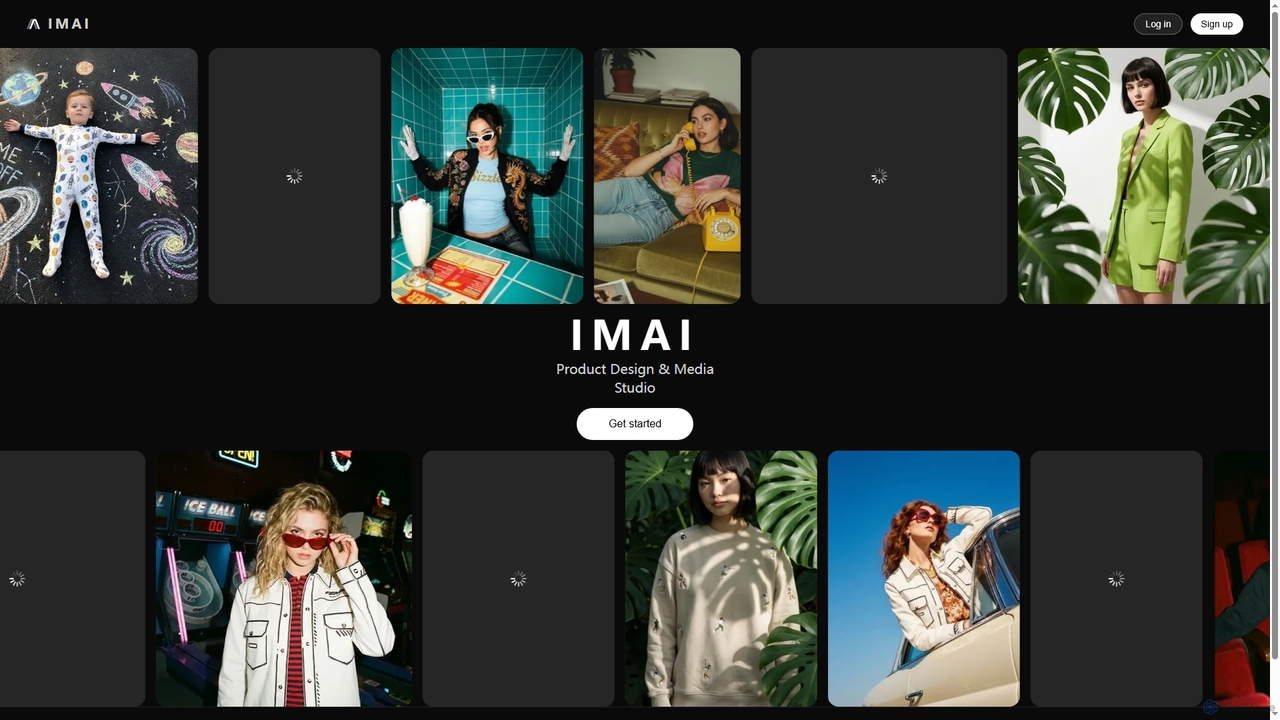
Popular 3D Model AI tools in Design include Imai, helping you work more efficiently.
3D Model tools are AI-powered platforms designed to generate, edit, and optimize three-dimensional digital assets. Leveraging advanced algorithms, these tools can transform text descriptions, 2D images, or even simple sketches into complex 3D models. As a specialized segment within AI design tools, they significantly accelerate the creation process for various industries, from gaming and film to product design and architecture. This technology democratizes 3D content creation, making it accessible to a broader range of creators.
These tools are invaluable for professionals in creative industries, manufacturing, and education. Game developers use them to rapidly prototype characters and environments, while product designers generate realistic mockups for visualization. Architects can quickly create detailed building models, and marketing teams produce immersive product showcases.
When selecting a 3D Model tool, consider its generation capabilities (text-to-3D, image-to-3D), output format compatibility (OBJ, FBX, GLB), editing features, and integration with existing design workflows. Evaluate the quality of generated models, ease of use, and pricing structure to match your project requirements and budget.
Game developers use AI 3D model generators to rapidly create character models, environmental props, and architectural elements from concept art or text descriptions. This significantly reduces manual modeling time, allowing for faster iteration and content production for new games or updates.
Industrial designers and manufacturers leverage these tools to generate realistic 3D prototypes of new products. By inputting design specifications or 2D sketches, they can quickly visualize different iterations, test forms, and present concepts to stakeholders without extensive manual modeling.
Architects and interior designers utilize AI 3D modeling to quickly create detailed building structures, room layouts, and furniture models. This aids in design exploration, client presentations, and virtual walkthroughs, streamlining the early stages of project development.
Animators and VFX artists employ AI 3D tools to generate background assets, non-essential characters, or complex environmental elements. This accelerates scene creation, allowing artists to focus on key characters and intricate visual effects, enhancing production efficiency.
E-commerce businesses use AI-generated 3D models to create interactive product showcases and augmented reality (AR) experiences. Customers can view products from all angles or place them virtually in their environment, boosting engagement and purchase confidence.
Educators and trainers use AI 3D tools to create immersive learning materials, such as anatomical models for medical students or historical artifact replicas for museum exhibits. These interactive 3D assets enhance understanding and provide engaging simulation experiences.
AI 3D Model Generation tools are advanced software applications that use artificial intelligence to create three-dimensional digital models. They can interpret various inputs like text prompts, 2D images, or even videos, and automatically generate complex 3D geometry, textures, and materials, significantly simplifying the traditional 3D modeling process.
These tools typically employ deep learning models, such as Generative Adversarial Networks (GANs) or diffusion models, trained on vast datasets of 3D objects and scenes. When given an input (e.g., "a medieval knight's helmet"), the AI synthesizes a 3D model by predicting its shape, topology, and surface properties, often allowing for further refinement by the user.
The primary benefits include accelerated creation workflows, enabling users to generate complex models in minutes instead of hours or days. They democratize 3D content creation, making it accessible to individuals without extensive 3D software expertise. Additionally, these tools offer high scalability for batch processing and can explore numerous design variations rapidly.
Traditional 3D modeling software (like Blender or Maya) requires manual manipulation of vertices, edges, and faces, demanding significant skill and time. AI 3D Model tools, conversely, automate much of this process by generating models from high-level inputs, acting more as creative assistants that interpret intent rather than requiring direct geometric construction.
AI 3D Model generators can accept a variety of inputs. Common methods include text-to-3D, where users describe the desired object in natural language; image-to-3D, converting one or more 2D images into a 3D representation; and even sketch-to-3D, where simple line drawings are transformed into volumetric models. Some advanced tools also support video-to-3D or point cloud data.