
Milvus Overview
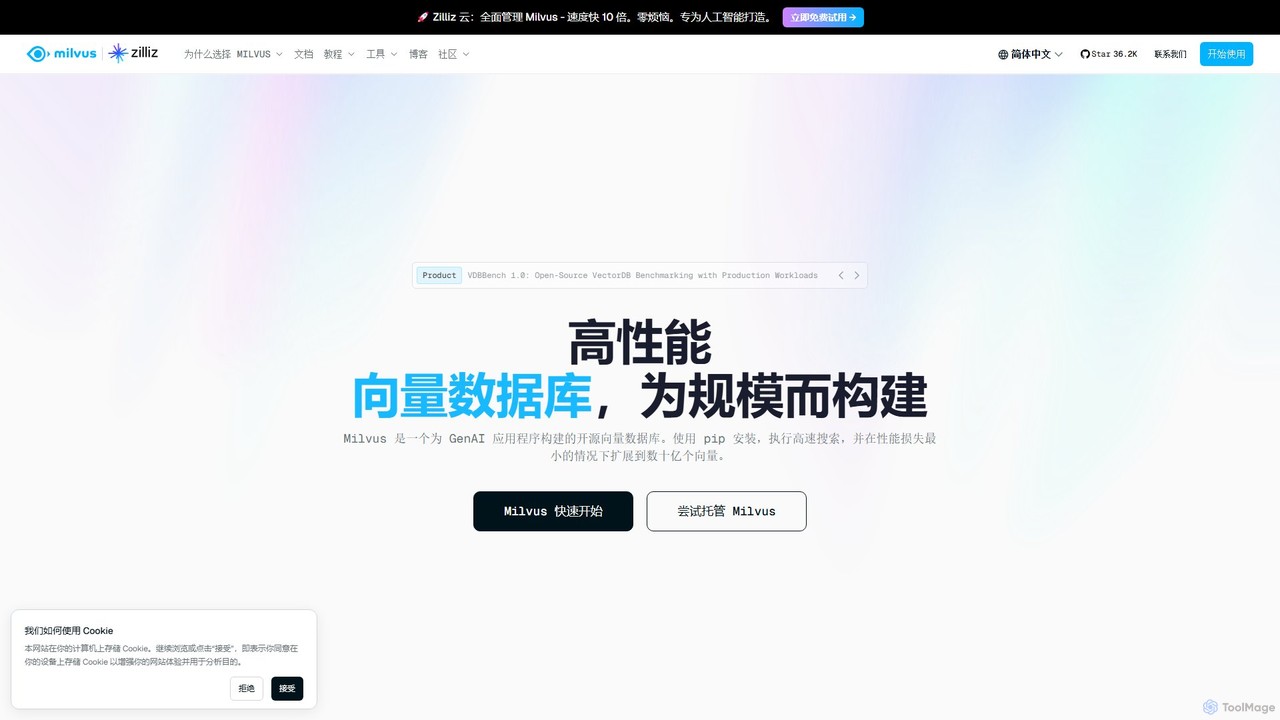
Milvus is a leading open-source vector database, specifically engineered to power AI and GenAI applications at scale. It excels at storing, indexing, and searching massive collections of embedding vectors, which are numerical representations of unstructured data like text, images, and audio. By finding the most similar vectors to a given query, Milvus forms the backbone for applications requiring semantic understanding, such as advanced search engines, recommendation systems, and Retrieval-Augmented Generation (RAG) pipelines. It's trusted by developers and enterprises for its high performance, reliability, and scalability.
How to use Milvus
Getting started with Milvus is designed to be straightforward for developers, scaling from a local machine to a full production cluster.
- Installation & Setup: You can begin locally with Milvus Lite, which is easily installed via Python's package manager:
pip install pymilvus. For production environments, Milvus can be deployed using Docker, Docker Compose, or on Kubernetes for distributed setups. - Connect to Milvus: Instantiate a client to connect to your Milvus instance. For local development, this can be as simple as
client = MilvusClient("milvus_demo.db"). For server deployments, you'll provide the URI and an access token. - Create a Collection: A collection is analogous to a table in a traditional database. You must define a collection with a name and the dimension of your vectors. You can also create a more detailed schema specifying primary keys, vector fields, and various scalar fields for metadata.
- Prepare and Insert Data: Convert your unstructured data (text, images, etc.) into vector embeddings using a pre-trained model (e.g., from Hugging Face). Then, insert this data, including the vectors and any associated metadata, into your collection. Data is typically formatted as a list of dictionaries.
- Search and Query: Perform lightning-fast similarity searches by providing one or more query vectors. You can refine searches by applying powerful metadata filters, for example,
filter="subject == 'biology'". Milvus also supports retrieving or deleting entities by their primary keys or filter expressions. - Scale Seamlessly: The client code you write for local development can be reused to connect to a production-grade Milvus cluster, ensuring a smooth transition from prototyping to large-scale deployment.
Core Features of Milvus
- Blazing-Fast Search: Utilizes state-of-the-art indexing algorithms like HNSW, IVF_FLAT, and IVF_RABITQ, along with GPU acceleration, to deliver millisecond-level search responses on billion-scale datasets.
- Flexible Deployment Options: Offers multiple deployment models to fit any need: Milvus Lite for lightweight local development, Milvus Standalone for single-server production, Milvus Distributed for massive-scale enterprise clusters, and Zilliz Cloud for a fully managed, serverless experience.
- Advanced Search Capabilities: Supports hybrid search (combining vector similarity with keyword/scalar filtering), multi-vector search, and sparse vector support to handle complex and nuanced queries effectively.
- Rich Data and Filtering: Manages both vector embeddings and a wide range of scalar data types (strings, integers, booleans). Its powerful filtering engine allows for precise data retrieval based on metadata attributes before or during a search.
- High Scalability & Reliability: Built on a cloud-native, distributed architecture that separates storage and compute, allowing for elastic scaling of resources to meet fluctuating demands and ensuring high availability.
- Unified Multi-Language SDKs: Provides a consistent and developer-friendly experience with comprehensive SDKs for popular languages including Python, Java, Go, C#, and Node.js.
Use Cases for Milvus
Milvus is the foundational infrastructure for a wide array of AI-powered applications:
- Retrieval-Augmented Generation (RAG): Acts as the external knowledge base for Large Language Models (LLMs), retrieving relevant, factual context to reduce hallucinations and provide up-to-date, accurate answers.
- Semantic Search & Question Answering: Powers search systems that understand the meaning and intent behind user queries, moving beyond simple keyword matching to deliver more relevant results.
- Image and Video Search: Enables applications to find visually similar content, which is critical for e-commerce product discovery, digital asset management, and security surveillance.
- Recommendation Engines: Recommends products, articles, music, or other content by matching user profiles and item characteristics in a high-dimensional vector space.
- Multimodal Applications: Facilitates search across different data modalities, such as using a text description to find a specific image or an audio clip.
Advantages of Milvus
- Open-Source & Community-Driven: As a graduated project of the LF AI & Data Foundation, Milvus benefits from a large, active community of contributors, ensuring continuous improvement, extensive documentation, and a wealth of shared resources.
- Production-Ready at Scale: Proven in production by numerous leading companies for mission-critical applications, demonstrating its stability, reliability, and performance under pressure.
- Cost-Effective: Being open-source, Milvus eliminates licensing fees. Its efficient, cloud-native architecture helps manage operational costs by optimizing resource utilization.
- Rich Ecosystem Integration: Integrates seamlessly with major AI/ML frameworks and tools like LangChain, LlamaIndex, PyTorch, and TensorFlow, streamlining the end-to-end development workflow.
Pricing and Plans
Milvus is an open-source project and is completely free to download, use, and modify. You are only responsible for the costs of the infrastructure on which you run it. For users who prefer a managed, hassle-free solution, Zilliz, the company that originally created Milvus, offers Zilliz Cloud. Zilliz Cloud is a fully managed vector database service based on Milvus that operates on a freemium model. It includes a free-forever "Starter" tier for development and small projects, as well as paid "Serverless" and "Dedicated" plans for production workloads that offer enhanced performance, auto-scaling, and enterprise-grade support.
Traffic
Latest traffic
Status
Monthly traffic trend
- 2026-1: 491.3K
- 2026-2: 541.6K
- 2026-3: 580.1K
- 2026-4: 583.3K
- 2026-5: 529.9K
Geography
Top 5 countries / regions
- 🇨🇳China47.9%
- 🇺🇸United States32.1%
- 🇮🇳India10.0%
- 🇭🇰Hong Kong SAR China5.7%
- 🇨🇦Canada4.3%
Traffic sources
| Source type | Percentage |
|---|---|
Direct | 68.0% |
Referral | 31.3% |
Email | 0.8% |
Top keywords
| Keyword | Cost per click |
|---|---|
| codex pricing | $5.15 |
| harness engineering | $3.31 |
| how many tokens in claude pro | $5.85 |
| milvus | $1.19 |
| milvus vector database | $4.10 |
Milvus Videos on YouTube

Aishwarya Srinivasan

Indian AI Production


Lekkala Ganesh

Professor Py: AI Engineering


Techlatest dot net
Milvus Alternatives

MindsDB
MindsDB is an open-source AI layer for databases, enabling developers to build, train, and deploy AI models and agents using standard SQL. It connects to hundreds of data sources, unifies structured and unstructured data into knowledge bases, and allows you to get AI-powered answers directly from your data without complex ETL pipelines.
Machine Learning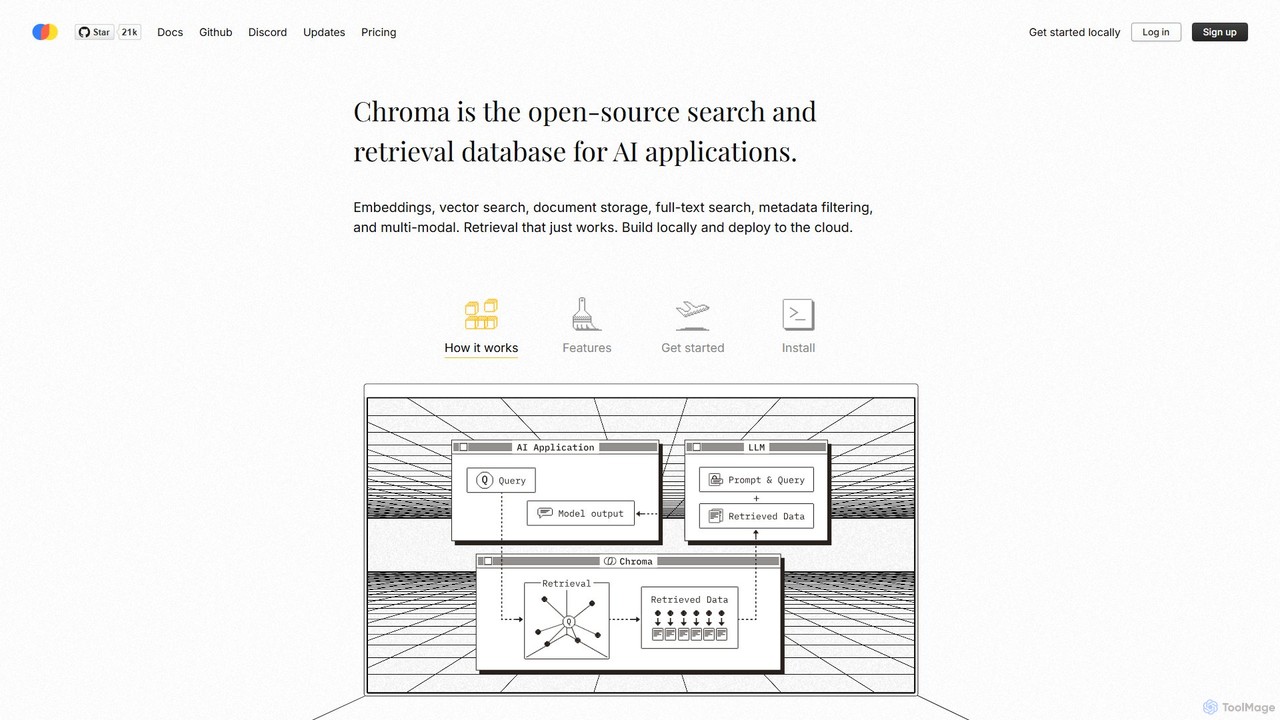
Chroma
Chroma is the open-source, AI-native retrieval database designed for building powerful AI applications with Retrieval-Augmented Generation (RAG). It simplifies storing and searching embeddings, documents, and metadata, offering vector search, full-text search, and a scalable, serverless cloud platform. It's built to be easy to use, cost-effective, and powerful, from local development to large-scale production.
Vector Database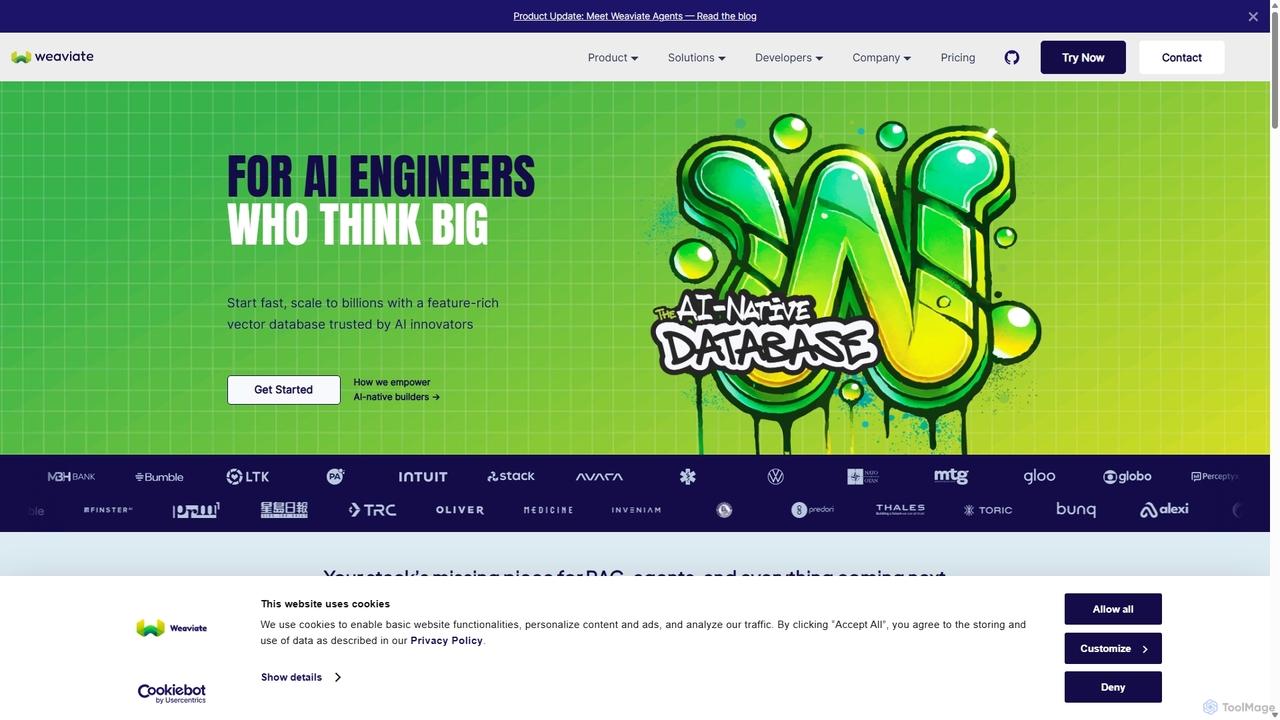
Weaviate
Weaviate is an open-source, AI-native vector database designed for developers. It enables scalable, low-latency vector, keyword, and hybrid search. Ideal for building AI applications like semantic search, recommendation engines, and Retrieval-Augmented Generation (RAG) systems, it integrates seamlessly with popular machine learning models to store and query data based on semantic meaning.
Vector Database
LanceDB
LanceDB is an open-source, AI-native multimodal lakehouse designed for building and scaling AI applications. It provides a unified platform for storing, searching, and managing complex data like text, images, voice, and vectors. Ideal for RAG, semantic search, and model training, LanceDB offers blazing-fast hybrid search, massive scalability to petabytes, and significant cost savings, making it a powerful foundation for enterprise-grade AI.
Vector Database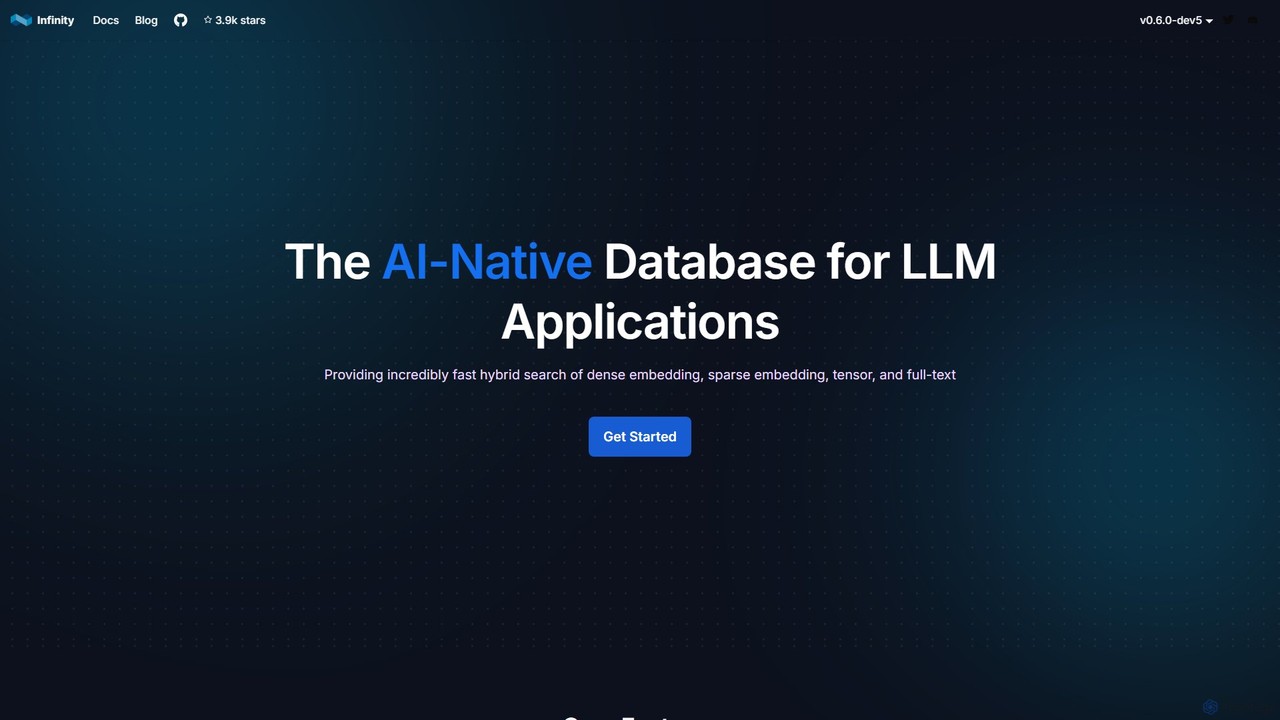
infiniflow
infiniflow is a high-performance, open-source, AI-native database specifically designed for LLM applications. It offers incredibly fast vector search, powerful hybrid search capabilities (vector, full-text, tensor), and simplified deployment. With an intuitive Python API, it's built to power demanding AI tasks like Retrieval-Augmented Generation (RAG) and semantic search with millisecond latency.
Vector SearchMilvus Categories
Milvus Embed Widget
Copy this embed code to place the badge on your blog, article, or product site and send readers directly to this ToolMage detail page.

Related AI tools
Qdrant
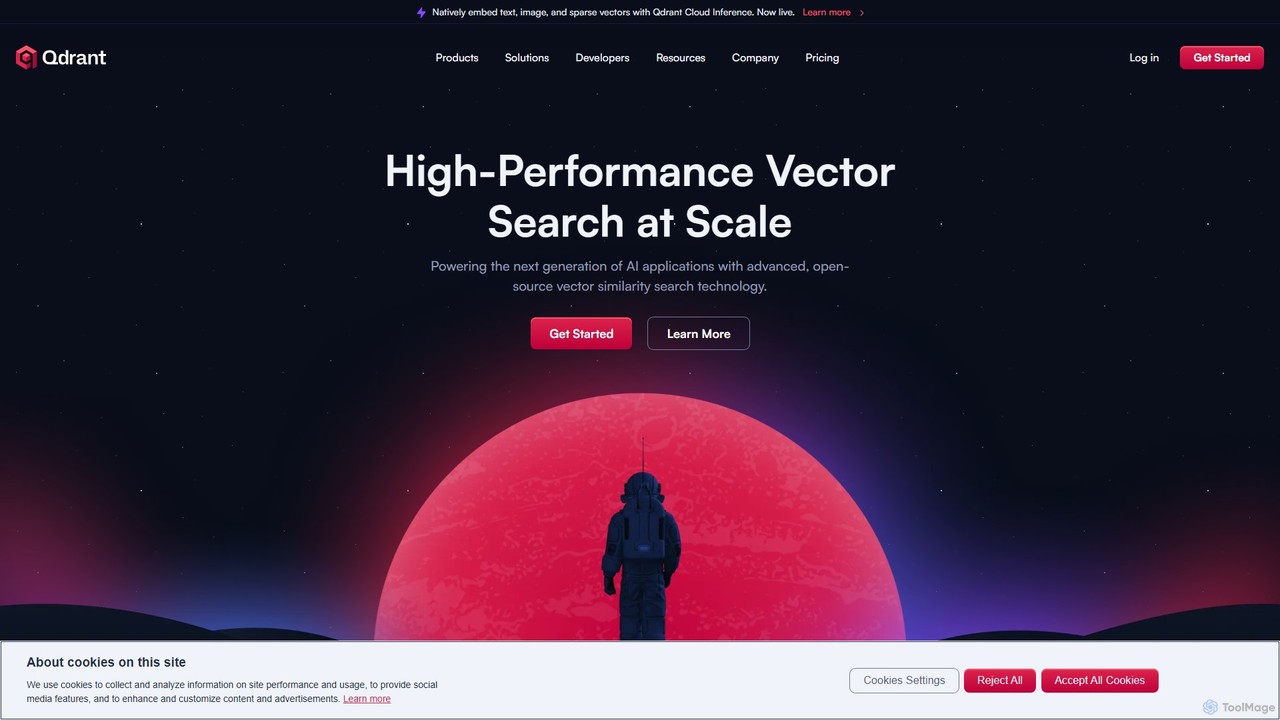
Qdrant is a high-performance, open-source vector database and similarity search engine built in Rust. It's designed to power next-generation AI applications by efficiently managing and searching billions of high-dimensional vectors. With advanced features like rich filtering, payload storage, and various quantization methods, Qdrant enables developers to build scalable and cost-effective solutions for semantic search, recommendation systems, and Retrieval Augmented Generation (RAG).
Vector SearchChroma
Chroma is the open-source, AI-native retrieval database designed for building powerful AI applications with Retrieval-Augmented Generation (RAG). It simplifies storing and searching embeddings, documents, and metadata, offering vector search, full-text search, and a scalable, serverless cloud platform. It's built to be easy to use, cost-effective, and powerful, from local development to large-scale production.
Vector DatabaseWeaviate
Weaviate is an open-source, AI-native vector database designed for developers. It enables scalable, low-latency vector, keyword, and hybrid search. Ideal for building AI applications like semantic search, recommendation engines, and Retrieval-Augmented Generation (RAG) systems, it integrates seamlessly with popular machine learning models to store and query data based on semantic meaning.
Vector DatabaseLanceDB
LanceDB is an open-source, AI-native multimodal lakehouse designed for building and scaling AI applications. It provides a unified platform for storing, searching, and managing complex data like text, images, voice, and vectors. Ideal for RAG, semantic search, and model training, LanceDB offers blazing-fast hybrid search, massive scalability to petabytes, and significant cost savings, making it a powerful foundation for enterprise-grade AI.
Vector Databaseinfiniflow
infiniflow is a high-performance, open-source, AI-native database specifically designed for LLM applications. It offers incredibly fast vector search, powerful hybrid search capabilities (vector, full-text, tensor), and simplified deployment. With an intuitive Python API, it's built to power demanding AI tasks like Retrieval-Augmented Generation (RAG) and semantic search with millisecond latency.
Vector Search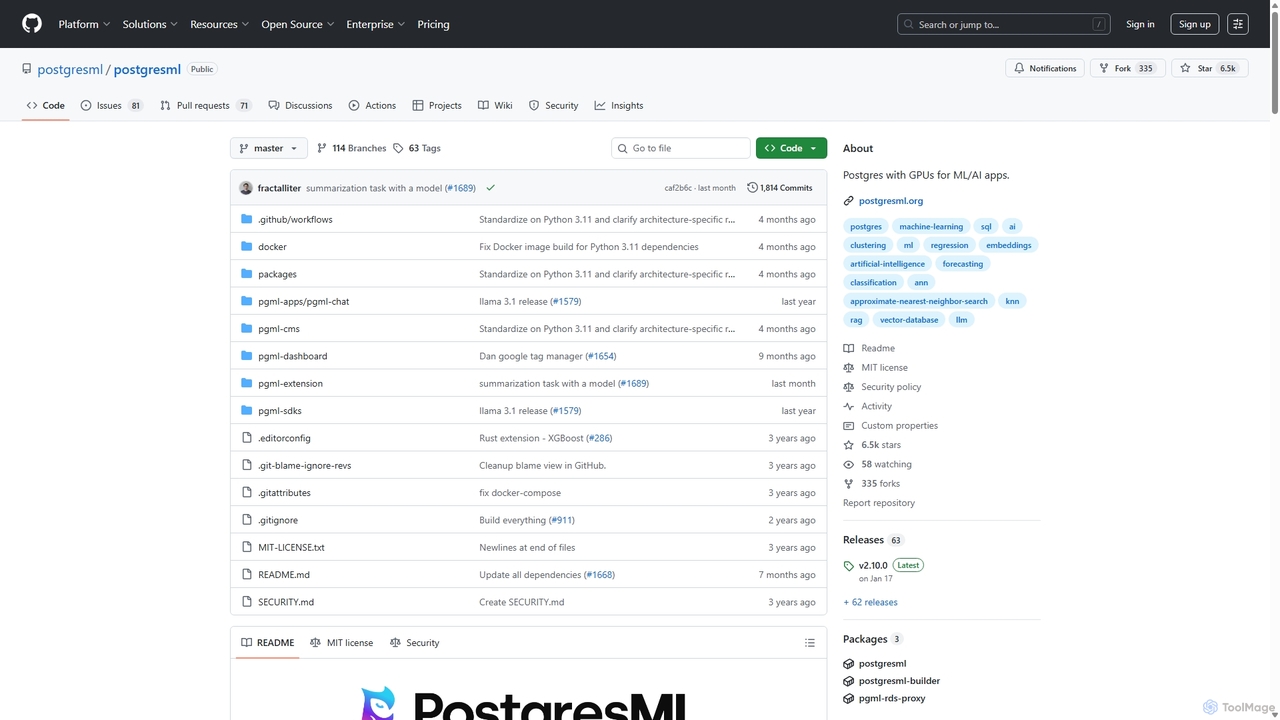
PostgresML
PostgresML is a powerful open-source extension that integrates machine learning and AI directly into your PostgreSQL database. It enables GPU-accelerated inference, vector search, and complete RAG pipelines using simple SQL commands, eliminating data movement and simplifying the MLOps stack for high-performance, scalable AI applications.
MlopsMindsDB
MindsDB is an open-source AI layer for databases, enabling developers to build, train, and deploy AI models and agents using standard SQL. It connects to hundreds of data sources, unifies structured and unstructured data into knowledge bases, and allows you to get AI-powered answers directly from your data without complex ETL pipelines.
Machine Learning
Pinecone
Pinecone is a high-performance, fully managed vector database designed for building knowledgeable AI applications at scale. It enables developers to implement advanced features like semantic search, retrieval-augmented generation (RAG), and personalized recommendations by efficiently storing and querying billions of vector embeddings in real-time.
Database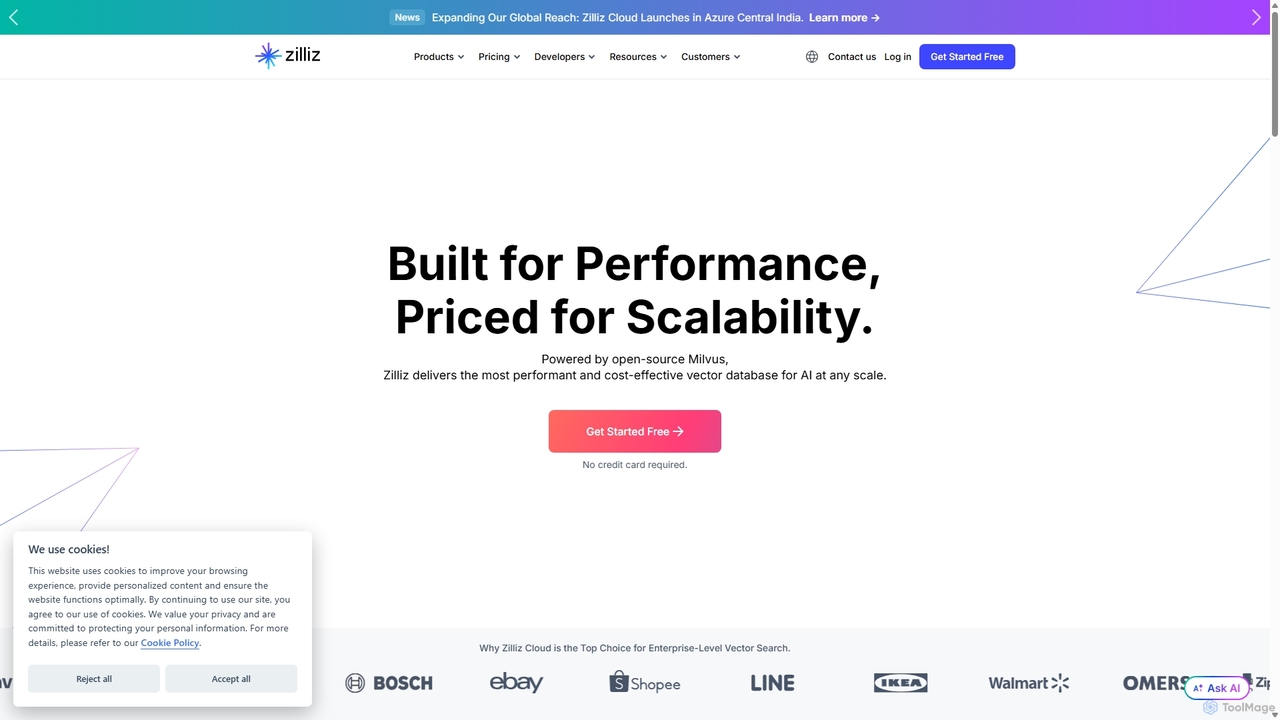
Zilliz
Zilliz is an enterprise-grade vector database built for scalable AI applications. Powered by the popular open-source project Milvus, it provides a high-performance, cost-effective, and fully-managed service (Zilliz Cloud) for storing, indexing, and searching billions of vector embeddings. It's designed to power applications like RAG, recommendation systems, and multimodal search, with seamless integrations into major AI frameworks and cloud platforms.
Machine Learning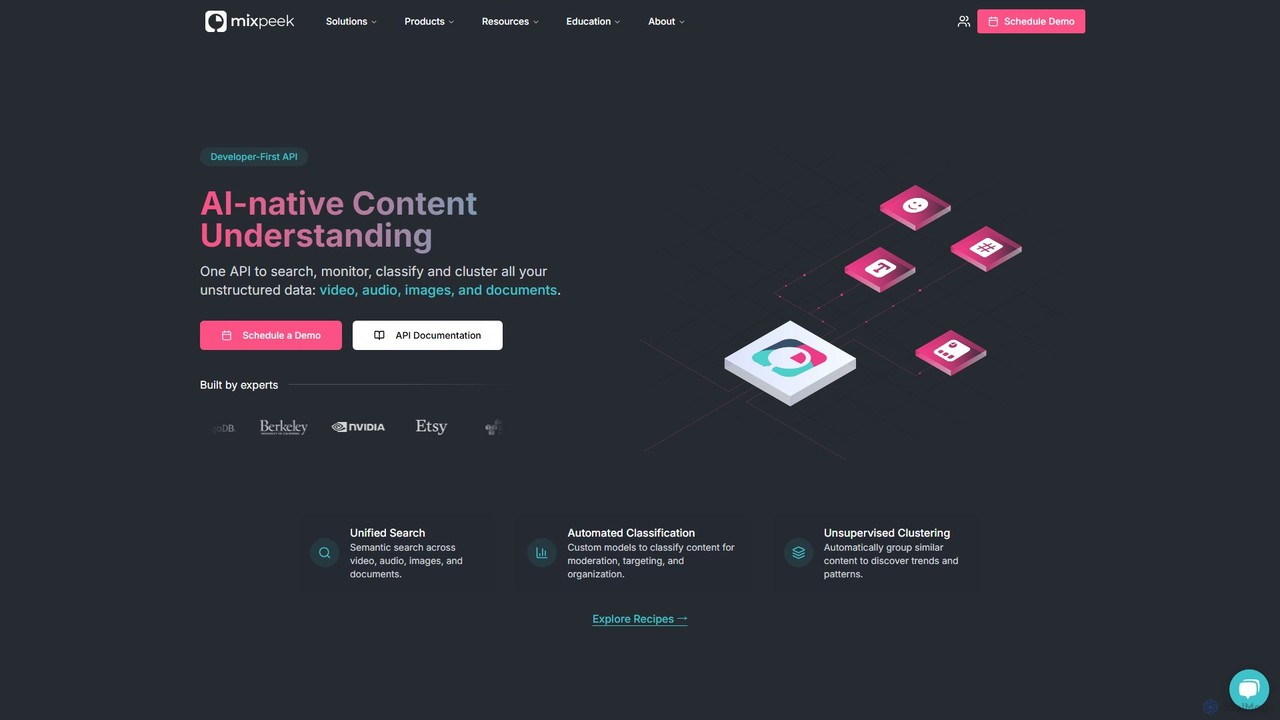
Mixpeek
Mixpeek is a developer-first API and multimodal data warehouse for processing, searching, and analyzing unstructured data like video, audio, images, and documents. It simplifies the AI/ML pipeline with unified semantic search, automated classification, and seamless model management, allowing developers to build powerful multimodal applications.
Machine Learning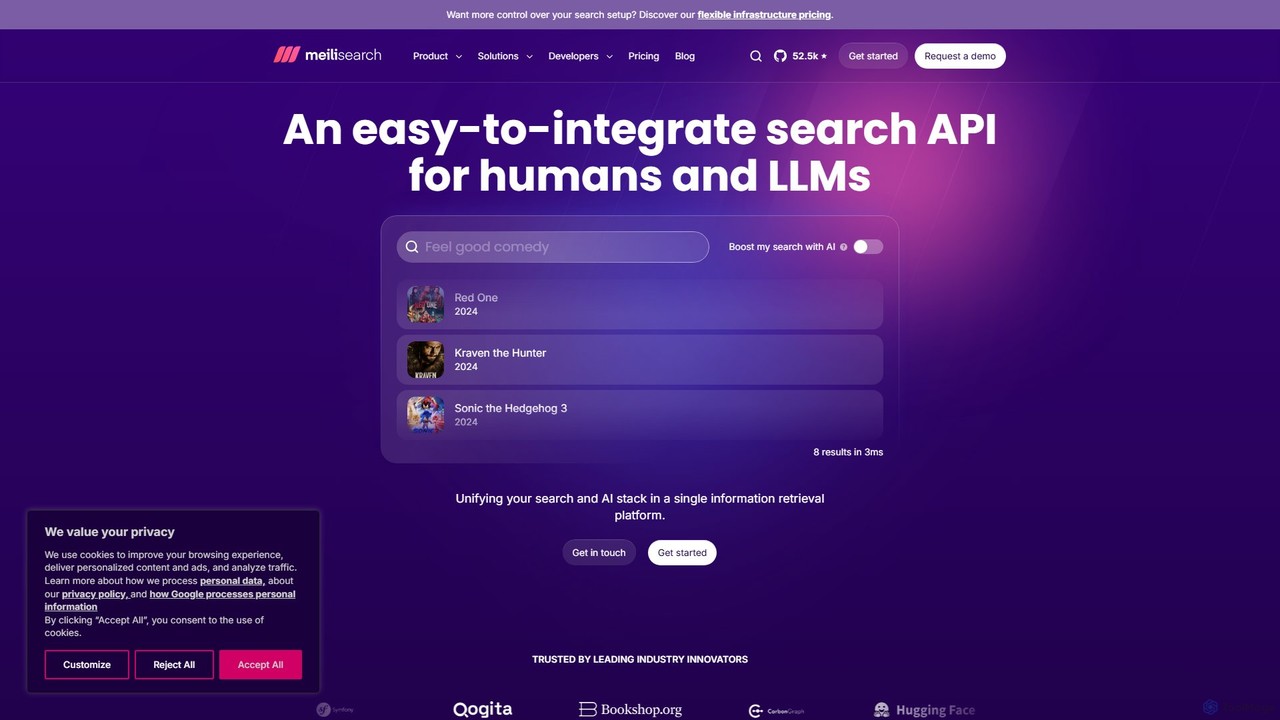
Meilisearch
Meilisearch is an open-source, lightning-fast, and AI-powered search engine. It's designed for developers to easily integrate advanced search capabilities, including full-text, semantic, and hybrid search, into any website or application. It offers an exceptional developer experience with powerful APIs and SDKs.
Database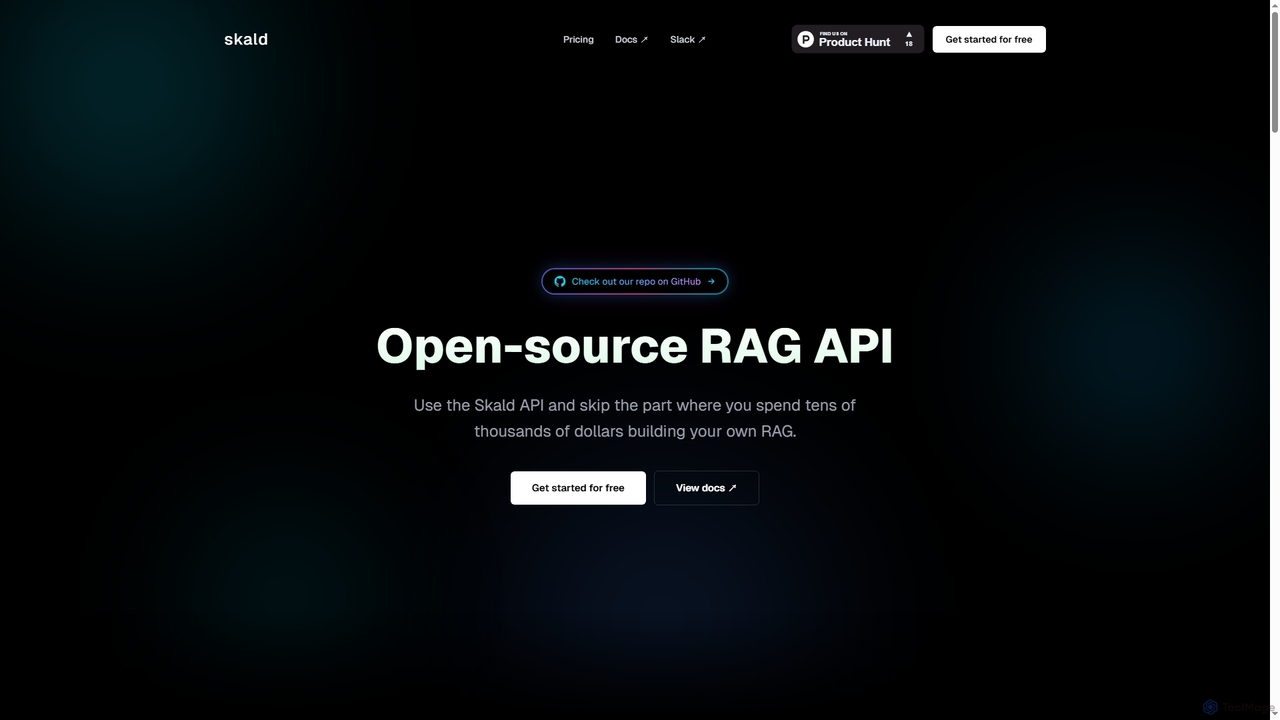
Skald
Skald is an open-source RAG API designed for developers to quickly build AI agents without the complexity of managing RAG infrastructure. It simplifies knowledge storage, context management, and semantic search, offering a powerful solution for integrating long-term memory into AI applications.
Rag
InfluxData
InfluxData offers InfluxDB, the leading time series database platform built for real-time data and AI applications. It empowers developers to ingest, store, and analyze massive volumes of high-velocity data from IoT, applications, and infrastructure. Featuring high-performance querying, superior data compression, and seamless integration with data lakes and AI/ML pipelines, InfluxData is the engine for anomaly detection, predictive maintenance, and autonomous systems.
Data Management
SurrealDB
SurrealDB is a next-generation, multi-model cloud database designed for modern applications. It simplifies backend development by unifying document, relational, graph, and time-series models with built-in full-text search, vector search, and in-database machine learning. Built for scalability and real-time data, it empowers developers to build complex, AI-powered applications with unprecedented ease and speed.
Vector Database
Jyek
Jyek is an AI agent platform that understands objectives, creates execution plans, uses tools, and delivers verifiable results for complex, multi-step tasks.
Automation
Milvus Comments (0)
Sign in to comment.
Sign inNo comments yet.