

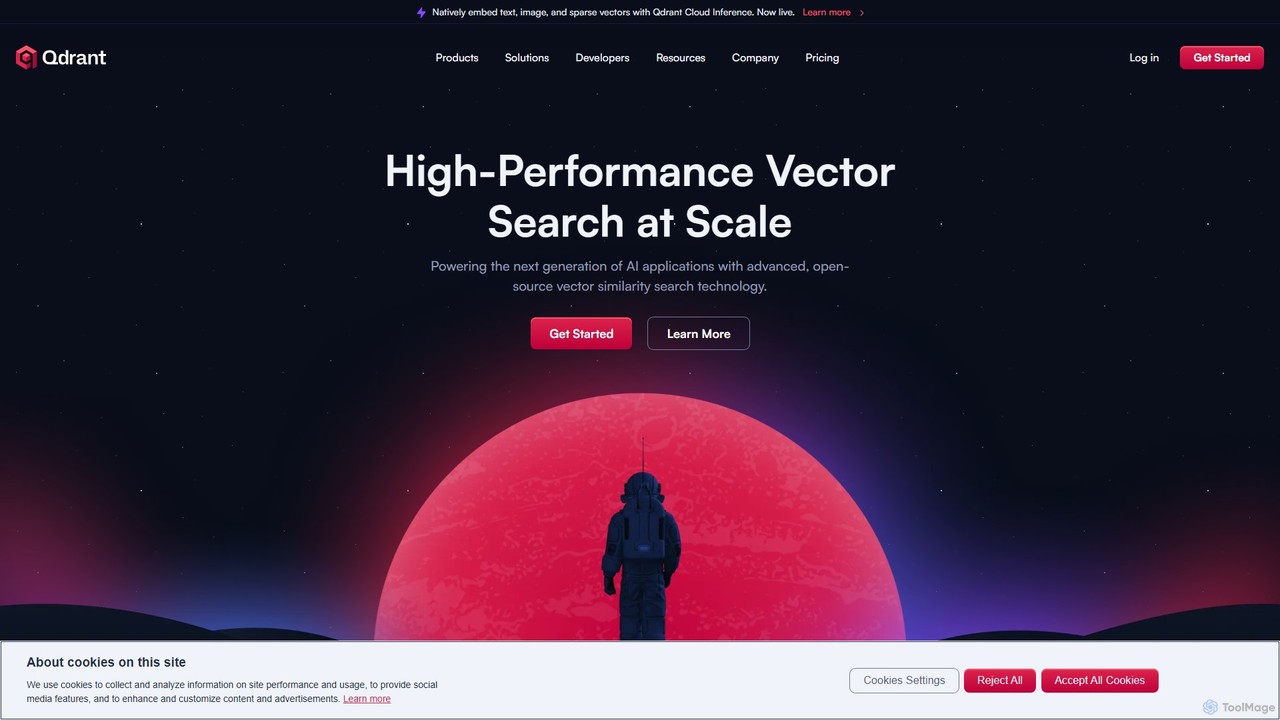
Qdrant Overview
Qdrant is a leading open-source vector database and similarity search engine specifically engineered for performance, scalability, and reliability in demanding AI applications. Written in Rust, it provides unmatched speed and memory safety, making it a foundational component for developers building solutions that rely on high-dimensional vector embeddings. Qdrant was created to address the need for a production-ready vector search tool that goes beyond simple libraries, offering a rich feature set for real-world use cases. It is trusted by top companies like Bosch, HubSpot, Bayer, and Cognizant to power their core AI functionalities.
How to use Qdrant
Getting started with Qdrant is straightforward, catering to both local development and large-scale cloud deployments.
- Deployment: For local testing or self-hosting, you can easily deploy Qdrant using Docker with a single command:
docker run -p 6333:6333 qdrant/qdrant. For production needs, Qdrant offers a fully managed, enterprise-grade Cloud service that handles scalability and high availability. - Integration: Qdrant provides intuitive client libraries for various programming languages, including Python, TypeScript/JavaScript, Go, Rust, Java, and C#. It also seamlessly integrates with popular AI frameworks like LangChain, LlamaIndex, and Haystack.
- Data Management: Users interact with Qdrant via its lean API. The typical workflow involves creating a 'collection' to store vectors, defining the vector size and distance metric (e.g., Cosine, Dot Product, Euclidean), and then uploading vectors along with optional JSON payloads for metadata.
- Searching: Once data is indexed, you can perform powerful similarity searches to find the nearest neighbors to a query vector. The API supports advanced filtering based on payload data, allowing for complex and precise queries.
- Optimization: For large datasets, you can enable quantization (Scalar, Product, or Binary) to significantly reduce memory usage and cost while maintaining high search performance and accuracy.
Core Features of Qdrant
- High-Performance Search: Built in Rust and leveraging modern CPU architectures (SIMD), Qdrant delivers extremely fast and accurate vector similarity search, even with billions of points.
- Advanced Filtering: Filter search results based on associated JSON payloads. Qdrant supports a wide range of conditions, including geo-queries, numerical ranges, full-text search, and more.
- Memory and Cost Efficiency: Features advanced quantization techniques (Scalar, Binary, Product) that can reduce memory footprint by up to 32x, drastically lowering operational costs without a significant drop in accuracy. It also supports on-disk storage for even larger datasets.
- Scalability and High Availability: Designed to be cloud-native, Qdrant can scale both vertically and horizontally. The managed Qdrant Cloud offers zero-downtime upgrades and enterprise-grade reliability.
- Rich Data Types: Store a variety of payload data alongside vectors, including text, numbers, booleans, and geographical coordinates.
- Open Source: Qdrant is an open-source project with a vibrant community, ensuring transparency, flexibility, and continuous improvement.
Use Cases for Qdrant
Qdrant's capabilities make it ideal for a wide range of AI-powered applications:
- Retrieval Augmented Generation (RAG): Enhance Large Language Models (LLMs) by providing them with relevant, up-to-date context retrieved from your private data, improving the accuracy and relevance of generated responses.
- Recommendation Systems: Build sophisticated recommendation engines that suggest products, content, or connections based on user behavior and item similarity in a high-dimensional space.
- Advanced Semantic Search: Move beyond keyword matching to create search systems that understand the meaning and context of queries, enabling search for images, audio, text, and other unstructured data.
- Data Analysis and Anomaly Detection: Identify patterns, clusters, and outliers in complex datasets by representing data points as vectors and searching for anomalies.
- AI Agents: Provide long-term memory for autonomous AI agents, allowing them to recall past interactions and information to make better decisions.
Advantages of Qdrant
Qdrant stands out in the vector database market due to several key advantages:
- Performance: Its Rust-based architecture ensures top-tier speed and resource efficiency.
- Cost-Effectiveness: Advanced quantization and on-disk storage options make it possible to manage massive datasets without proportionally massive hardware costs.
- Flexibility: Offers the choice between a free, self-hosted open-source version and a hassle-free, scalable managed cloud service.
- Developer Experience: A simple, well-documented API, easy deployment with Docker, and strong client library support make it easy to integrate into any project.
- Production-Ready: Built from the ground up with enterprise needs in mind, focusing on scalability, reliability, and advanced filtering capabilities that are crucial for real-world applications.
Pricing and Plans
Qdrant offers a flexible pricing model to suit different needs:
- Open Source: The core Qdrant engine is completely free and open-source. You can download, deploy, and manage it on your own infrastructure without any licensing fees. This is ideal for development, research, and users who require full control over their environment.
- Qdrant Cloud: A fully managed vector database service. It includes a generous free tier for getting started and for small-scale projects. For larger applications, it offers paid plans that scale based on resource consumption (e.g., cluster size, storage, RAM) and provide additional features like dedicated support, enhanced security, and automated backups. For detailed and up-to-date pricing, please visit the official Qdrant website.
Traffic
Latest traffic
Status
Monthly traffic trend
- 2025-9: 321.1K
- 2026-1: 363.4K
- 2026-2: 330.7K
- 2026-3: 354.7K
- 2026-4: 315.9K
- 2026-5: 300.2K
Geography
Top 5 countries / regions
- 🇮🇳India40.6%
- 🇺🇸United States22.1%
- 🇨🇳China18.4%
- 🇬🇧United Kingdom9.4%
- 🇩🇪Germany9.4%
Traffic sources
| Source type | Percentage |
|---|---|
Direct | 77.3% |
Referral | 20.4% |
Email | 2.3% |
Top keywords
| Keyword | Cost per click |
|---|---|
| ai | $0.43 |
| qdrant | $1.11 |
| qdrant cloud | $1.50 |
| qdrant vector database | $3.55 |
| quadrant | $0.89 |
Qdrant Videos on YouTube

Sami Sabir-Idrissi

Qdrant Vector Search

Aishwarya Srinivasan


Qdrant Vector Search
Qdrant Vector Search

Padho with Pratyush
Qdrant Alternatives
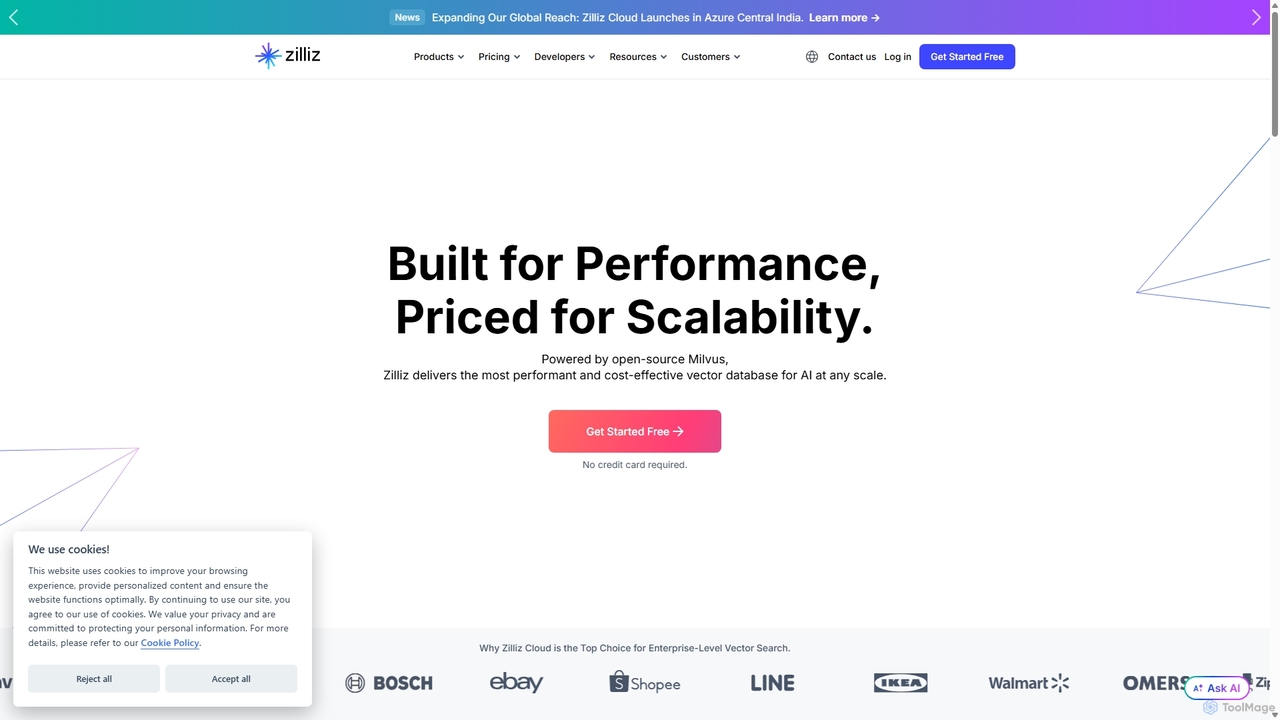
Zilliz
Zilliz is an enterprise-grade vector database built for scalable AI applications. Powered by the popular open-source project Milvus, it provides a high-performance, cost-effective, and fully-managed service (Zilliz Cloud) for storing, indexing, and searching billions of vector embeddings. It's designed to power applications like RAG, recommendation systems, and multimodal search, with seamless integrations into major AI frameworks and cloud platforms.
Machine Learning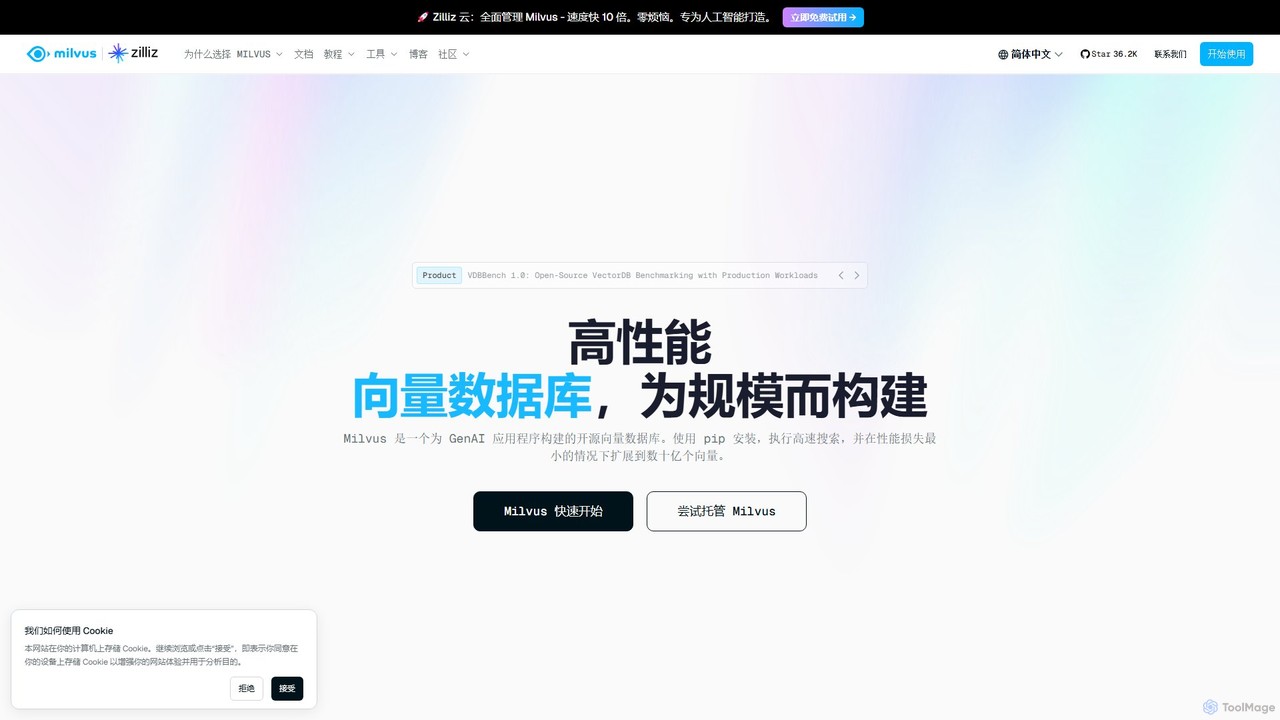
Milvus
Milvus is a high-performance, open-source vector database built for AI applications. It enables developers to manage and search through billions of high-dimensional vectors with minimal latency. Ideal for building scalable systems like retrieval-augmented generation (RAG), recommendation engines, and semantic search, Milvus offers flexible deployment options from local prototyping to large-scale distributed clusters.
Machine Learning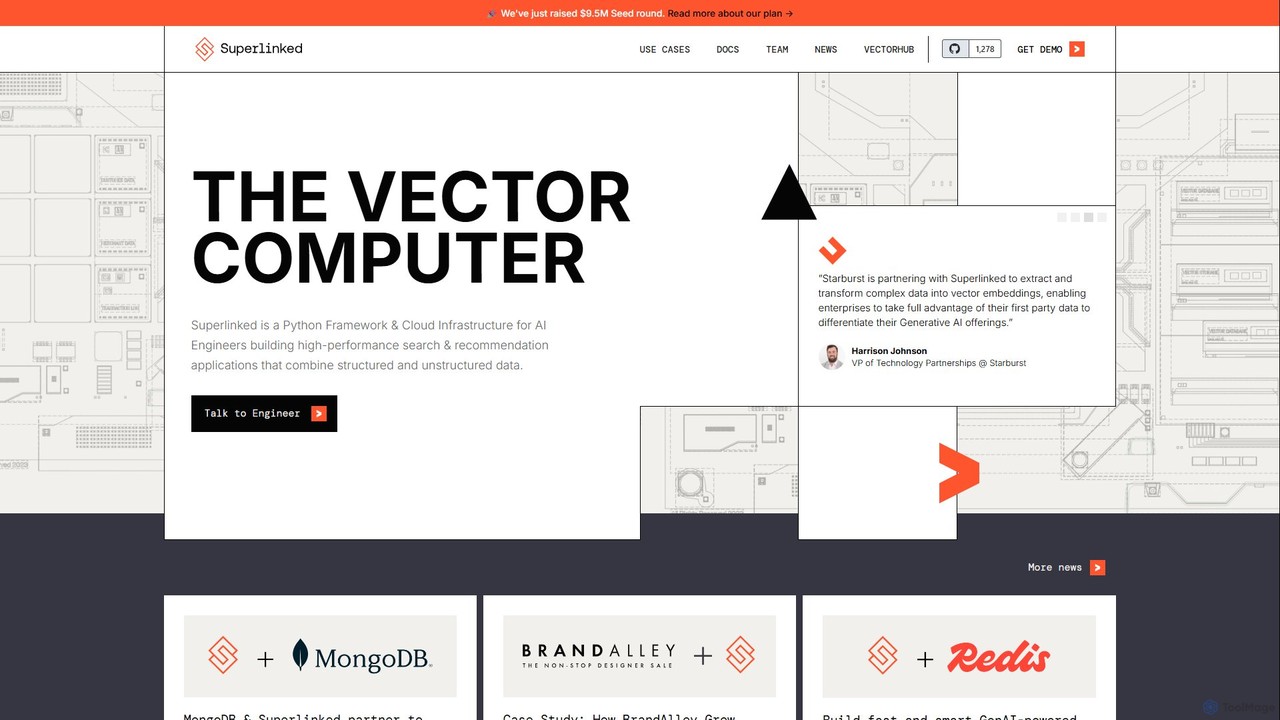
Superlinked
Superlinked is a Python framework and cloud infrastructure, known as The Vector Computer, designed for AI engineers. It enables the creation of high-performance search and recommendation applications by effectively combining structured and unstructured data into multi-modal vector embeddings.
Vector Search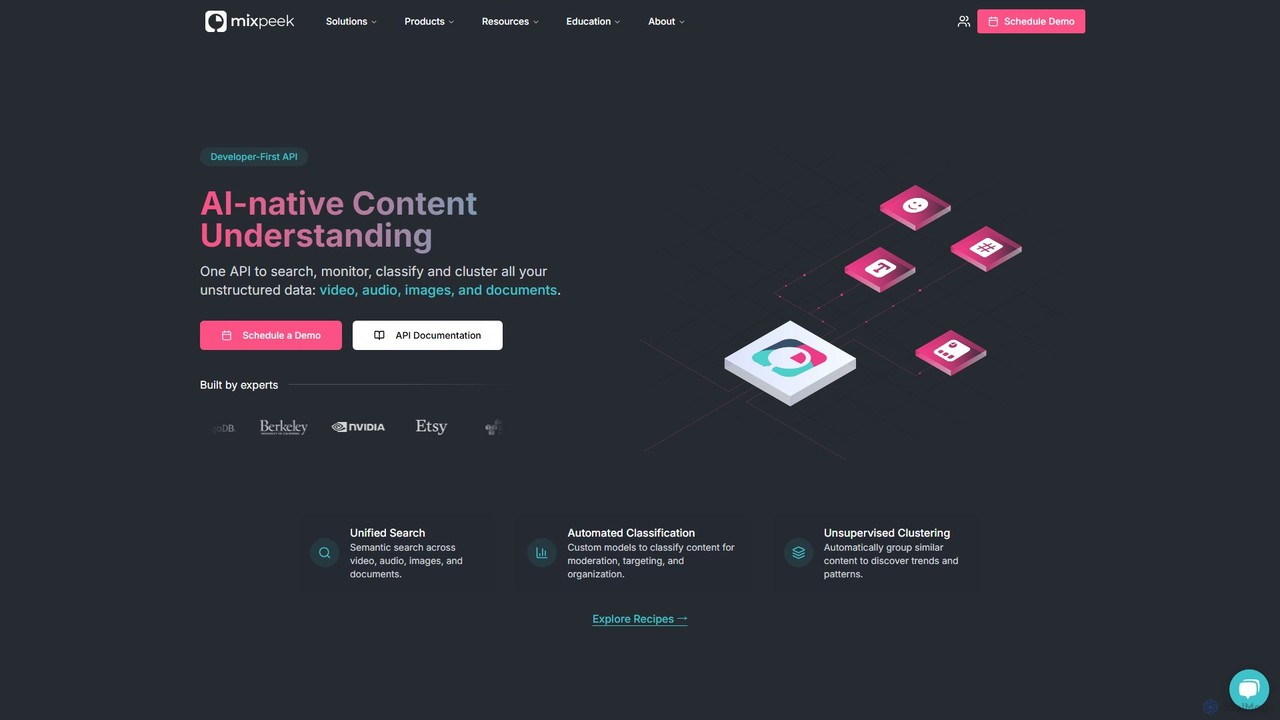
Mixpeek
Mixpeek is a developer-first API and multimodal data warehouse for processing, searching, and analyzing unstructured data like video, audio, images, and documents. It simplifies the AI/ML pipeline with unified semantic search, automated classification, and seamless model management, allowing developers to build powerful multimodal applications.
Machine Learning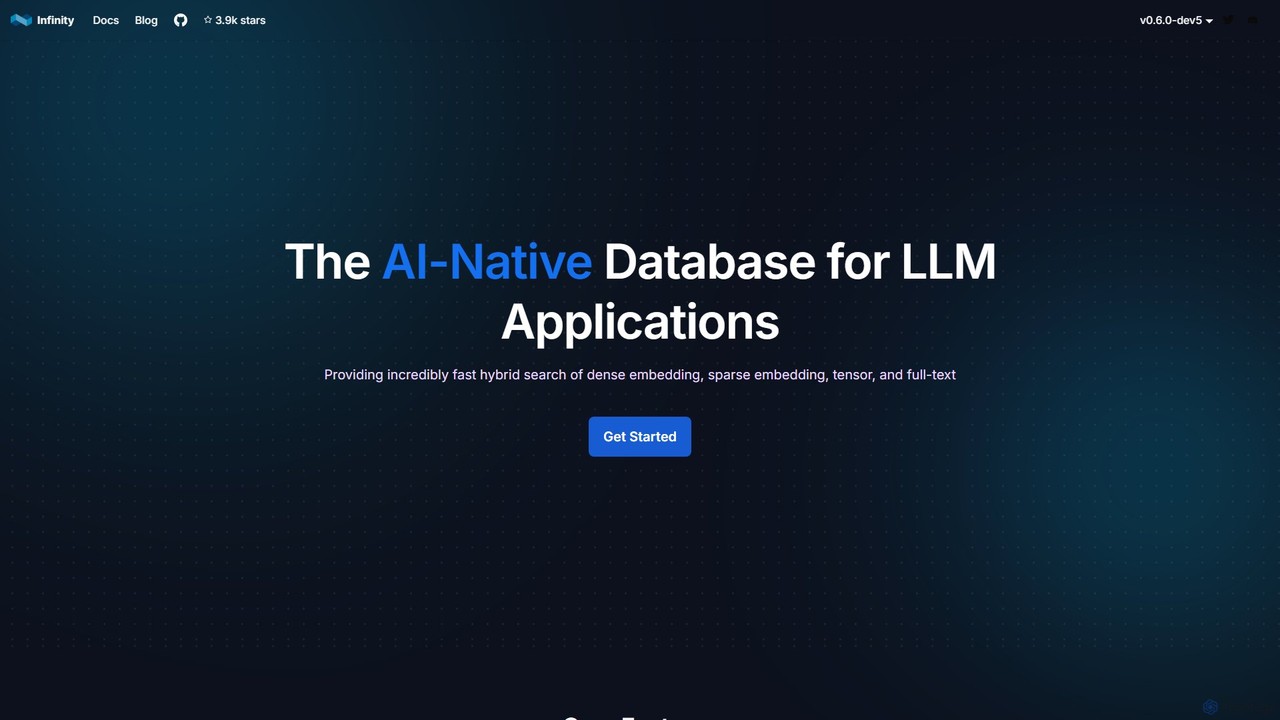
infiniflow
infiniflow is a high-performance, open-source, AI-native database specifically designed for LLM applications. It offers incredibly fast vector search, powerful hybrid search capabilities (vector, full-text, tensor), and simplified deployment. With an intuitive Python API, it's built to power demanding AI tasks like Retrieval-Augmented Generation (RAG) and semantic search with millisecond latency.
Vector SearchQdrant Categories
Qdrant Embed Widget
Copy this embed code to place the badge on your blog, article, or product site and send readers directly to this ToolMage detail page.

Related AI tools
Milvus
Milvus is a high-performance, open-source vector database built for AI applications. It enables developers to manage and search through billions of high-dimensional vectors with minimal latency. Ideal for building scalable systems like retrieval-augmented generation (RAG), recommendation engines, and semantic search, Milvus offers flexible deployment options from local prototyping to large-scale distributed clusters.
Machine LearningZilliz
Zilliz is an enterprise-grade vector database built for scalable AI applications. Powered by the popular open-source project Milvus, it provides a high-performance, cost-effective, and fully-managed service (Zilliz Cloud) for storing, indexing, and searching billions of vector embeddings. It's designed to power applications like RAG, recommendation systems, and multimodal search, with seamless integrations into major AI frameworks and cloud platforms.
Machine Learning
LanceDB
LanceDB is an open-source, AI-native multimodal lakehouse designed for building and scaling AI applications. It provides a unified platform for storing, searching, and managing complex data like text, images, voice, and vectors. Ideal for RAG, semantic search, and model training, LanceDB offers blazing-fast hybrid search, massive scalability to petabytes, and significant cost savings, making it a powerful foundation for enterprise-grade AI.
Vector DatabaseSuperlinked
Superlinked is a Python framework and cloud infrastructure, known as The Vector Computer, designed for AI engineers. It enables the creation of high-performance search and recommendation applications by effectively combining structured and unstructured data into multi-modal vector embeddings.
Vector SearchMixpeek
Mixpeek is a developer-first API and multimodal data warehouse for processing, searching, and analyzing unstructured data like video, audio, images, and documents. It simplifies the AI/ML pipeline with unified semantic search, automated classification, and seamless model management, allowing developers to build powerful multimodal applications.
Machine Learning
Jyek
Jyek is an AI agent platform that understands objectives, creates execution plans, uses tools, and delivers verifiable results for complex, multi-step tasks.
Automationinfiniflow
infiniflow is a high-performance, open-source, AI-native database specifically designed for LLM applications. It offers incredibly fast vector search, powerful hybrid search capabilities (vector, full-text, tensor), and simplified deployment. With an intuitive Python API, it's built to power demanding AI tasks like Retrieval-Augmented Generation (RAG) and semantic search with millisecond latency.
Vector Search
SvectorDB
SvectorDB is a serverless vector database designed for developers. It simplifies building AI applications like recommendation engines, semantic search, and RAG systems with pay-per-request pricing, instant updates, and built-in vectorizers. Go from prototype to production with just a few lines of code.
Vector Search
Pinecone
Pinecone is a high-performance, fully managed vector database designed for building knowledgeable AI applications at scale. It enables developers to implement advanced features like semantic search, retrieval-augmented generation (RAG), and personalized recommendations by efficiently storing and querying billions of vector embeddings in real-time.
Database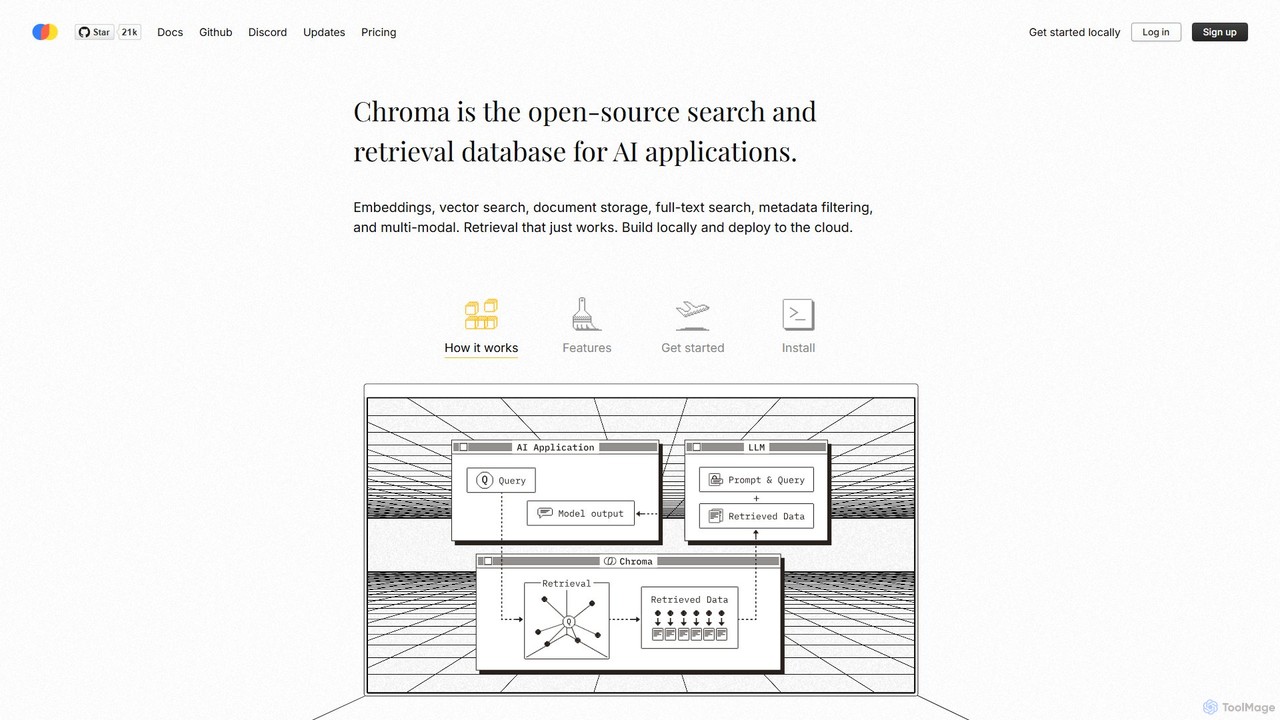
Chroma
Chroma is the open-source, AI-native retrieval database designed for building powerful AI applications with Retrieval-Augmented Generation (RAG). It simplifies storing and searching embeddings, documents, and metadata, offering vector search, full-text search, and a scalable, serverless cloud platform. It's built to be easy to use, cost-effective, and powerful, from local development to large-scale production.
Vector Database
Weaviate
Weaviate is an open-source, AI-native vector database designed for developers. It enables scalable, low-latency vector, keyword, and hybrid search. Ideal for building AI applications like semantic search, recommendation engines, and Retrieval-Augmented Generation (RAG) systems, it integrates seamlessly with popular machine learning models to store and query data based on semantic meaning.
Vector Database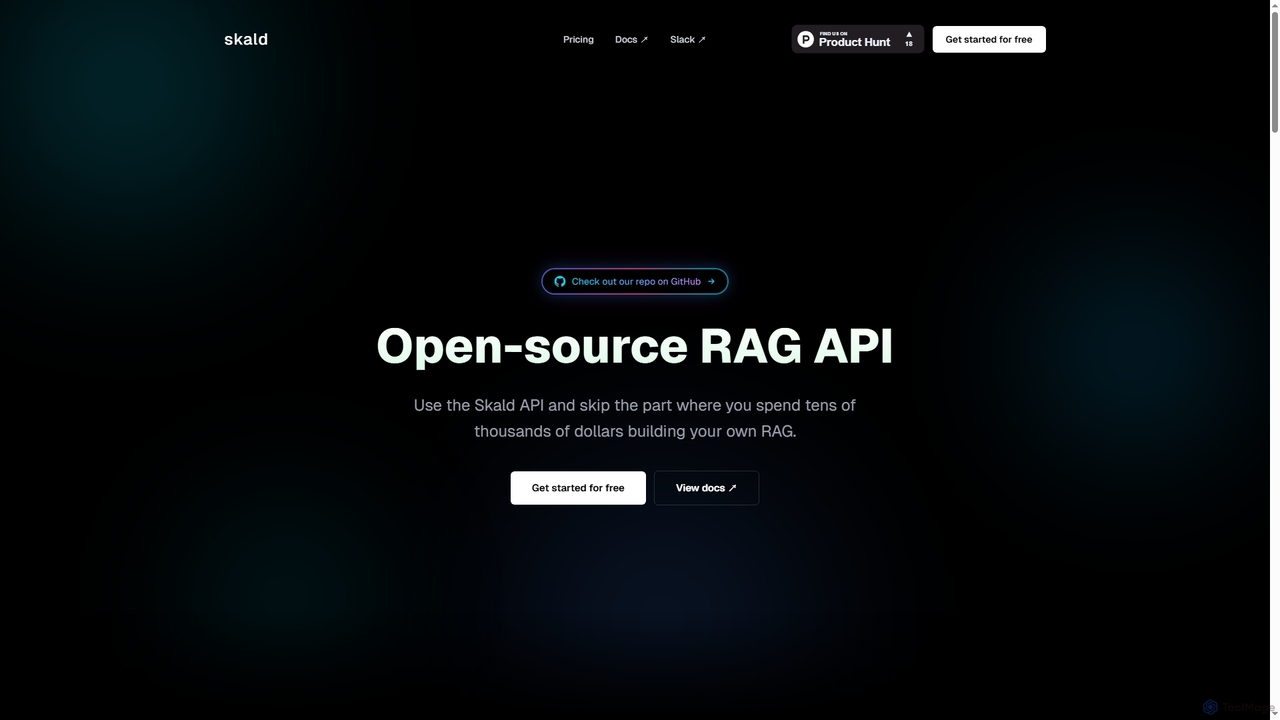
Skald
Skald is an open-source RAG API designed for developers to quickly build AI agents without the complexity of managing RAG infrastructure. It simplifies knowledge storage, context management, and semantic search, offering a powerful solution for integrating long-term memory into AI applications.
Rag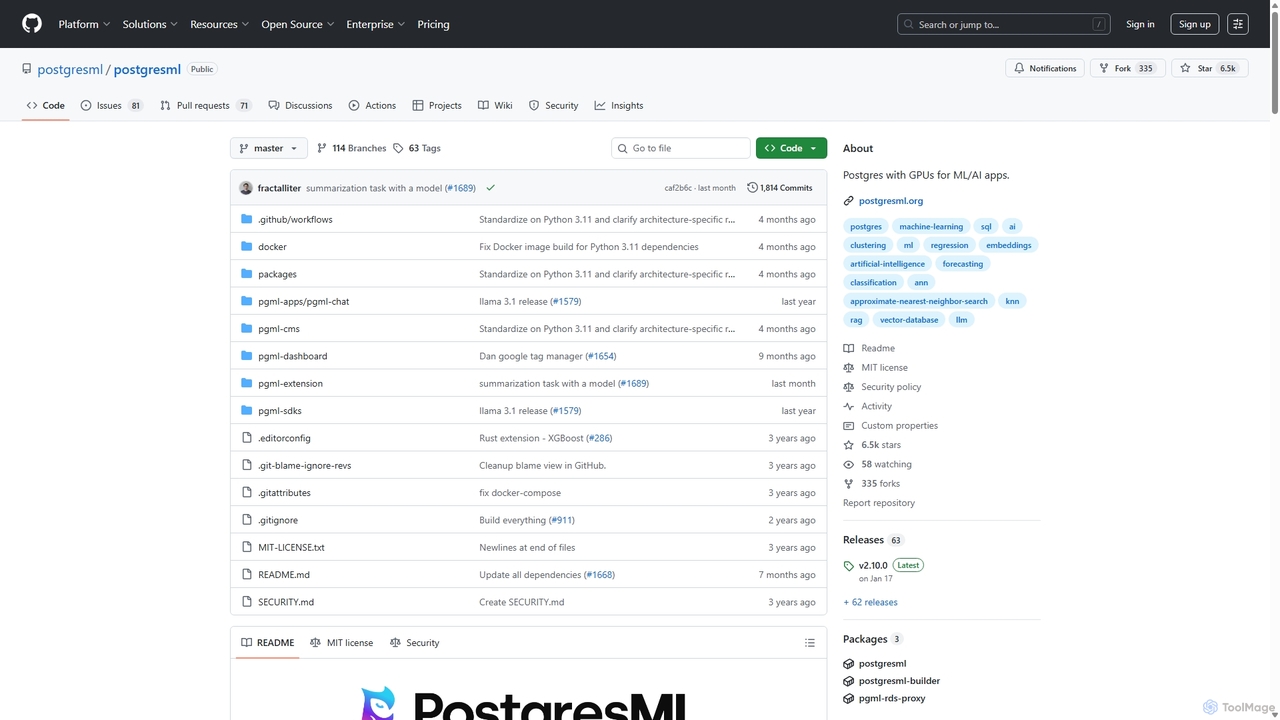
PostgresML
PostgresML is a powerful open-source extension that integrates machine learning and AI directly into your PostgreSQL database. It enables GPU-accelerated inference, vector search, and complete RAG pipelines using simple SQL commands, eliminating data movement and simplifying the MLOps stack for high-performance, scalable AI applications.
Mlops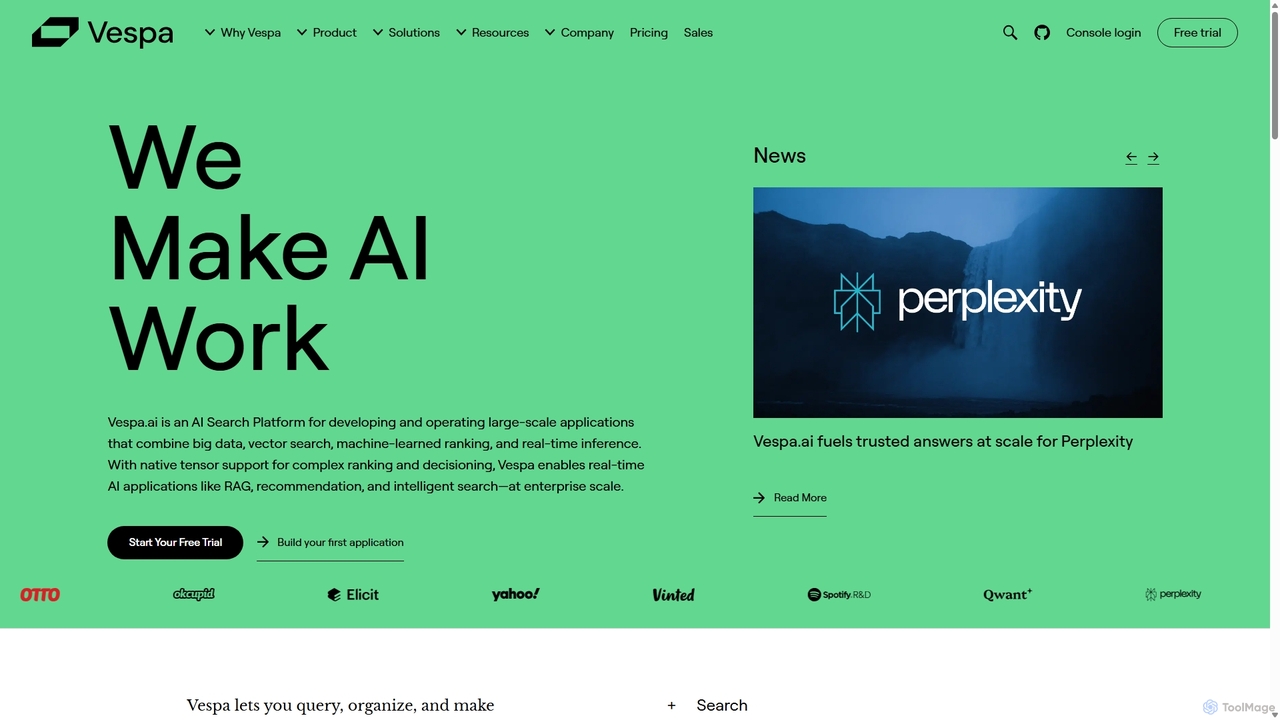
Vespa.ai
Vespa.ai is a high-performance AI search platform for building large-scale applications. It unifies vector search, text search, and machine-learned ranking to power advanced use cases like Retrieval-Augmented Generation (RAG), recommendation engines, and intelligent search. Designed for real-time inference and scalability, it's trusted by leading companies like Spotify and Perplexity to handle massive datasets with low latency.
Search
Eventual
Eventual is building the future of data infrastructure with Daft, a high-performance, open-source query engine for multimodal data. It enables engineers to process petabyte-scale images, video, audio, and text with the simplicity of SQL, drastically accelerating AI and ML workflows without the need for deep distributed systems expertise.
Machine Learning
Qdrant Comments (0)
Sign in to comment.
Sign inNo comments yet.