
infiniflow Overview
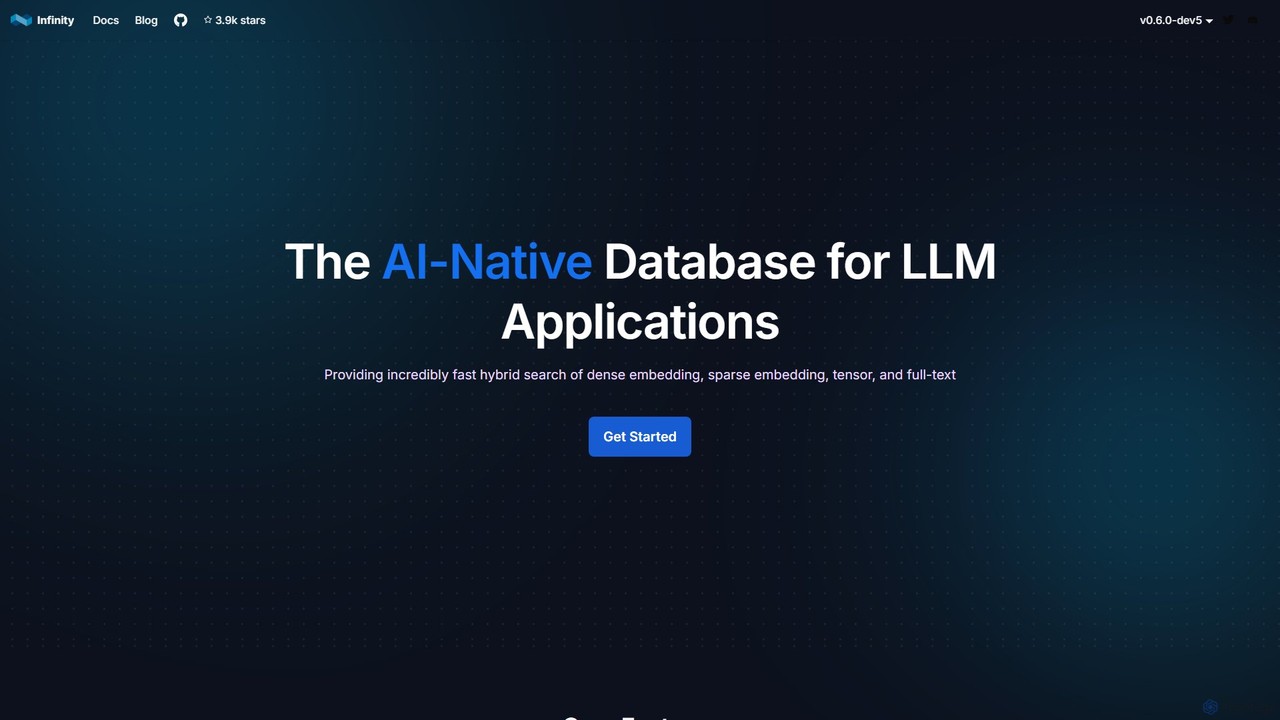
infiniflow provides the Infinity database, an open-source, AI-native database engineered from the ground up to meet the demands of modern Large Language Model (LLM) applications. It is designed to provide top-tier performance, flexibility, and ease of use, enabling developers to build sophisticated AI systems without the complexity of managing traditional databases. As a specialized vector database, its core strength lies in storing, indexing, and querying high-dimensional data like embeddings, which are fundamental to AI tasks such as semantic search and Retrieval-Augmented Generation (RAG).
The architecture of infiniflow is focused on simplicity and speed. It operates as a single binary with no external dependencies, which dramatically simplifies the deployment process. Whether you're embedding it directly into a Python application or running it as a standalone server via Docker, getting started is straightforward. This makes it an ideal choice for both rapid prototyping and scalable production environments.
How to use infiniflow
Using infiniflow involves a few simple steps, primarily through its Python SDK. Here’s a general workflow:
- Prerequisites: Ensure your system meets the requirements: an x86_64 CPU with AVX2 support, a compatible OS (Linux, Windows with WSL, or macOS), and Python 3.10+.
- Deployment: Choose your deployment method. You can run the Infinity server using Docker for a client-server architecture, deploy it directly from a binary, or embed it into your Python application using the `infinity-embedded-sdk` for a serverless experience. For Docker, you can pull the image and run it with a single command.
- Installation: Install the Python client library using pip:
pip install infinity-sdk. - Connect and Operate:
- Connect to your Infinity instance using the Python API.
- Create a database and define a table with a specific schema, including columns for standard data types (integers, strings) and specialized types like vectors (e.g., `vector, 1024, float`).
- Insert your data, including the vector embeddings generated from your content.
- Perform queries. You can execute dense vector searches (`match_dense`), full-text searches, or powerful hybrid searches that combine both to achieve more relevant results. - Integrate: Use the retrieved results in your LLM application, for example, to provide context to a language model for a RAG pipeline.
Core Features of infiniflow
- Incredibly Fast Performance: Achieves query latencies as low as 0.1 milliseconds on million-scale vector datasets and supports up to 15,000 queries per second (QPS).
- Powerful Hybrid Search: Supports a combination of dense embedding, sparse embedding, tensor, and full-text search, along with robust filtering capabilities.
- Advanced Reranking: Includes built-in support for multiple reranking algorithms like Reciprocal Rank Fusion (RRF), weighted sum, and ColBERT to improve search result relevance.
- Rich Data Type Support: Natively handles a wide range of data types, including strings, numerics (integer, float), and multi-dimensional vectors, providing flexibility for complex data models.
- Ease-of-Use: Features an intuitive Python API that simplifies database operations and a single-binary, dependency-free architecture for hassle-free deployment.
Use Cases for infiniflow
infiniflow is ideal for a variety of AI-driven applications:
- Retrieval-Augmented Generation (RAG): Serve as the high-speed knowledge base for LLMs, retrieving relevant documents or data chunks to ground the model's responses in factual information and reduce hallucinations.
- Semantic Search Engines: Build search systems that understand the meaning and context of user queries, going beyond simple keyword matching to deliver more accurate results.
- AI-Powered Q&A and Chatbots: Power conversational AI by quickly searching a vast knowledge base to find the most relevant information to answer user questions.
- Recommendation Systems: Find and recommend similar items (products, articles, music) by comparing their vector embeddings in real-time.
Advantages of infiniflow
The primary advantages of infiniflow stem from its specialized design:
- Performance-Optimized: Built specifically for the low-latency, high-throughput needs of AI applications.
- Developer-Friendly: The simple API and easy deployment process reduce development time and operational overhead.
- Flexible and Versatile: Hybrid search and rich data type support allow it to be used for a wide range of tasks, not just vector similarity search.
- Open Source: Being an open-source project, it is free to use, transparent, and benefits from community contributions and support via platforms like GitHub and Discord.
Pricing and Plans
infiniflow is an open-source project and is completely free to use. You can download, deploy, and modify the software without any licensing fees. Support is provided through its community channels, including GitHub for issue tracking and contributions, and a Discord server for discussions and help.
Traffic
Latest traffic
Status
Monthly traffic trend
- 2025-9: 6.5K
- 2026-1: 4.9K
- 2026-2: 2.2K
- 2026-3: 3.4K
- 2026-4: 2.5K
- 2026-5: 2.8K
Geography
Top 5 countries / regions
- 🇺🇸United States67.6%
- 🇮🇳India32.4%
Top keywords
| Keyword | Cost per click |
|---|---|
| infiniflow | $0.00 |
| infinisynapse | $0.00 |
| infinite数据库 | $0.00 |
| infinity ai api | $0.00 |
| infinity flow configurations | $0.00 |
infiniflow Alternatives
Weaviate
Weaviate is an open-source, AI-native vector database designed for developers. It enables scalable, low-latency vector, keyword, and hybrid search. Ideal for building AI applications like semantic search, recommendation engines, and Retrieval-Augmented Generation (RAG) systems, it integrates seamlessly with popular machine learning models to store and query data based on semantic meaning.
Vector Database
SvectorDB
SvectorDB is a serverless vector database designed for developers. It simplifies building AI applications like recommendation engines, semantic search, and RAG systems with pay-per-request pricing, instant updates, and built-in vectorizers. Go from prototype to production with just a few lines of code.
Vector Search
Milvus
Milvus is a high-performance, open-source vector database built for AI applications. It enables developers to manage and search through billions of high-dimensional vectors with minimal latency. Ideal for building scalable systems like retrieval-augmented generation (RAG), recommendation engines, and semantic search, Milvus offers flexible deployment options from local prototyping to large-scale distributed clusters.
Machine Learning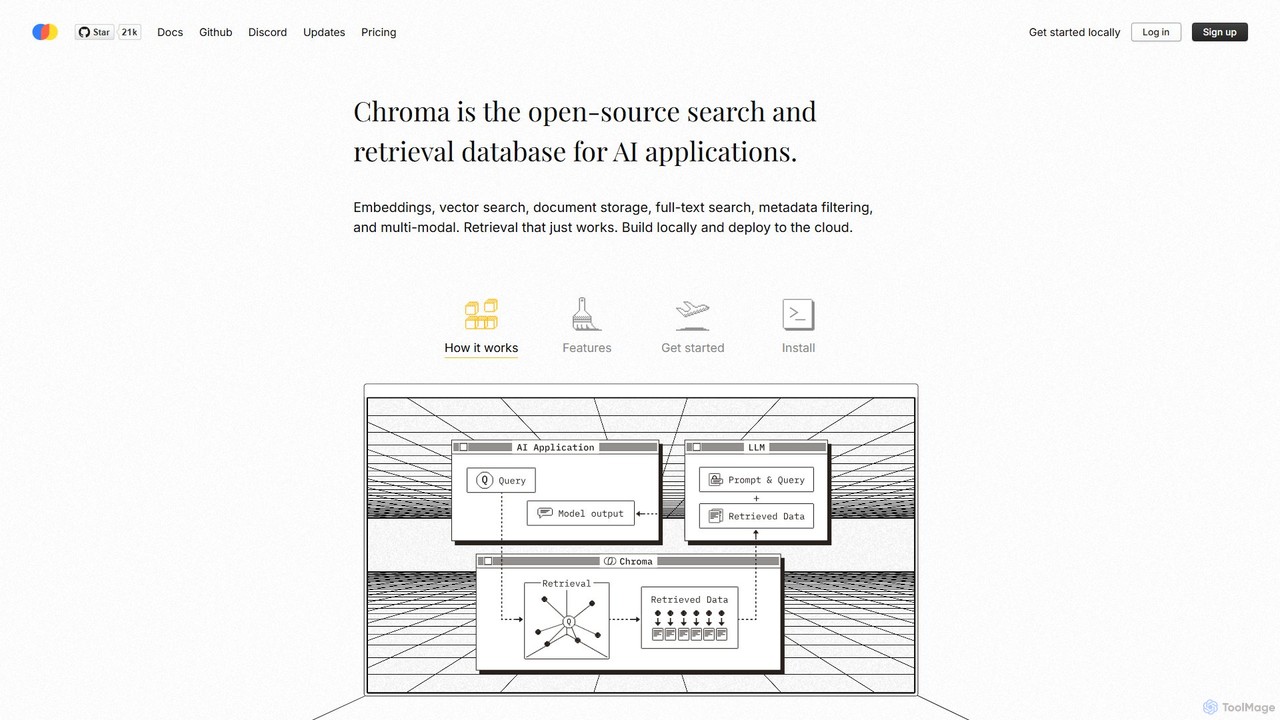
Chroma
Chroma is the open-source, AI-native retrieval database designed for building powerful AI applications with Retrieval-Augmented Generation (RAG). It simplifies storing and searching embeddings, documents, and metadata, offering vector search, full-text search, and a scalable, serverless cloud platform. It's built to be easy to use, cost-effective, and powerful, from local development to large-scale production.
Vector Database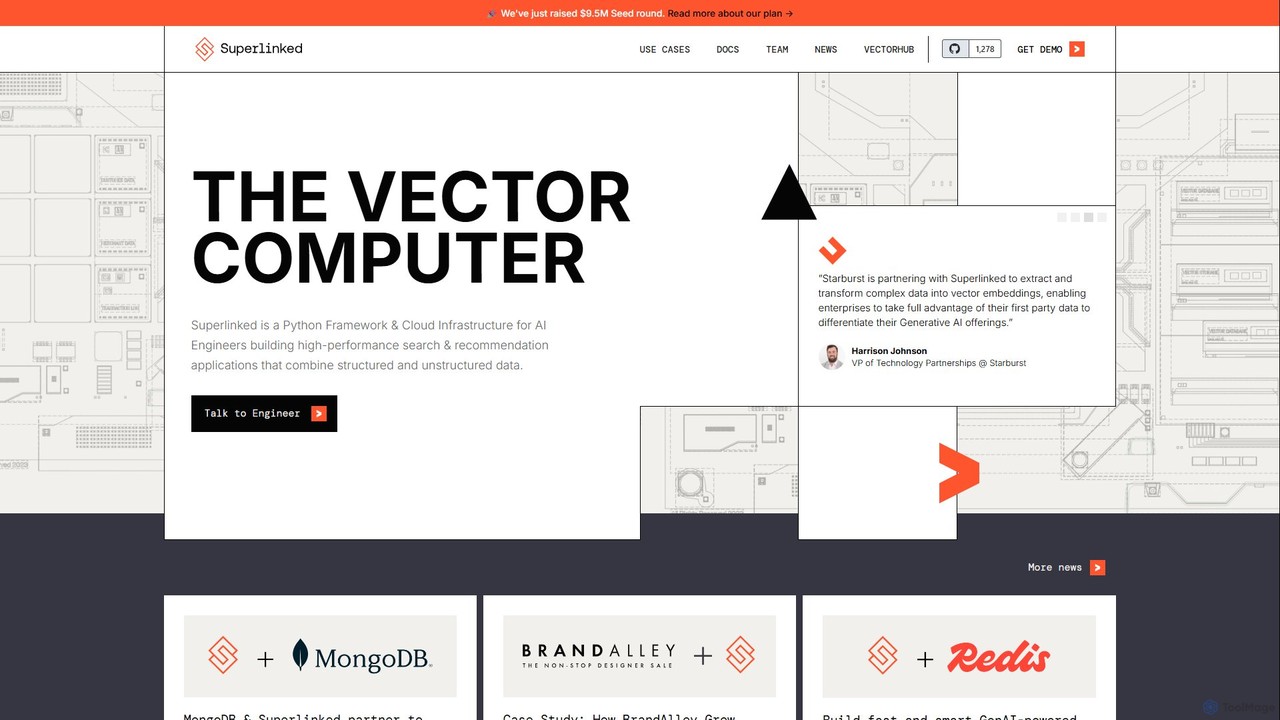
Superlinked
Superlinked is a Python framework and cloud infrastructure, known as The Vector Computer, designed for AI engineers. It enables the creation of high-performance search and recommendation applications by effectively combining structured and unstructured data into multi-modal vector embeddings.
Vector Searchinfiniflow Categories
infiniflow Embed Widget
Copy this embed code to place the badge on your blog, article, or product site and send readers directly to this ToolMage detail page.

Related AI tools
Weaviate
Weaviate is an open-source, AI-native vector database designed for developers. It enables scalable, low-latency vector, keyword, and hybrid search. Ideal for building AI applications like semantic search, recommendation engines, and Retrieval-Augmented Generation (RAG) systems, it integrates seamlessly with popular machine learning models to store and query data based on semantic meaning.
Vector DatabaseMilvus
Milvus is a high-performance, open-source vector database built for AI applications. It enables developers to manage and search through billions of high-dimensional vectors with minimal latency. Ideal for building scalable systems like retrieval-augmented generation (RAG), recommendation engines, and semantic search, Milvus offers flexible deployment options from local prototyping to large-scale distributed clusters.
Machine LearningChroma
Chroma is the open-source, AI-native retrieval database designed for building powerful AI applications with Retrieval-Augmented Generation (RAG). It simplifies storing and searching embeddings, documents, and metadata, offering vector search, full-text search, and a scalable, serverless cloud platform. It's built to be easy to use, cost-effective, and powerful, from local development to large-scale production.
Vector Database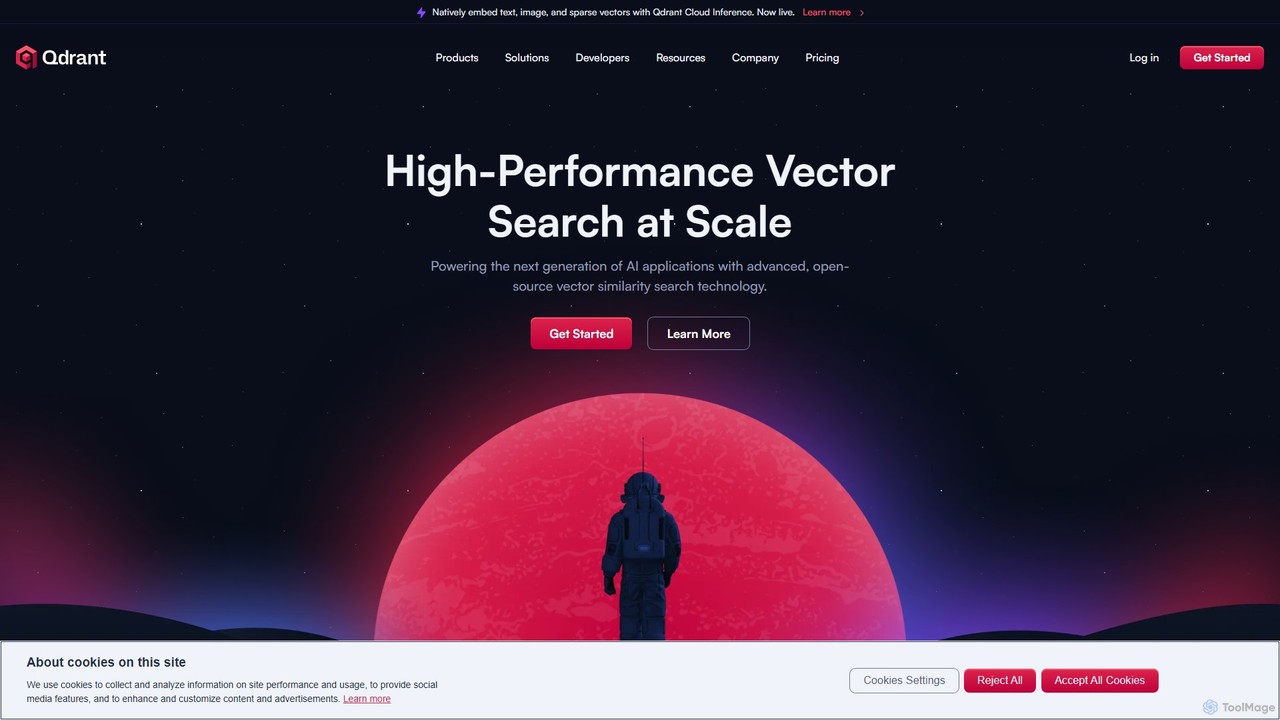
Qdrant
Qdrant is a high-performance, open-source vector database and similarity search engine built in Rust. It's designed to power next-generation AI applications by efficiently managing and searching billions of high-dimensional vectors. With advanced features like rich filtering, payload storage, and various quantization methods, Qdrant enables developers to build scalable and cost-effective solutions for semantic search, recommendation systems, and Retrieval Augmented Generation (RAG).
Vector Search
Jyek
Jyek is an AI agent platform that understands objectives, creates execution plans, uses tools, and delivers verifiable results for complex, multi-step tasks.
Automation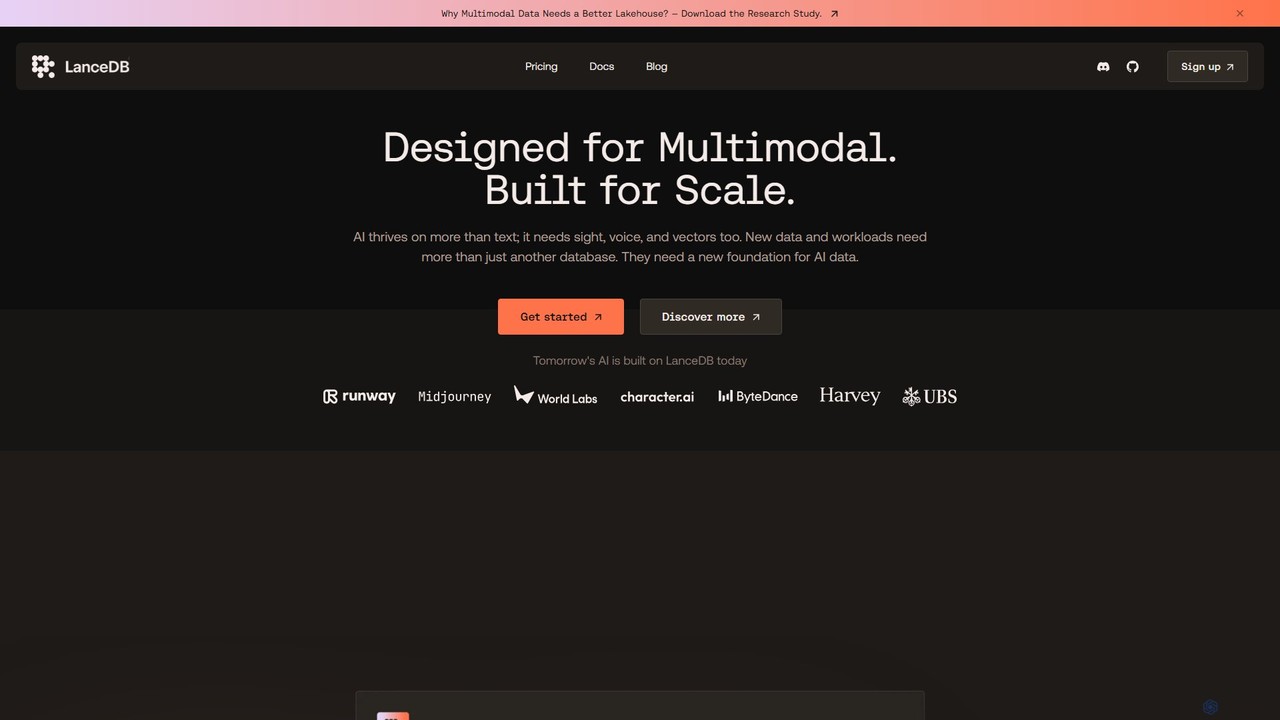
LanceDB
LanceDB is an open-source, AI-native multimodal lakehouse designed for building and scaling AI applications. It provides a unified platform for storing, searching, and managing complex data like text, images, voice, and vectors. Ideal for RAG, semantic search, and model training, LanceDB offers blazing-fast hybrid search, massive scalability to petabytes, and significant cost savings, making it a powerful foundation for enterprise-grade AI.
Vector Database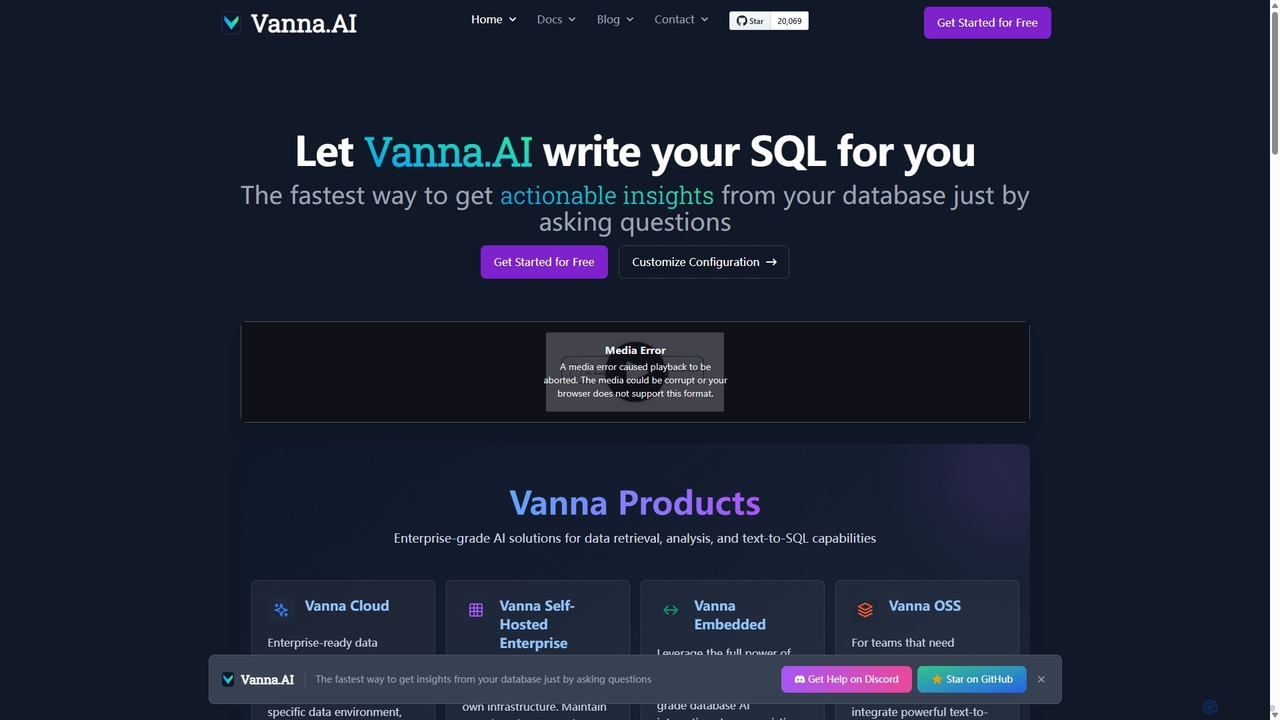
Vanna.AI
Vanna.AI is an open-source, personalized AI SQL agent that transforms natural language questions into accurate SQL queries. It uses a Retrieval-Augmented Generation (RAG) model trained on your specific database schema, documentation, and past queries to achieve high accuracy on complex datasets. It's designed for security, flexibility, and easy integration into any application, empowering both technical and non-technical users to gain insights from their data effortlessly.
Business Intelligence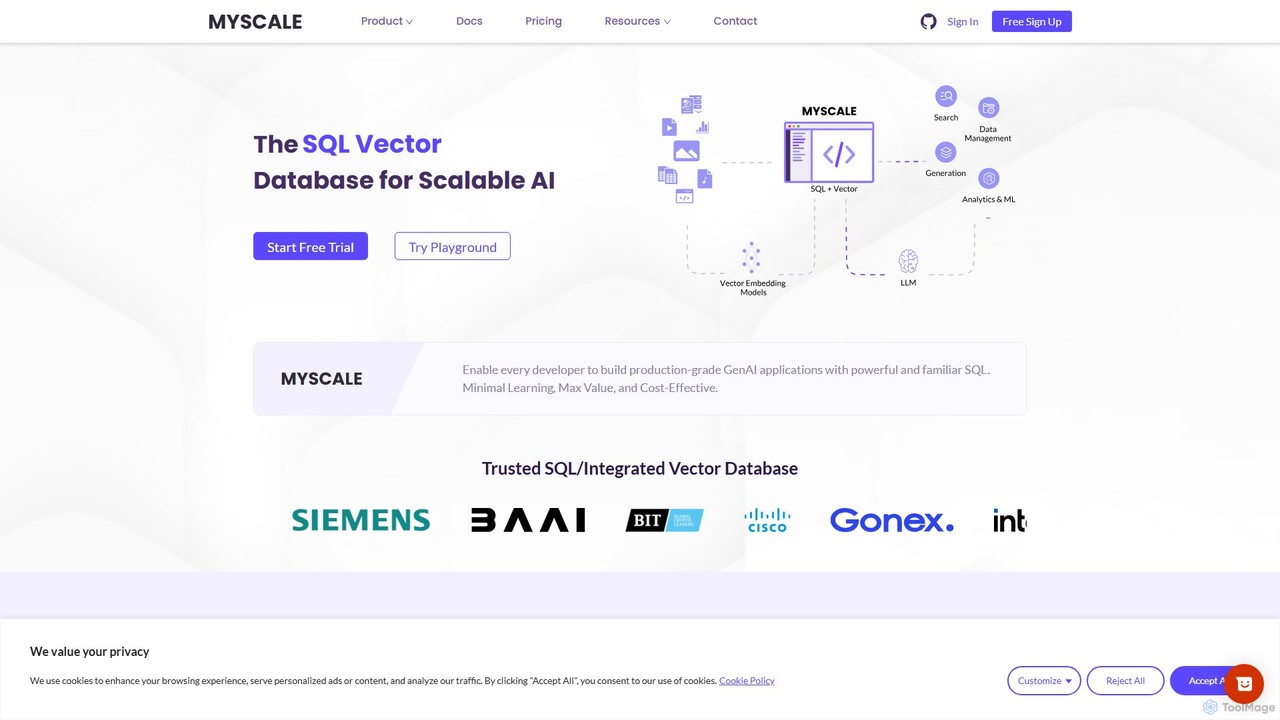
MyScale
MyScale is a high-performance vector database that uniquely combines vector search with the power of SQL. It's designed for building advanced AI applications like RAG, semantic search, and recommendation systems, simplifying the tech stack by allowing developers to run hybrid queries on vectors and structured data using a single, familiar interface.
Vector Database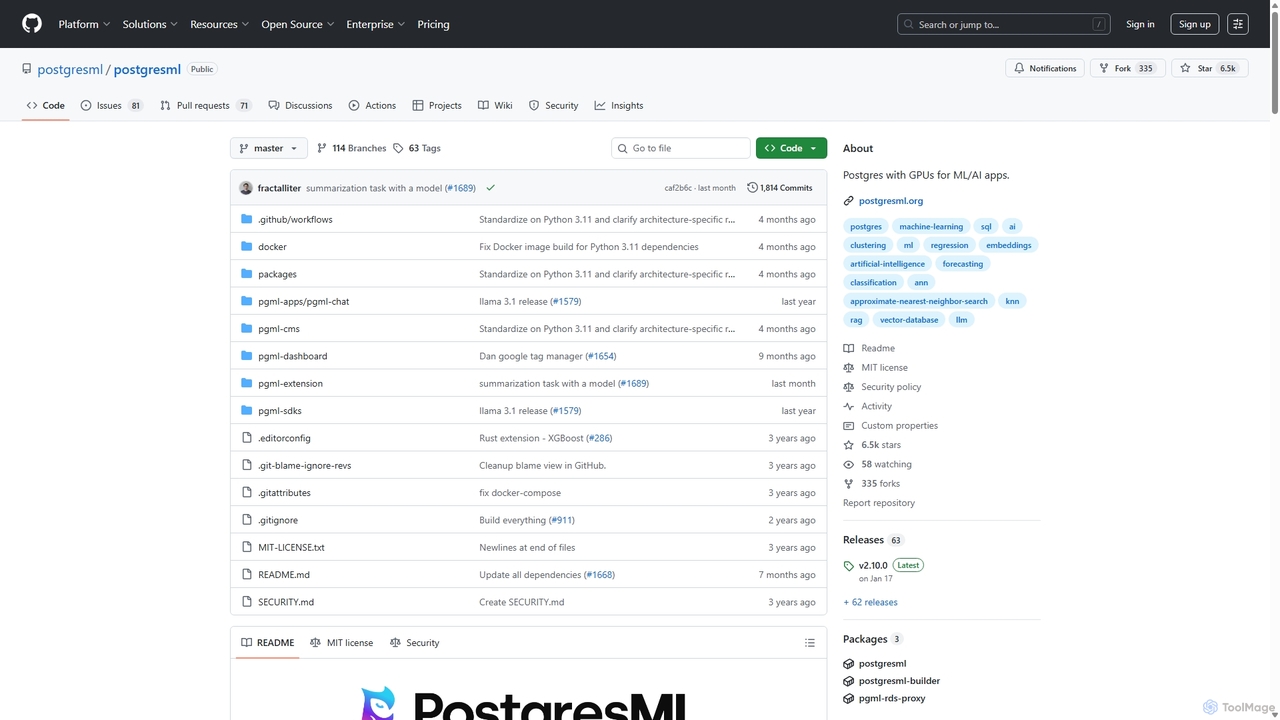
PostgresML
PostgresML is a powerful open-source extension that integrates machine learning and AI directly into your PostgreSQL database. It enables GPU-accelerated inference, vector search, and complete RAG pipelines using simple SQL commands, eliminating data movement and simplifying the MLOps stack for high-performance, scalable AI applications.
Mlops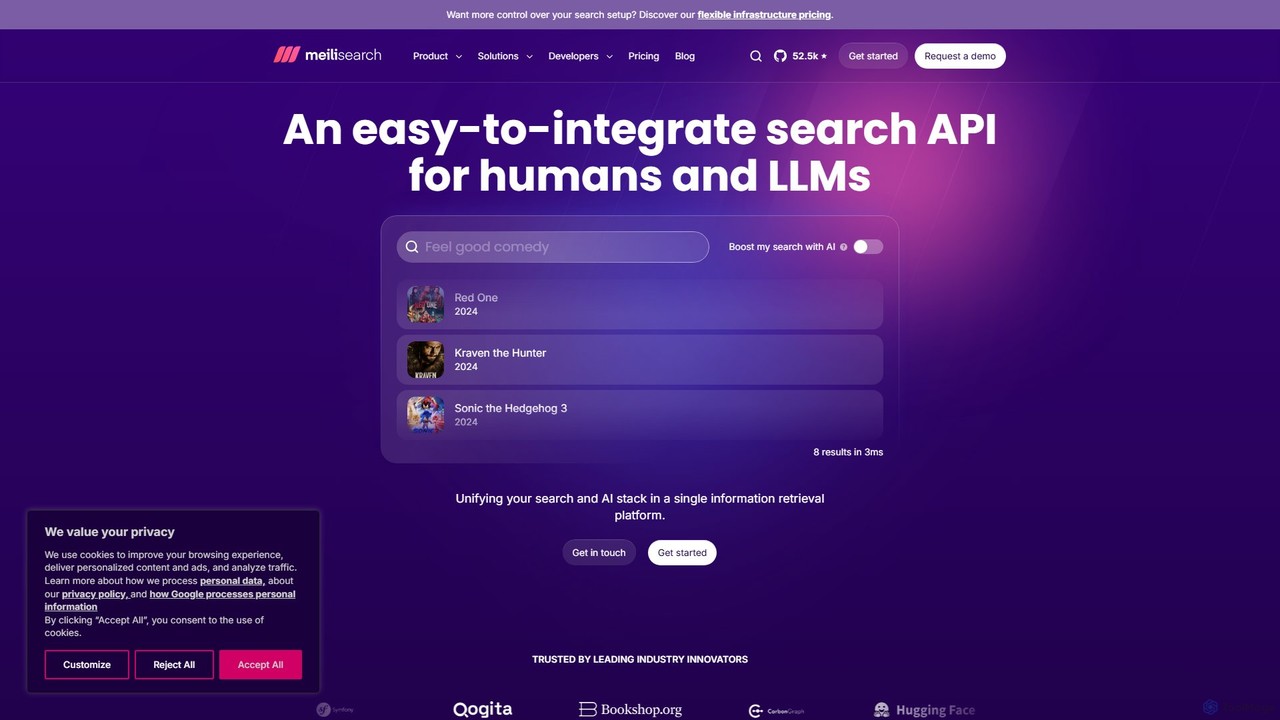
Meilisearch
Meilisearch is an open-source, lightning-fast, and AI-powered search engine. It's designed for developers to easily integrate advanced search capabilities, including full-text, semantic, and hybrid search, into any website or application. It offers an exceptional developer experience with powerful APIs and SDKs.
Database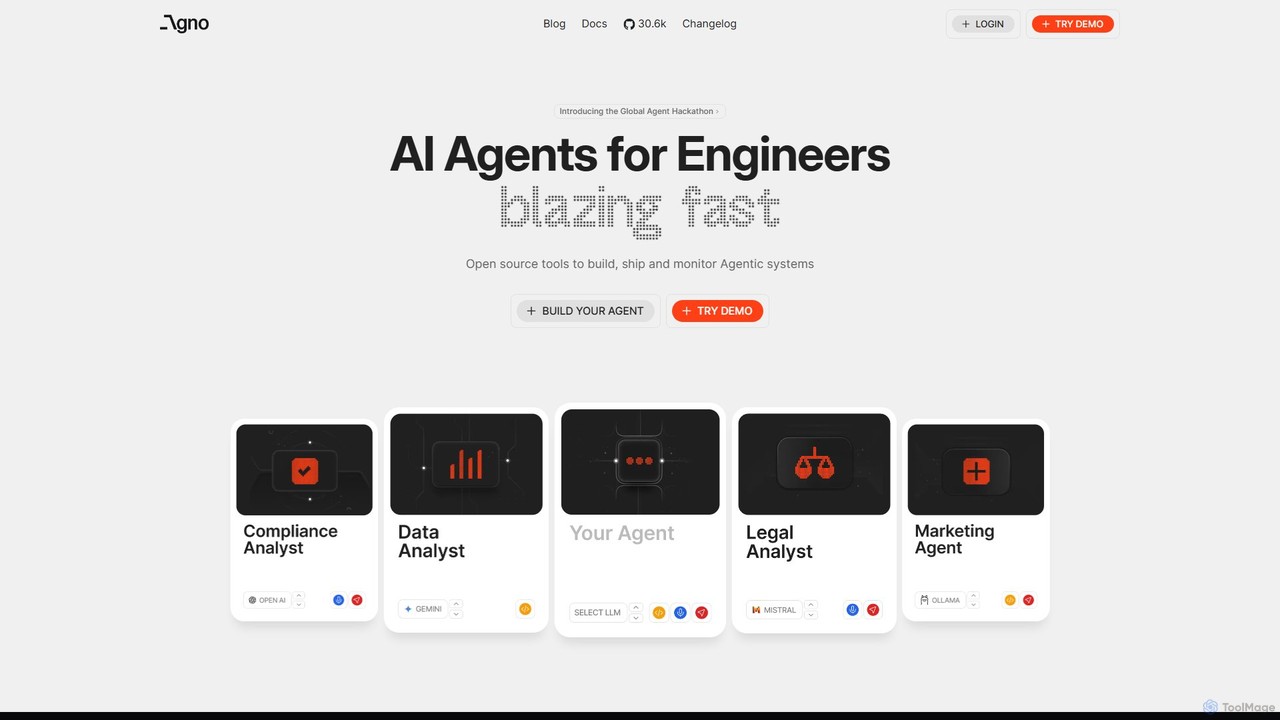
phidata
phidata is an open-source Python framework for building autonomous AI Assistants. It simplifies the integration of LLMs with memory, knowledge bases, and external tools, enabling developers to create powerful, stateful AI applications with ease.
Frameworks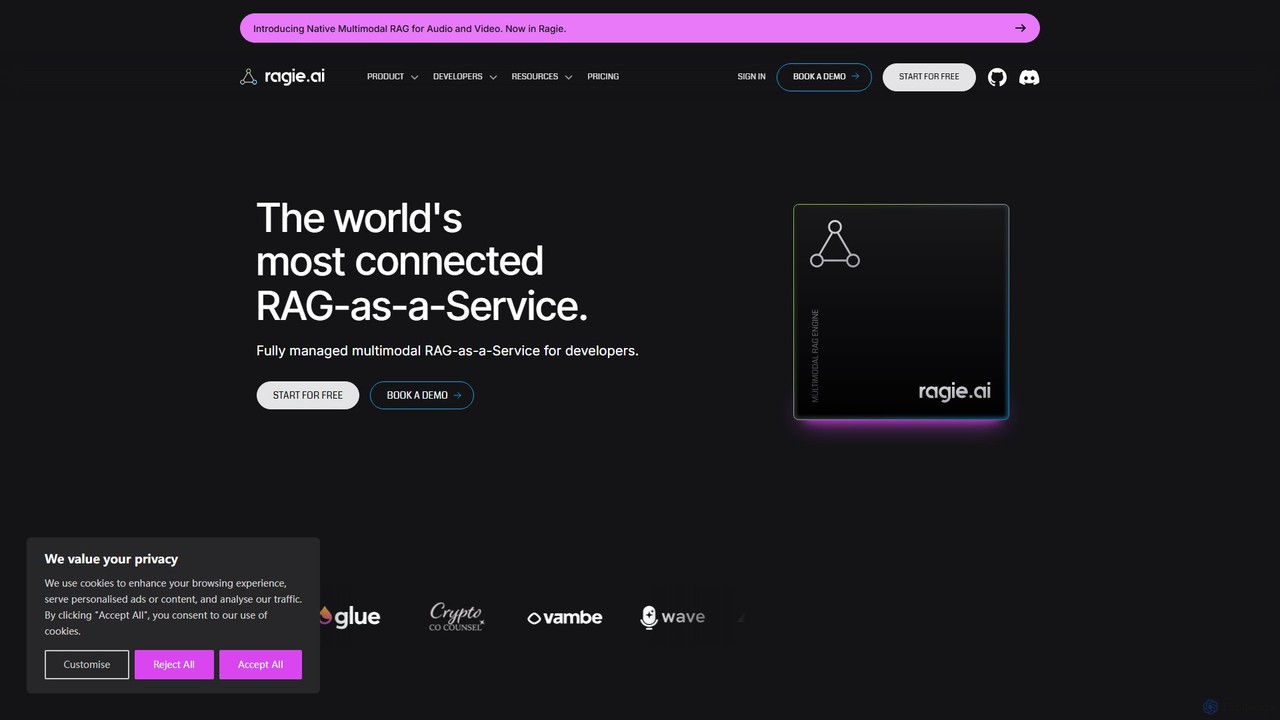
ragie
Ragie is a fully managed RAG-as-a-Service platform designed for developers. It simplifies the process of building and deploying AI applications by handling the entire Retrieval-Augmented Generation pipeline. Connect your data sources, and use a simple API to power accurate, context-aware chatbots, semantic search, and knowledge management systems without the complexity of managing infrastructure.
Machine Learning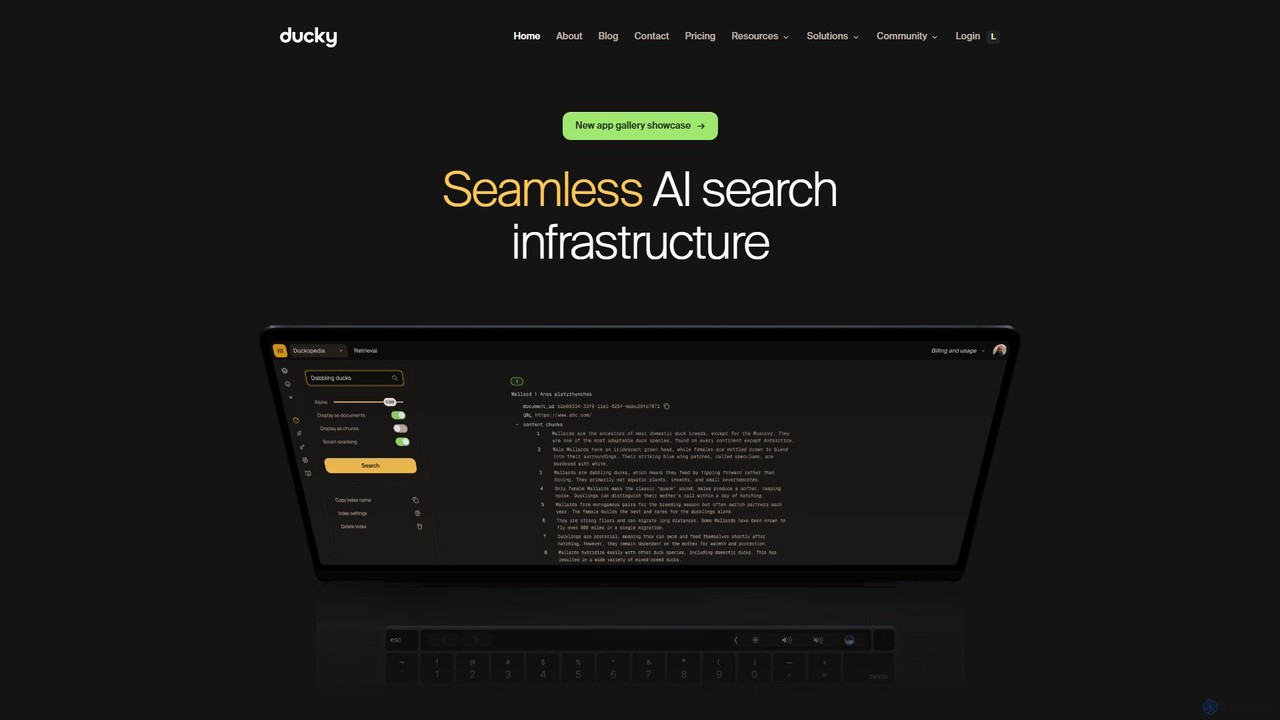
Ducky
Ducky is a fully managed AI search infrastructure designed for developers. It simplifies the implementation of Retrieval-Augmented Generation (RAG) by handling complex tasks like data chunking, embedding, and reranking. With a simple Python SDK, Ducky enables developers to quickly build fast, accurate, and scalable semantic search capabilities into their applications, providing context-aware and hallucination-free responses from LLMs.
Retrieval Augmented Generation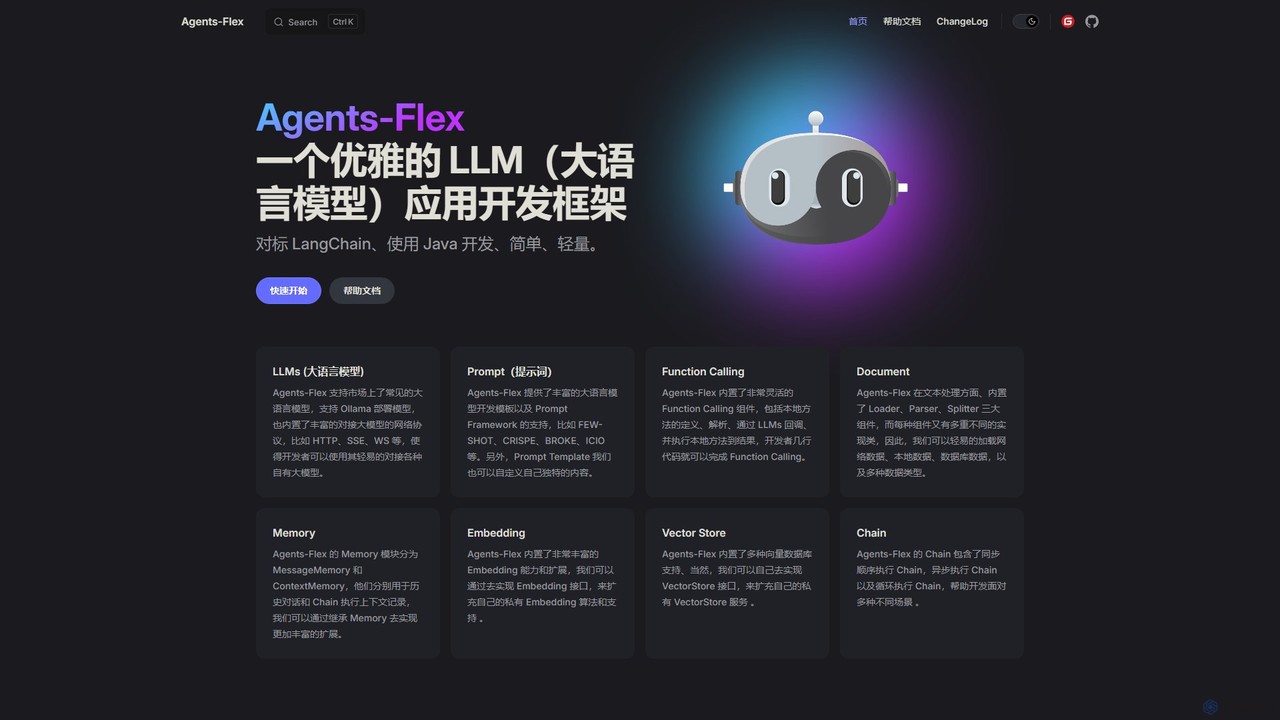
Agents-Flex
Agents-Flex is an open-source Java framework for building LLM-powered applications. As a lightweight and elegant alternative to LangChain, it simplifies development with a highly extensible architecture. It supports a wide range of LLMs, vector databases, and advanced features like function calling, RAG, and agent orchestration. Its framework-agnostic nature and low JDK requirement (8+) make it a versatile choice for any Java developer.
Llm Ops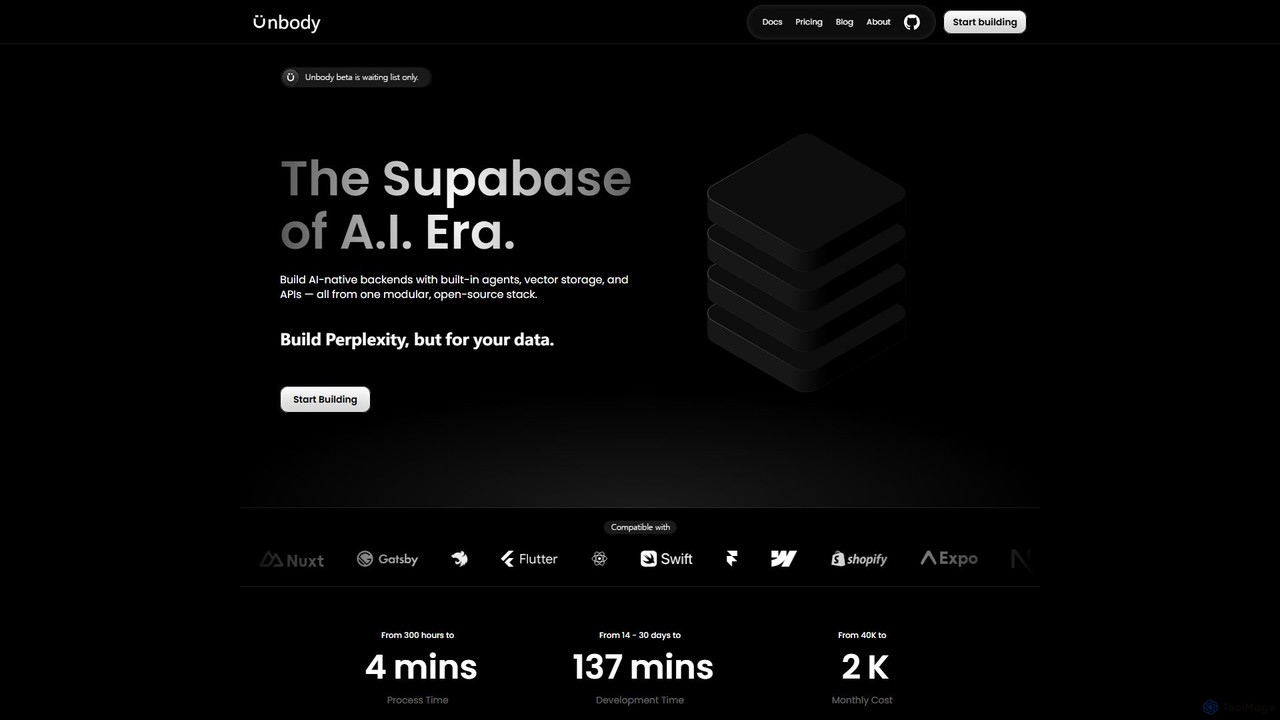
Unbody
Unbody is an AI-native development stack, described as the "Supabase of the AI Era." It provides developers with a modular, open-source backend featuring built-in agents, vector storage, and a unified API. This allows for the rapid and cost-effective creation of intelligent, adaptive applications by transforming any data into a queryable knowledge base, eliminating the need for fragmented systems and complex AI pipelines.
Vector Database
infiniflow Comments (0)
Sign in to comment.
Sign inNo comments yet.