Data Science Best in category 1 results Libraries AI Tool

Popular AI tools in the Libraries field of Data Science include infiniflow, etc., helping you quickly improve efficiency.

Free
infiniflow

infiniflow

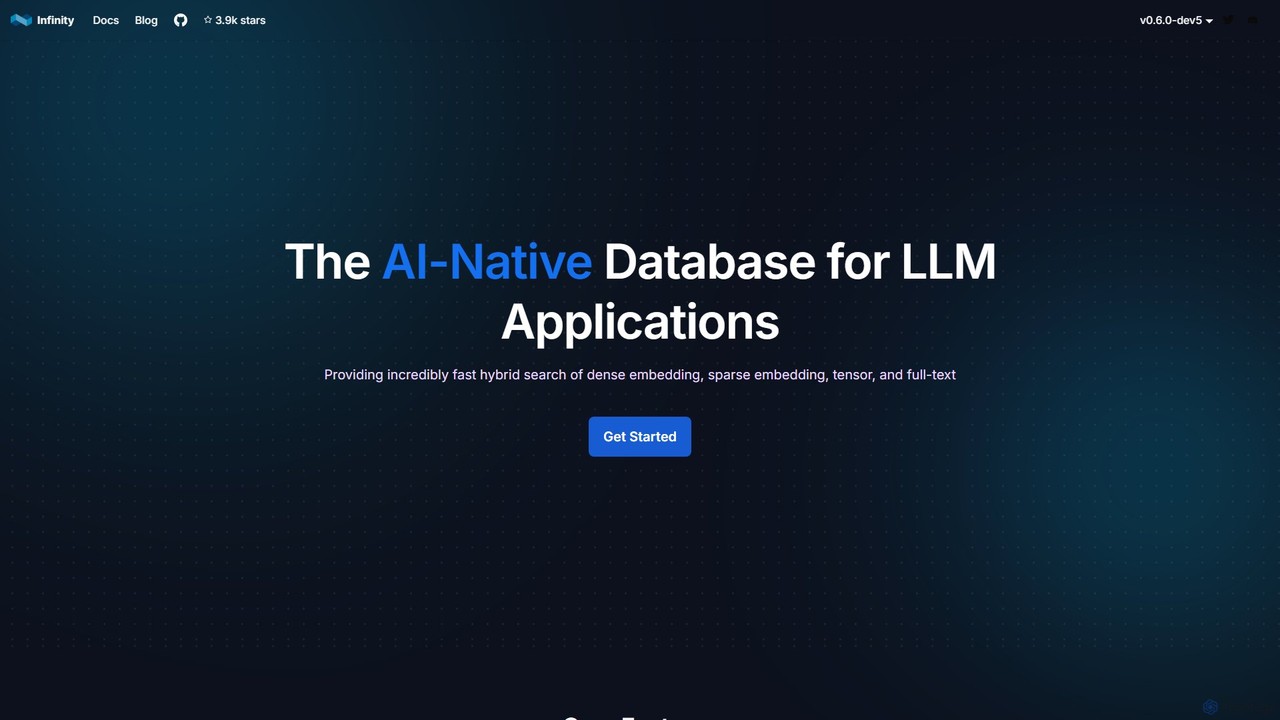
infiniflow is a high-performance, open-source, AI-native database specifically designed for LLM applications. It offers incredibly fast vector search, …

6.1K

About Libraries

Libraries are essential collections of pre-written code, functions, and modules specifically designed to streamline complex tasks within data science and AI development. These powerful tools provide optimized algorithms and data structures, enabling data scientists and developers to efficiently perform data manipulation, analysis, visualization, and machine learning without building every component from scratch. By offering specialized functionalities, libraries significantly accelerate project development, enhance code quality, and facilitate rapid prototyping across various AI applications.

Core Features

  • Data Manipulation: Efficiently clean, transform, and reshape datasets for analysis and model training.
  • Statistical Modeling: Implement advanced statistical methods and hypothesis testing for robust data interpretation.
  • Machine Learning Algorithms: Access a wide array of pre-built algorithms for classification, regression, clustering, and more.
  • Deep Learning Frameworks: Provide foundational structures for designing, training, and deploying complex neural networks.
  • Data Visualization: Generate interactive and static plots, charts, and dashboards to explore and communicate insights.

Applicable Scenarios

Data science libraries are indispensable for researchers, data analysts, and machine learning engineers. They are used in academic research for statistical analysis, in business intelligence for predictive modeling, and in AI product development for building sophisticated deep learning applications. For instance, a data analyst might use a library to quickly preprocess a large dataset, while an ML engineer could leverage another to train a recommendation system.

How to Choose

When selecting a data science library, consider its functionality scope, ensuring it covers your specific needs for data processing, modeling, or visualization. Evaluate its performance and scalability for handling large datasets. Community support and comprehensive documentation are crucial for troubleshooting and learning. Finally, assess its compatibility with your existing technology stack and ease of integration into your workflow.

LibrariesUse Cases

1

Automated Data Cleaning and Preprocessing

Data analysts and scientists frequently encounter raw, messy datasets. Using libraries like Pandas or NumPy, they can automate tasks such as handling missing values, normalizing numerical features, and encoding categorical data. This significantly reduces manual effort, ensuring data quality and preparing datasets for more accurate model training, saving hours of tedious work.

2

Developing Predictive Machine Learning Models

Machine learning engineers leverage libraries such as Scikit-learn or TensorFlow to build and deploy predictive models. They can easily implement various algorithms like linear regression, decision trees, or neural networks, train them on prepared data, and evaluate their performance. This accelerates the development cycle for applications like fraud detection, customer churn prediction, or recommendation systems.

3

Creating Interactive Data Visualizations

Researchers and business intelligence analysts utilize visualization libraries like Matplotlib, Seaborn, or Plotly to transform complex data into insightful visual representations. They can generate interactive charts, graphs, and dashboards to explore data patterns, identify trends, and effectively communicate findings to stakeholders. This enhances data storytelling and supports data-driven decision-making.

4

Implementing Natural Language Processing (NLP) Solutions

Developers and AI specialists use NLP libraries such as NLTK or SpaCy to process and understand human language. They can perform tasks like tokenization, sentiment analysis, named entity recognition, and text classification. This is crucial for building applications like chatbots, spam filters, content summarizers, or advanced search engines, enabling machines to interact more intelligently with text data.

5

Designing and Training Deep Learning Neural Networks

AI researchers and deep learning engineers rely on frameworks like TensorFlow or PyTorch to construct and train sophisticated neural networks. These libraries provide the necessary tools for defining model architectures, managing computational graphs, and optimizing training processes on GPUs. This enables breakthroughs in areas such as image recognition, speech synthesis, and autonomous driving systems.

6

Performing Advanced Statistical Analysis

Statisticians and quantitative analysts employ libraries like SciPy or Statsmodels to conduct rigorous statistical tests and modeling. They can perform hypothesis testing, regression analysis, time series forecasting, and advanced probability distributions. This allows for robust scientific research, A/B testing analysis, and deriving statistically significant conclusions from experimental and observational data.

LibrariesFrequently Asked Questions