Freemium
Popular Database AI tools in Developer Tools include MongoDB, Databricks, Elastic, Pinecone, Milvus, InfluxData, Chroma, Navicat, Vectorize, and MotherDuck, helping you work more efficiently.
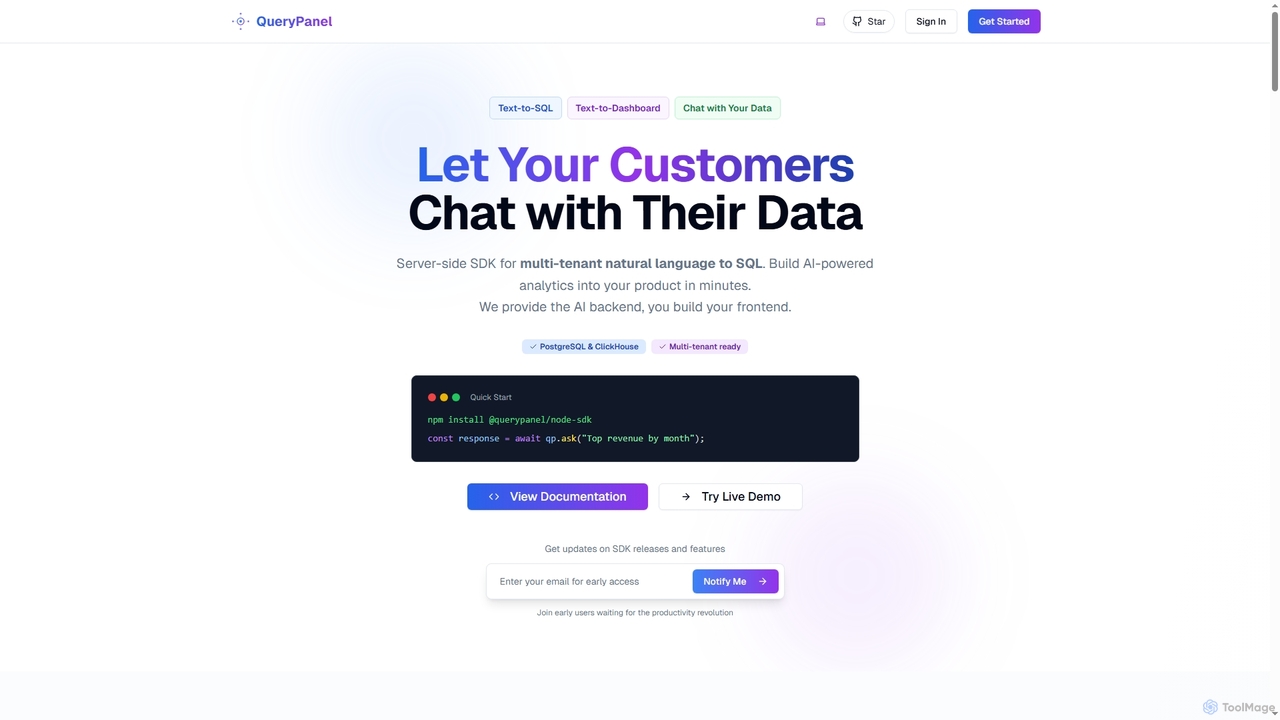
A server-side SDK for multi-tenant SaaS applications to embed AI-powered analytics. It translates natural language queries into SQL and visualizations, allowing end-users to interact with their data conversationally.
Database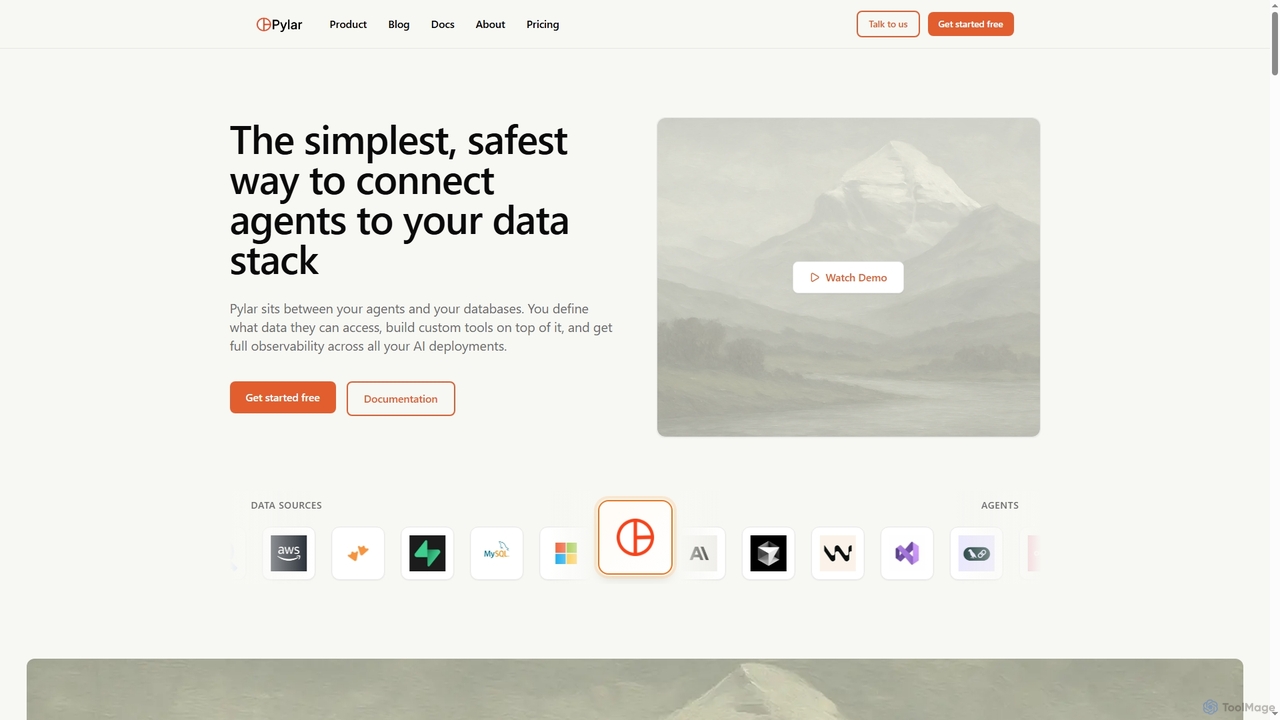
Pylar is a data governance platform that securely connects AI agents to your data stack. It allows you to define safe data access through SQL views, build custom tools for agents, and monitor all interactions, preventing direct database access and ensuring security and control.
Data Governance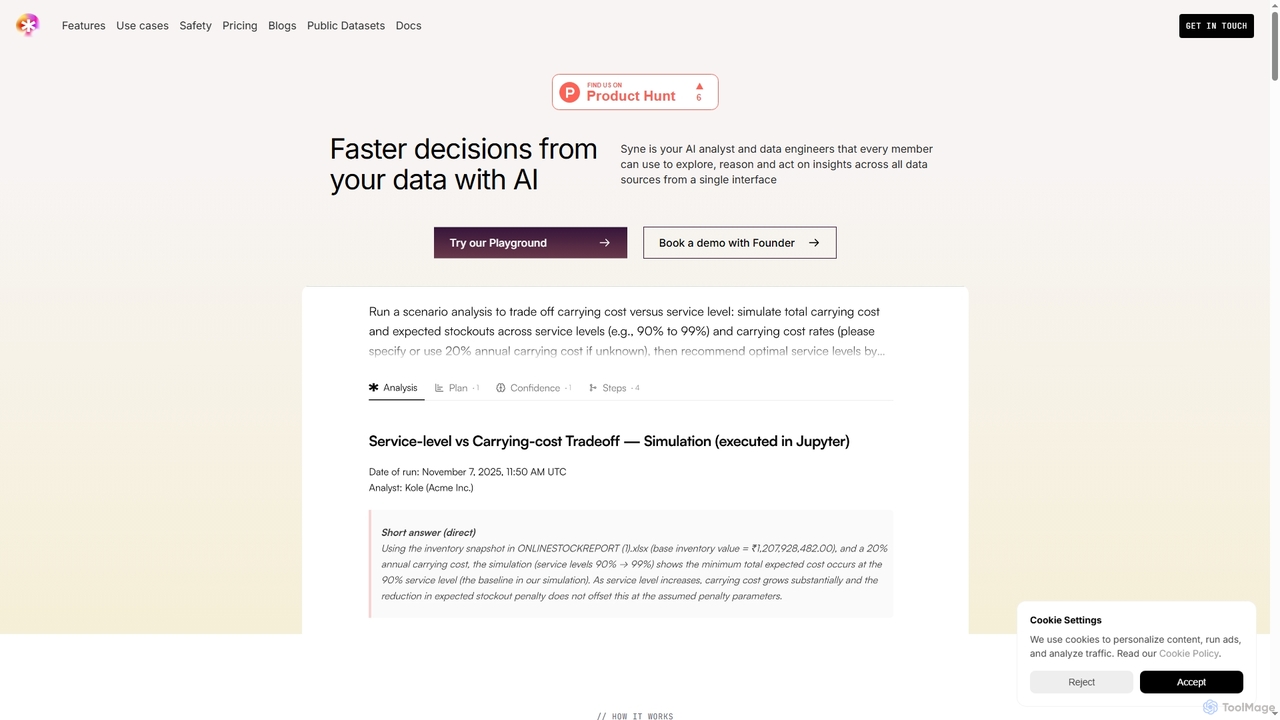
Syne is an AI-powered data analytics platform that functions as an AI analyst and data engineer. It enables all team members to explore, analyze, and act on insights from over 100 data sources using natural language queries through a single interface, eliminating the need for complex SQL knowledge for basic inquiries.
Business Intelligence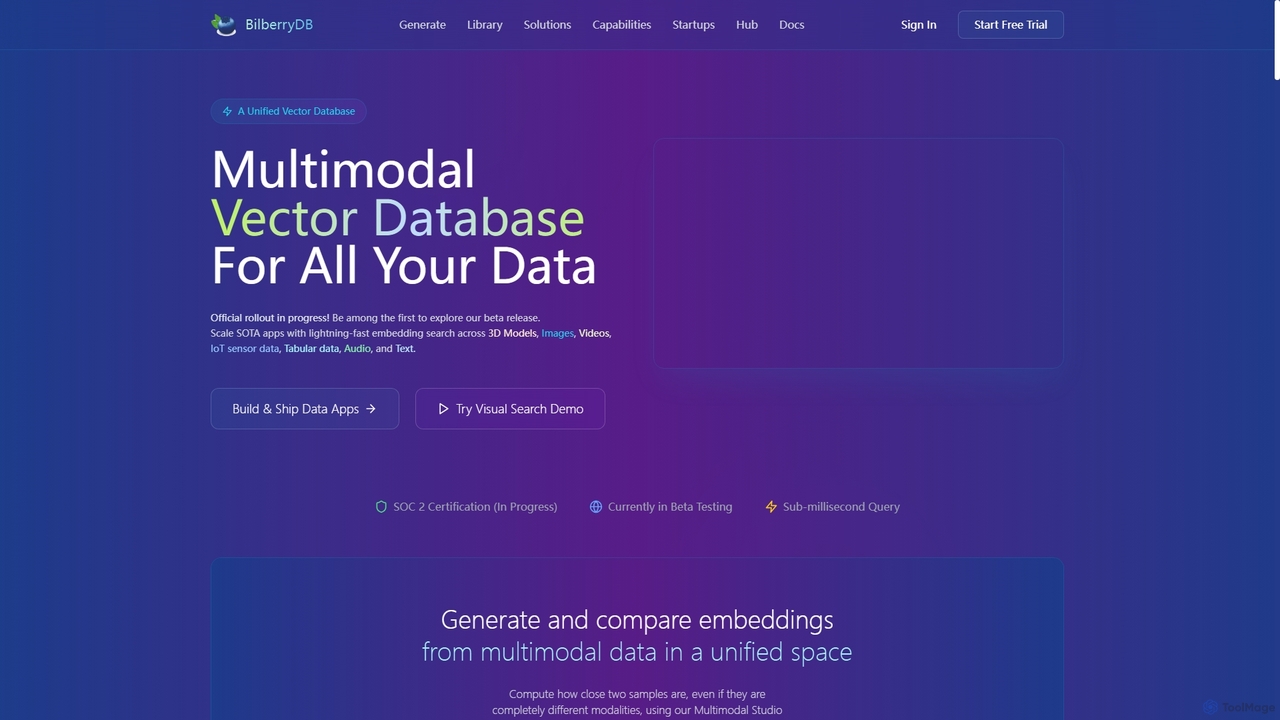
Bilberrydb is an enterprise-grade, multimodal vector database designed for building advanced AI applications. It enables lightning-fast embedding search across diverse data types including 3D models, images, videos, audio, text, and tabular data on a unified platform.
Vector Database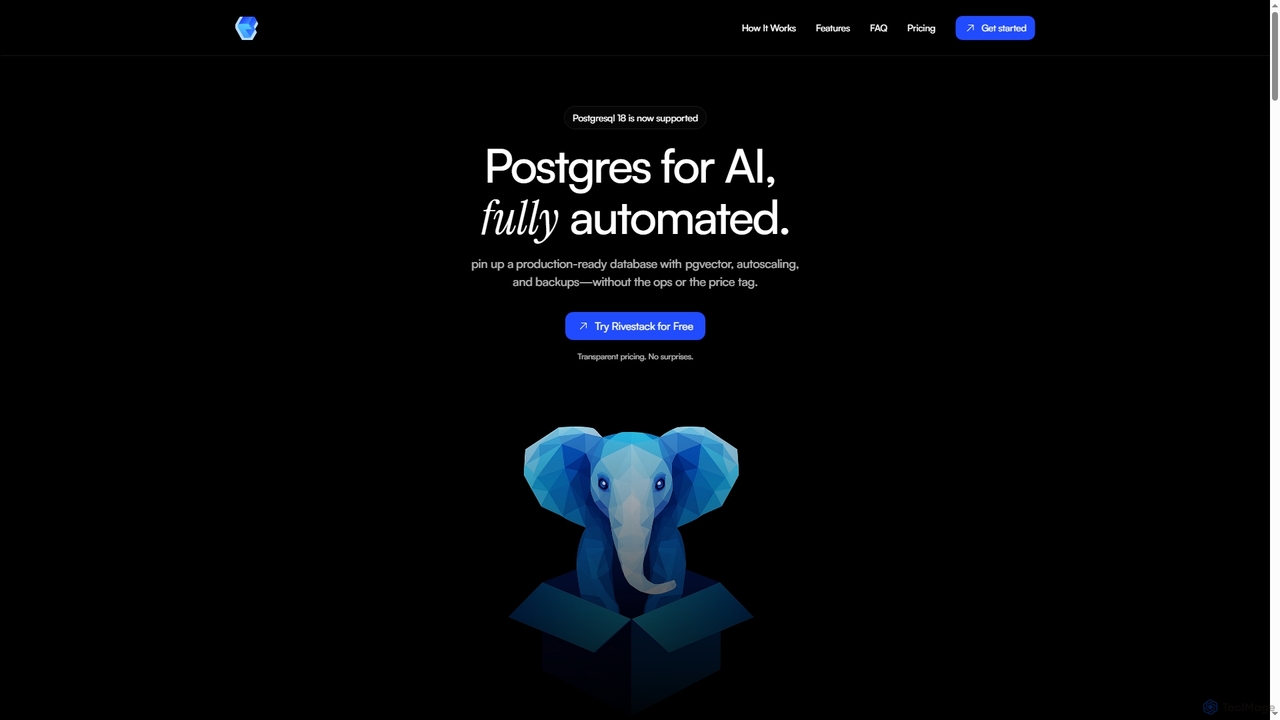
An EU-hosted, managed PostgreSQL database service optimized for AI applications. It provides fully automated deployment with pgvector for vector search, autoscaling, backups, and transparent pricing, enabling developers to launch production-ready databases in minutes.
Vector Database
Neosync is an open-source platform for data anonymization and synthetic data generation. It helps developers and data scientists create safe, privacy-compliant, and realistic datasets for testing, development, and AI model training, ensuring referential integrity across databases.
Data Generation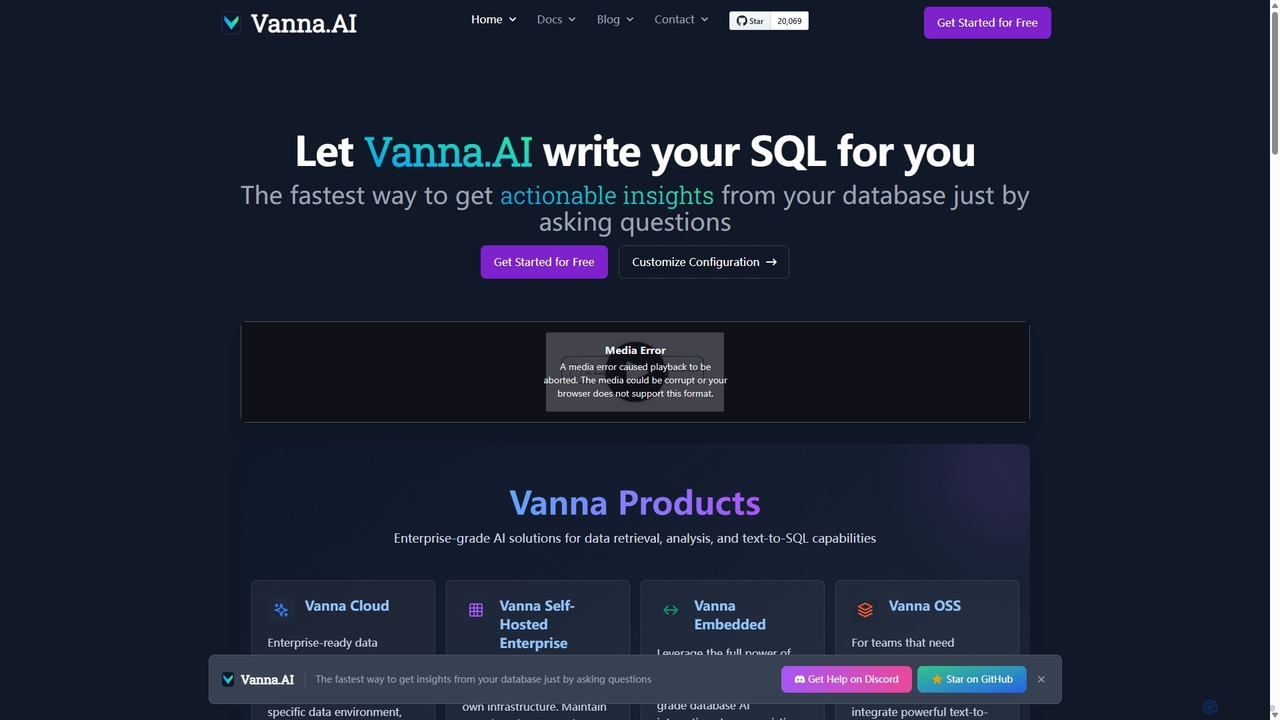
Vanna.AI is an open-source, personalized AI SQL agent that transforms natural language questions into accurate SQL queries. It uses a Retrieval-Augmented Generation (RAG) model trained on your specific database schema, documentation, and past queries to achieve high accuracy on complex datasets. It's designed for security, flexibility, and easy integration into any application, empowering both technical and non-technical users to gain insights from their data effortlessly.
Business Intelligence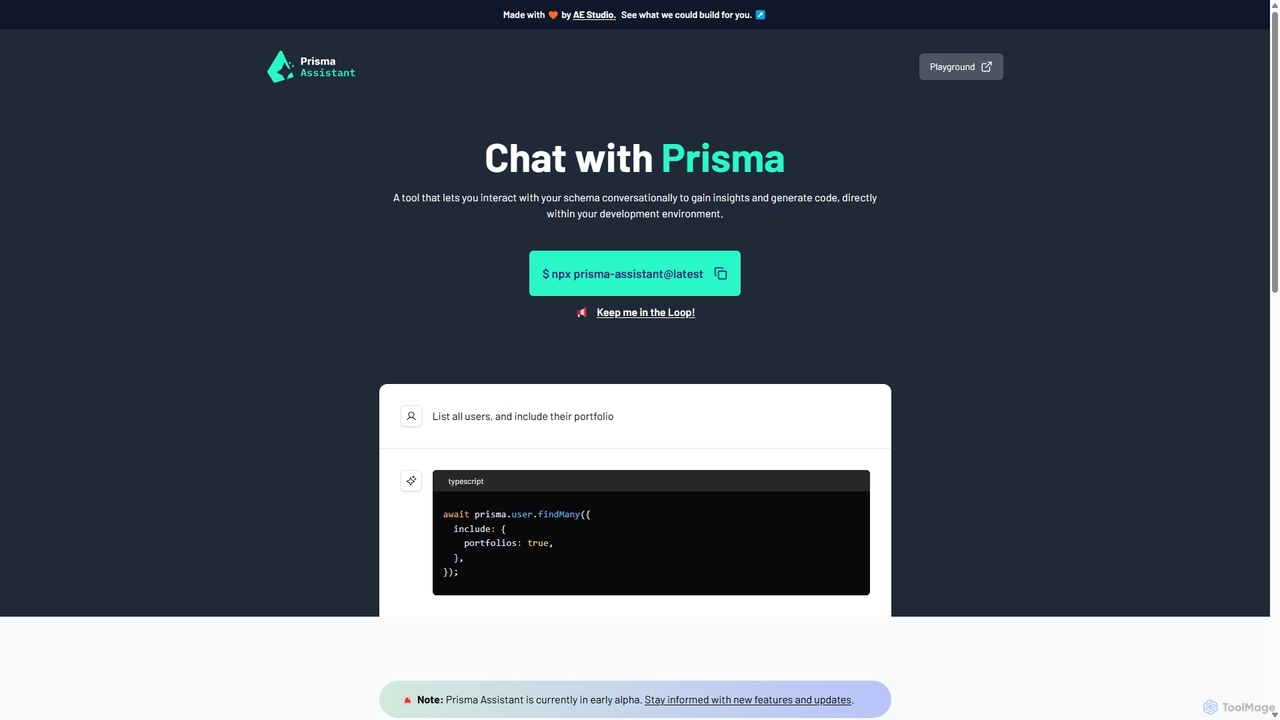
Prisma Assistant is an AI-powered tool for developers that enables conversational interaction with your Prisma schema. Run it locally to gain insights, ask questions in natural language, and automatically generate Prisma queries and mutations, significantly speeding up your backend development workflow.
Ai Coding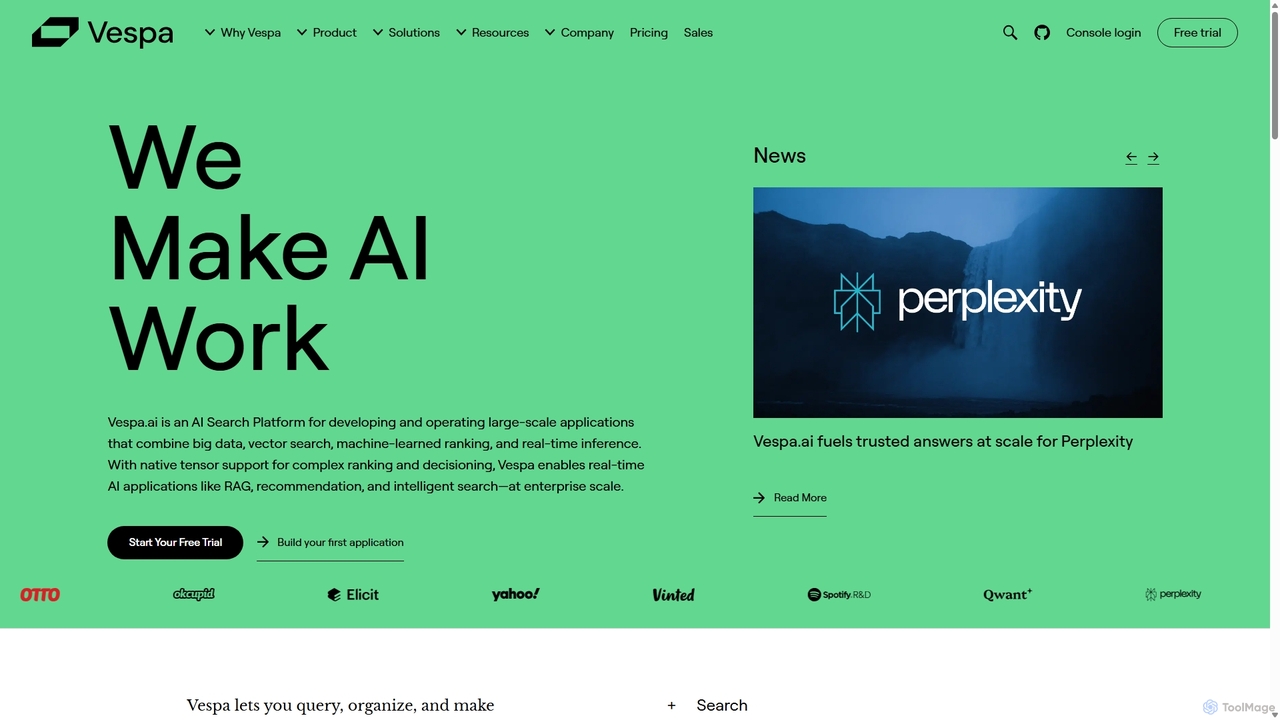
Vespa.ai is a high-performance AI search platform for building large-scale applications. It unifies vector search, text search, and machine-learned ranking to power advanced use cases like Retrieval-Augmented Generation (RAG), recommendation engines, and intelligent search. Designed for real-time inference and scalability, it's trusted by leading companies like Spotify and Perplexity to handle massive datasets with low latency.
Search
MindsDB is an open-source AI layer for databases, enabling developers to build, train, and deploy AI models and agents using standard SQL. It connects to hundreds of data sources, unifies structured and unstructured data into knowledge bases, and allows you to get AI-powered answers directly from your data without complex ETL pipelines.
Machine Learning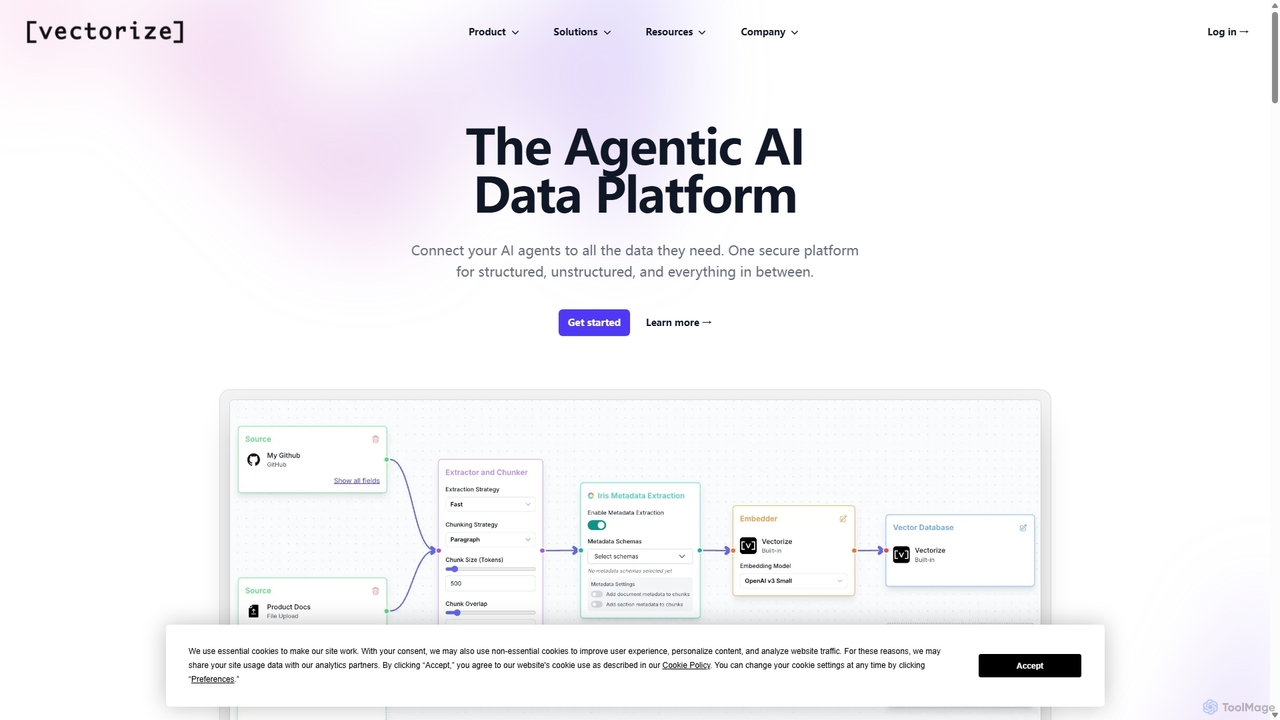
Vectorize is a RAG-as-a-Service platform that simplifies building AI applications on unstructured data. It offers managed RAG pipelines, extensive data source connectors, and the flexibility to use its managed vector database or connect your own, enabling developers to deploy production-ready AI solutions quickly.
Rag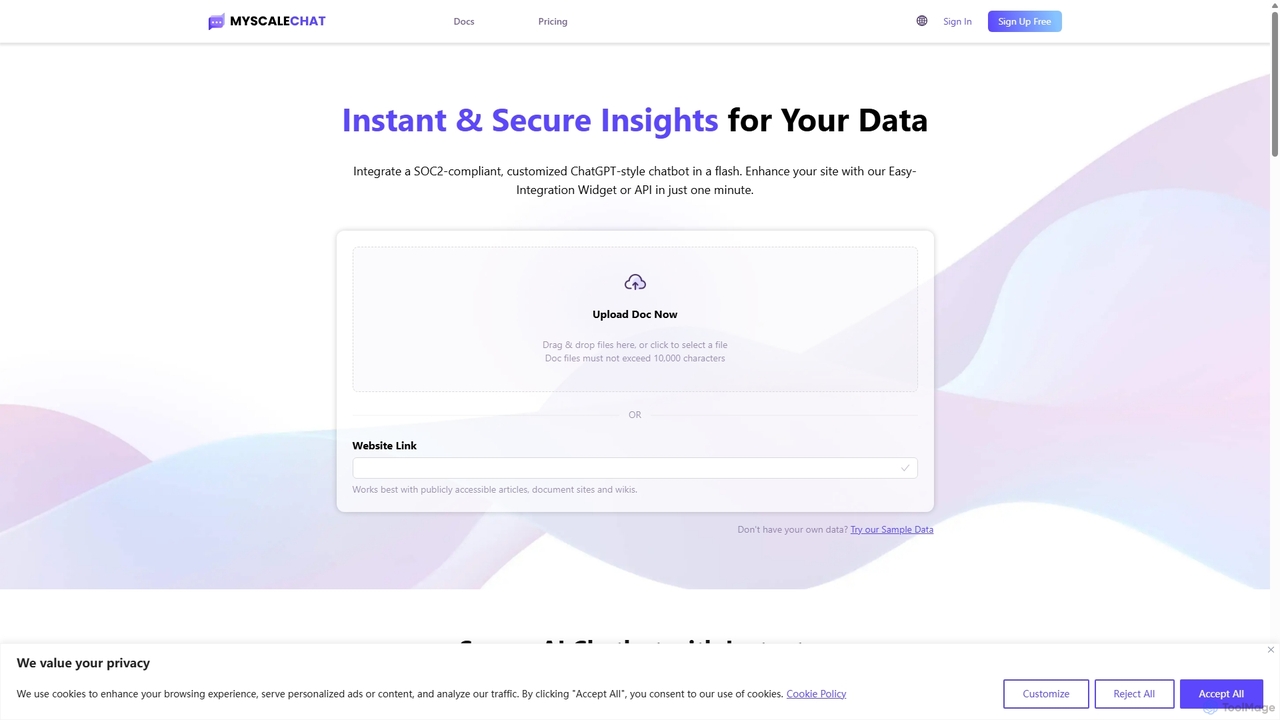
MyScale Chat is an AI-powered platform that enables users to build custom chatbots by chatting with their own data. Leveraging the high-performance MyScale vector database, it provides instant, secure, and accurate insights from documents, websites, or knowledge bases. It's designed for developers and businesses to create sophisticated RAG (Retrieval-Augmented Generation) applications, transforming private data into interactive, intelligent conversational agents.
Document Analysis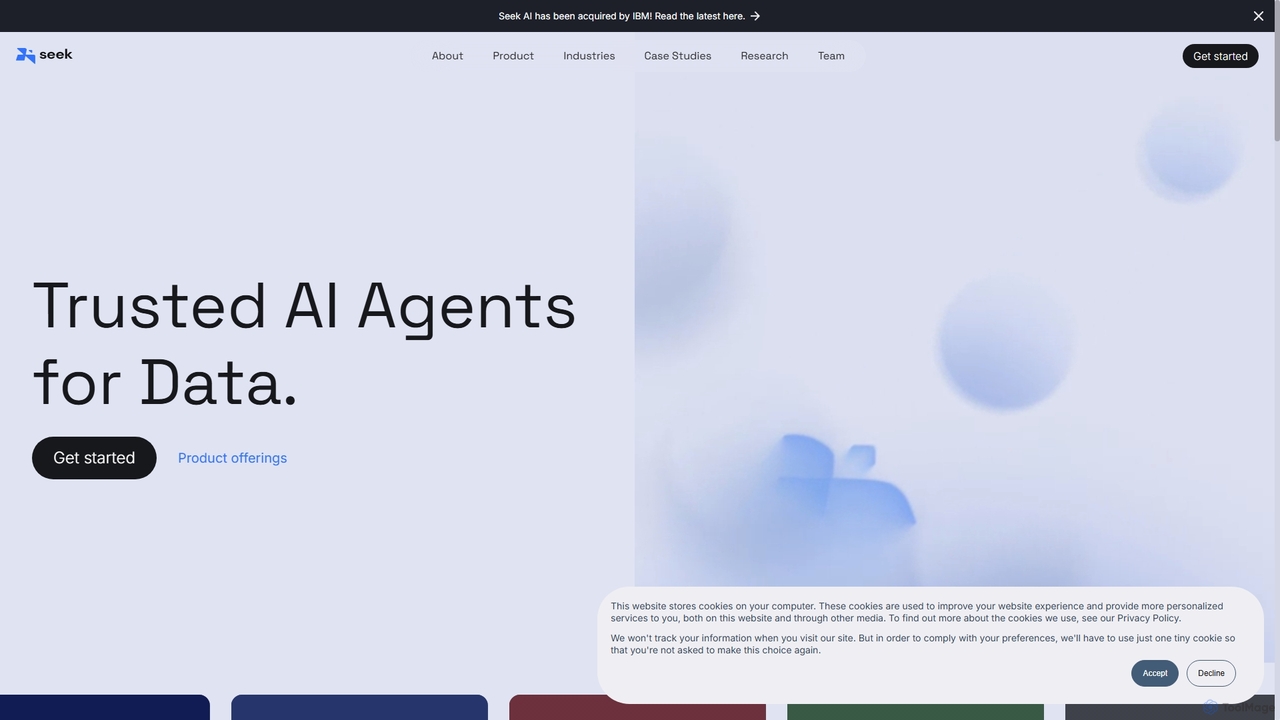
Seek AI is a generative AI platform for data analytics that empowers users to query databases, generate reports, and create visualizations using natural language. It automates the text-to-SQL process, making data accessible to non-technical users and accelerating insights for data teams.
Business Intelligence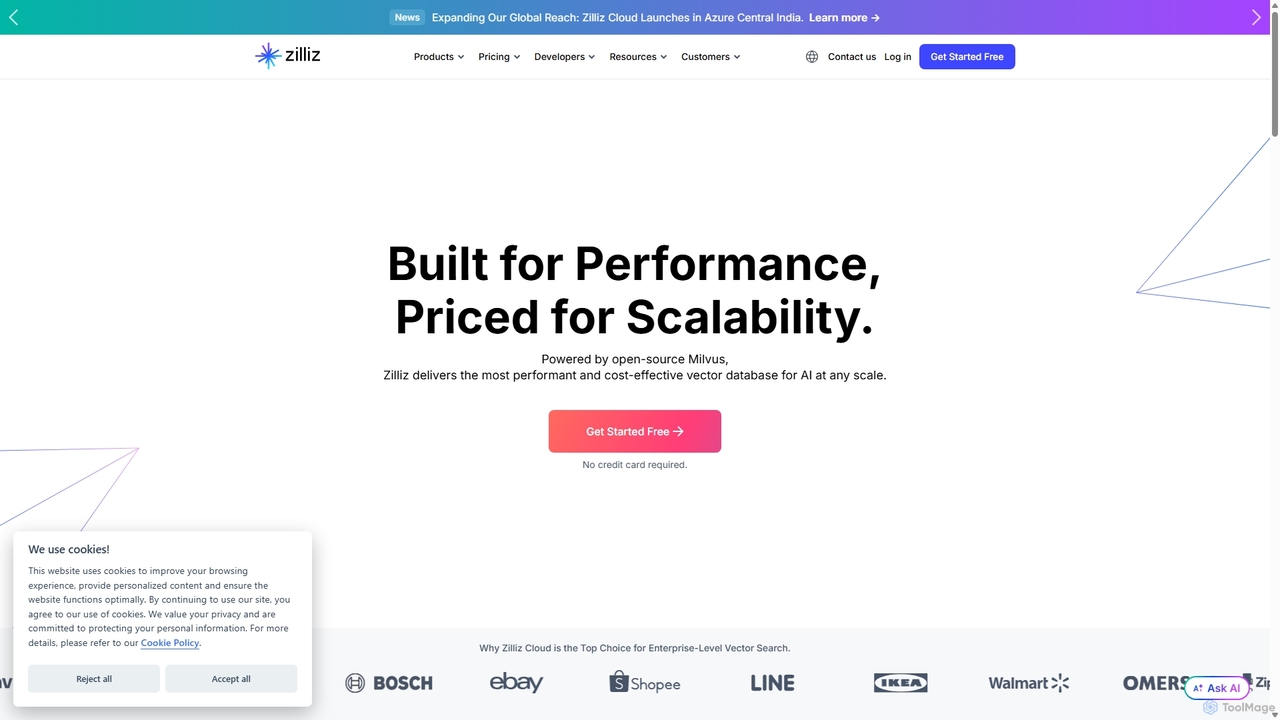
Zilliz is an enterprise-grade vector database built for scalable AI applications. Powered by the popular open-source project Milvus, it provides a high-performance, cost-effective, and fully-managed service (Zilliz Cloud) for storing, indexing, and searching billions of vector embeddings. It's designed to power applications like RAG, recommendation systems, and multimodal search, with seamless integrations into major AI frameworks and cloud platforms.
Machine Learning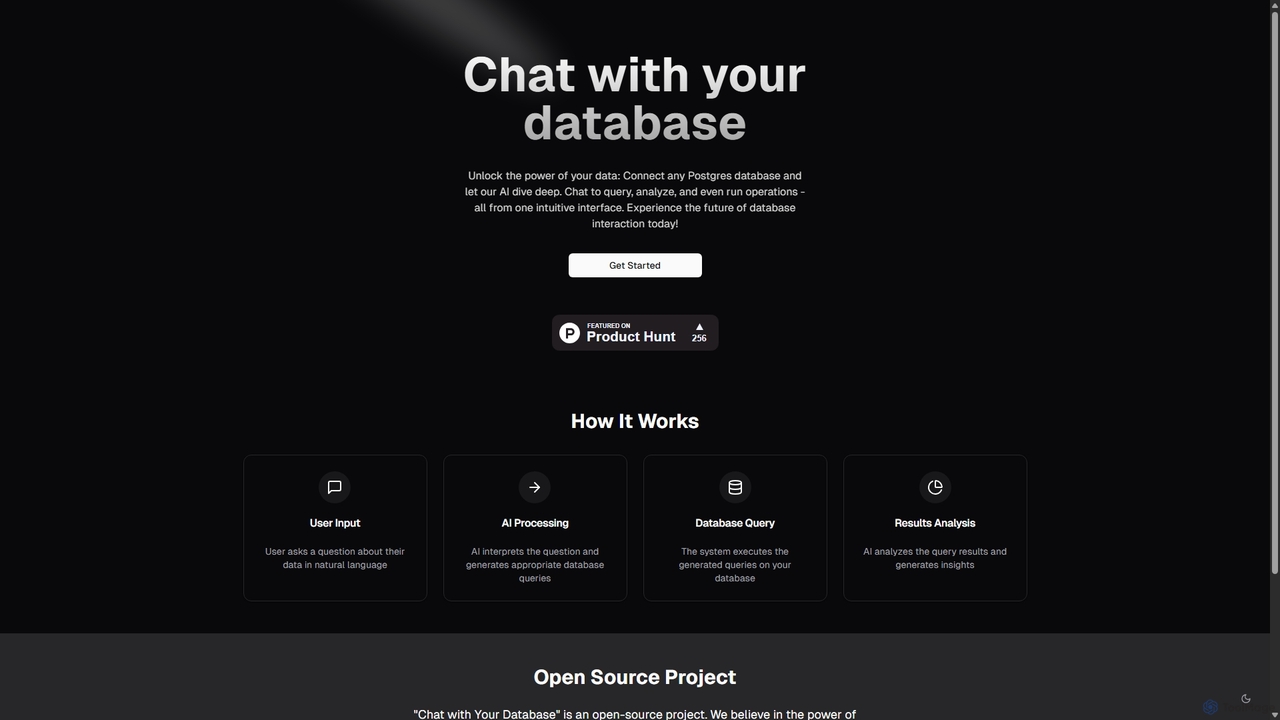
An open-source AI tool that allows you to interact with your PostgreSQL database using natural language. Ask questions, get insights, and perform operations through a simple chat interface, eliminating the need for complex SQL queries.
Business Intelligence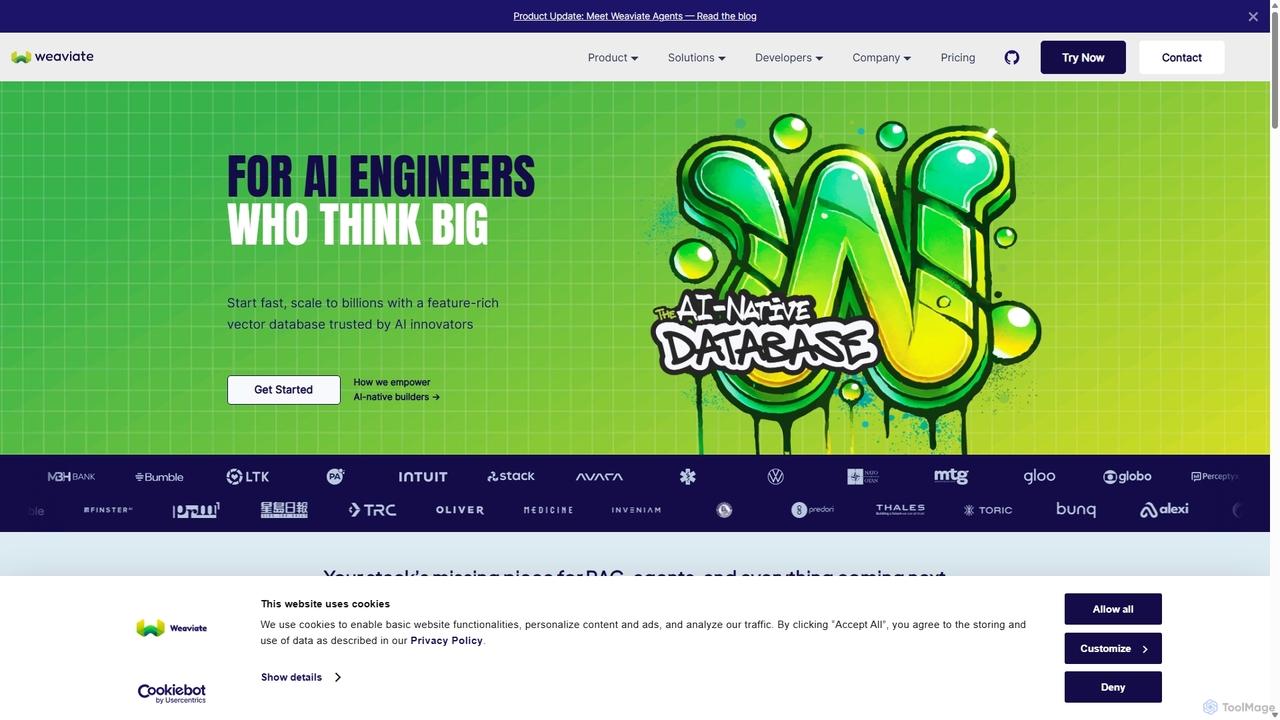
Weaviate is an open-source, AI-native vector database designed for developers. It enables scalable, low-latency vector, keyword, and hybrid search. Ideal for building AI applications like semantic search, recommendation engines, and Retrieval-Augmented Generation (RAG) systems, it integrates seamlessly with popular machine learning models to store and query data based on semantic meaning.
Vector Database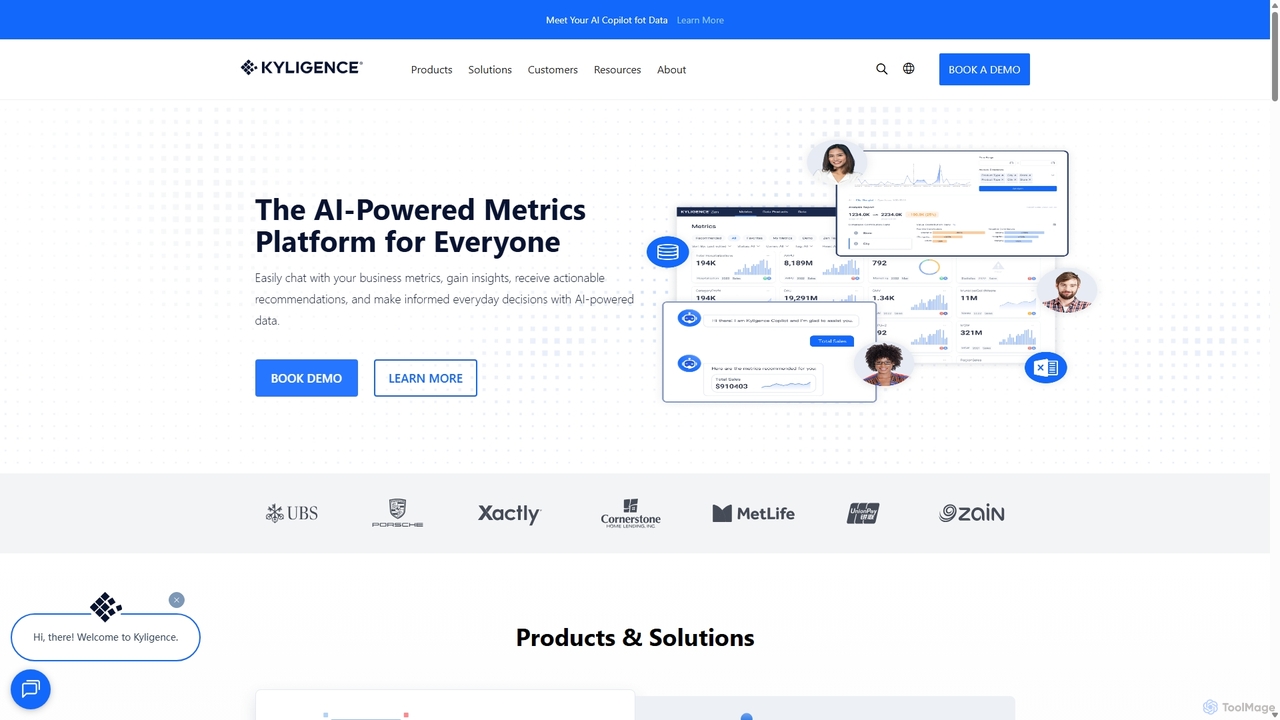
Kyligence is an AI-powered metrics platform that revolutionizes data analytics. It features an AI Copilot, allowing users to chat with business metrics in natural language to gain insights, receive recommendations, and make informed decisions. The platform unifies metrics, provides a high-performance OLAP engine for petabyte-scale data, and connects seamlessly with existing BI tools, democratizing data for everyone in the organization.
Business Intelligence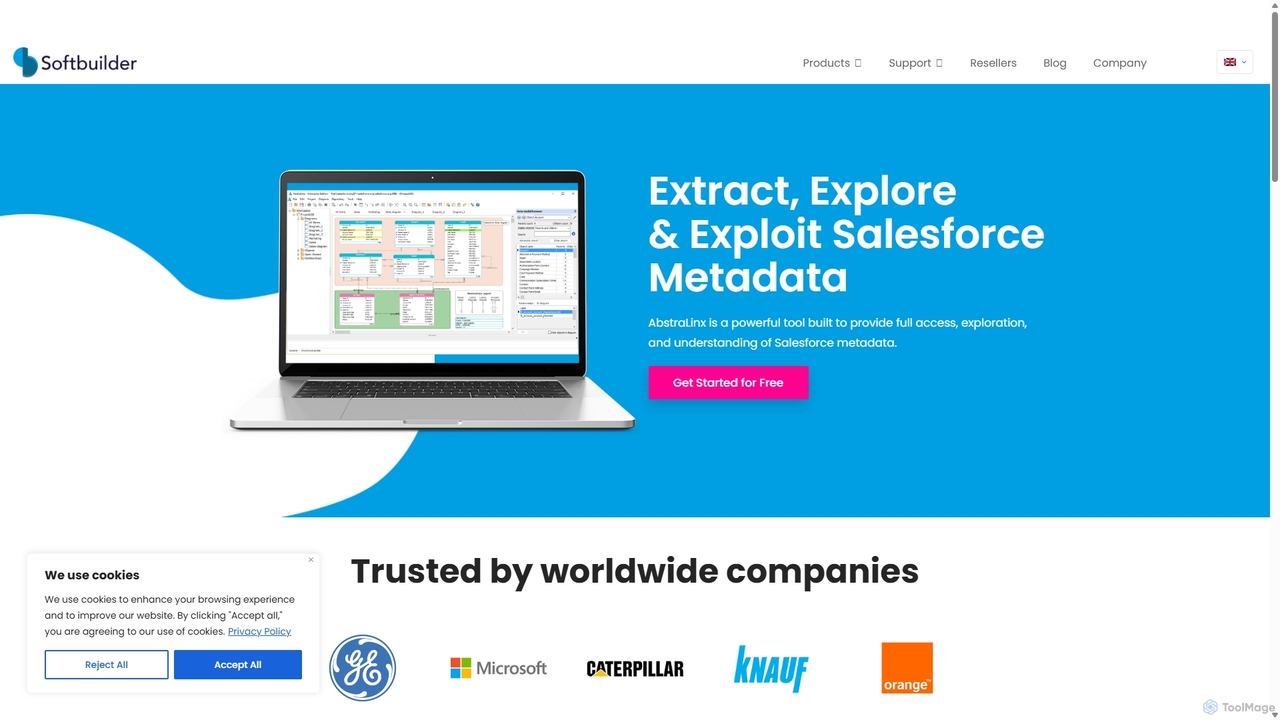
ERBuilder Data Modeler is an AI-powered database design and data modeling tool for data architects and developers. It facilitates the visual creation of Entity-Relationship Diagrams (ERDs), supports forward and reverse engineering for numerous databases, and leverages generative AI to create and update models from natural language. It also offers advanced documentation, version control, and test data generation features.
Code Generation
TiDB Cloud is a fully managed, distributed SQL database-as-a-service (DBaaS). It offers horizontal scalability, MySQL compatibility, and Hybrid Transactional/Analytical Processing (HTAP) capabilities. Ideal for building modern, data-intensive applications and AI-powered services, it simplifies database operations and provides a powerful backend for applications that require both real-time transactions and complex analytics, including vector search for AI.
Vector Database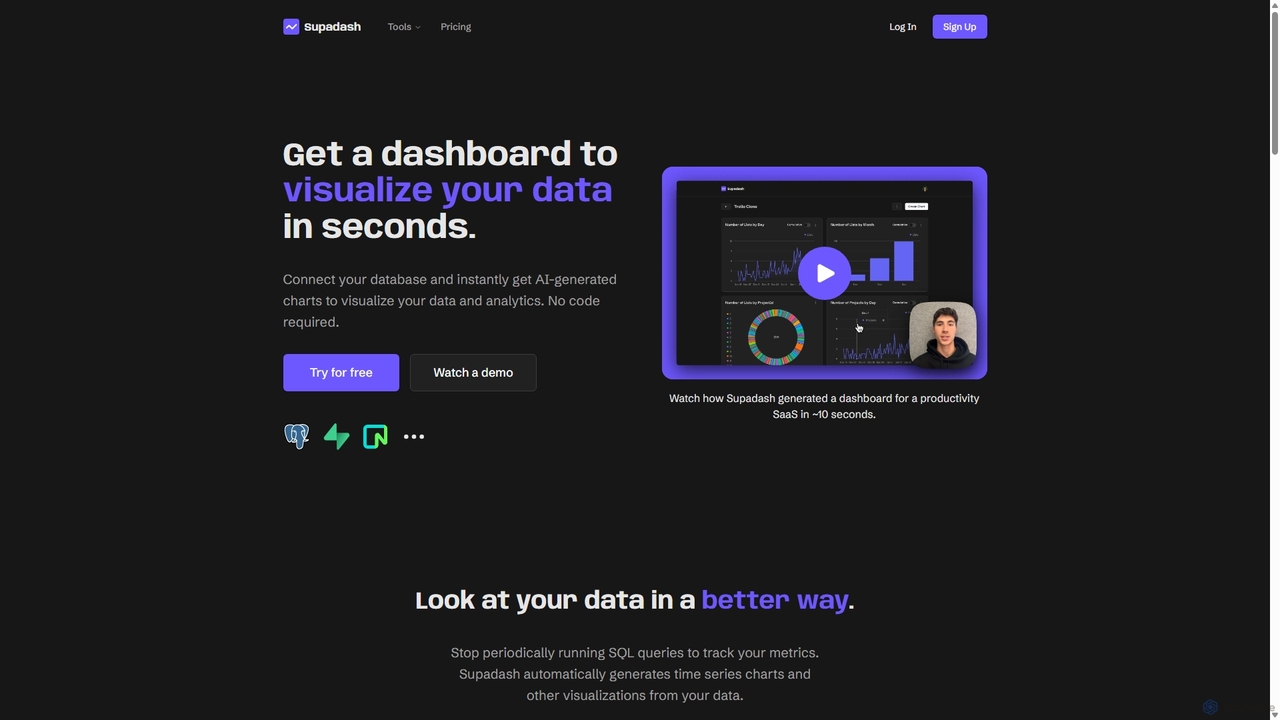
Supadash is an AI-powered, no-code platform that instantly generates visual dashboards from your database. Connect your data source, and within seconds, Supadash's AI analyzes your tables and creates insightful charts and analytics. It's designed for developers, startups, and teams who need to track key metrics without writing complex SQL queries, transforming raw data into actionable insights effortlessly.
Business Intelligence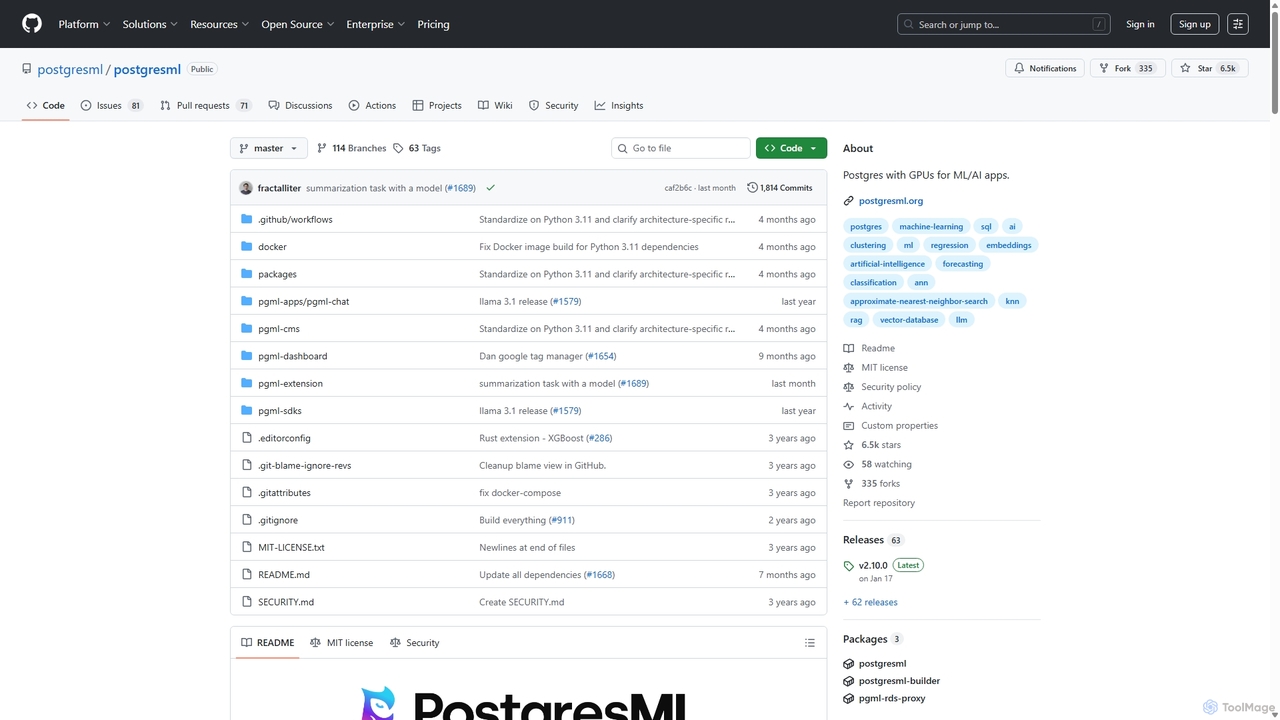
PostgresML is a powerful open-source extension that integrates machine learning and AI directly into your PostgreSQL database. It enables GPU-accelerated inference, vector search, and complete RAG pipelines using simple SQL commands, eliminating data movement and simplifying the MLOps stack for high-performance, scalable AI applications.
Mlops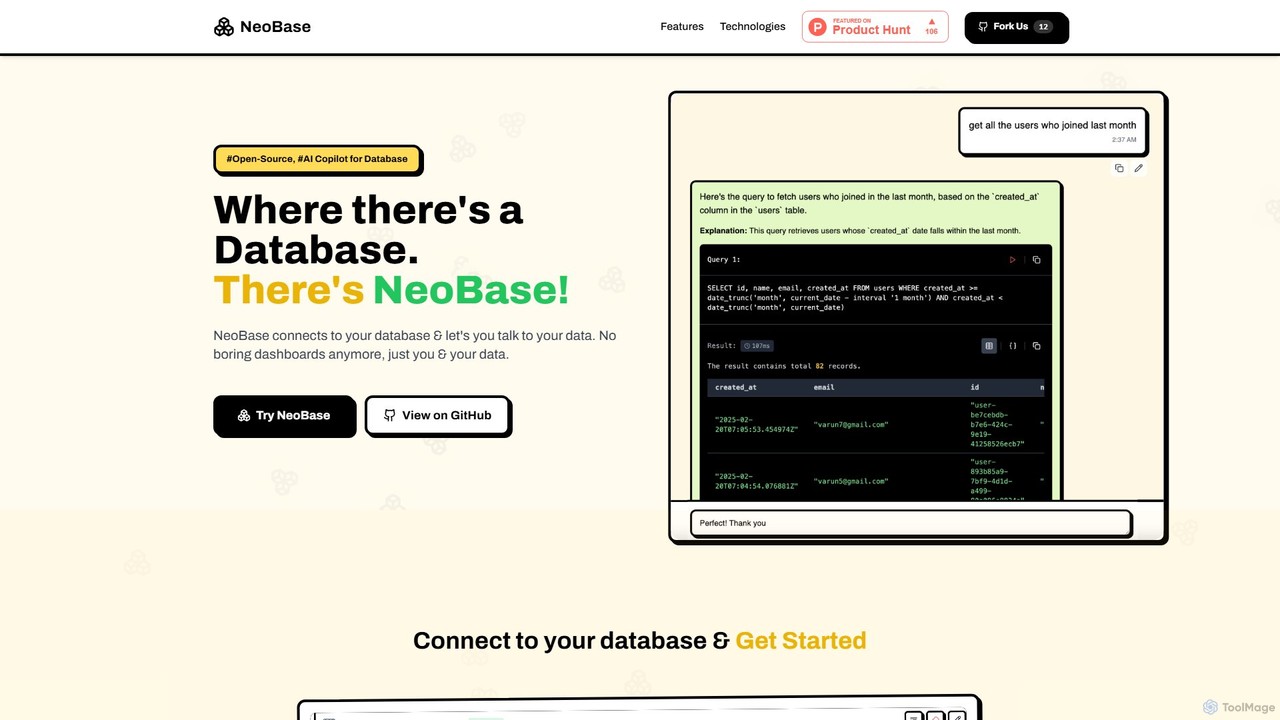
NeoBase is an open-source AI copilot for databases, enabling users to interact with their data using natural language. It connects to various SQL and NoSQL databases, translates plain English queries into optimized code, and visualizes the results. Designed for both technical and non-technical users, it streamlines data analysis, debugging, and reporting, eliminating the need for complex query writing and providing full data control through self-hosting.
Data Analysis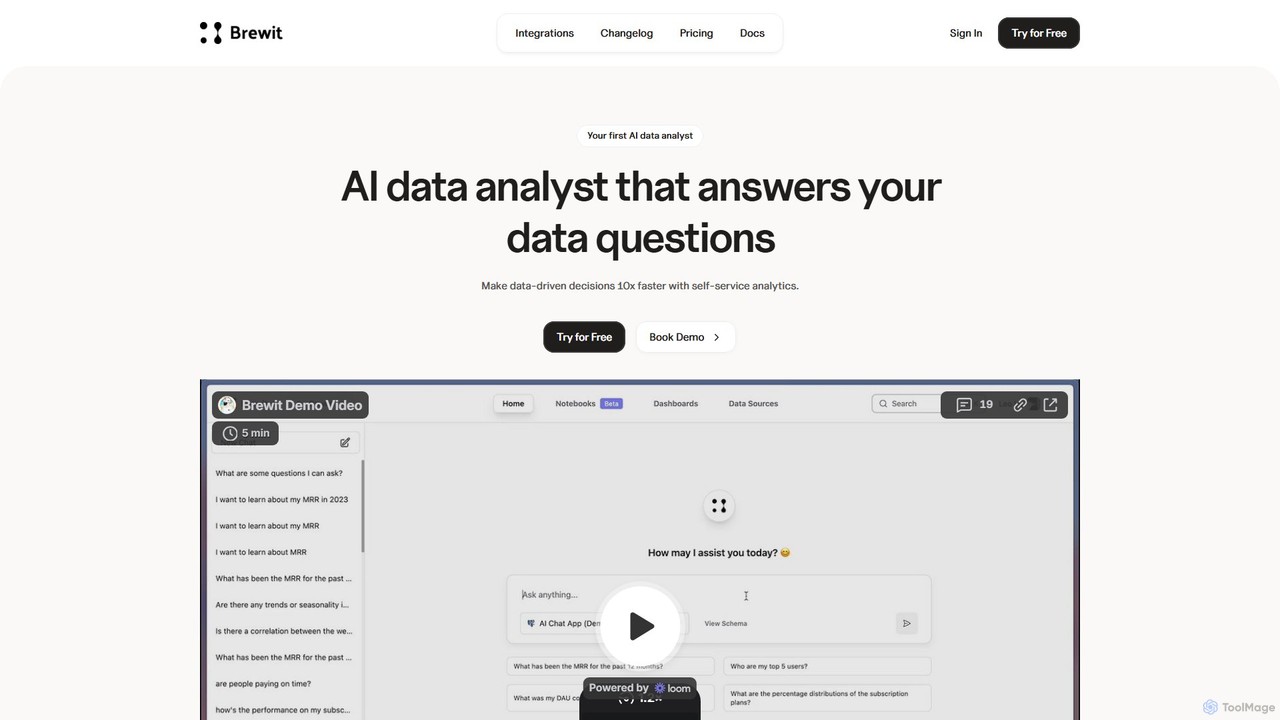
Brewit is an AI-powered analytics platform that enables users to perform self-service data analysis. Connect to your databases, chat in natural language to query data, generate SQL, and create interactive visualizations and reports. It simplifies business intelligence, making data accessible to everyone in the organization, regardless of their technical skills.
DatabaseAI Databases are advanced data management systems that integrate artificial intelligence to automate and enhance data operations. They leverage machine learning for tasks like natural language querying, automated performance tuning, and vector search, enabling more intuitive and powerful data interaction. These tools are essential for building next-generation applications requiring semantic search, real-time analytics, and predictive modeling. Their primary value lies in reducing manual database administration and unlocking deeper insights from complex, unstructured datasets.
AI Databases are widely used by developers and data scientists building intelligent applications. Common scenarios include creating sophisticated recommendation engines for e-commerce, developing real-time fraud detection systems in finance, and enabling powerful semantic search capabilities for internal knowledge bases or customer-facing products.
When selecting an AI Database, consider the specific AI features you need, such as vector search or natural language processing. Evaluate its scalability and performance for your expected workload. Also, check its compatibility with your existing tech stack and machine learning frameworks, and consider the ease of use for both developers and data analysts.
An e-commerce developer needs to create a product search feature that understands user intent, not just keywords. Instead of matching 'red shoes', it should understand queries like 'footwear for a summer party'. Using an AI database with built-in vector search, the developer converts product descriptions and images into vector embeddings. When a user searches, their query is also converted into a vector, and the database finds the most semantically similar products. This results in more relevant search results, improved user experience, and higher conversion rates.
A data scientist at a financial institution is tasked with preventing fraudulent transactions. They use an AI database with in-database machine learning capabilities. Transaction data streams directly into the database, where a pre-trained anomaly detection model runs in real-time. The model analyzes patterns, such as transaction amount, location, and frequency. If a transaction deviates significantly from a user's normal behavior, the database flags it instantly, allowing the institution to block the transaction and alert the customer, minimizing financial loss.
A business analyst needs to quickly generate reports without relying on the IT department to write complex SQL queries. By connecting their BI tool to an AI database, they can ask questions in plain English, such as 'Compare sales of product X and product Y in the last quarter by region'. The AI database's natural language processing (NLP) engine translates this question into a formal query, executes it, and returns the data. This empowers non-technical users to perform self-service analytics, accelerating decision-making and freeing up developer resources.
A DevOps engineer manages the database for a rapidly growing social media application. As user traffic fluctuates, database performance can degrade. Instead of manually creating and dropping indexes or tuning query parameters, they use an AI database that performs automated tuning. The database's AI component continuously monitors workload patterns and predicts future query needs. It proactively creates optimal indexes, adjusts memory allocation, and rewrites inefficient queries on the fly. This ensures consistent high performance without constant manual intervention, reducing operational overhead.
A content creator for a streaming platform wants to increase user engagement by suggesting highly relevant videos. They use an AI database to store vector representations of their video content (based on titles, descriptions, and subtitles). When a user watches a video, the system queries the database to find other videos with the most similar vectors. This goes beyond simple tag-based matching, capturing the nuances and topics of the content. The result is a 'Recommended for You' section that feels genuinely personalized, leading to longer watch times and higher user retention.
A site reliability engineer (SRE) is investigating a production issue, facing millions of log entries. Instead of using complex grep commands or rigid log query languages, they ingest the logs into an AI database. They can then ask questions like, 'Show me all error logs related to payment failures in the last hour from the EU cluster'. The database uses NLP to understand the query and semantic search to find relevant log entries, even if they don't contain the exact keywords. This dramatically speeds up the root cause analysis process, reducing system downtime.
An AI Database is a data management system enhanced with artificial intelligence capabilities. Unlike traditional databases that simply store and retrieve data, AI databases can understand, analyze, and automate operations on the data. Key features often include natural language querying (asking questions in English), automated performance tuning, and integrated vector search for finding data based on semantic meaning. They are designed to power intelligent applications and simplify complex data analysis.
The primary difference lies in their core capabilities. Traditional databases focus on structured storage and efficient retrieval based on exact matches (SQL) or key-value lookups (NoSQL). AI Databases add a layer of intelligence on top of storage. Key differences include:
Vector search is a method of finding data based on its semantic similarity rather than exact keyword matches. It works by converting data (like text, images, or audio) into numerical representations called vectors. The database then finds items whose vectors are closest in multi-dimensional space. This is crucial for AI databases because it enables applications like recommendation engines, image search, and question-answering systems that understand the context and meaning behind a user's query, providing far more relevant results than traditional search methods.
Choosing the right AI Database depends on your specific needs. Consider the following factors:
Yes, one of the key strengths of many AI databases is their ability to handle a mix of data types. They can manage traditional structured data (like user profiles in tables) while also excelling at processing unstructured data (like product reviews, images, or support tickets). They often achieve this by creating vector embeddings for unstructured content, allowing it to be queried and analyzed alongside structured data, providing a unified view of all information.