

Elastic Overview
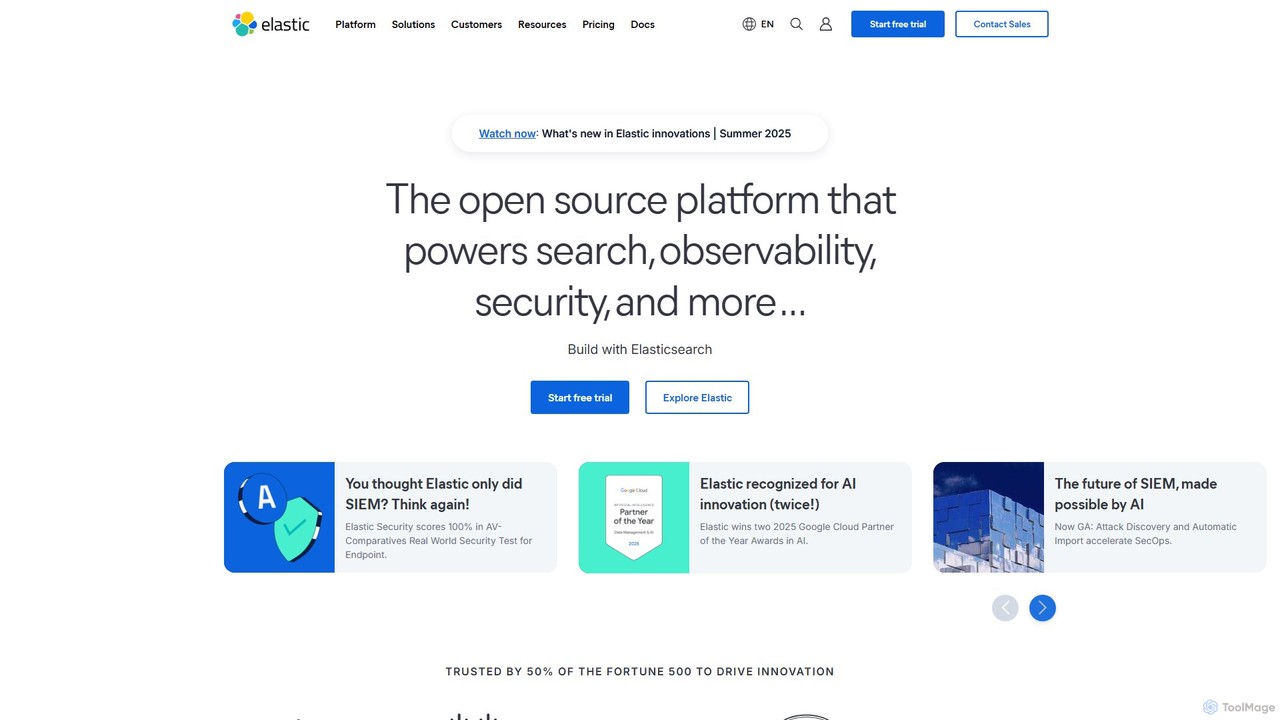
Elastic is a leading Search AI company that provides a powerful, open, and flexible platform to turn vast amounts of data into actionable results. At its core is Elasticsearch, the most widely deployed vector database and search engine, which enables users to build sophisticated search experiences, monitor complex systems, and secure their digital environments. The Elastic platform is designed to handle data at scale, offering solutions that combine the power of search with the intelligence of generative AI.
The platform is structured around three primary solutions: Elastic Search, Elastic Observability, and Elastic Security. Elastic Search allows businesses to create advanced AI and machine learning-enabled search applications for customers and employees. Elastic Observability unifies application and infrastructure visibility, using advanced machine learning and analytics to proactively resolve issues. Elastic Security modernizes Security Operations (SecOps) with AI-driven analytics to detect, investigate, and respond to threats before they can cause damage. The introduction of the Search AI Lake further enhances these capabilities by merging the cost-effectiveness of object storage with the low-latency performance of a premier vector database, optimized for generative AI and Retrieval-Augmented Generation (RAG) workloads.
How to use Elastic
Getting started with Elastic is designed to be flexible, catering to various organizational needs and technical expertise. Users can choose from several deployment models:
- Elastic Cloud Serverless: The simplest way to start. Users just bring their data, and Elastic manages all infrastructure, including hardware configuration, cluster sizing, and versioning. It automatically scales based on load, with usage-based pricing.
- Elastic Cloud Hosted: This option offers more control over hardware configuration, cluster size, and versions while still being a fully managed service. It's available on major cloud providers like AWS, Google Cloud, and Microsoft Azure.
- Self-Managed: For maximum control, users can deploy and manage Elastic on their own infrastructure, whether on-premises or in a private/public cloud. This provides full control over the deployment environment.
Once deployed, users can ingest data from countless sources. Developers can then leverage robust APIs and SDKs, such as the Elastic Distributions of OTel (EDOT), to build custom applications or integrate with existing systems. The platform's user interface, Kibana, provides powerful tools for data visualization, dashboard creation, and management.
Core Features of Elastic
- Search AI Platform: A unified solution that integrates search, observability, and security, powered by AI and machine learning.
- Elasticsearch: A distributed, RESTful search and analytics engine that excels as a vector database for semantic search and AI applications.
- Generative AI & RAG: Optimized for Retrieval-Augmented Generation (RAG) workloads, enabling seamless integration with Large Language Models (LLMs) to build intelligent applications.
- Elastic Security: A comprehensive solution for SIEM and Endpoint Security, offering AI-driven threat detection, investigation, and response. It has achieved top scores in independent security tests.
- Elastic Observability: Provides a unified view of logs, metrics, and APM traces to monitor the health and performance of applications and infrastructure.
- Search AI Lake: An innovative architecture that combines the scalability of cloud object storage with the high-performance search capabilities of a vector database.
- ES|QL (Elasticsearch Query Language): A powerful and piped query language that simplifies data exploration and analysis, now featuring join capabilities for real-time data enrichment.
- Flexible Deployment: Offers a range of deployment options including fully managed Serverless, Hosted Cloud, and Self-Managed for ultimate control.
Use Cases for Elastic
Elastic's versatility makes it suitable for a wide array of applications across industries:
- Enterprise Search: Creating powerful internal search engines for workplace documents or customer-facing search on websites and e-commerce platforms.
- Log Analytics and Infrastructure Monitoring: Centralizing and analyzing logs, metrics, and traces from servers, applications, and network devices for real-time monitoring and troubleshooting.
- Cybersecurity Analytics (SIEM): Aggregating security data from across the enterprise to detect, investigate, and respond to cyber threats in real time.
- Endpoint Protection: Securing servers and user endpoints against ransomware and other advanced threats.
- Generative AI Applications: Building sophisticated AI-powered systems like chatbots, semantic search engines, and Q&A platforms using its vector database and RAG capabilities.
- Business Analytics: Analyzing business data to gain insights into customer behavior, operational efficiency, and market trends.
Advantages of Elastic
Elastic is trusted by over 50% of the Fortune 500 for several key reasons:
- Performance and Speed: Engineered for unprecedented speed, delivering relevant results from massive datasets in milliseconds.
- Scalability: Proven to scale from a single developer's laptop to petabyte-scale clusters in production.
- Unified Platform: Reduces complexity and cost by providing a single platform for search, observability, and security, eliminating tool sprawl.
- AI-Powered: Deeply integrated AI and machine learning capabilities, including generative AI, enhance every aspect of the platform.
- Open and Flexible: Built on a foundation of open source, offering transparency, a strong community, and the flexibility to deploy anywhere.
- Cost-Effective: Delivers high performance at a competitive price point, with flexible pricing models to suit different needs.
Pricing and Plans
Elastic offers flexible pricing across its deployment models to fit various use cases and budgets. The main options are:
- Serverless: A usage-based pricing model where you pay for what you use. It's fully managed by Elastic and scales automatically, making it ideal for getting started quickly or for workloads with variable traffic.
- Hosted (Elastic Cloud): A resource-based pricing model. You can pay as you go monthly or opt for prepaid plans. This model gives you more control over cluster configuration and is available on AWS, Google Cloud, and Azure.
- Self-Managed: A license-based model based on the number of nodes and resources used. This is for organizations that require full control over their deployment environment.
Elastic also offers a free trial for Elastic Cloud, allowing users to explore its capabilities without commitment. Specific pricing details can be found on the official website and vary based on the chosen solution, resources, and support tier.
Traffic
Latest traffic
Status
Monthly traffic trend
- 2025-9: 1.6M
- 2026-1: 1.5M
- 2026-2: 1.3M
- 2026-3: 1.5M
- 2026-4: 1.4M
- 2026-5: 1.3M
Geography
Top 5 countries / regions
- 🇺🇸United States55.2%
- 🇨🇳China15.1%
- 🇮🇳India14.4%
- 🇰🇷South Korea8.0%
- 🇩🇪Germany7.3%
Traffic sources
| Source type | Percentage |
|---|---|
Direct | 74.1% |
Referral | 22.9% |
Email | 3.0% |
Top keywords
| Keyword | Cost per click |
|---|---|
| elastic | $2.76 |
| elastic careers | $2.94 |
| elastic search | $1.87 |
| elasticsearch | $2.08 |
| kibana | $1.63 |
Elastic Videos on YouTube

![How to build AI‑powered search with Elasticsearch [2 min live demo]](https://i.ytimg.com/vi/76MC4racGFc/maxresdefault.jpg)


Official Elastic Community


Official Elastic Community
Official Elastic Community

Elastic Alternatives
Langfuse
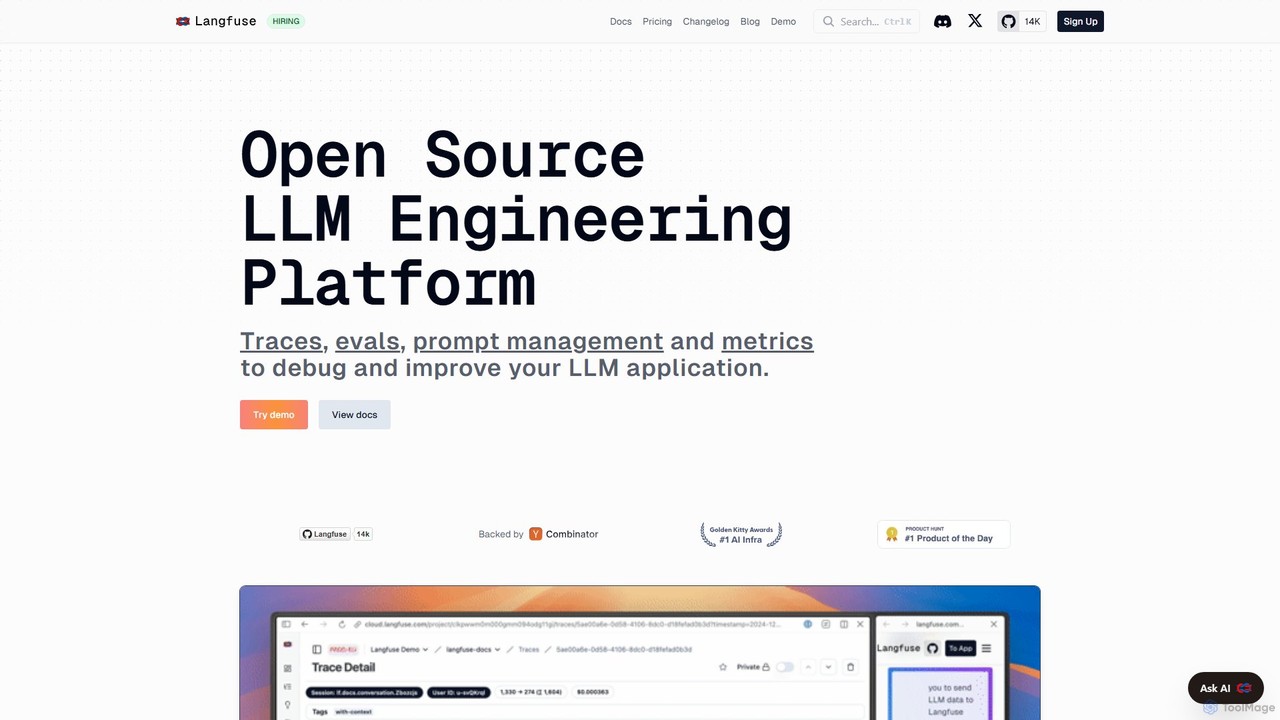
Langfuse is an open-source LLM engineering platform that provides comprehensive tools for debugging, evaluating, and improving LLM applications. It offers features like tracing, prompt management, evaluation frameworks, and metrics to streamline the entire development lifecycle for teams building with large language models.
Analytics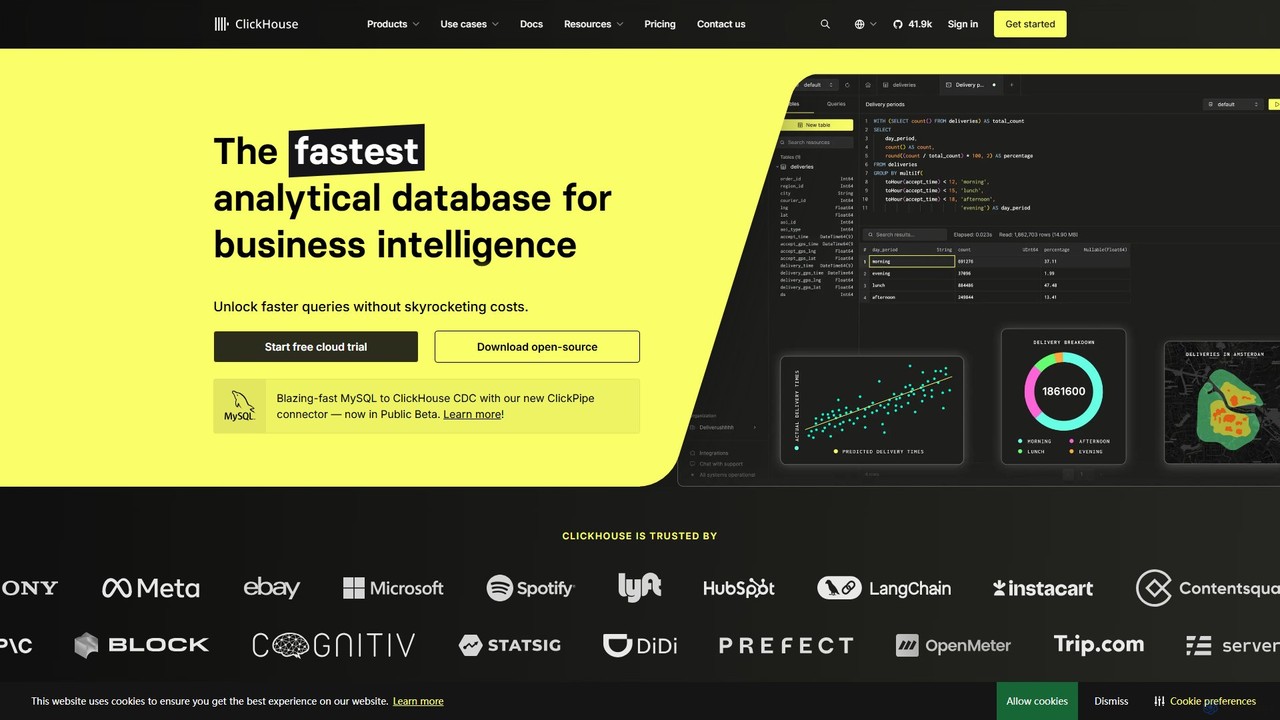
ClickHouse
ClickHouse is a high-performance, open-source, column-oriented OLAP database management system. It's designed for real-time analytics on large-scale data, enabling blazing-fast queries for observability, business intelligence, ML/GenAI, and more, while remaining resource-efficient and cost-effective.
Databases
Milvus
Milvus is a high-performance, open-source vector database built for AI applications. It enables developers to manage and search through billions of high-dimensional vectors with minimal latency. Ideal for building scalable systems like retrieval-augmented generation (RAG), recommendation engines, and semantic search, Milvus offers flexible deployment options from local prototyping to large-scale distributed clusters.
Machine Learning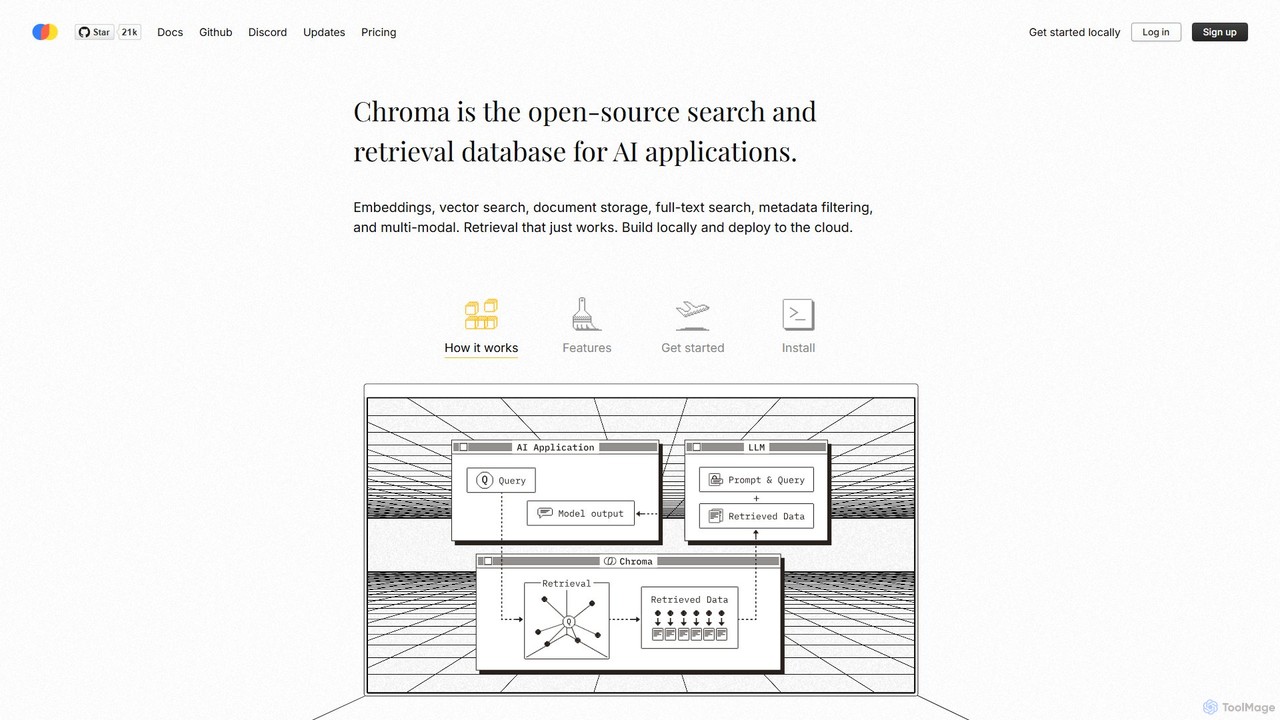
Chroma
Chroma is the open-source, AI-native retrieval database designed for building powerful AI applications with Retrieval-Augmented Generation (RAG). It simplifies storing and searching embeddings, documents, and metadata, offering vector search, full-text search, and a scalable, serverless cloud platform. It's built to be easy to use, cost-effective, and powerful, from local development to large-scale production.
Vector Database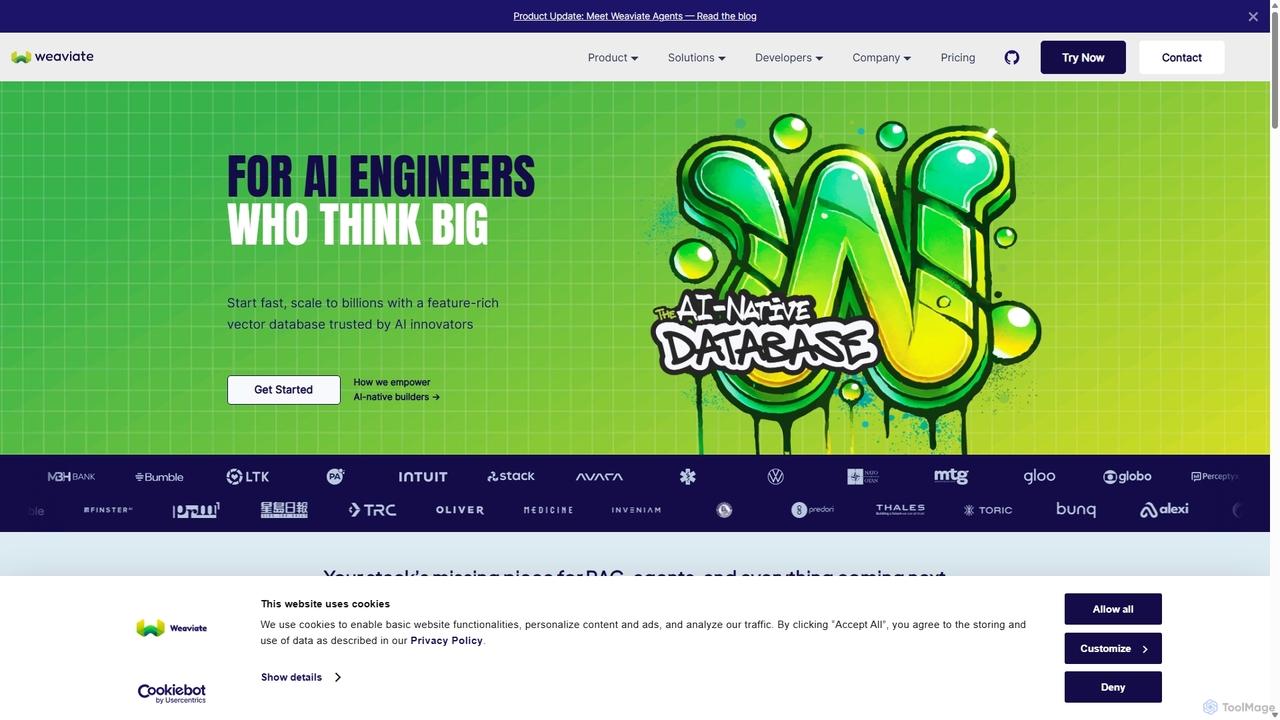
Weaviate
Weaviate is an open-source, AI-native vector database designed for developers. It enables scalable, low-latency vector, keyword, and hybrid search. Ideal for building AI applications like semantic search, recommendation engines, and Retrieval-Augmented Generation (RAG) systems, it integrates seamlessly with popular machine learning models to store and query data based on semantic meaning.
Vector DatabaseElastic Categories
Elastic Embed Widget
Copy this embed code to place the badge on your blog, article, or product site and send readers directly to this ToolMage detail page.

Related AI tools
Splunk
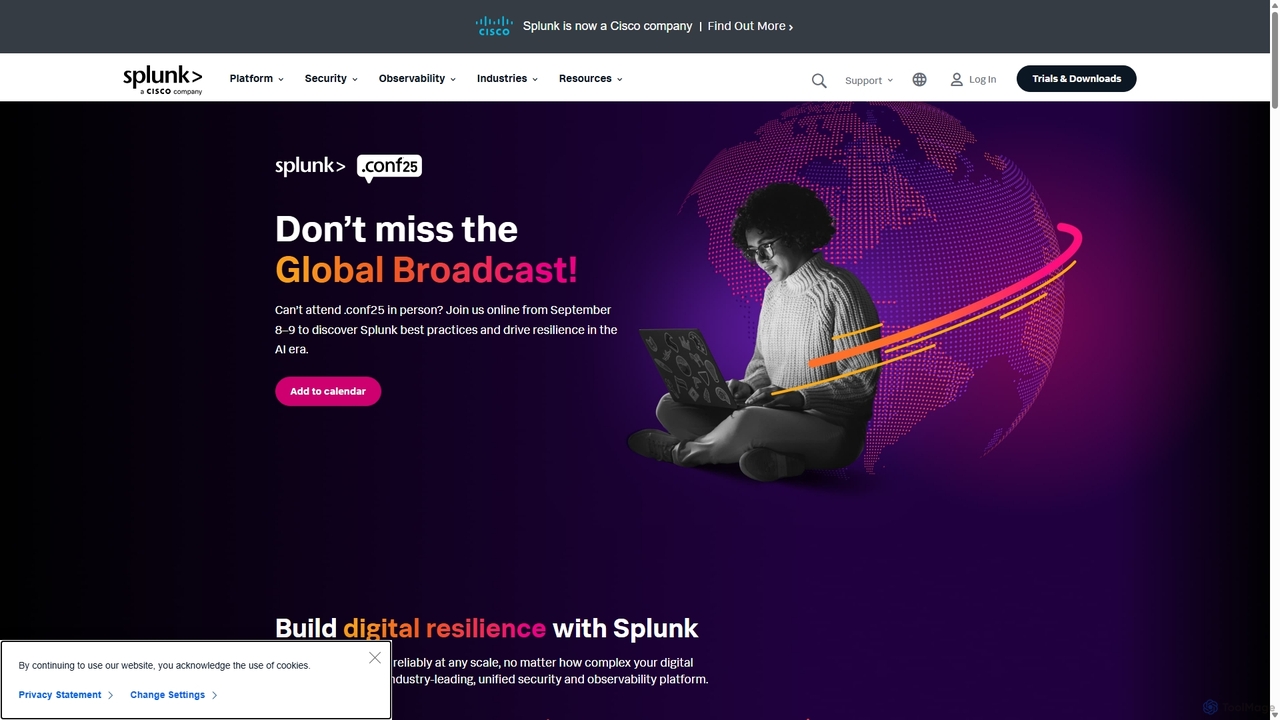
Splunk is the key to enterprise resilience, offering a unified, AI-powered platform for security and observability. It enables organizations to investigate, monitor, analyze, and act on data from any source at any scale. Now a Cisco company, Splunk helps SecOps, ITOps, and engineering teams keep their digital systems secure and reliable in the AI era.
It Operations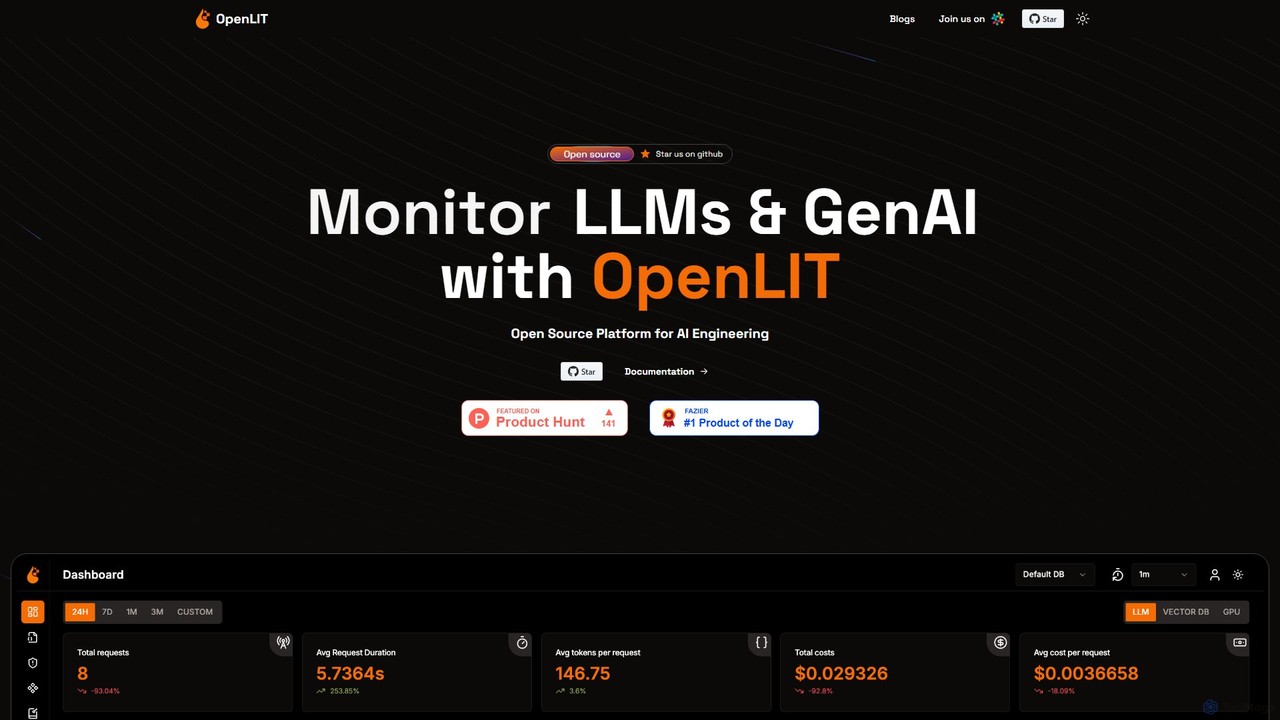
OpenLIT
OpenLIT is an open-source, OpenTelemetry-native observability platform for Generative AI and LLM applications. It simplifies development with tools for request tracing, cost tracking, exception monitoring, and performance analysis. Featuring a centralized prompt repository, a secure vault for secrets, and a playground for comparing LLMs, OpenLIT provides a comprehensive solution for monitoring and scaling AI applications efficiently.
Model Management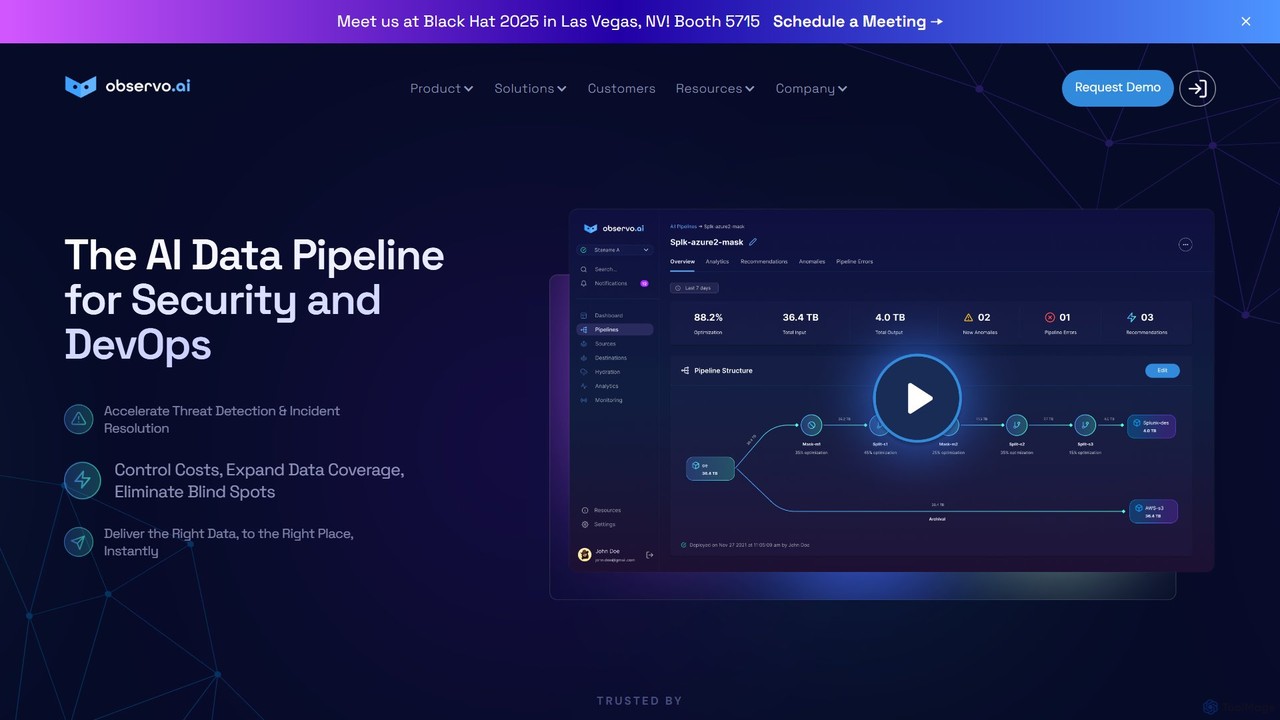
Observo AI
Observo AI is an intelligent data pipeline platform for Security and DevOps teams. It uses AI to optimize telemetry data, reducing log volumes by up to 80% and observability costs by over 50%. The platform accelerates threat detection, enriches data in real-time, and eliminates blind spots, making security and operations more efficient and cost-effective.
Data Pipeline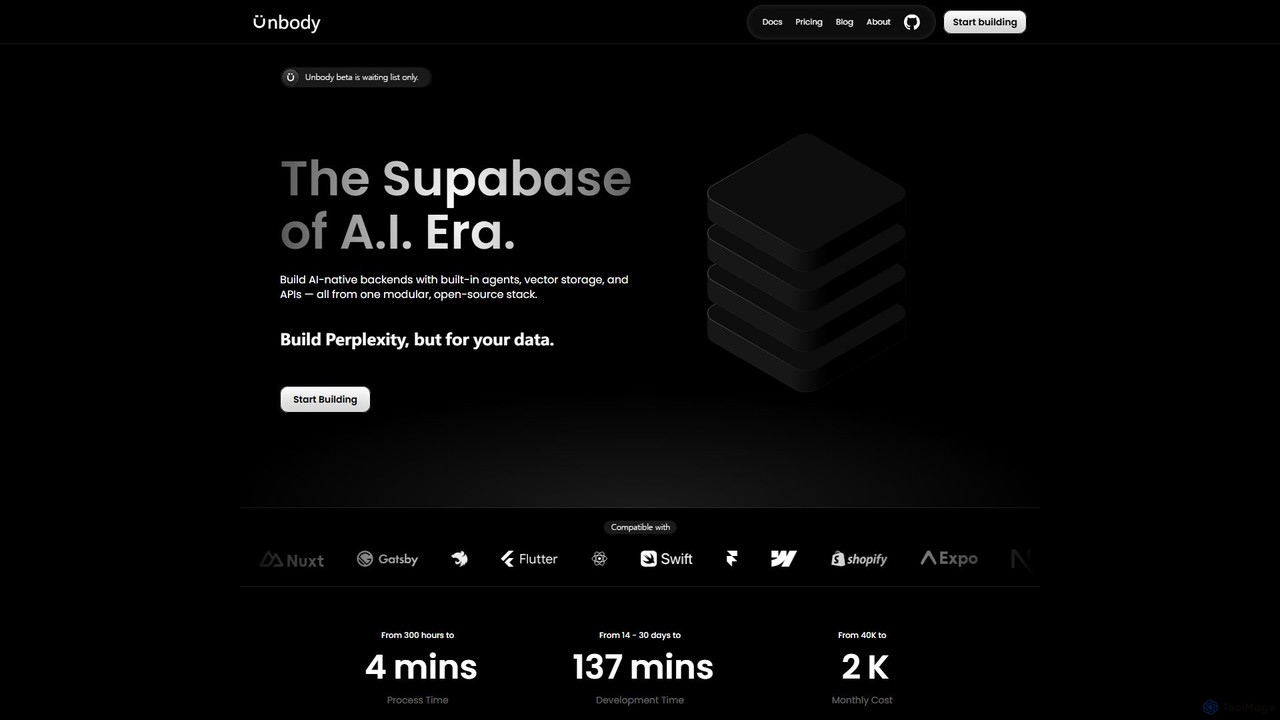
Unbody
Unbody is an AI-native development stack, described as the "Supabase of the AI Era." It provides developers with a modular, open-source backend featuring built-in agents, vector storage, and a unified API. This allows for the rapid and cost-effective creation of intelligent, adaptive applications by transforming any data into a queryable knowledge base, eliminating the need for fragmented systems and complex AI pipelines.
Vector Database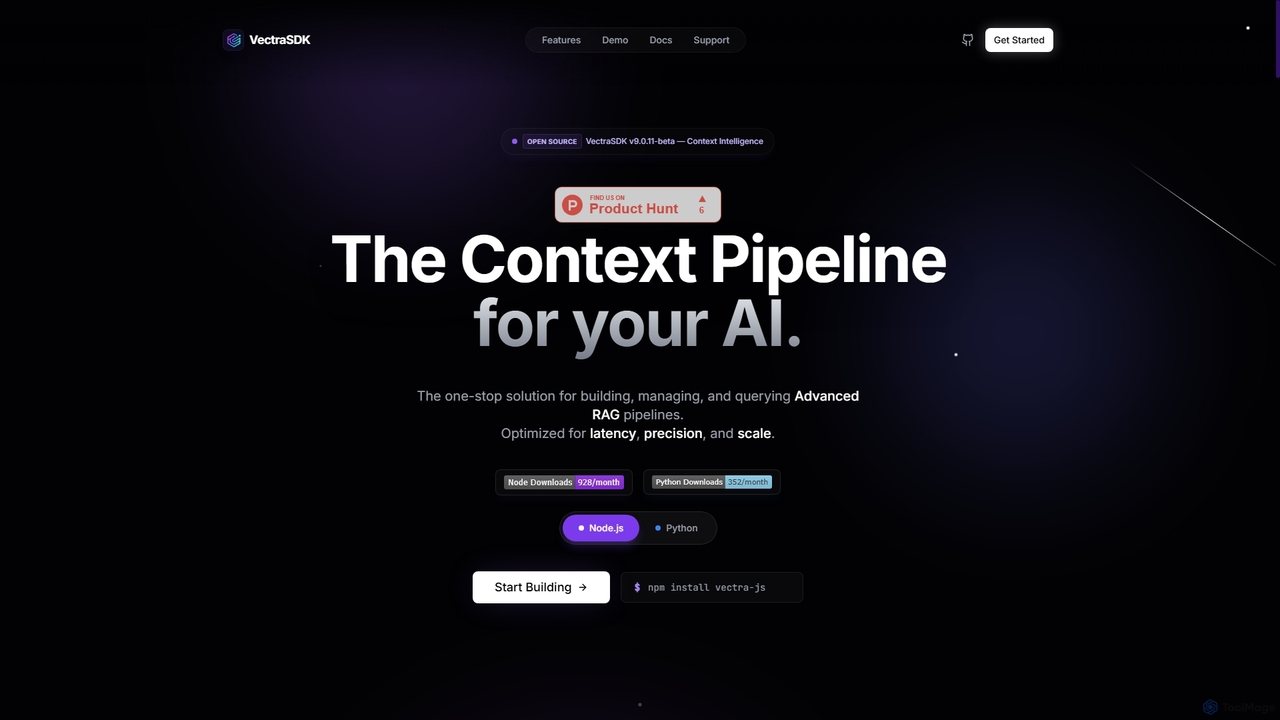
Vectra
Vectra is an open-source, production-grade SDK for Node.js and Python, designed to build, manage, and query advanced Retrieval-Augmented Generation (RAG) pipelines. It offers a comprehensive toolkit for developing context-aware AI applications, optimized for low latency, high precision, and scalability.
Rag PipelinesLangfuse
Langfuse is an open-source LLM engineering platform that provides comprehensive tools for debugging, evaluating, and improving LLM applications. It offers features like tracing, prompt management, evaluation frameworks, and metrics to streamline the entire development lifecycle for teams building with large language models.
AnalyticsClickHouse
ClickHouse is a high-performance, open-source, column-oriented OLAP database management system. It's designed for real-time analytics on large-scale data, enabling blazing-fast queries for observability, business intelligence, ML/GenAI, and more, while remaining resource-efficient and cost-effective.
DatabasesMilvus
Milvus is a high-performance, open-source vector database built for AI applications. It enables developers to manage and search through billions of high-dimensional vectors with minimal latency. Ideal for building scalable systems like retrieval-augmented generation (RAG), recommendation engines, and semantic search, Milvus offers flexible deployment options from local prototyping to large-scale distributed clusters.
Machine Learning
Jyek
Jyek is an AI agent platform that understands objectives, creates execution plans, uses tools, and delivers verifiable results for complex, multi-step tasks.
AutomationChroma
Chroma is the open-source, AI-native retrieval database designed for building powerful AI applications with Retrieval-Augmented Generation (RAG). It simplifies storing and searching embeddings, documents, and metadata, offering vector search, full-text search, and a scalable, serverless cloud platform. It's built to be easy to use, cost-effective, and powerful, from local development to large-scale production.
Vector DatabaseWeaviate
Weaviate is an open-source, AI-native vector database designed for developers. It enables scalable, low-latency vector, keyword, and hybrid search. Ideal for building AI applications like semantic search, recommendation engines, and Retrieval-Augmented Generation (RAG) systems, it integrates seamlessly with popular machine learning models to store and query data based on semantic meaning.
Vector Database
LanceDB
LanceDB is an open-source, AI-native multimodal lakehouse designed for building and scaling AI applications. It provides a unified platform for storing, searching, and managing complex data like text, images, voice, and vectors. Ideal for RAG, semantic search, and model training, LanceDB offers blazing-fast hybrid search, massive scalability to petabytes, and significant cost savings, making it a powerful foundation for enterprise-grade AI.
Vector Database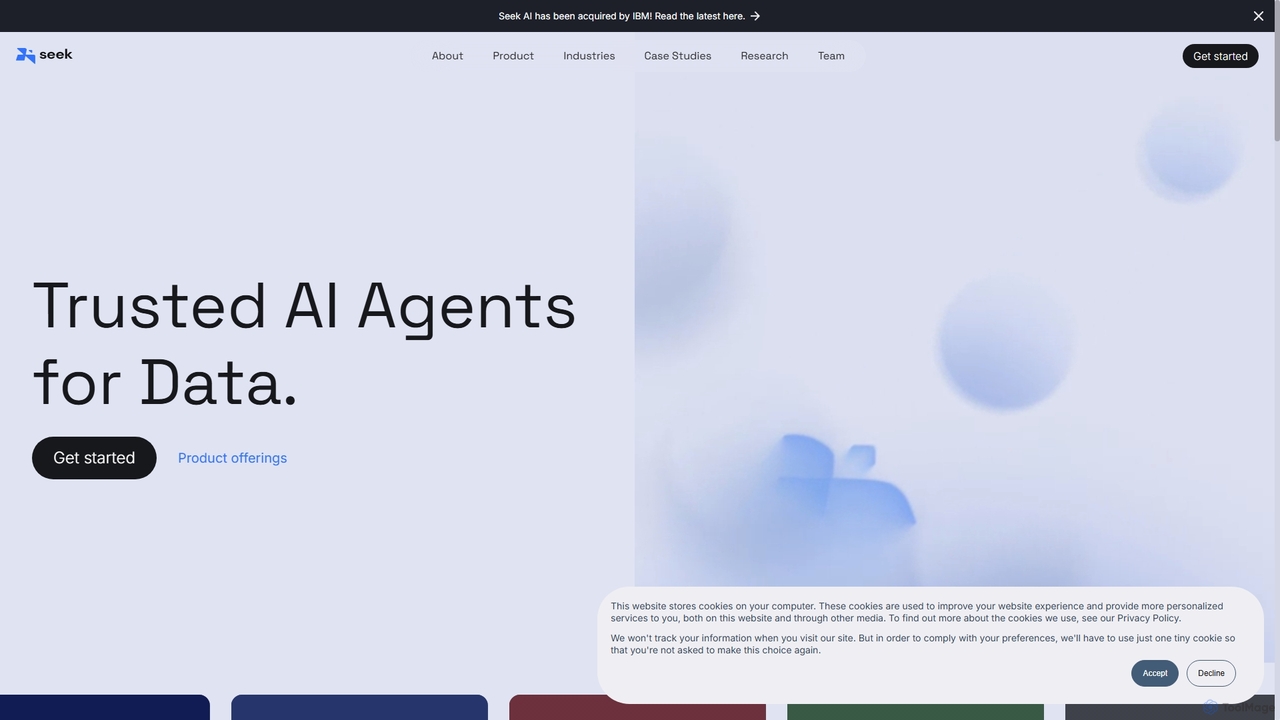
Seek AI
Seek AI is a generative AI platform for data analytics that empowers users to query databases, generate reports, and create visualizations using natural language. It automates the text-to-SQL process, making data accessible to non-technical users and accelerating insights for data teams.
Business Intelligence
MindsDB
MindsDB is an open-source AI layer for databases, enabling developers to build, train, and deploy AI models and agents using standard SQL. It connects to hundreds of data sources, unifies structured and unstructured data into knowledge bases, and allows you to get AI-powered answers directly from your data without complex ETL pipelines.
Machine Learning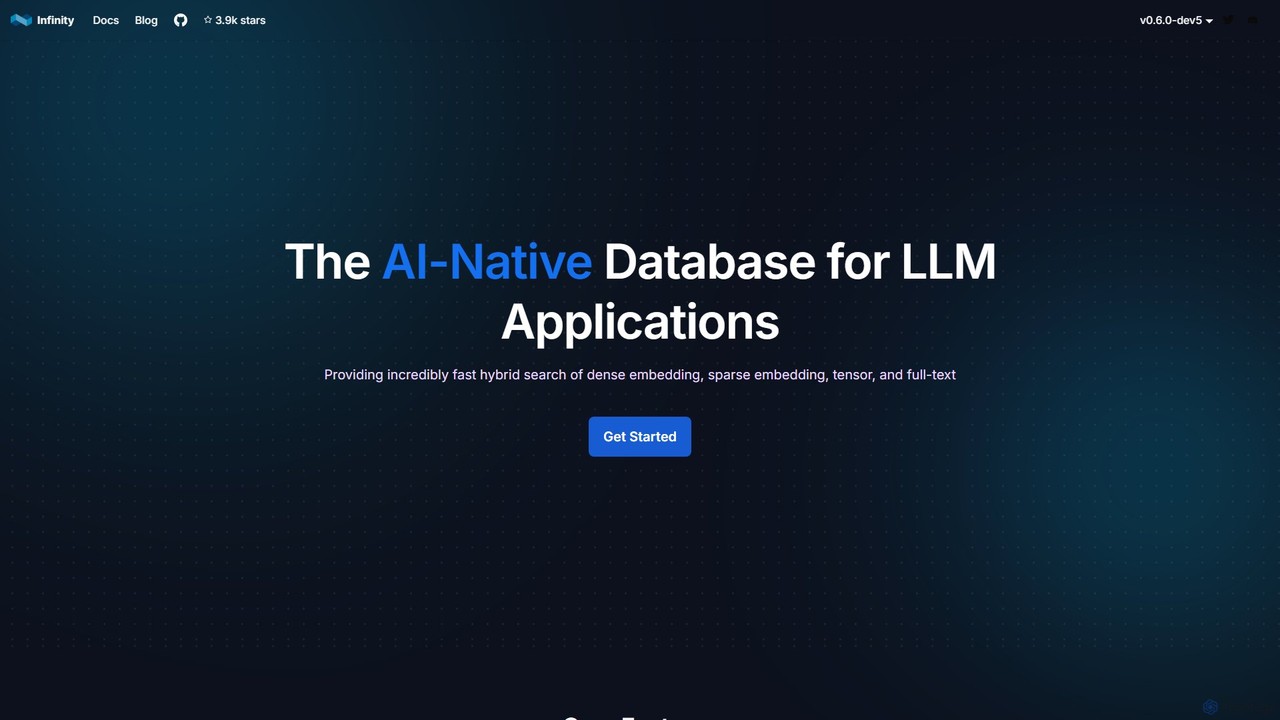
infiniflow
infiniflow is a high-performance, open-source, AI-native database specifically designed for LLM applications. It offers incredibly fast vector search, powerful hybrid search capabilities (vector, full-text, tensor), and simplified deployment. With an intuitive Python API, it's built to power demanding AI tasks like Retrieval-Augmented Generation (RAG) and semantic search with millisecond latency.
Vector Search
Elastic Comments (0)
Sign in to comment.
Sign inNo comments yet.