
xMem Overview
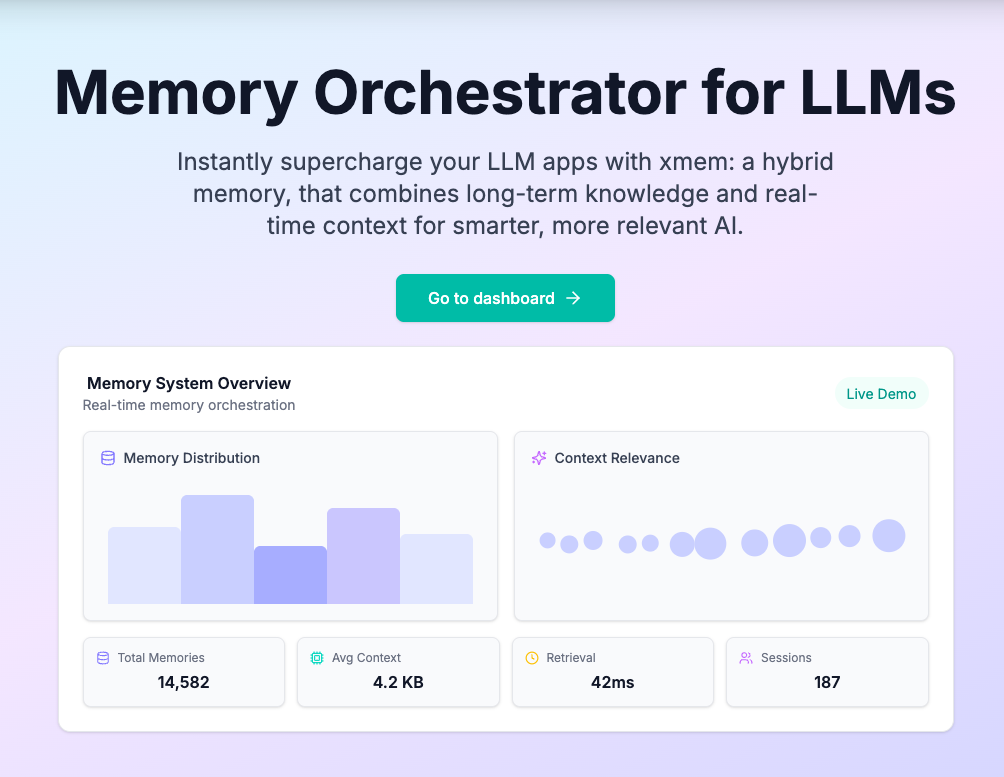
xMem is a sophisticated memory orchestrator built for developers creating applications with Large Language Models (LLMs). It addresses one of the most significant challenges in AI development: the inherent forgetfulness of LLMs. By providing a hybrid memory system, xMem ensures that AI applications can maintain context and knowledge not just within a single session, but across multiple interactions over time.
The platform works by intelligently combining two types of memory. Long-term memory stores and retrieves persistent information like documents, user history, and foundational knowledge using vector search, integrating with popular vector databases such as Qdrant, ChromaDB, and Pinecone. Simultaneously, session memory tracks the immediate context of the current conversation, including recent messages and instructions, for personalization and recency. xMem's RAG (Retrieval-Augmented Generation) Orchestration layer automatically assembles the most relevant context from both memory stores for every LLM call, eliminating the need for manual tuning and significantly boosting the accuracy and relevance of the AI's responses.
How to use xMem
Integrating xMem into an LLM application is designed to be a straightforward process for developers:
- Setup and Configuration: Begin by choosing your preferred components. xMem is open-source friendly and supports various LLM providers (like OpenAI, Llama.cpp, Ollama), vector databases (Qdrant, ChromaDB), and session stores (in-memory, MongoDB).
- Installation: Install the xMem SDK into your project. The primary SDK is available for TypeScript/JavaScript environments.
- Instantiation: In your application's code, create an instance of the xMem orchestrator. You'll pass your chosen configurations for the vector store, session store, and LLM provider during this initialization step.
- Querying: Instead of calling the LLM directly, you use the xMem `orchestrator.query()` method. When you send a user's prompt through this method, xMem automatically handles the complex process of fetching relevant long-term knowledge and recent session context, packaging it, and sending it to the LLM.
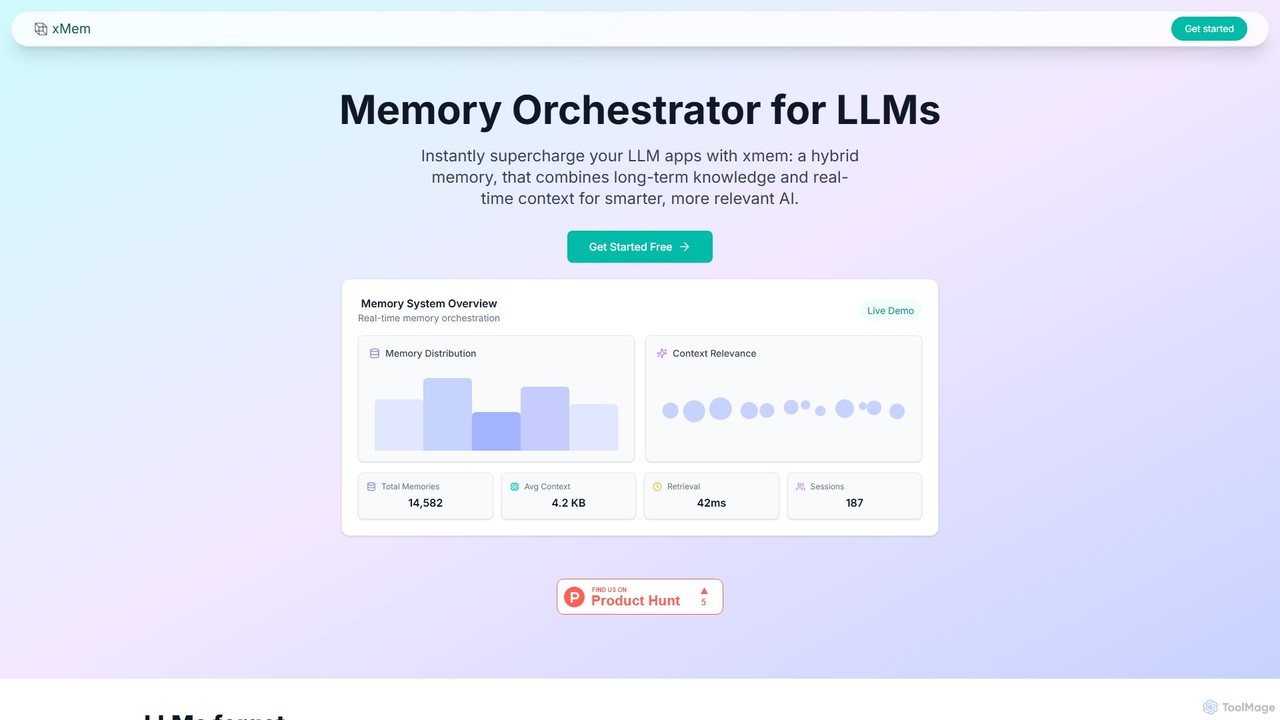
- Monitoring: Utilize the xMem dashboard to monitor the system's performance. The dashboard provides insights into memory distribution, context relevance, retrieval latency, and active sessions. It also features a knowledge graph to visualize the connections between different pieces of information.
Core Features of xMem
- Hybrid Memory System: Seamlessly combines persistent long-term memory (via vector DBs) and volatile short-term session memory for comprehensive context.
- Automated RAG Orchestration: Intelligently retrieves and assembles the optimal context for each query, improving response quality without manual intervention.
- Knowledge Graph: Visualizes the relationships between concepts, facts, and user context in real-time, enabling the LLM to perform more complex reasoning and recall.
- Open-Source First: Designed to work with any open-source LLM (e.g., Llama, Mistral) and vector database, offering maximum flexibility and avoiding vendor lock-in.
- Effortless Integration: Provides a simple API and a comprehensive dashboard for easy integration, monitoring, and management of the memory system.
- Persistent User Context: Solves the problem of context loss by ensuring the AI remembers user details, project information, and past conversations across sessions.
Use Cases for xMem
xMem is ideal for any application where contextual memory is crucial for a high-quality user experience:
- Advanced Chatbots and Virtual Assistants: Create assistants that remember user preferences, past conversations, and personal details, offering a truly personalized experience.
- AI Copilots for Development and Work: Build copilots that maintain the context of a project, codebase, or team discussions, providing relevant help without needing constant reminders.
- Intelligent Customer Support Agents: Deploy AI agents that have access to a customer's full interaction history, enabling them to provide seamless and informed support.
- Personalized Knowledge Management: Develop systems that not only search documents but also understand the user's research context, connecting new queries with previous findings.
Advantages of xMem
The primary advantage of xMem is its ability to make LLM applications significantly smarter and more user-friendly. By giving LLMs a reliable memory, it prevents frustrating situations where users have to repeat themselves. Its open-source nature provides flexibility and control to developers. The automated orchestration simplifies the complex task of managing context for RAG pipelines, saving development time and effort. Ultimately, xMem boosts LLM accuracy, enhances user engagement, and unlocks the potential for more sophisticated AI agents and copilots.
Pricing and Plans
xMem operates on a freemium model. It offers a generous free tier that allows developers to get started and integrate the memory orchestrator into their projects. For applications with larger-scale needs, higher usage limits, or advanced enterprise features, paid plans are expected to be available. Specific details on the tiers and pricing can be found on the official website.
Traffic
Latest traffic
Status
Monthly traffic trend
- 2025-8: 65
- 2025-9: 367
- 2026-3: 0
- 2026-4: 0
- 2026-5: 616
Geography
Top 5 countries / regions
- 🇺🇸United States100.0%
Top keywords
| Keyword | Cost per click |
|---|---|
| xme ai | $0.00 |
xMem Alternatives
MyScale Chat
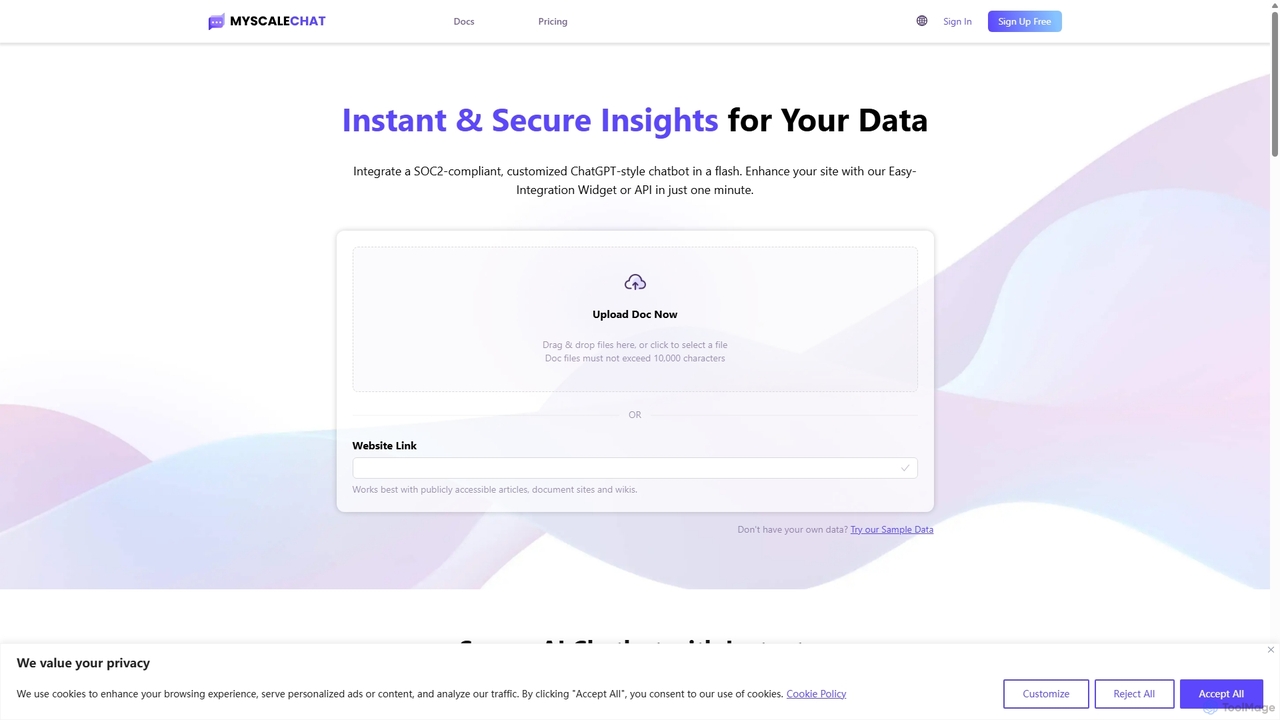
MyScale Chat is an AI-powered platform that enables users to build custom chatbots by chatting with their own data. Leveraging the high-performance MyScale vector database, it provides instant, secure, and accurate insights from documents, websites, or knowledge bases. It's designed for developers and businesses to create sophisticated RAG (Retrieval-Augmented Generation) applications, transforming private data into interactive, intelligent conversational agents.
Document Analysis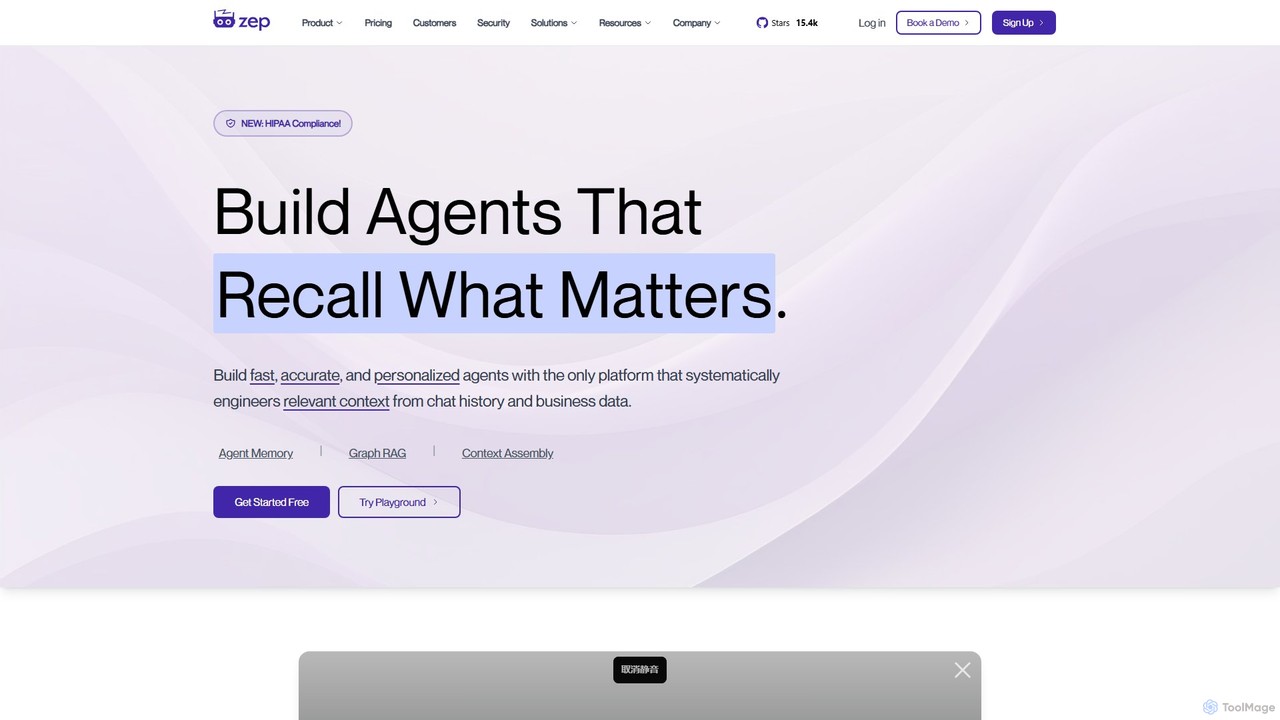
Zep
Zep is a context engineering platform for developers building AI agents. It provides long-term memory and advanced Graph RAG capabilities, enabling agents to recall user preferences, conversation history, and dynamic business data. By automatically constructing temporal knowledge graphs, Zep delivers relevant, token-efficient context to LLMs, resulting in faster, more accurate, and highly personalized AI interactions.
Agent Builder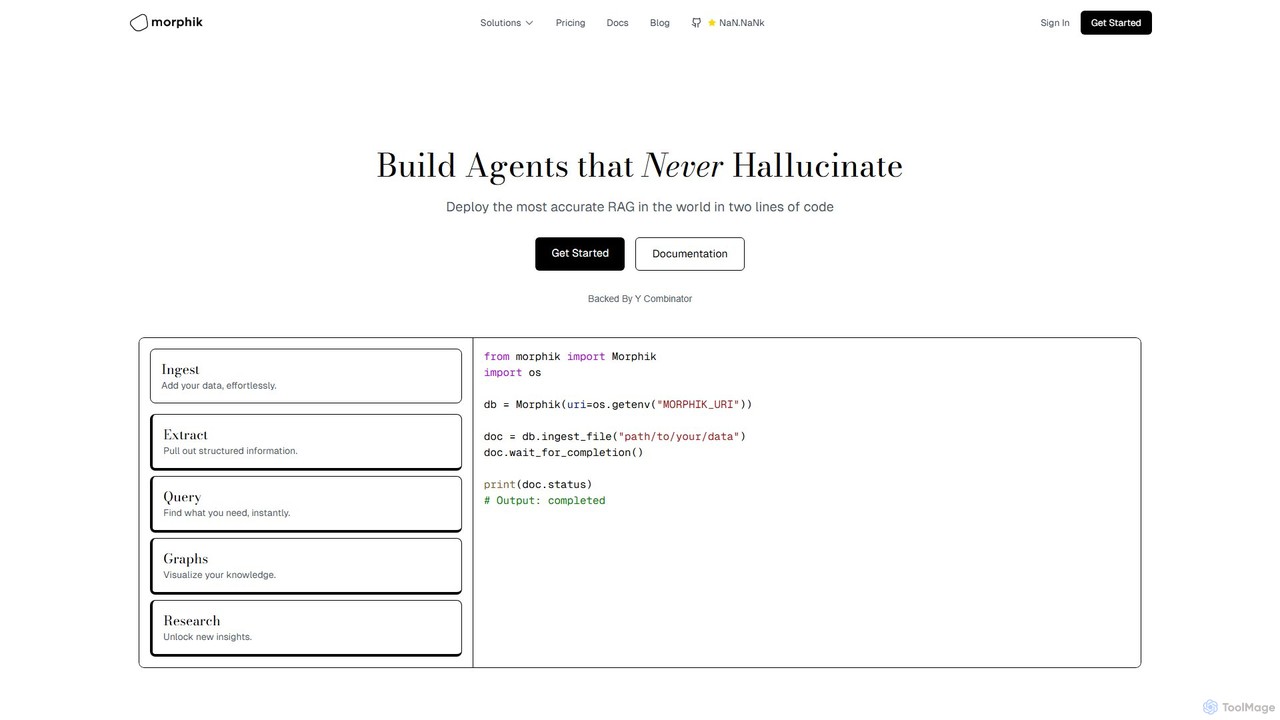
Morphik
Morphik is an advanced developer platform for building highly accurate Retrieval-Augmented Generation (RAG) systems and AI agents. It specializes in eliminating hallucinations by using visual-first retrieval to understand complex, domain-specific documents, including diagrams and schematics. Deployable with just two lines of code, it offers superior performance, speed, and scalability for enterprise-grade AI applications.
Enterprise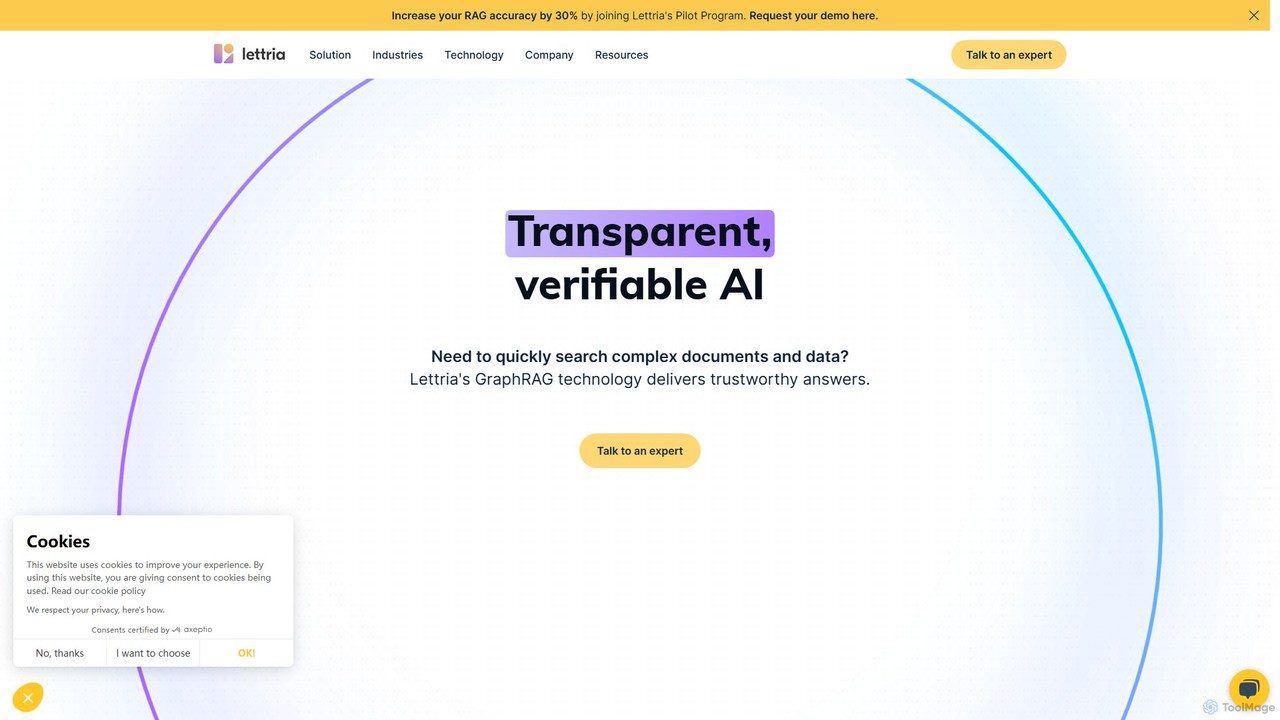
Lettria
Lettria is an enterprise-grade AI platform featuring GraphRAG technology. It enhances Retrieval-Augmented Generation (RAG) by combining knowledge graphs with vector databases to deliver accurate, verifiable, and transparent answers from complex, unstructured data. Designed for sectors like healthcare, finance, and legal, it eliminates AI hallucinations and builds trust in business-critical applications.
Document Intelligence
Pinecone
Pinecone is a high-performance, fully managed vector database designed for building knowledgeable AI applications at scale. It enables developers to implement advanced features like semantic search, retrieval-augmented generation (RAG), and personalized recommendations by efficiently storing and querying billions of vector embeddings in real-time.
DatabasexMem Categories
xMem Embed Widget
Copy this embed code to place the badge on your blog, article, or product site and send readers directly to this ToolMage detail page.
Related AI tools
AnythingLLM
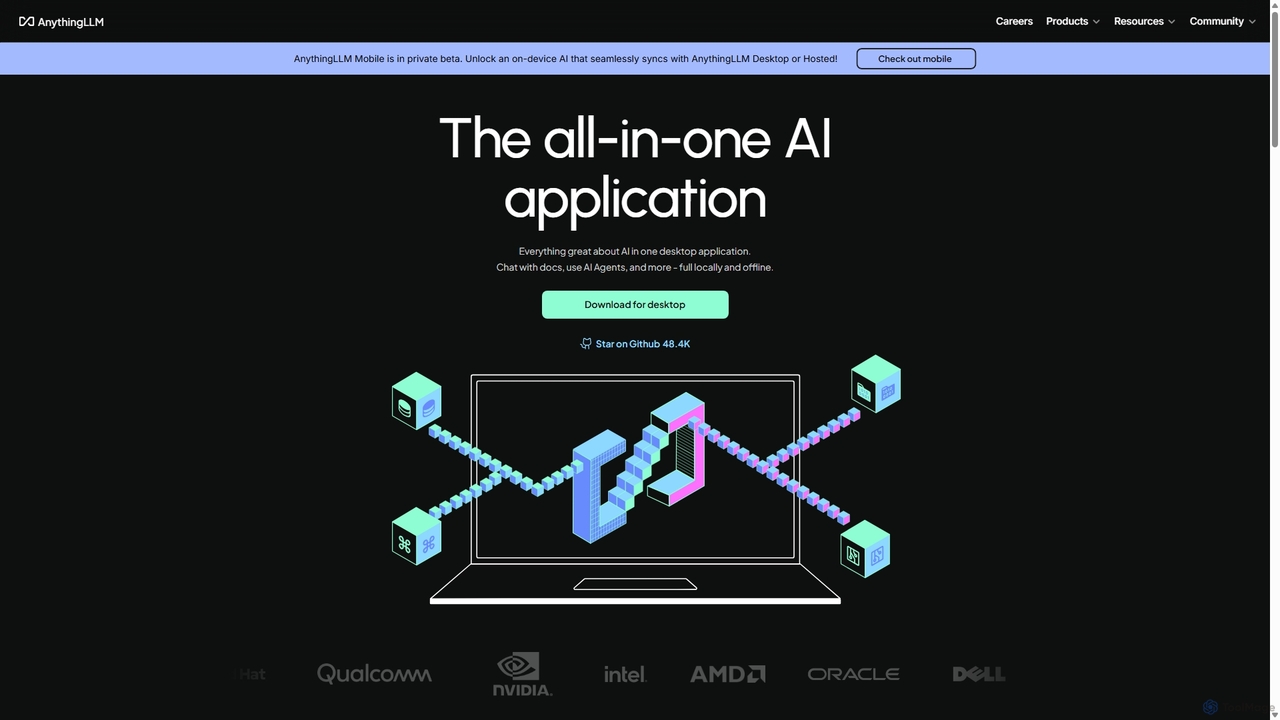
AnythingLLM is an open-source, all-in-one AI application that runs locally on your desktop or can be self-hosted. It allows you to create a private knowledge base from any document, chat with your data, and utilize powerful AI agents while ensuring complete data privacy and control.
Document Management
Embedding.io
An AI-powered platform that transforms any website into an interactive, queryable knowledge base for Large Language Models (LLMs). Easily create custom chatbots, AI search functions, and automated support systems by providing a simple URL. It handles crawling, embedding, and API integration.
Search
phidata
phidata is an open-source Python framework for building autonomous AI Assistants. It simplifies the integration of LLMs with memory, knowledge bases, and external tools, enabling developers to create powerful, stateful AI applications with ease.
FrameworksMyScale Chat
MyScale Chat is an AI-powered platform that enables users to build custom chatbots by chatting with their own data. Leveraging the high-performance MyScale vector database, it provides instant, secure, and accurate insights from documents, websites, or knowledge bases. It's designed for developers and businesses to create sophisticated RAG (Retrieval-Augmented Generation) applications, transforming private data into interactive, intelligent conversational agents.
Document Analysis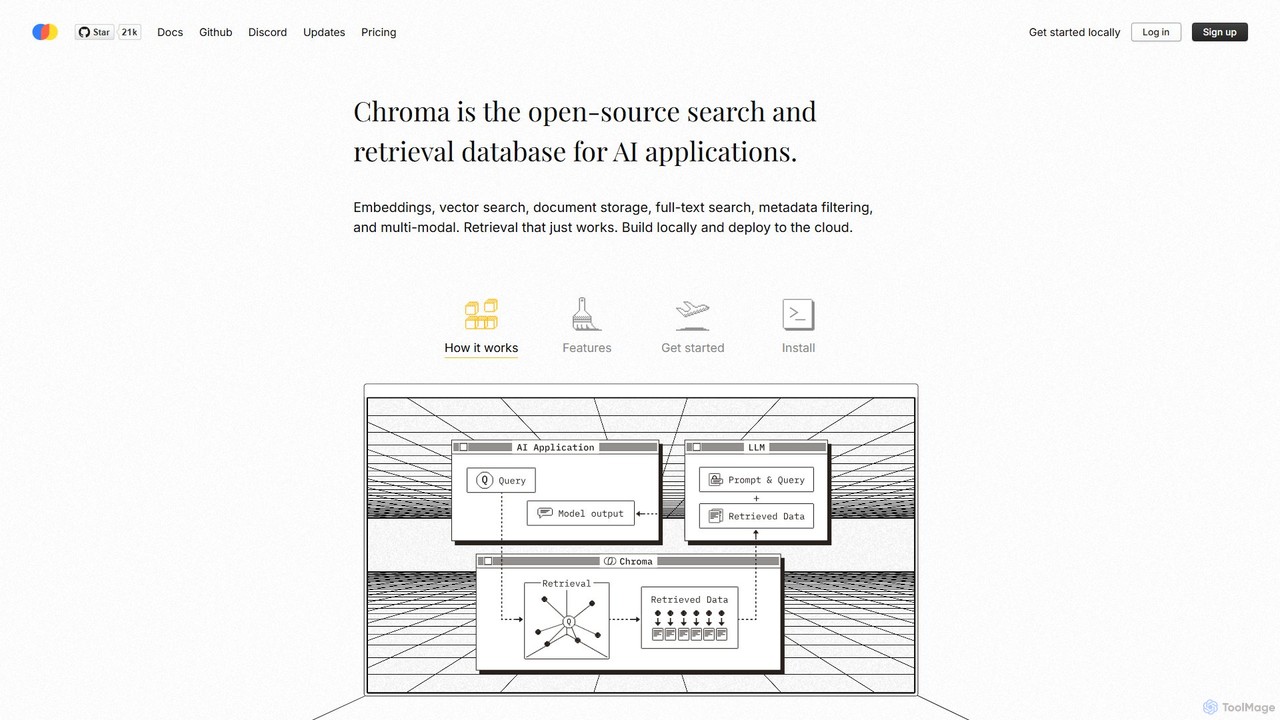
Chroma
Chroma is the open-source, AI-native retrieval database designed for building powerful AI applications with Retrieval-Augmented Generation (RAG). It simplifies storing and searching embeddings, documents, and metadata, offering vector search, full-text search, and a scalable, serverless cloud platform. It's built to be easy to use, cost-effective, and powerful, from local development to large-scale production.
Vector Database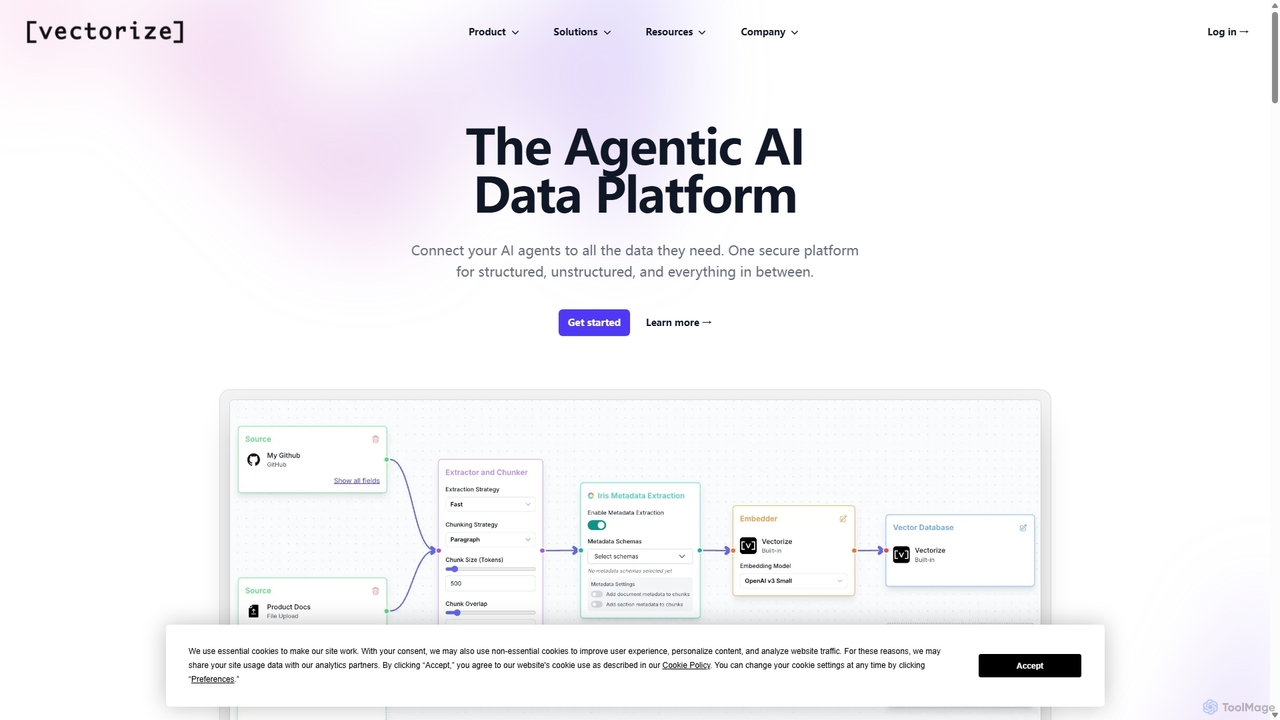
Vectorize
Vectorize is a RAG-as-a-Service platform that simplifies building AI applications on unstructured data. It offers managed RAG pipelines, extensive data source connectors, and the flexibility to use its managed vector database or connect your own, enabling developers to deploy production-ready AI solutions quickly.
Rag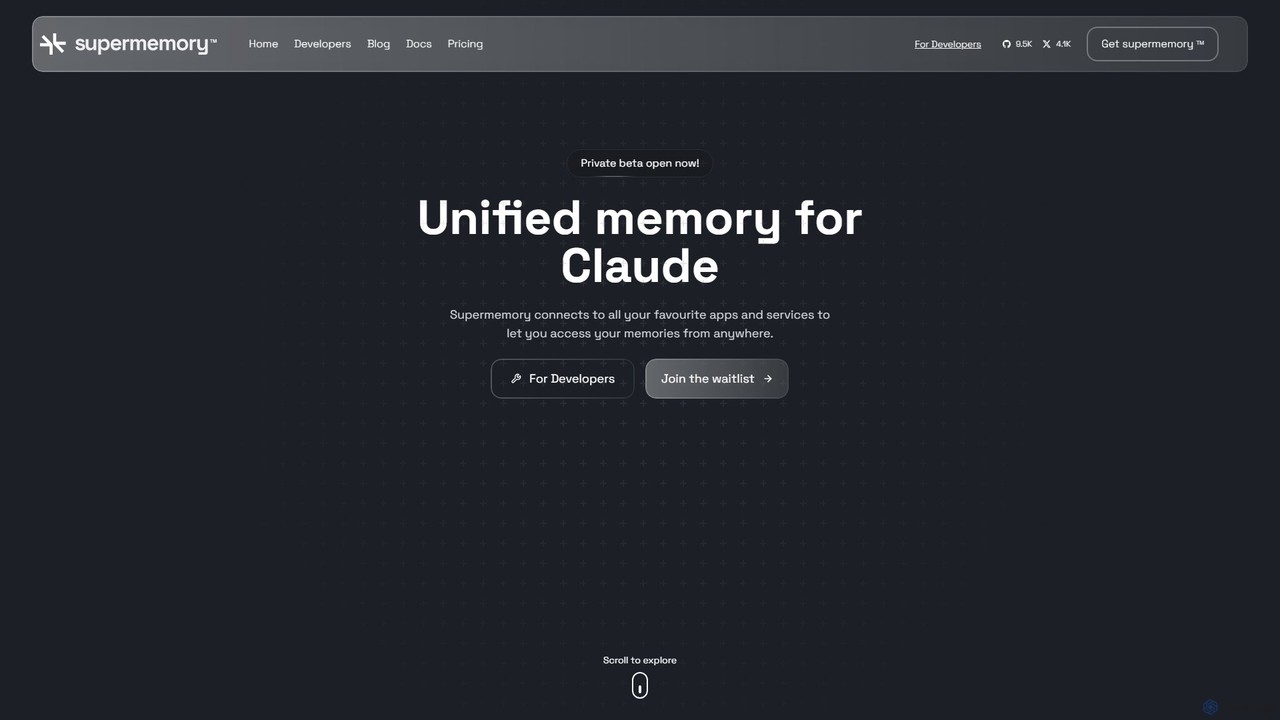
supermemory
supermemory is a memory API and infrastructure for the AI era, designed for developers to build LLMs with long-term, persistent memory. It overcomes the finite context window limitation, enabling the creation of intelligent, context-aware AI agents, chatbots, and applications that remember past interactions and information across various platforms.
Llm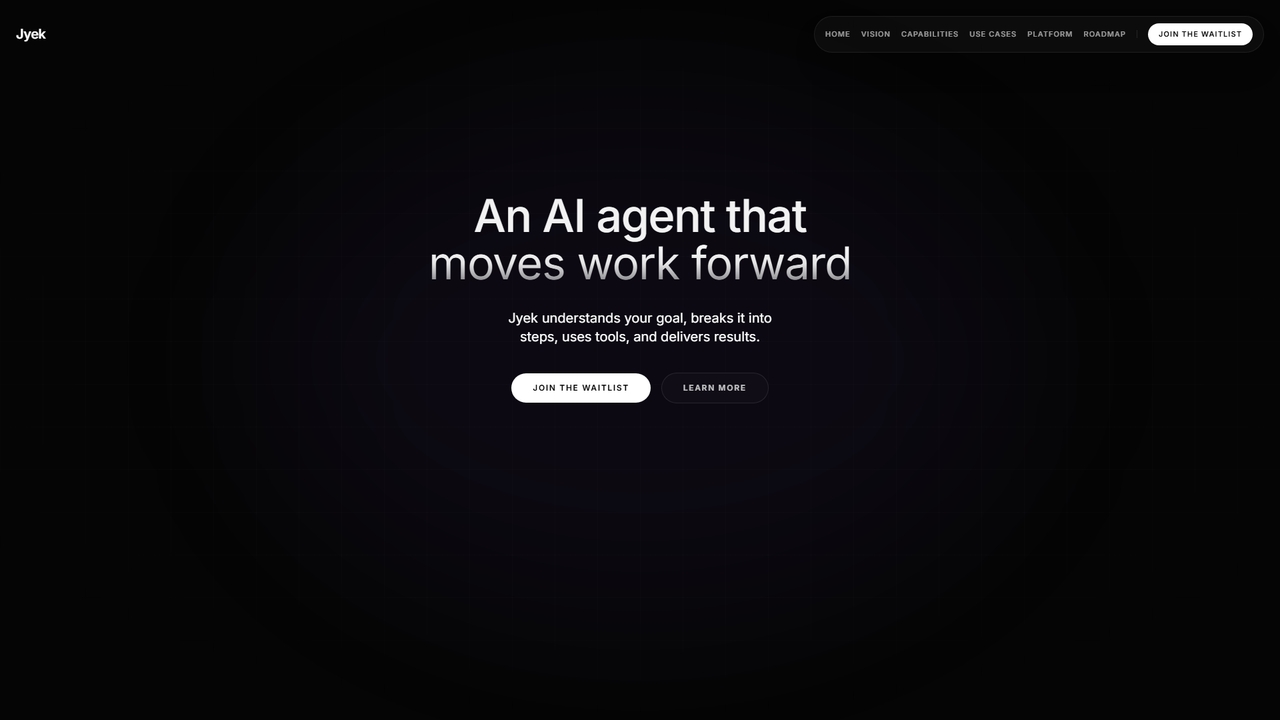
Jyek
Jyek is an AI agent platform that understands objectives, creates execution plans, uses tools, and delivers verifiable results for complex, multi-step tasks.
Automation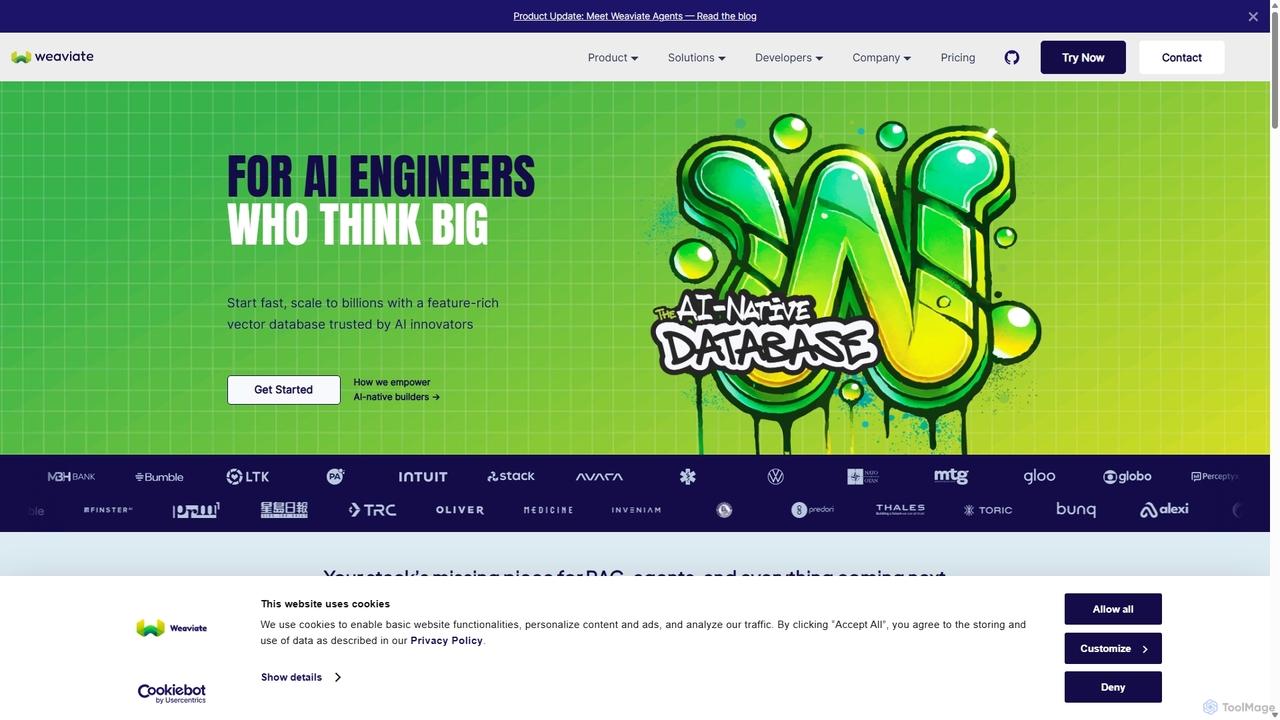
Weaviate
Weaviate is an open-source, AI-native vector database designed for developers. It enables scalable, low-latency vector, keyword, and hybrid search. Ideal for building AI applications like semantic search, recommendation engines, and Retrieval-Augmented Generation (RAG) systems, it integrates seamlessly with popular machine learning models to store and query data based on semantic meaning.
Vector Database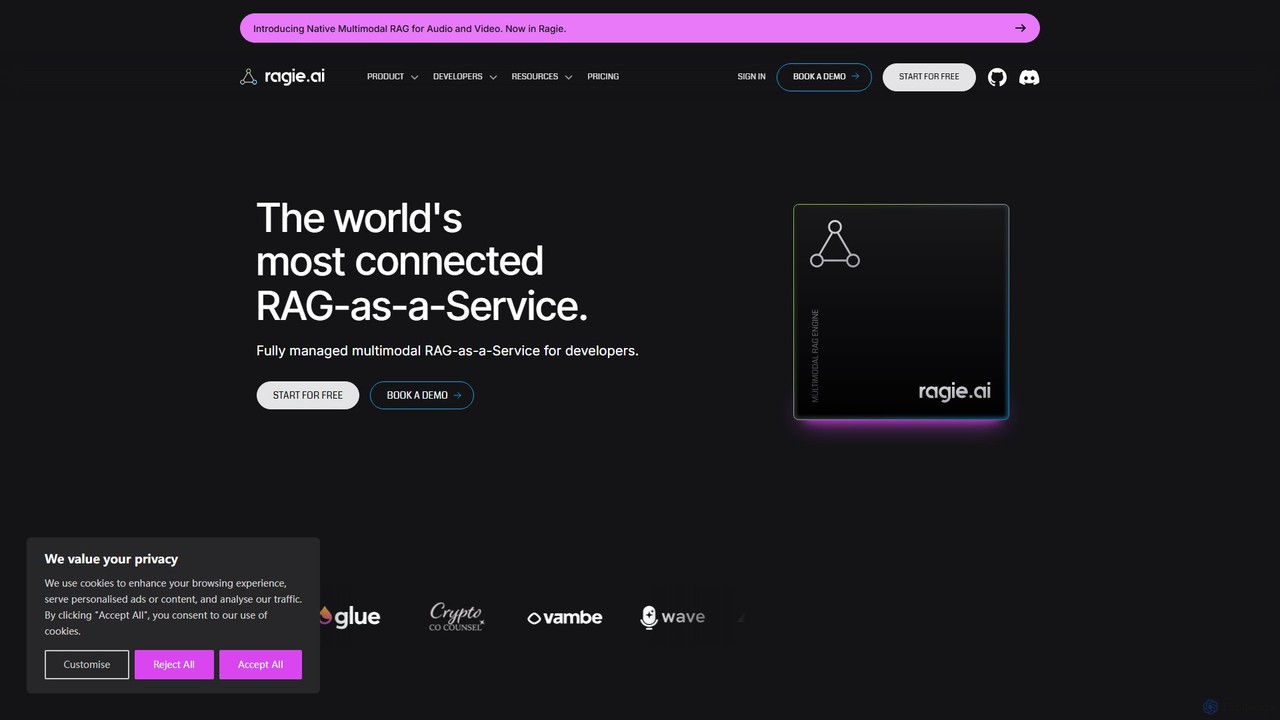
ragie
Ragie is a fully managed RAG-as-a-Service platform designed for developers. It simplifies the process of building and deploying AI applications by handling the entire Retrieval-Augmented Generation pipeline. Connect your data sources, and use a simple API to power accurate, context-aware chatbots, semantic search, and knowledge management systems without the complexity of managing infrastructure.
Machine Learning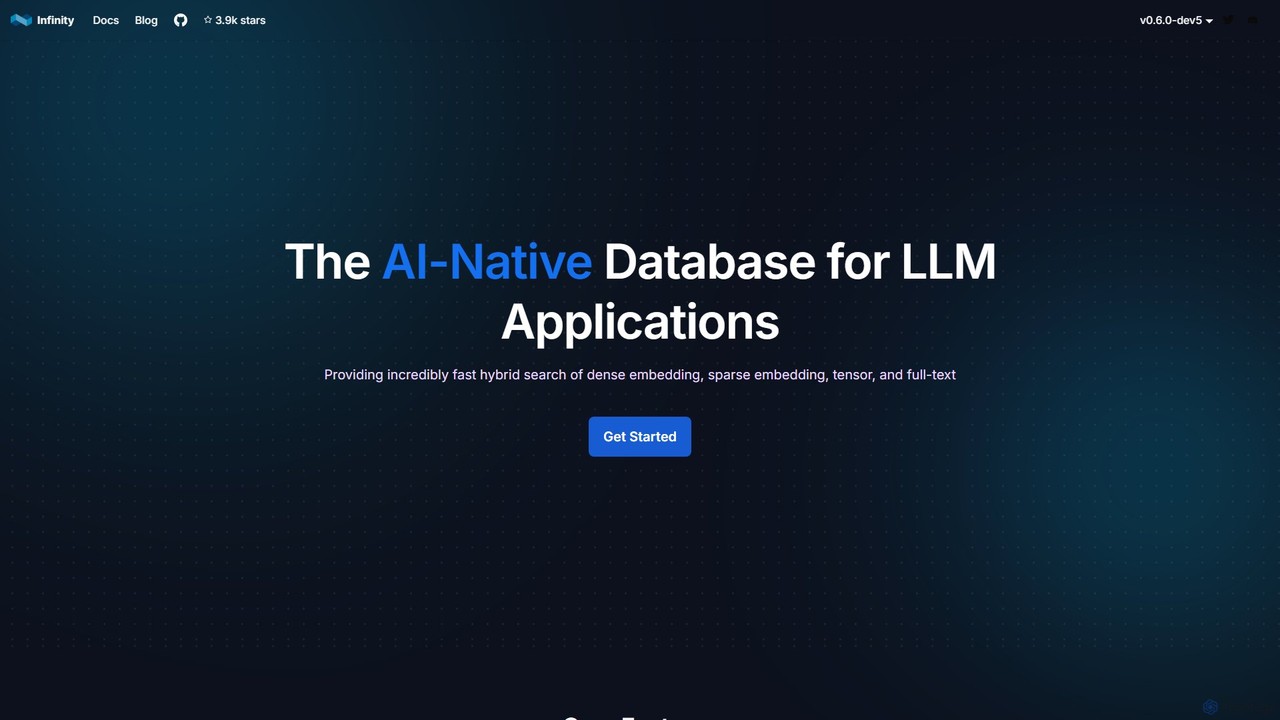
infiniflow
infiniflow is a high-performance, open-source, AI-native database specifically designed for LLM applications. It offers incredibly fast vector search, powerful hybrid search capabilities (vector, full-text, tensor), and simplified deployment. With an intuitive Python API, it's built to power demanding AI tasks like Retrieval-Augmented Generation (RAG) and semantic search with millisecond latency.
Vector Search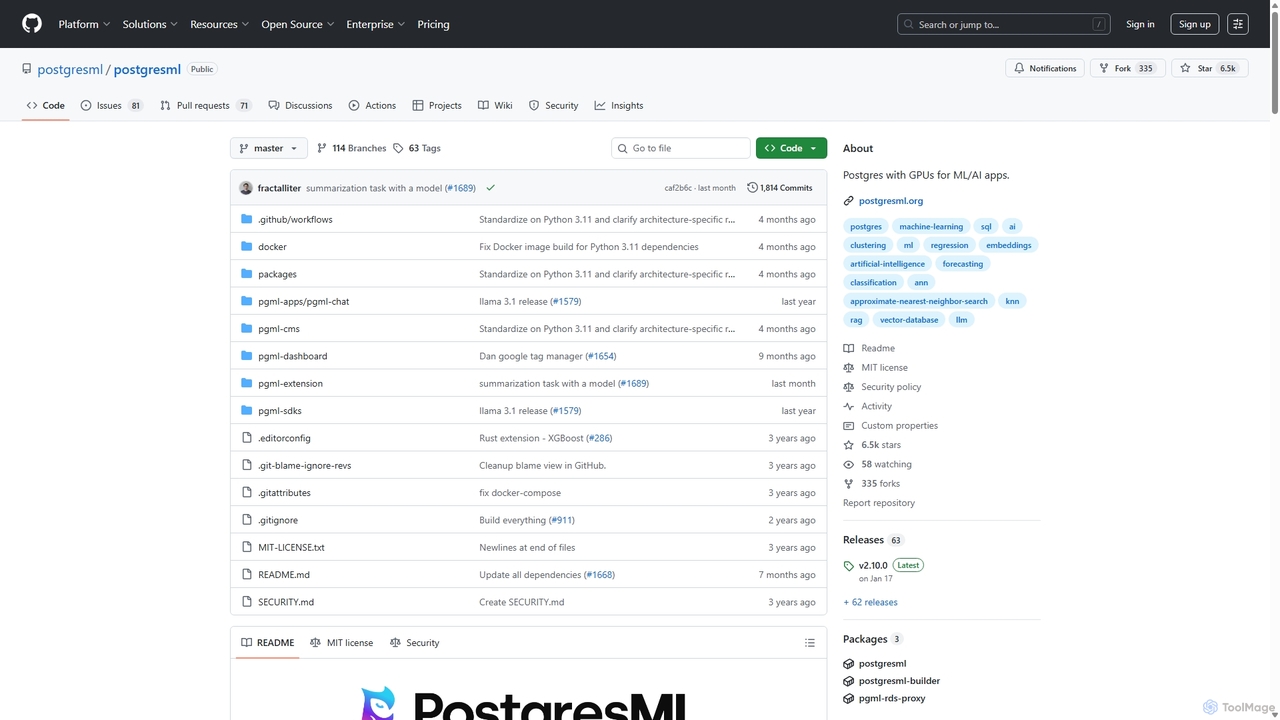
PostgresML
PostgresML is a powerful open-source extension that integrates machine learning and AI directly into your PostgreSQL database. It enables GPU-accelerated inference, vector search, and complete RAG pipelines using simple SQL commands, eliminating data movement and simplifying the MLOps stack for high-performance, scalable AI applications.
Mlops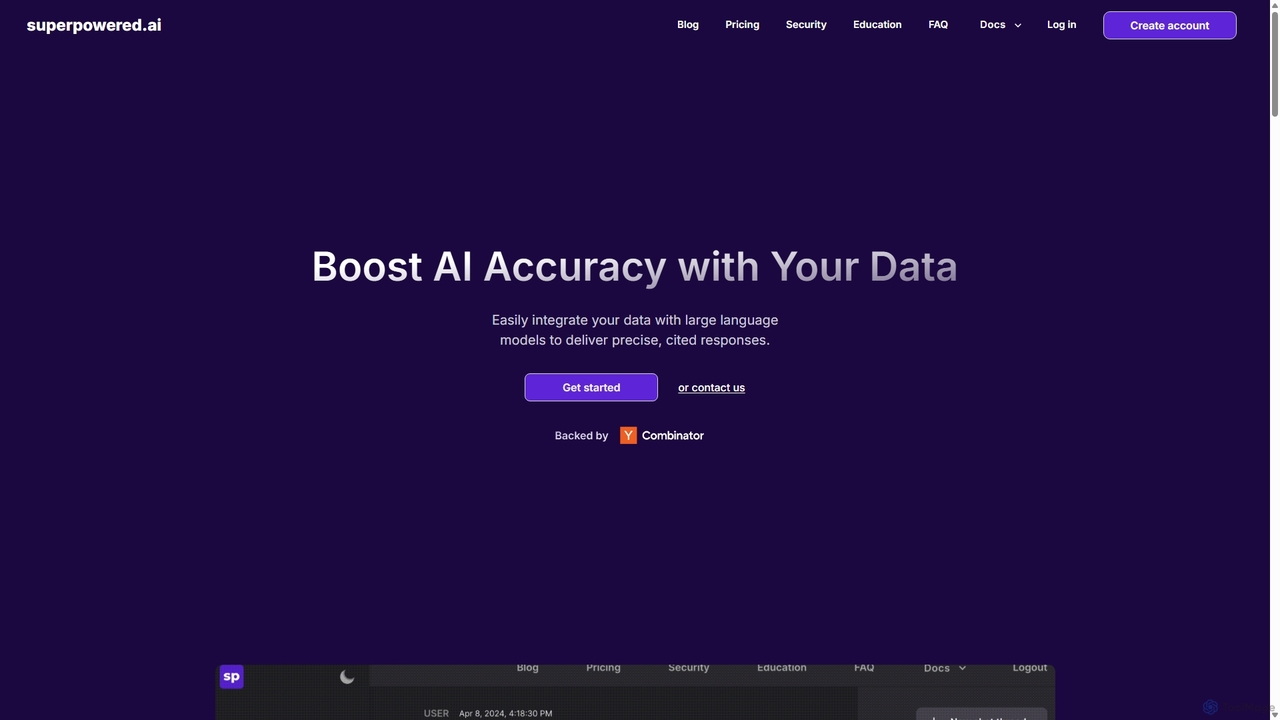
Superpowered AI
Superpowered AI is a platform that enhances Large Language Models (LLMs) by securely connecting them to your private data. It enables developers and businesses to build highly accurate, cited AI applications like chatbots, search tools, and content generators through a flexible API and an intuitive no-code interface.
Chatbots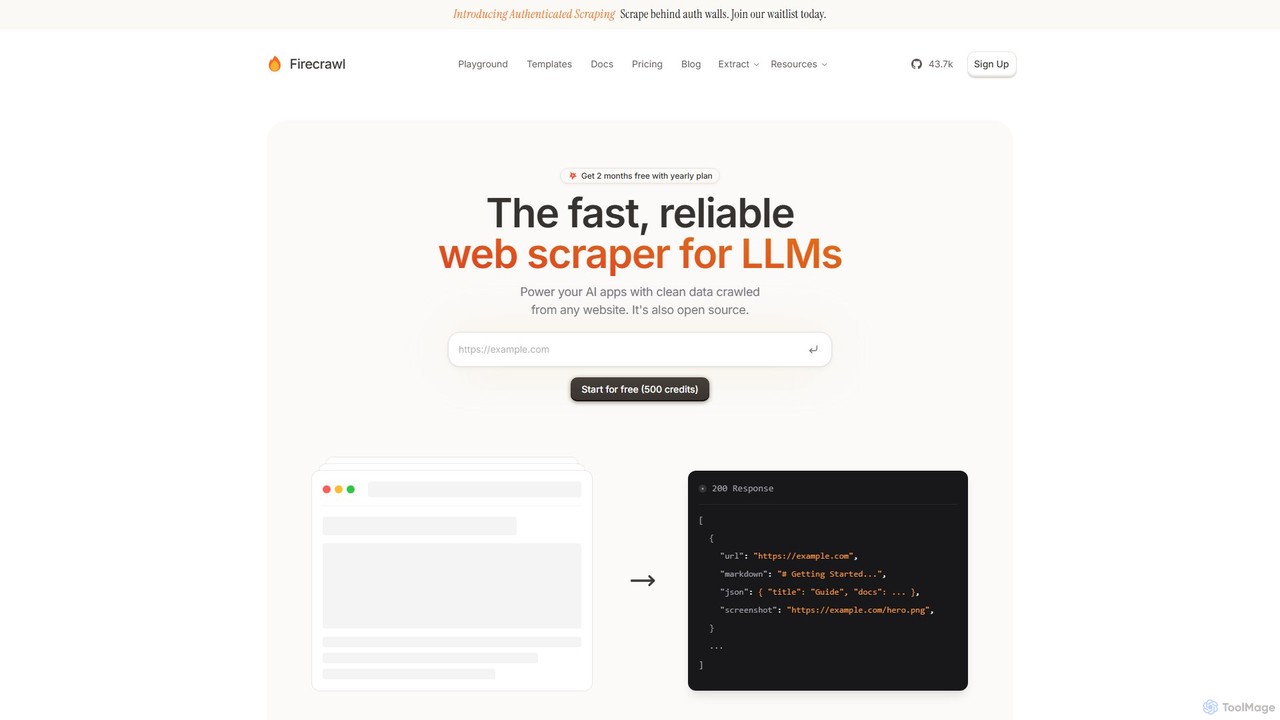
Firecrawl
Firecrawl is an open-source, developer-first API that turns any website into clean, LLM-ready data. It handles all the complexities of web scraping, including JavaScript rendering, proxy rotation, and rate limits, allowing you to power AI applications, agents, and RAG systems with reliable web content. It offers scraping, crawling, and search functionalities through a simple API.
Data Collection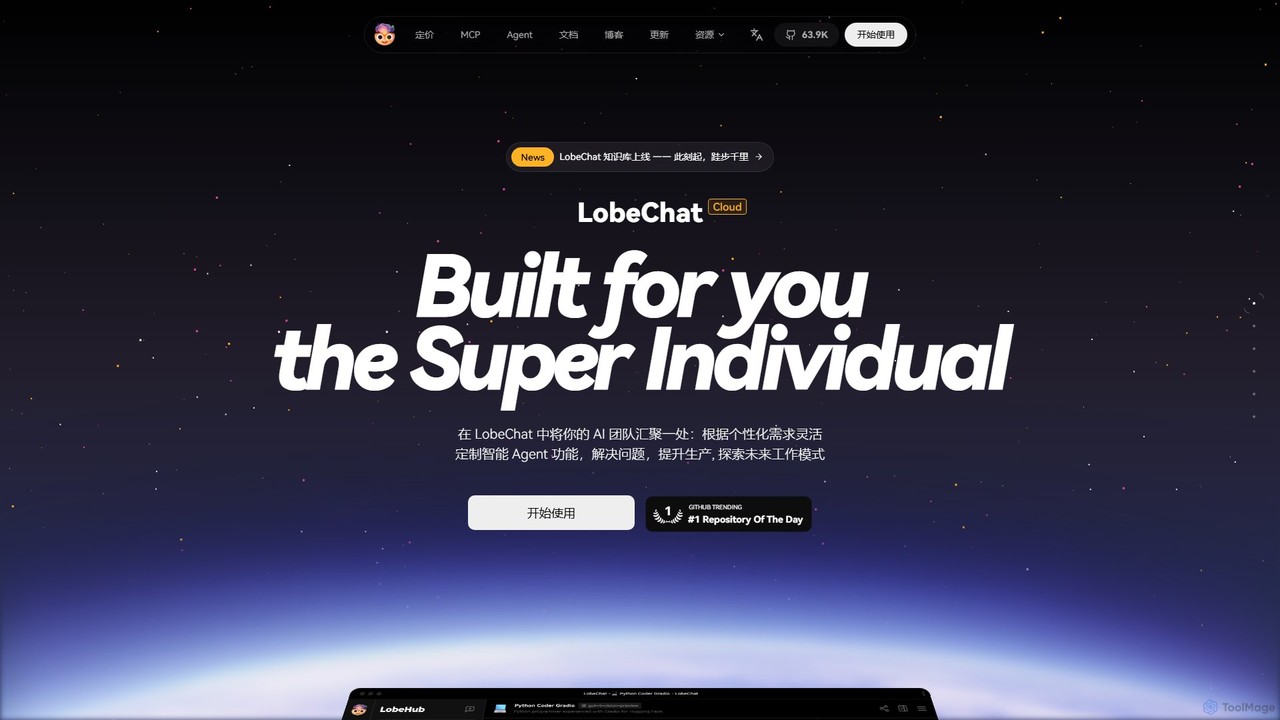
LobeHub
LobeHub is an all-in-one AI platform that allows you to build and manage a personalized team of AI Agents. It offers a superior user experience to standard LLM interfaces like ChatGPT, with support for numerous models, plugins, and multi-modal interactions. Create, share, and use specialized agents for tasks ranging from coding and writing to academic research and daily life, all within a single, intuitive chat interface.
Chatbot Platform
xMem Comments (0)
Sign in to comment.
Sign inNo comments yet.