Lettria
Lettria is an enterprise-grade AI platform featuring GraphRAG technology. It enhances Retrieval-Augmented Generation (RAG) by combining knowledge graphs …
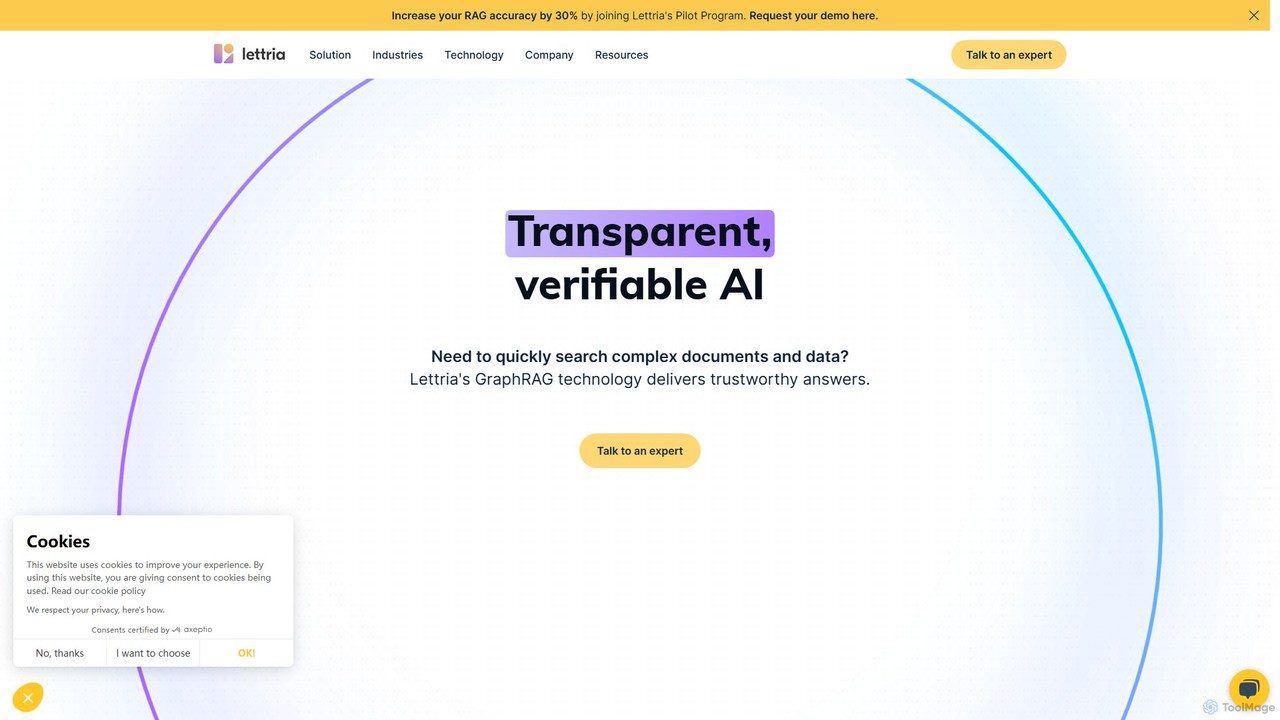
Lettria is an enterprise-grade AI platform featuring GraphRAG technology. It enhances Retrieval-Augmented Generation (RAG) by combining knowledge graphs with vector databases to deliver accurate, verifiable, and transparent answers from complex, unstructured data. Designed for sectors like healthcare, finance, and legal, it eliminates AI hallucinations and builds trust in business-critical applications.
About Document Intelligence
Document Intelligence is a category of AI-powered tools designed to automatically process, understand, and extract valuable information from various types of documents. These tools leverage advanced technologies like Optical Character Recognition (OCR), Natural Language Processing (NLP), and machine learning to transform unstructured or semi-structured data into actionable insights. By automating data extraction, classification, and analysis, Document Intelligence solutions significantly enhance operational efficiency, reduce manual errors, and accelerate decision-making across business operations.
Core Features
- Intelligent Data Extraction: Automatically identifies and extracts specific data points (e.g., names, dates, amounts, addresses) from diverse document layouts.
- Document Classification: Categorizes documents (e.g., invoices, contracts, receipts, reports) based on content and structure, enabling efficient organization.
- Semantic Search & Analysis: Allows users to query documents using natural language, finding relevant information and identifying patterns or anomalies.
- Automated Validation: Cross-references extracted data with existing databases or predefined rules to ensure accuracy and compliance.
- Summarization & Generation: Condenses long documents into key summaries or generates new document sections based on extracted information.
Use Cases
Document Intelligence tools are crucial for industries handling large volumes of paperwork, such as finance, legal, healthcare, and logistics. They empower roles like financial analysts, legal professionals, HR managers, and customer service agents to automate routine data entry, accelerate review processes, and gain deeper insights from their document archives. These solutions streamline workflows from onboarding to compliance, making document-centric tasks more efficient and less prone to human error.
How to Choose
When selecting a Document Intelligence solution, consider its accuracy in data extraction across various document types and languages, its integration capabilities with existing enterprise systems (e.g., ERP, CRM), and its scalability to handle growing document volumes. Evaluate the level of customization offered for specific document layouts and business rules, as well as the security and compliance features to protect sensitive information. Finally, assess the user-friendliness of the interface and the quality of vendor support.

Document IntelligenceUse Cases
Automating Invoice Processing for Finance Teams
Finance departments often spend countless hours manually entering data from invoices. Document Intelligence tools can automatically extract vendor details, line items, amounts, and dates from incoming invoices, regardless of their format. This automation reduces processing time by up to 80%, minimizes data entry errors, and accelerates payment cycles, allowing finance professionals to focus on strategic analysis rather than repetitive tasks.
Extracting Key Data from Legal Contracts
Legal professionals frequently review lengthy contracts to identify specific clauses, terms, or obligations. Document Intelligence solutions can rapidly scan and extract critical information suchs as effective dates, parties involved, renewal terms, and liability clauses. This capability significantly speeds up contract review, due diligence processes, and compliance checks, ensuring no important detail is overlooked.
Classifying Customer Feedback and Support Tickets
Customer service centers receive vast amounts of feedback, emails, and support tickets. Document Intelligence can automatically classify these documents by topic, sentiment, or urgency. This allows support teams to prioritize critical issues, route inquiries to the correct department, and identify recurring customer pain points, leading to faster resolution times and improved customer satisfaction.
Digitizing and Indexing Historical Archives
Organizations with extensive physical archives, such as libraries, government agencies, or historical societies, face challenges in making this information accessible. Document Intelligence tools can digitize scanned documents, apply OCR to make text searchable, and automatically index content based on keywords or categories. This transforms static archives into dynamic, searchable knowledge bases, preserving information and enabling efficient retrieval.
Streamlining Loan Application Processing in Banking
Banks and financial institutions handle numerous loan applications, each requiring the processing of various documents like income statements, identity proofs, and credit reports. Document Intelligence can automate the extraction and validation of data from these diverse documents. This accelerates the application review process, reduces manual verification efforts, and improves the overall customer experience by providing quicker loan approvals.
Ensuring Regulatory Compliance by Monitoring Documents
Businesses in regulated industries must constantly monitor and adhere to evolving compliance standards. Document Intelligence tools can automatically scan and analyze regulatory updates, internal policies, and audit reports to identify potential compliance gaps or risks. This proactive monitoring helps organizations maintain adherence to regulations, avoid penalties, and ensure robust governance practices.