ToolMage
Sign in

Best 4 Enterprise AI tools for Business

Popular Enterprise AI tools in Business include Morphik, Kyber, fynite, and Veridian by VeerOne, helping you work more efficiently.

fynite
Paid

fynite

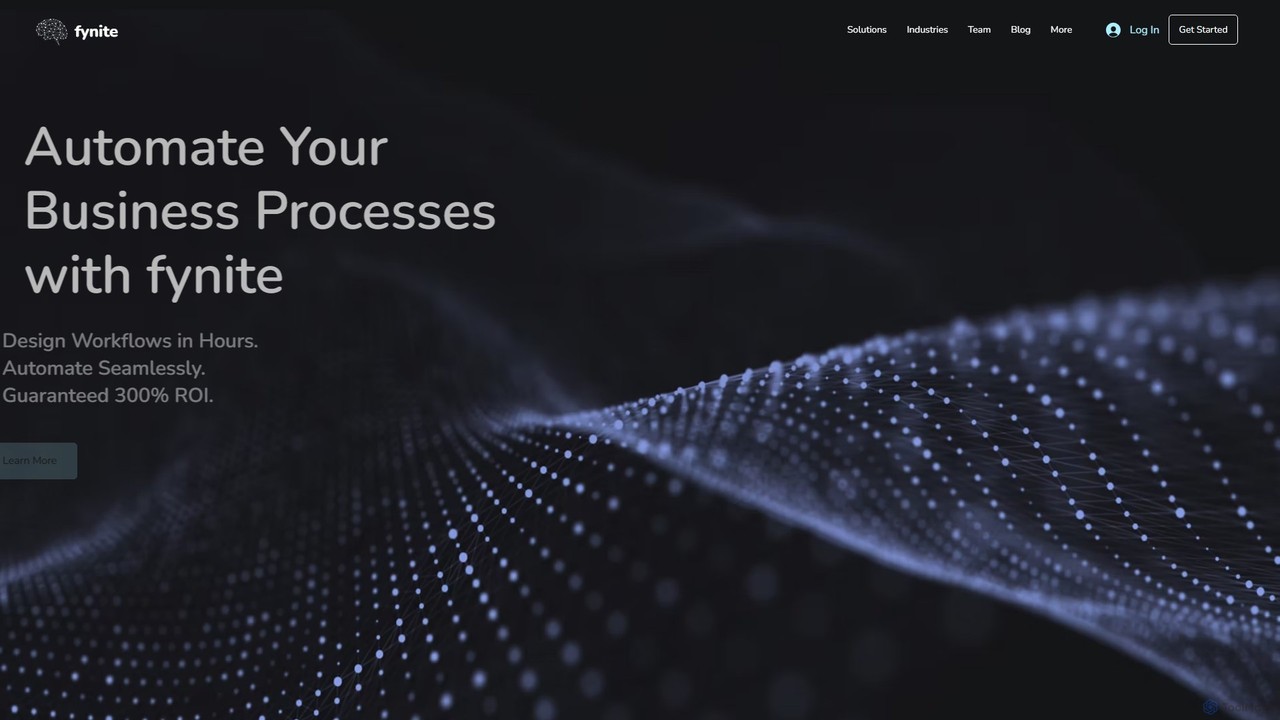
Fynite is an AI-powered, no-code platform for enterprise workflow and process automation. It enables businesses to design, build, and launch complex automations in hours using a drag-and-drop interface. With over 600 integrations and industry-specific templates, Fynite guarantees a 300% ROI by enhancing operational efficiency and driving intelligent decision-making.

Enterprise
Visits 7.5KFavorites 153Likes 140
Morphik
Freemium

Morphik

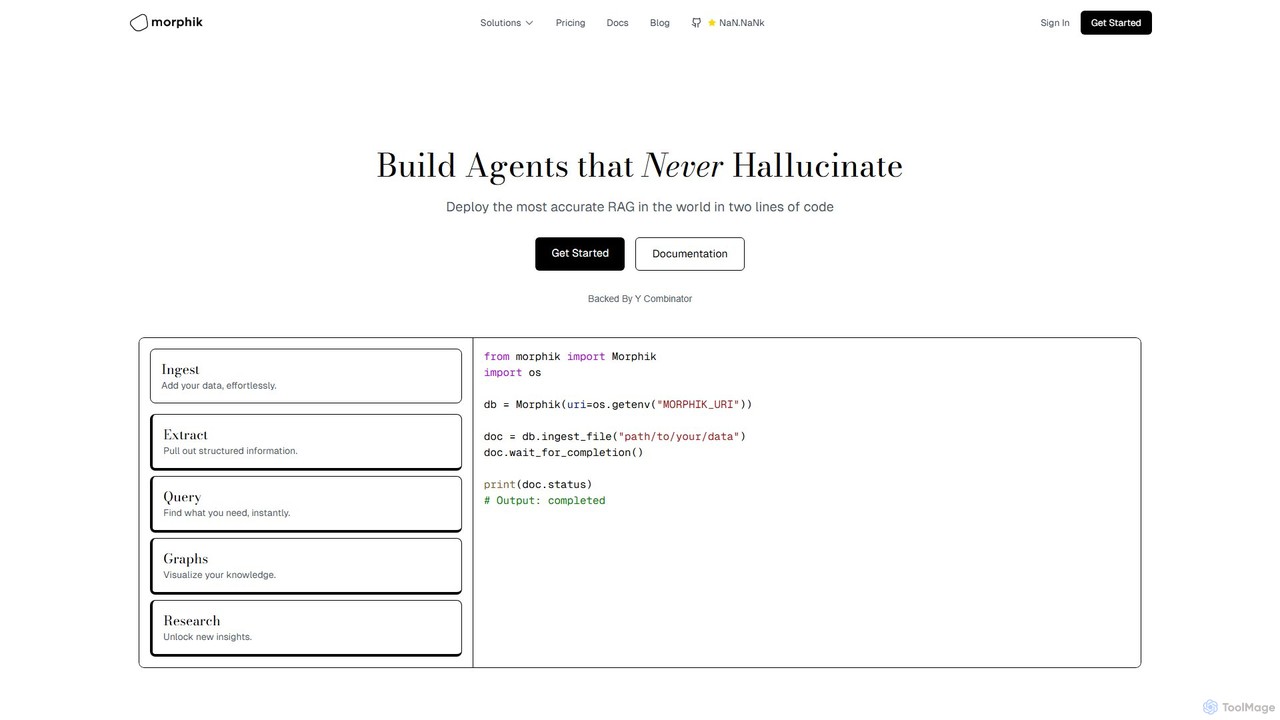
Morphik is an advanced developer platform for building highly accurate Retrieval-Augmented Generation (RAG) systems and AI agents. It specializes in eliminating hallucinations by using visual-first retrieval to understand complex, domain-specific documents, including diagrams and schematics. Deployable with just two lines of code, it offers superior performance, speed, and scalability for enterprise-grade AI applications.

Enterprise
Visits 15.8KFavorites 138Likes 135
Kyber
Paid

Kyber

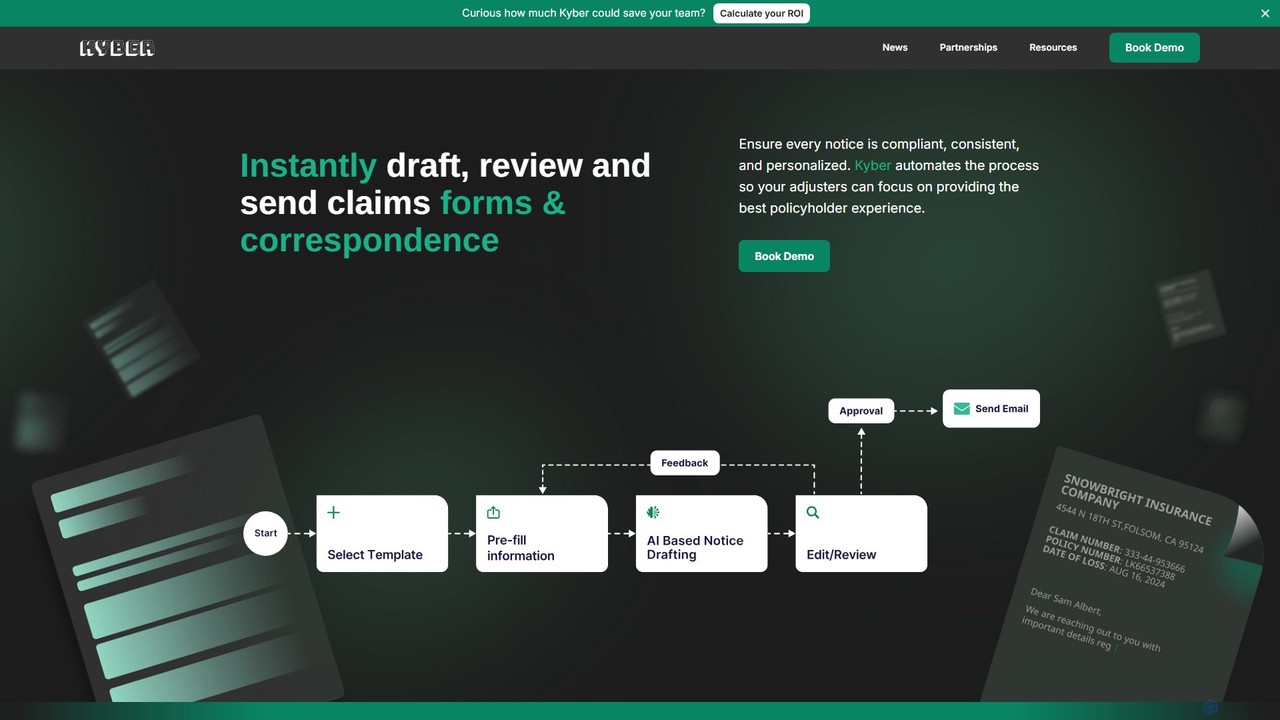
Kyber is an AI-powered platform designed for the insurance industry to automate and streamline claims correspondence. It helps P&C carriers, TPAs, and MGAs generate compliant, personalized, and accurate claims forms and letters, significantly reducing drafting time and compliance risks while integrating with existing systems.

Enterprise
Visits 10.1KFavorites 134Likes 132
Veridian by VeerOne

Veridian by VeerOne

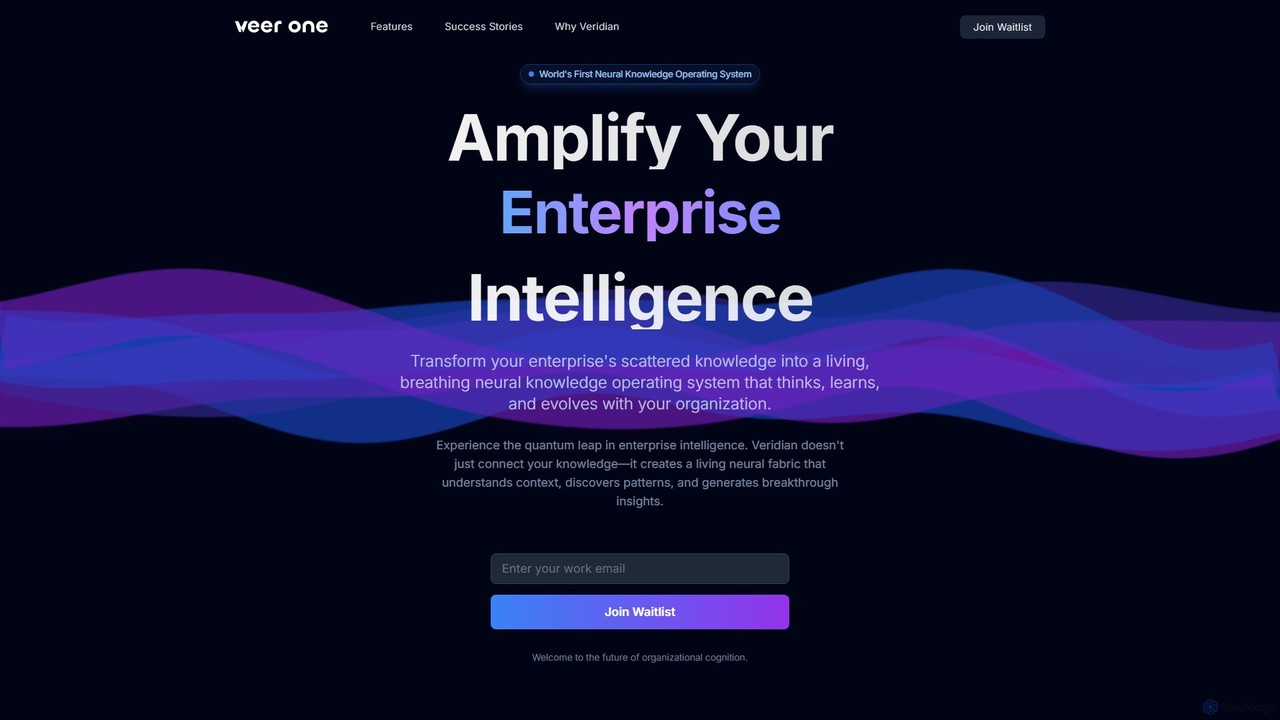
Veridian by VeerOne is an enterprise-grade AI platform that transforms scattered organizational data into a unified, intelligent Neural Knowledge Operating System. It goes beyond traditional RAG to create a living neural fabric that understands context, discovers patterns, and generates real-time insights. With over 100 connectors and enterprise-grade security, Veridian amplifies business intelligence and automates knowledge workflows.

Enterprise
Visits 5.5KFavorites 139Likes 133

About Enterprise

Enterprise AI tools are sophisticated artificial intelligence solutions specifically designed for large organizations to address complex business challenges. These tools leverage advanced machine learning, natural language processing, and computer vision to automate processes, enhance decision-making, and drive strategic growth across various departments. They provide scalable, secure, and integrated capabilities essential for corporate environments, distinguishing them from consumer or small business AI applications.

Core Features

  • Scalability & Performance: Designed to handle vast datasets and high transaction volumes, ensuring reliable operation across large user bases and complex workflows.
  • Robust Security & Compliance: Incorporate enterprise-grade security protocols, data privacy measures, and compliance frameworks (e.g., GDPR, HIPAA) crucial for sensitive corporate data.
  • Seamless Integration: Offer APIs and connectors for smooth integration with existing enterprise resource planning (ERP), customer relationship management (CRM), and other legacy systems.
  • Customization & Adaptability: Provide extensive customization options to tailor AI models and workflows to specific business needs, industry regulations, and operational processes.
  • Advanced Analytics & Reporting: Deliver deep insights through sophisticated data analysis, predictive modeling, and comprehensive reporting dashboards for strategic decision-making.

Applicable Scenarios

Large corporations utilize Enterprise AI for automating customer service operations through intelligent chatbots, optimizing supply chain logistics with predictive analytics, and enhancing cybersecurity defenses. They also apply these tools in human resources for talent acquisition and in finance for fraud detection and risk assessment, streamlining operations across the entire organization.

How to Choose

Selecting Enterprise AI tools requires evaluating their integration capabilities with existing IT infrastructure, assessing their scalability to meet future growth, and verifying their security and compliance certifications. Additionally, consider the vendor's support, customization options, and the total cost of ownership, including implementation and maintenance.

Enterprise use cases

1

Streamlining Enterprise Customer Service with AI Chatbots

For global enterprises managing millions of customer interactions daily, AI-powered chatbots and virtual assistants handle routine inquiries, provide instant support, and escalate complex issues to human agents. This reduces call center load, improves response times, and ensures consistent service quality across multiple channels, significantly cutting operational costs while enhancing customer satisfaction.

2

Predictive Optimization for Global Supply Chains

Supply chain managers in multinational corporations use Enterprise AI to analyze vast datasets of historical demand, market trends, weather patterns, and geopolitical events. The AI predicts potential disruptions, optimizes inventory levels, routes shipments efficiently, and identifies cost-saving opportunities, leading to reduced lead times, minimized waste, and improved on-time delivery rates.

3

Proactive Cybersecurity Threat Detection and Response

Large organizations face constant, sophisticated cyber threats. Enterprise AI tools continuously monitor network traffic, user behavior, and system logs for anomalies and suspicious patterns that indicate potential breaches. By leveraging machine learning, these systems can identify zero-day attacks and rapidly respond to threats, significantly strengthening the organization's security posture and protecting sensitive data.

4

Hyper-Personalized Marketing and Sales Engagement

Marketing and sales teams in large enterprises deploy AI to analyze customer data from various touchpoints, creating highly personalized campaigns and product recommendations. AI segments audiences, predicts purchasing behavior, and optimizes content delivery across channels, leading to higher conversion rates, increased customer lifetime value, and more efficient allocation of marketing spend.

5

Advanced Fraud Detection and Financial Risk Assessment

Financial institutions and large corporations utilize Enterprise AI to process massive volumes of transaction data in real-time, identifying fraudulent activities with high accuracy. AI models detect unusual patterns, flag suspicious transactions, and assess credit risks more effectively than traditional methods, minimizing financial losses and ensuring regulatory compliance.

6

AI-Driven Talent Acquisition and Employee Engagement

HR departments in large companies use Enterprise AI to automate resume screening, identify best-fit candidates, and personalize employee training programs. AI tools analyze performance data to predict attrition risks and recommend engagement strategies, improving recruitment efficiency, reducing turnover, and fostering a more productive and satisfied workforce.

Enterprise FAQ

What are Enterprise AI tools?

Enterprise AI tools are specialized artificial intelligence solutions designed for large organizations to solve complex business problems. They leverage advanced machine learning, natural language processing, and computer vision to automate processes, enhance decision-making, and drive strategic growth. Key characteristics include scalability, robust security, seamless integration with existing systems, and extensive customization capabilities.

How do Enterprise AI tools differ from general AI solutions?

Enterprise AI tools are distinct from general AI solutions primarily in their scale, security, and integration requirements. While general AI might focus on individual tasks or consumer applications, Enterprise AI is built for large-scale deployment, handling vast datasets, adhering to strict corporate security and compliance standards, and integrating deeply with complex legacy IT infrastructures. They prioritize reliability, governance, and long-term strategic value for an entire organization.

What are the key benefits of implementing Enterprise AI?

Implementing Enterprise AI offers several significant benefits for large organizations. These include enhanced operational efficiency through automation, improved decision-making driven by advanced analytics and predictive insights, stronger cybersecurity defenses, and personalized customer experiences at scale. Ultimately, Enterprise AI helps drive innovation, reduce costs, and gain a competitive advantage in complex market environments.

What challenges should companies consider when adopting Enterprise AI?

Companies adopting Enterprise AI should consider several challenges. These include the complexity of integrating AI with existing legacy systems, ensuring data quality and availability for training AI models, addressing data privacy and ethical concerns, and managing the significant upfront investment in technology and talent. Additionally, organizational change management and securing executive buy-in are crucial for successful deployment.

How can Enterprise AI improve decision-making?

Enterprise AI improves decision-making by providing data-driven insights that go beyond human analytical capabilities. It processes massive amounts of data from various sources, identifies hidden patterns, predicts future trends, and simulates outcomes of different strategies. This allows leaders to make more informed, proactive, and strategic decisions across areas like market forecasting, resource allocation, risk management, and product development.