
Developer Tools Best in category 1 results Libraries & Apis AI Tool

Popular AI tools in the Libraries & Apis field of Developer Tools include xMem, etc., helping you quickly improve efficiency.

xMem

xMem

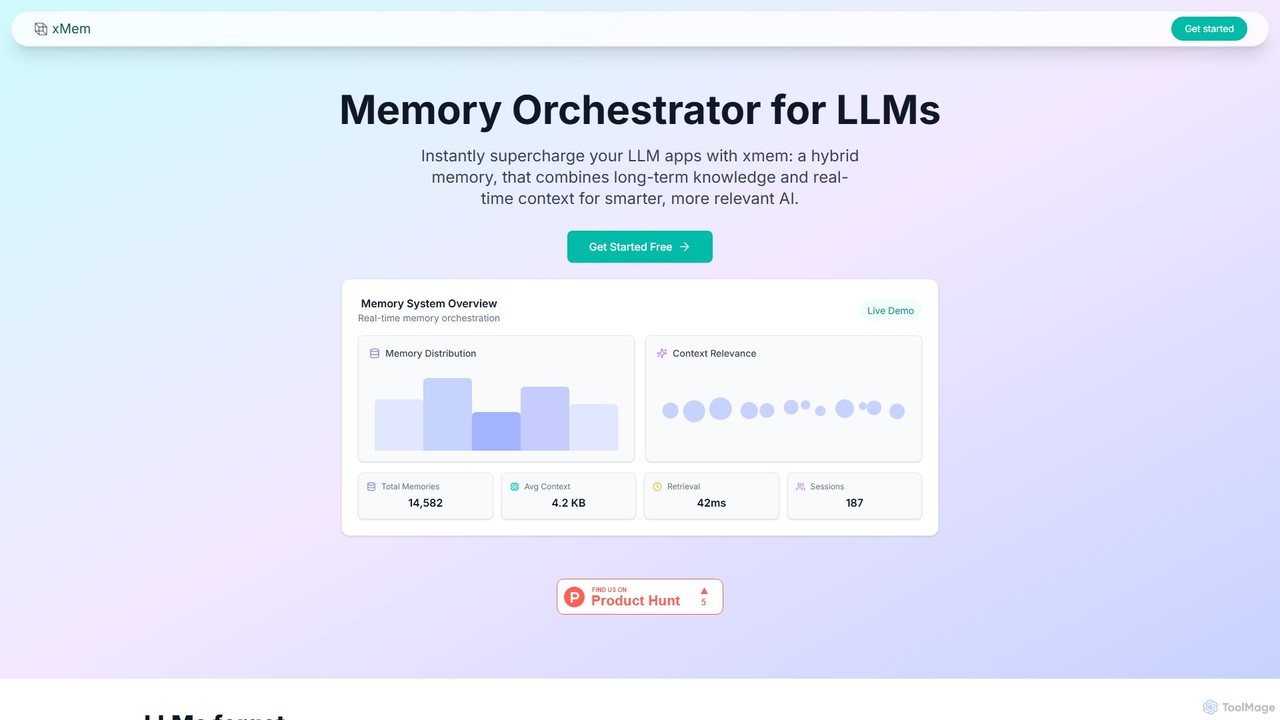
xMem is a hybrid memory orchestrator for LLMs, designed to give AI applications persistent memory. It combines long-term …

3.6K

About Libraries & Apis

Libraries & APIs are pre-built code packages and interfaces that allow developers to integrate sophisticated AI functionalities into their applications without extensive machine learning expertise. These tools provide direct access to powerful AI models, such as natural language processing, computer vision, and machine learning algorithms, through simple function calls or HTTP requests. They significantly accelerate development cycles by abstracting complex AI infrastructure, enabling rapid prototyping and deployment of intelligent features across various platforms.

Core Features

  • Pre-trained Model Access: Provides ready-to-use AI models for common tasks like sentiment analysis, object detection, or speech recognition.
  • Simplified Integration: Offers SDKs and clear documentation for seamless embedding into existing software architectures.
  • Scalability & Performance: Manages the underlying infrastructure, ensuring high availability and efficient processing of AI workloads.
  • Customization Options: Allows for fine-tuning of models with proprietary data to enhance performance for specific use cases.
  • Cross-Platform Compatibility: Supports integration across web, mobile, and backend environments using various programming languages.

Applicable Scenarios

Developers leverage AI libraries and APIs to infuse intelligence into diverse applications, from enhancing user experience in mobile apps to automating complex business processes. They are crucial for startups building AI-first products and established enterprises looking to modernize their systems with advanced capabilities. This approach minimizes the need for in-house AI research teams, making advanced AI accessible to a broader range of development projects.

How to Choose

When selecting AI libraries and APIs, consider the breadth of available models and their performance metrics for your specific tasks. Evaluate the ease of integration, quality of documentation, and availability of SDKs for your preferred programming languages. Assess the pricing structure, scalability options, and the provider's commitment to data privacy and security. Finally, examine community support and the frequency of updates to ensure long-term viability and access to the latest AI advancements.

Libraries & ApisUse Cases

1

Automating Customer Support with NLP APIs

A software development team integrates a Natural Language Processing (NLP) API into their customer service platform. This allows their chatbot to accurately understand user queries, extract key information, and provide relevant, automated responses, significantly reducing response times and freeing up human agents for more complex issues. The API handles intent recognition, entity extraction, and sentiment analysis, making the chatbot more intelligent and efficient.

2

Enhancing E-commerce with Computer Vision

An e-commerce company utilizes a Computer Vision (CV) API to automatically tag and categorize product images. By feeding product photos through the API, they can detect objects, identify attributes (e.g., color, material), and generate descriptive tags. This improves product searchability, enhances recommendation engines, and streamlines inventory management, leading to a better shopping experience for customers and reduced manual effort for staff.

3

Building Voice-Enabled Mobile Applications

A mobile app developer incorporates a Speech-to-Text API to enable voice commands and dictation features within their productivity application. Users can speak notes, search for content, or control app functions hands-free. The API accurately transcribes spoken words into text, providing a seamless and accessible user experience, especially for users on the go or those with accessibility needs.

4

Personalizing Content Recommendations

A media streaming service employs a Machine Learning (ML) library to develop a personalized content recommendation engine. By analyzing user viewing history, preferences, and interactions, the library's algorithms suggest movies, shows, or articles tailored to individual tastes. This increases user engagement, improves content discovery, and drives longer session durations, directly impacting subscription retention.

5

Streamlining Document Processing with AI

A financial institution integrates a Document AI API to automate the extraction of key data from invoices, contracts, and application forms. The API uses optical character recognition (OCR) and intelligent document processing to identify and pull out specific fields like names, dates, amounts, and addresses. This drastically reduces manual data entry errors, accelerates processing times, and ensures compliance by standardizing data capture.

6

Developing Predictive Analytics Features

An industrial IoT solution provider uses an AI library for predictive analytics to monitor machinery performance. By feeding sensor data (temperature, vibration, pressure) into the library's anomaly detection and forecasting models, they can predict potential equipment failures before they occur. This enables proactive maintenance scheduling, minimizes downtime, extends asset lifespan, and optimizes operational costs for manufacturing plants.

Libraries & ApisFrequently Asked Questions