Ai Infrastructure Best in category 3 results Rag AI Tool

Popular AI tools in the Rag field of Ai Infrastructure include Vectorize、Graphlit、Chonkie, etc., helping you quickly improve efficiency.

Vectorize

Vectorize

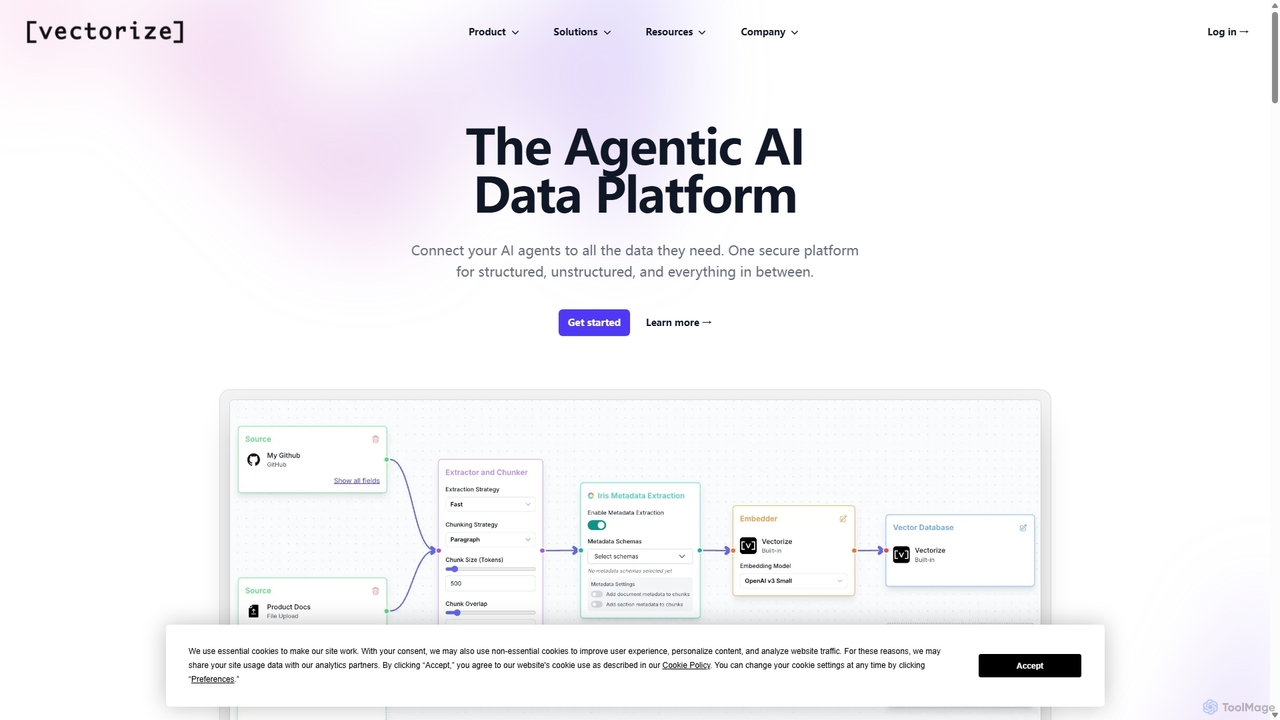
Vectorize is a RAG-as-a-Service platform that simplifies building AI applications on unstructured data. It offers managed RAG pipelines, …

149.3K
Graphlit

Graphlit

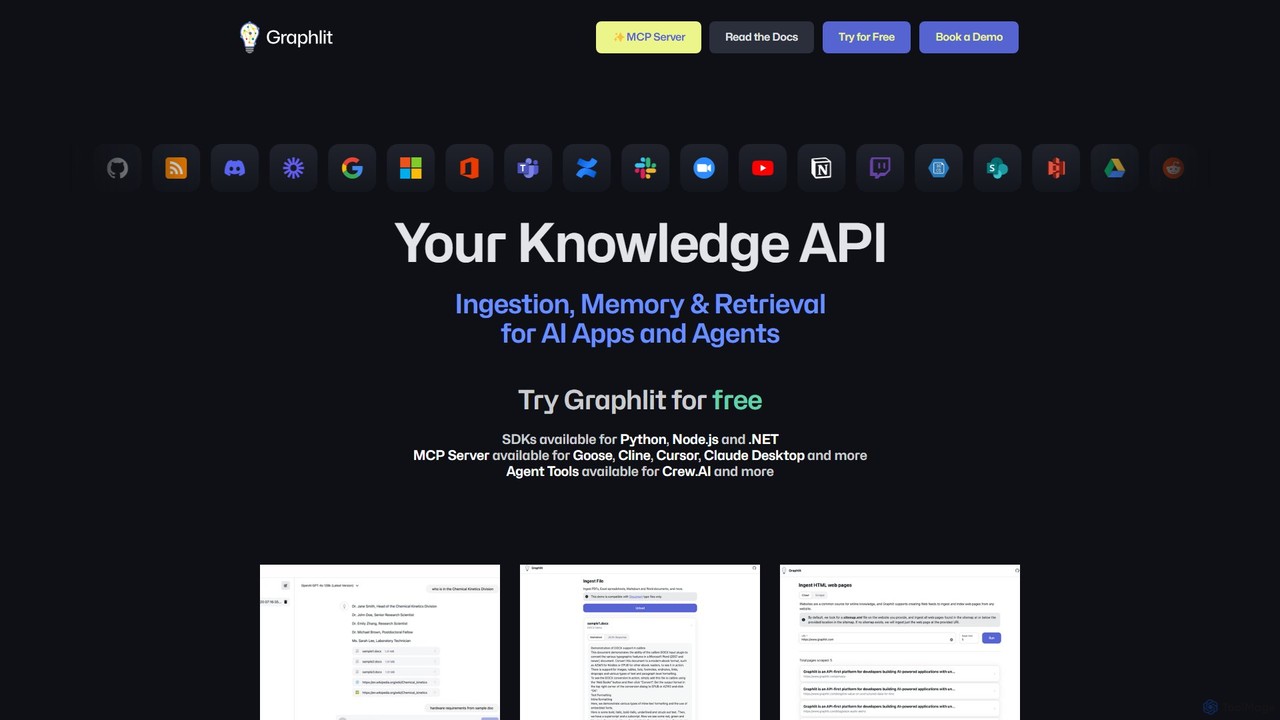
Graphlit is a developer-focused Knowledge API platform for building AI applications and agents. It streamlines the ingestion, memory, …

11.6K
Chonkie

Chonkie

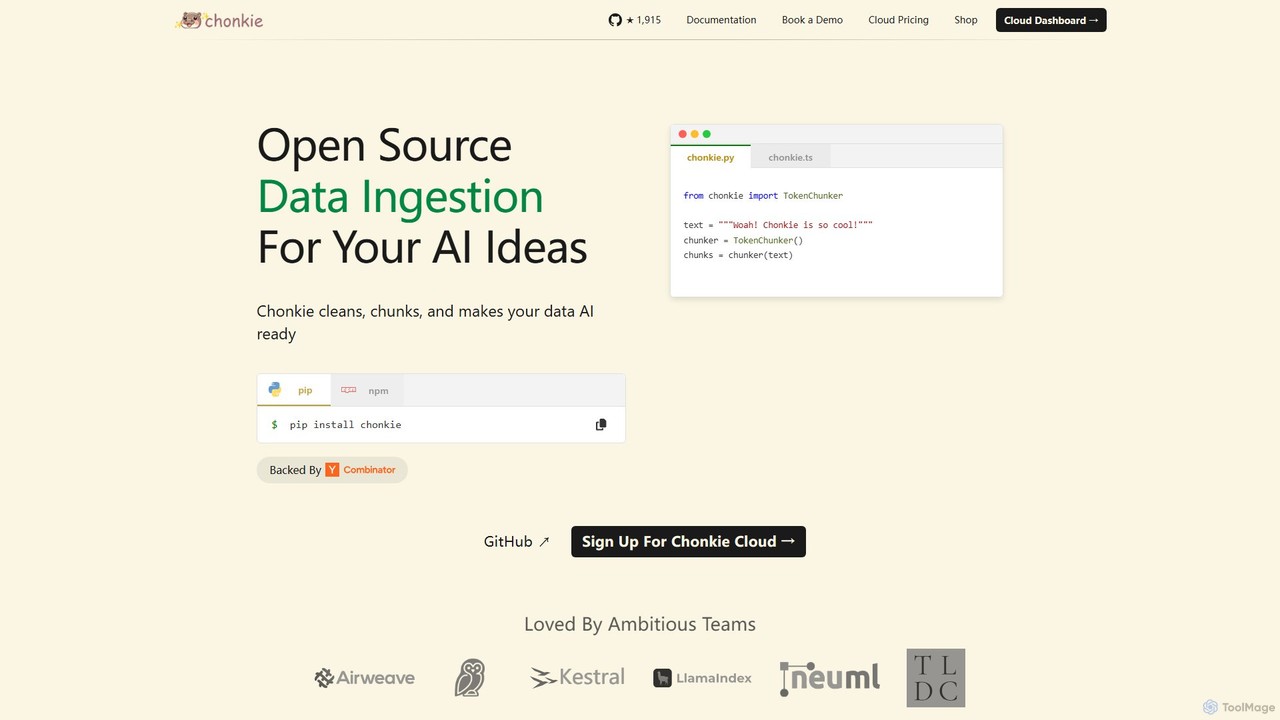
Chonkie is an open-source data ingestion framework designed for AI applications. It efficiently cleans, chunks, and enriches various …

9.8K

About Rag

RAG (Retrieval-Augmented Generation) tools are a class of AI solutions designed to enhance the capabilities of large language models (LLMs) by integrating external, up-to-date, and authoritative information. These tools operate by retrieving relevant data from a knowledge base or external source in response to a user query, then feeding this retrieved context to the LLM for generating more accurate, informed, and hallucination-free answers. They are crucial for building AI applications that require access to specific, proprietary, or real-time information beyond the LLM's initial training data, significantly improving the relevance and trustworthiness of AI-generated content within the broader AI Infrastructure.

Core Features

  • Intelligent Retrieval: Advanced algorithms to search and extract highly relevant information from diverse data sources (documents, databases, web).
  • Contextual Augmentation: Seamlessly injects retrieved information into the LLM's prompt, guiding its generation process.
  • Knowledge Base Management: Tools for indexing, updating, and managing external data sources efficiently.
  • Source Attribution: Ability to cite the origin of retrieved information, enhancing transparency and trustworthiness.
  • LLM Integration: Designed for flexible integration with various large language models and AI platforms.

Use Cases

RAG tools are widely adopted in scenarios where LLMs need to provide precise, factual, and context-specific responses. This includes enterprise search, custom chatbot development for specific domains, and applications requiring real-time data access. They are essential for organizations looking to leverage LLMs without compromising on data accuracy or relying solely on potentially outdated training data.

How to Choose

When selecting a RAG tool, consider its compatibility with your existing data infrastructure and LLMs, the efficiency and accuracy of its retrieval mechanisms, and its scalability to handle growing data volumes. Evaluate the ease of knowledge base management, the flexibility of data source integration, and the level of control it offers over the retrieval and generation process to ensure it meets your specific application requirements and technical expertise.

RagUse Cases

1

Enhancing Enterprise Knowledge Management

Large organizations often struggle with employees finding accurate and up-to-date information across vast internal documents, wikis, and databases. RAG tools enable the creation of intelligent chatbots or search interfaces that can retrieve precise answers from this proprietary knowledge base. Employees can ask natural language questions and receive contextually relevant, verified information, significantly reducing search time and improving decision-making across departments like HR, IT, and legal.

2

Building Enterprise Knowledge Base Chatbots

An enterprise needs a chatbot that can answer employee questions based on internal documents, policies, and HR data. A RAG system indexes these proprietary documents, allowing the chatbot to retrieve specific paragraphs or facts and then use an LLM to generate accurate, context-aware responses. This reduces the workload on support staff and provides instant, reliable information to employees, improving internal efficiency by 30%.

3

Building Factual Customer Support Chatbots

Customer service departments can leverage RAG to power chatbots that provide highly accurate and up-to-date responses to customer queries. By connecting the chatbot to a company's product manuals, FAQs, and support tickets, RAG ensures that the LLM generates answers based on the latest official information, rather than its potentially outdated training data. This leads to improved customer satisfaction, reduced agent workload, and consistent support quality.

4

Enhancing Customer Support with Real-time Data

Customer service teams can leverage RAG to provide instant, accurate answers to complex customer queries. By connecting an LLM to a RAG system that retrieves information from product manuals, FAQs, and live inventory databases, agents can quickly access the most current data. This ensures consistent, high-quality support, reducing average handling time by 25% and improving customer satisfaction by providing precise, up-to-date solutions.

5

Accelerating Research and Development

Researchers and developers in specialized fields (e.g., medicine, law, engineering) can use RAG tools to quickly synthesize information from vast academic papers, patents, and technical specifications. Instead of manually sifting through countless documents, they can query an LLM augmented with RAG to get concise summaries, identify key findings, or compare methodologies across a curated corpus, significantly speeding up literature reviews and innovation cycles.

6

Automated Legal Document Analysis and Q&A

Legal professionals can use RAG systems to quickly extract specific clauses, precedents, or definitions from vast libraries of legal documents. By querying a RAG-powered LLM, they can get precise answers to complex legal questions, citing the exact source document and page number. This significantly speeds up legal research, reduces the risk of errors, and allows for more efficient case preparation, saving hundreds of hours in document review.

7

Personalized Learning and Education

Educational platforms can implement RAG to provide students with personalized learning experiences. By connecting an LLM to a curriculum's textbooks, lecture notes, and supplementary materials, students can ask questions about complex topics and receive explanations tailored to their specific context and learning style, complete with references to the course material. This fosters deeper understanding and makes learning more interactive and accessible.

8

Personalized Learning and Educational Content

Educational platforms can implement RAG to provide students with highly personalized and accurate answers to questions based on course materials, textbooks, and supplementary readings. Instead of generic LLM responses, students receive explanations grounded in their specific curriculum, complete with references. This enhances the learning experience, improves comprehension, and allows educators to scale personalized tutoring, leading to a 20% increase in student engagement.

9

Automated Content Generation with Factual Grounding

Content creators and marketers can utilize RAG to generate articles, reports, or marketing copy that is not only creative but also factually accurate and up-to-date. By providing the LLM with access to a curated database of verified information, product specifications, or industry reports, RAG ensures that the generated content is grounded in reliable data, reducing the need for extensive manual fact-checking and improving the credibility of the output.

10

Research and Information Synthesis for Analysts

Financial analysts, market researchers, and scientists can utilize RAG to synthesize information from vast datasets, research papers, and market reports. By posing complex analytical questions to a RAG-powered LLM, they can quickly identify trends, summarize findings, and cross-reference data points with high accuracy. This accelerates the research process by up to 40%, enabling faster decision-making and more comprehensive insights without manual data sifting.

11

Developing Specialized AI Assistants

Developers can build highly specialized AI assistants for niche domains, such as legal research, medical diagnostics, or financial analysis. By integrating RAG with an LLM and a domain-specific knowledge base (e.g., legal precedents, medical journals, financial reports), these assistants can provide expert-level insights and advice. This allows for the creation of AI tools that are not only conversational but also deeply knowledgeable and reliable within their specific fields, offering significant value to professionals.

12

Content Generation with Factual Grounding

Content creators and marketers can use RAG to generate articles, reports, or marketing copy that is factually accurate and up-to-date. Instead of relying solely on an LLM's potentially outdated knowledge, the RAG system retrieves current statistics, product specifications, or industry news, ensuring the generated content is authoritative and trustworthy. This reduces the need for extensive fact-checking and improves content quality, leading to a 50% reduction in revision cycles.

RagFrequently Asked Questions