
Graphlit Overview
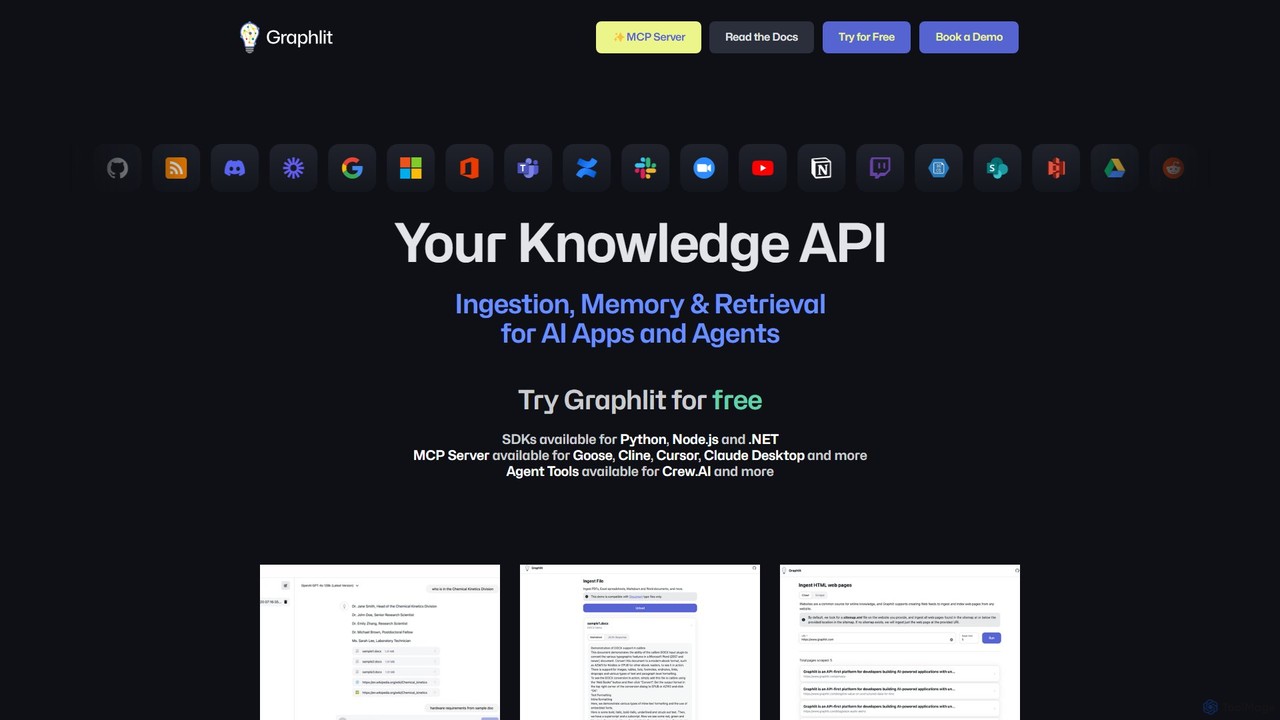
Graphlit is a comprehensive Knowledge API platform designed specifically for developers building next-generation AI applications and agents. It serves as a complete backend solution, handling the entire lifecycle of unstructured data—from ingestion and processing to memory and retrieval. By offering a powerful RAG-as-a-Service (Retrieval-Augmented Generation) and GraphRAG system, Graphlit eliminates the need for developers to build and maintain complex data pipelines, allowing them to focus on creating innovative user experiences.
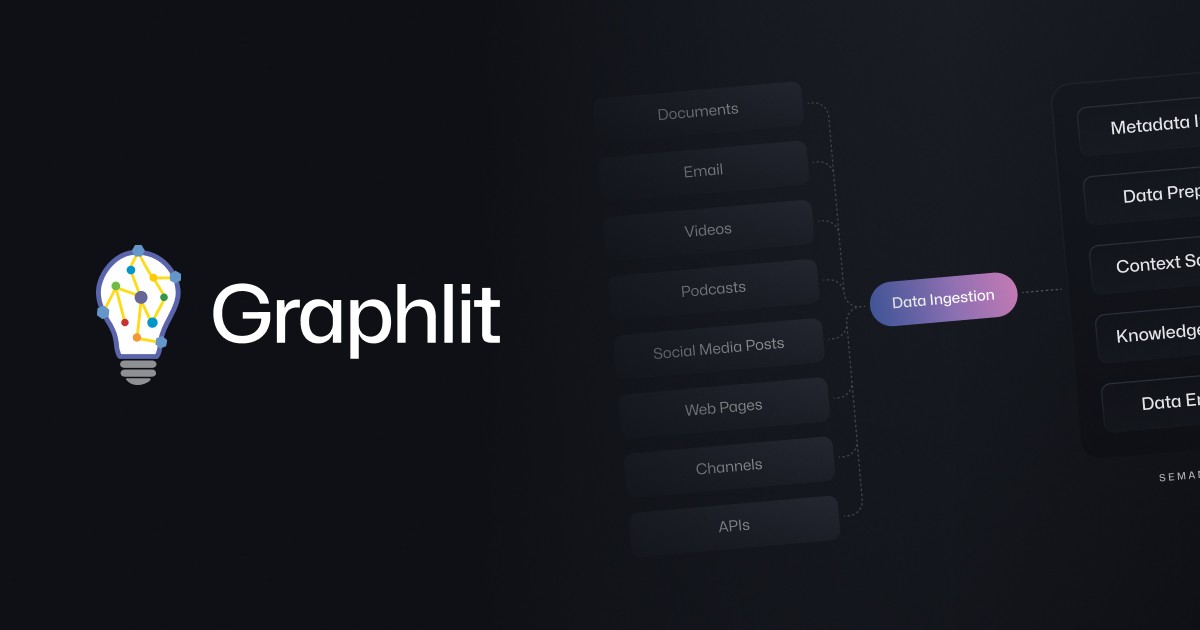
The platform is built on a serverless, cloud-native architecture, ensuring scalability and cost-efficiency. It can ingest data from a vast array of sources, including websites, cloud storage, SharePoint, podcasts, Jira, Notion, YouTube, email, and Slack. It seamlessly processes various data formats like documents (PDF, DOCX), audio, video, and images, automatically extracting text, transcribing audio, and enriching data to make it ready for LLM interaction.
How to use Graphlit
Using Graphlit is a streamlined process for developers:
- Sign Up & Configure: Start by signing up for a free Graphlit account to obtain your project credentials, including an organization ID, environment ID, and JWT secret.
- Integrate with SDKs: Integrate the Graphlit API into your application using native SDKs available for Python, Node.js, and .NET. This provides a simple interface to all platform features.
- Define Ingestion Feeds: Create and configure data feeds to automatically ingest content from your desired sources. For example, you can set up a feed to crawl a website, monitor a SharePoint folder, or pull messages from a Slack channel.
- Create Workflows: Customize data processing workflows. You can specify connectors like Azure AI Document Intelligence for advanced document layout extraction or Deepgram for high-quality audio transcription.
- Query and Retrieve: Use the API to perform powerful searches on your knowledge base. You can use semantic (vector) search to find relevant information based on meaning, or filter content precisely using metadata.
- Build AI Agents: Leverage Graphlit's Agent Tools for Python to easily integrate with agentic frameworks like CrewAI. Alternatively, use the Graphlit MCP (Model Context Protocol) Server to connect with clients like Claude Desktop or Goose, enabling agentic workflows directly within these tools.
Core Features of Graphlit
- Automated ETL for LLMs: Provides automated data feeds for continuous ingestion. It extracts text and tables from documents and images using OCR and LLMs, transcribes audio with Deepgram, and performs automated web scraping.
- RAG-as-a-Service: Features intelligent text extraction and chunking, built-in vector embeddings, and conversation history management. It also supports GraphRAG for LLM-based entity extraction.
- Multimodal Capabilities: Integrated with Large Multimodal Models (LMMs) like OpenAI's GPT-4o and Anthropic's Sonnet 3.5. It can generate image descriptions, perform visual object detection, and enable similarity search via image embeddings.
- Comprehensive Data Source Integration: Connects to a wide range of sources such as websites, cloud storage (Azure Blob, S3), SharePoint, podcasts (RSS), Jira, Notion, YouTube, email (Gmail, Outlook), and communication platforms (Slack, Discord, Teams).
- Developer-First Design: Built by developers, for developers. It offers a serverless, cloud-native platform with no infrastructure to manage, native SDKs, multitenant-ready architecture with RBAC, and at-rest data encryption.
- AI Agent Tools: Provides a suite of tools for Python to integrate with frameworks like CrewAI, enabling agents to perform tasks like web scraping, data ingestion, RAG-based prompting, and content generation.
Use Cases for Graphlit
Graphlit's versatile platform supports a wide range of applications:
- Intelligent Chatbots: Create chatbots that can accurately answer questions based on a private knowledge base of PDFs, Word documents, website content, and more.
- Automated Research Agents: Build AI agents that can perform web research, crawl competitor websites, ingest industry reports, and generate summarized insights.
- Media Analysis: Ingest and transcribe audio from podcasts or videos, then use semantic search to analyze content, find specific quotes, or identify trends discussed.
- Enterprise Search: Deploy a powerful search engine across all company data, including SharePoint, Jira, Slack, and email, allowing employees to find information instantly.
- Structured Data Extraction: Automate the process of scraping web pages (e.g., e-commerce sites) and extracting specific information into a structured JSON format for analysis or database population.
Advantages of Graphlit
Graphlit offers significant advantages for developers:
- Speed and Efficiency: Dramatically accelerates the development of AI applications by providing a ready-made, robust data backend.
- Unified Platform: A single, cohesive API for ingestion, processing, and retrieval, which simplifies the tech stack and reduces integration complexity.
- Scalability and Cost-Control: The serverless architecture scales automatically with demand, and the usage-based pricing model ensures you only pay for the resources you consume.
- Flexibility and Power: Supports a vast ecosystem of data sources, formats, and integrations with leading LLMs and agent frameworks.
- Future-Ready: Built with advanced concepts like GraphRAG and multimodality, enabling the creation of highly sophisticated and capable AI systems.
Pricing and Plans
Graphlit offers a freemium model with plans designed to scale with your needs:
- Free: $0/month. Includes 100 credits, up to 1GB content storage, 1000 content items, 3 feeds, and 100 chatbot conversations. Perfect for getting started.
- Hobby: $49/month + usage ($0.10/credit). Includes everything in Free, with limits increased to 10GB storage, 10K content items, and unlimited feeds/conversations.
- Starter: $199/month + usage ($0.09/credit - 10% off). Includes everything in Hobby, with 100GB storage and unlimited content items, plus priority support.
- Growth: $999/month + usage ($0.08/credit - 20% off). Includes everything in Starter, with unlimited storage and a dedicated technical contact.
Credits are an aggregated unit of compute, storage, and API usage. For example, 1 credit can process approximately 5 PDF pages, 10 minutes of audio, or 10 web pages.
Traffic
Latest traffic
Status
Monthly traffic trend
- 2025-9: 5.9K
- 2026-1: 12.4K
- 2026-2: 12.8K
- 2026-3: 9.0K
- 2026-4: 8.7K
- 2026-5: 11.3K
Geography
Top 5 countries / regions
- 🇺🇸United States50.3%
- 🇮🇳India24.2%
- 🇩🇪Germany9.8%
- 🇨🇭Switzerland8.1%
- 🇨🇦Canada7.5%
Top keywords
| Keyword | Cost per click |
|---|---|
| context engine | $0.00 |
| find me some sample pdf files with text and tablets | $0.00 |
| graphlit | $10.83 |
| memcity convex vs zep graphiti | $0.00 |
| zep cloud | $1.03 |
Graphlit Alternatives
Godly
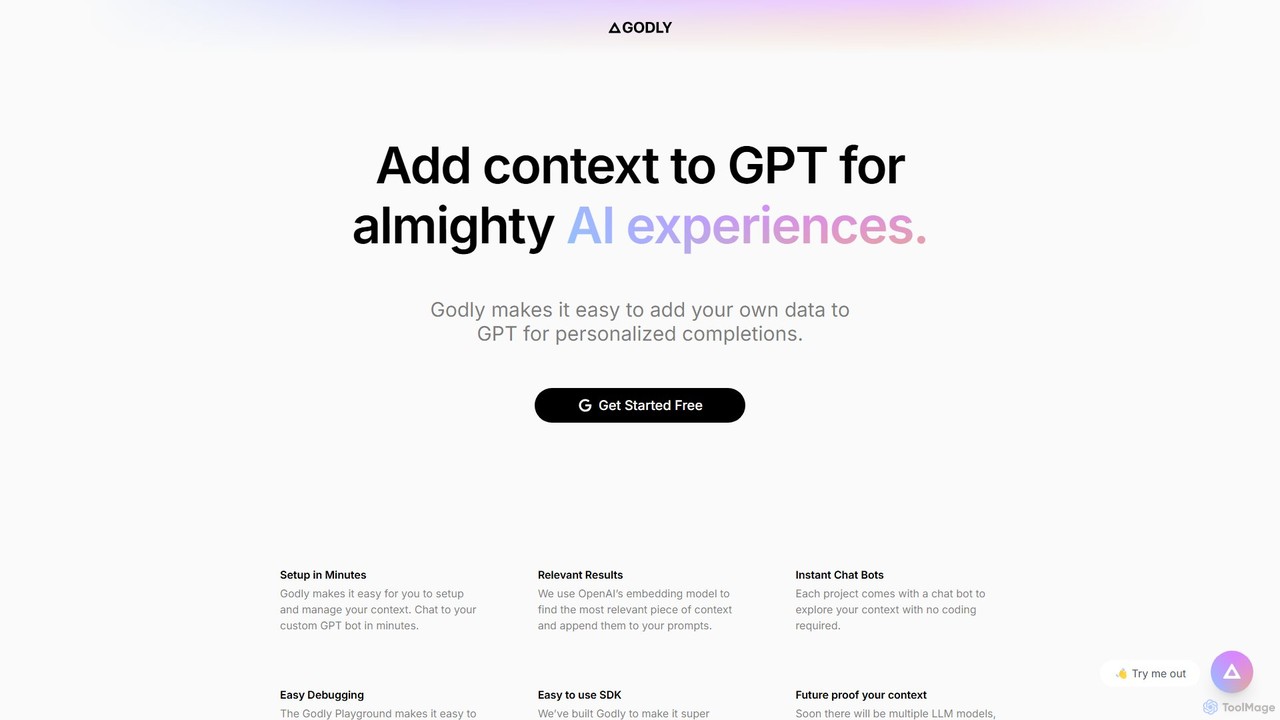
Godly is a developer-focused platform that enables the rapid integration of custom data into GPT and other LLMs. It provides the tools to build context-aware AI applications, such as personalized chatbots and intelligent search systems, by connecting your own data sources to large language models through a streamlined RAG (Retrieval-Augmented Generation) pipeline.
Api & Sdk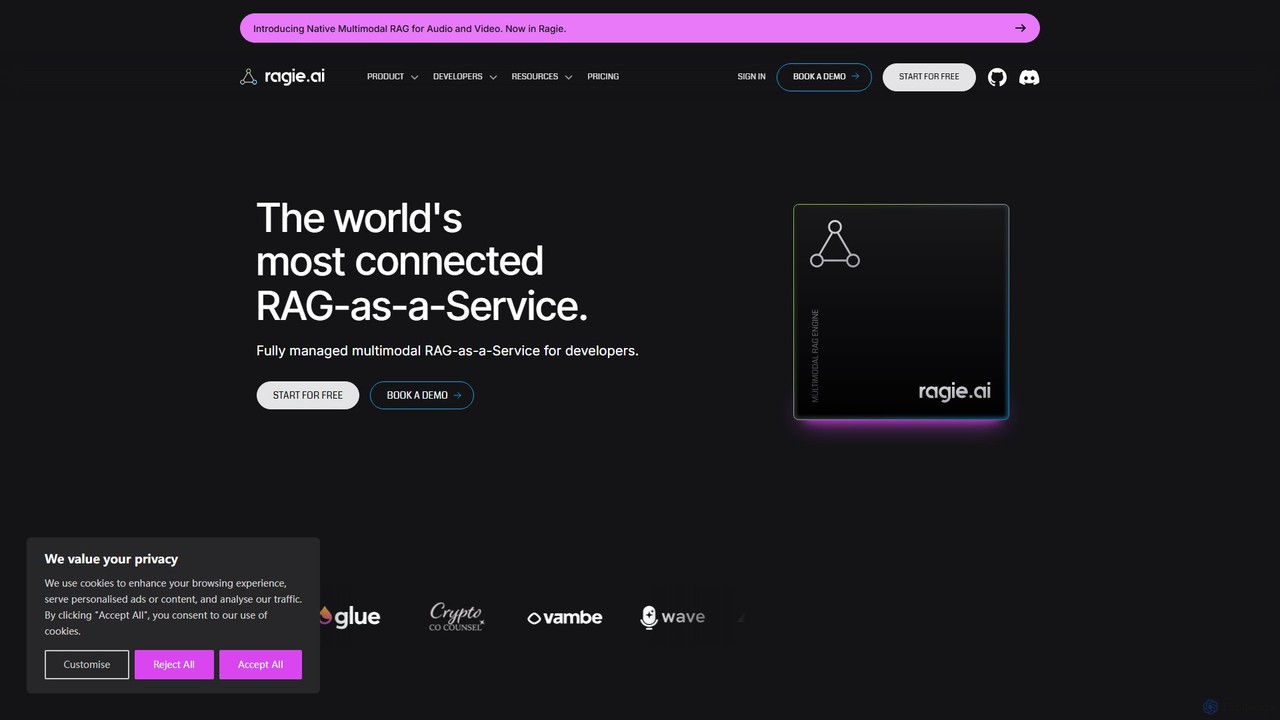
ragie
Ragie is a fully managed RAG-as-a-Service platform designed for developers. It simplifies the process of building and deploying AI applications by handling the entire Retrieval-Augmented Generation pipeline. Connect your data sources, and use a simple API to power accurate, context-aware chatbots, semantic search, and knowledge management systems without the complexity of managing infrastructure.
Machine Learning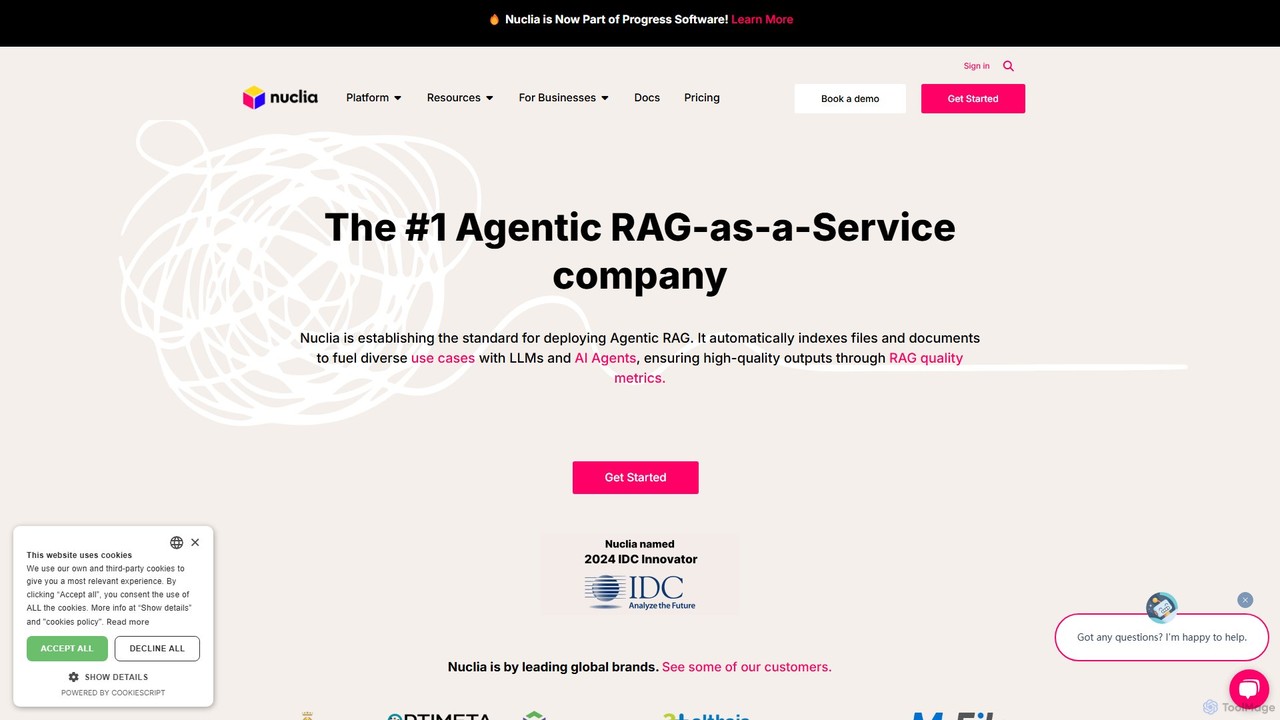
Nuclia
Nuclia is a leading Agentic RAG-as-a-Service platform that enables businesses to index any unstructured data and build powerful AI search, generative AI applications, and AI agents. It provides a modular, end-to-end solution for creating trusted, verifiable AI systems on your private data.
Data Analysis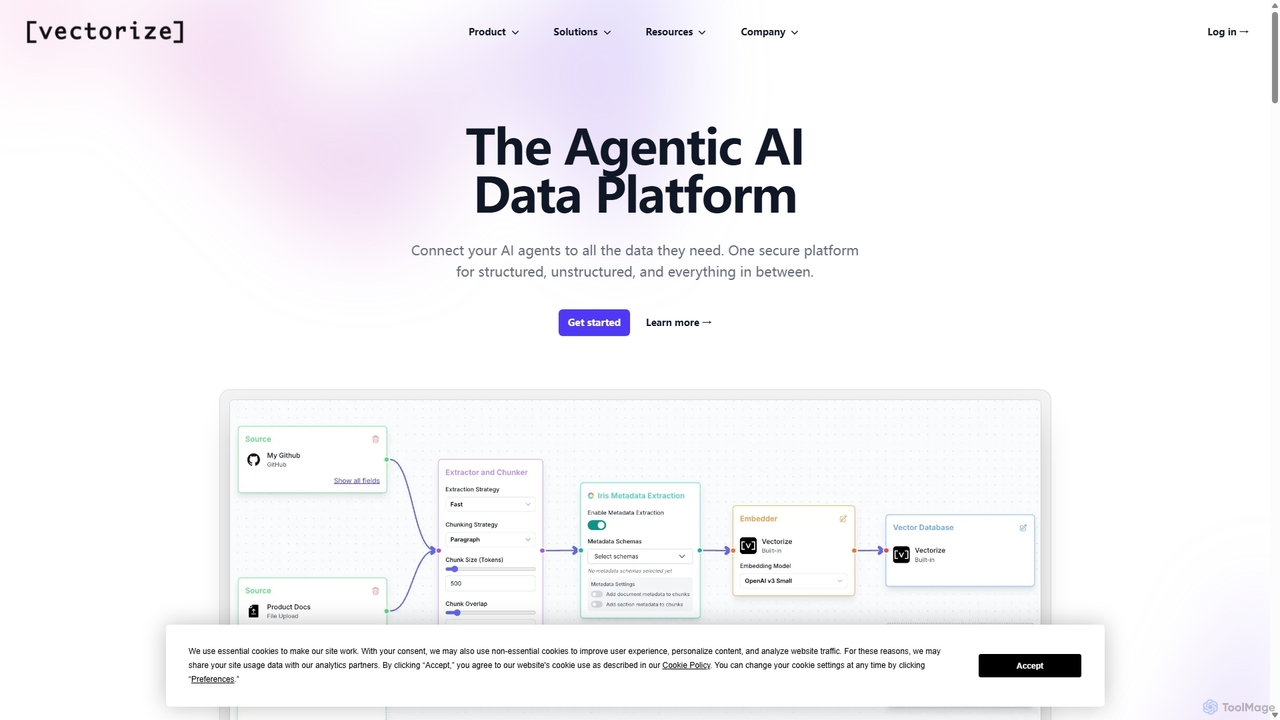
Vectorize
Vectorize is a RAG-as-a-Service platform that simplifies building AI applications on unstructured data. It offers managed RAG pipelines, extensive data source connectors, and the flexibility to use its managed vector database or connect your own, enabling developers to deploy production-ready AI solutions quickly.
Rag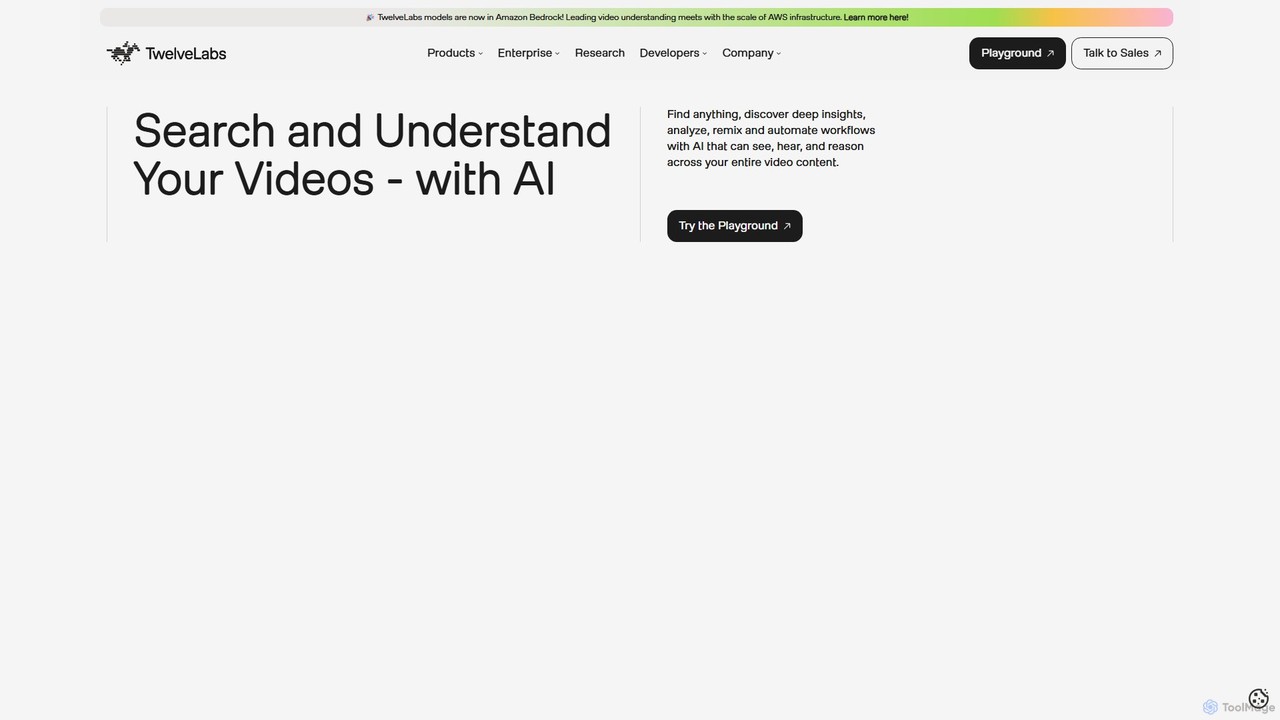
TwelveLabs
TwelveLabs is a powerful multimodal AI platform for video understanding. It provides APIs and SDKs for developers to build applications that can search, analyze, and generate text from video content. By understanding visuals, audio, and speech, it unlocks deep insights from large video libraries.
Api & SdkGraphlit Categories
Graphlit Embed Widget
Copy this embed code to place the badge on your blog, article, or product site and send readers directly to this ToolMage detail page.

Related AI tools
Godly
Godly is a developer-focused platform that enables the rapid integration of custom data into GPT and other LLMs. It provides the tools to build context-aware AI applications, such as personalized chatbots and intelligent search systems, by connecting your own data sources to large language models through a streamlined RAG (Retrieval-Augmented Generation) pipeline.
Api & Sdkragie
Ragie is a fully managed RAG-as-a-Service platform designed for developers. It simplifies the process of building and deploying AI applications by handling the entire Retrieval-Augmented Generation pipeline. Connect your data sources, and use a simple API to power accurate, context-aware chatbots, semantic search, and knowledge management systems without the complexity of managing infrastructure.
Machine LearningNuclia
Nuclia is a leading Agentic RAG-as-a-Service platform that enables businesses to index any unstructured data and build powerful AI search, generative AI applications, and AI agents. It provides a modular, end-to-end solution for creating trusted, verifiable AI systems on your private data.
Data Analysis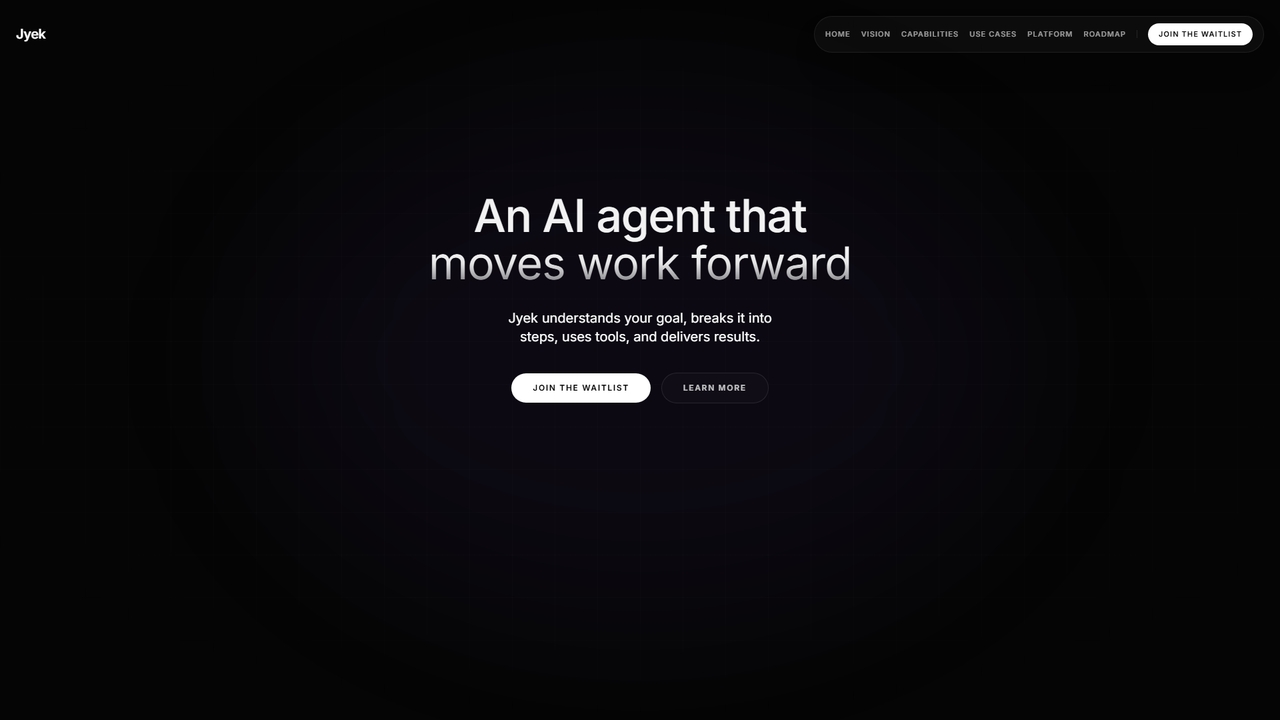
Jyek
Jyek is an AI agent platform that understands objectives, creates execution plans, uses tools, and delivers verifiable results for complex, multi-step tasks.
Automation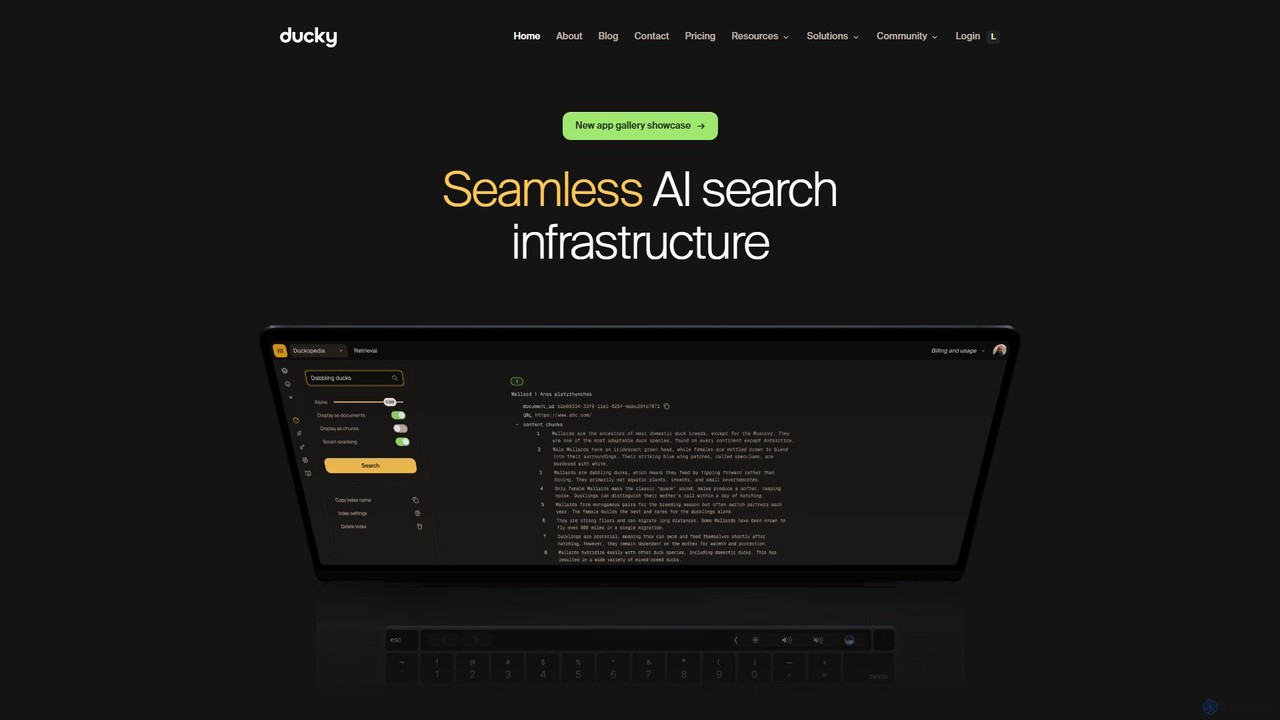
Ducky
Ducky is a fully managed AI search infrastructure designed for developers. It simplifies the implementation of Retrieval-Augmented Generation (RAG) by handling complex tasks like data chunking, embedding, and reranking. With a simple Python SDK, Ducky enables developers to quickly build fast, accurate, and scalable semantic search capabilities into their applications, providing context-aware and hallucination-free responses from LLMs.
Retrieval Augmented Generation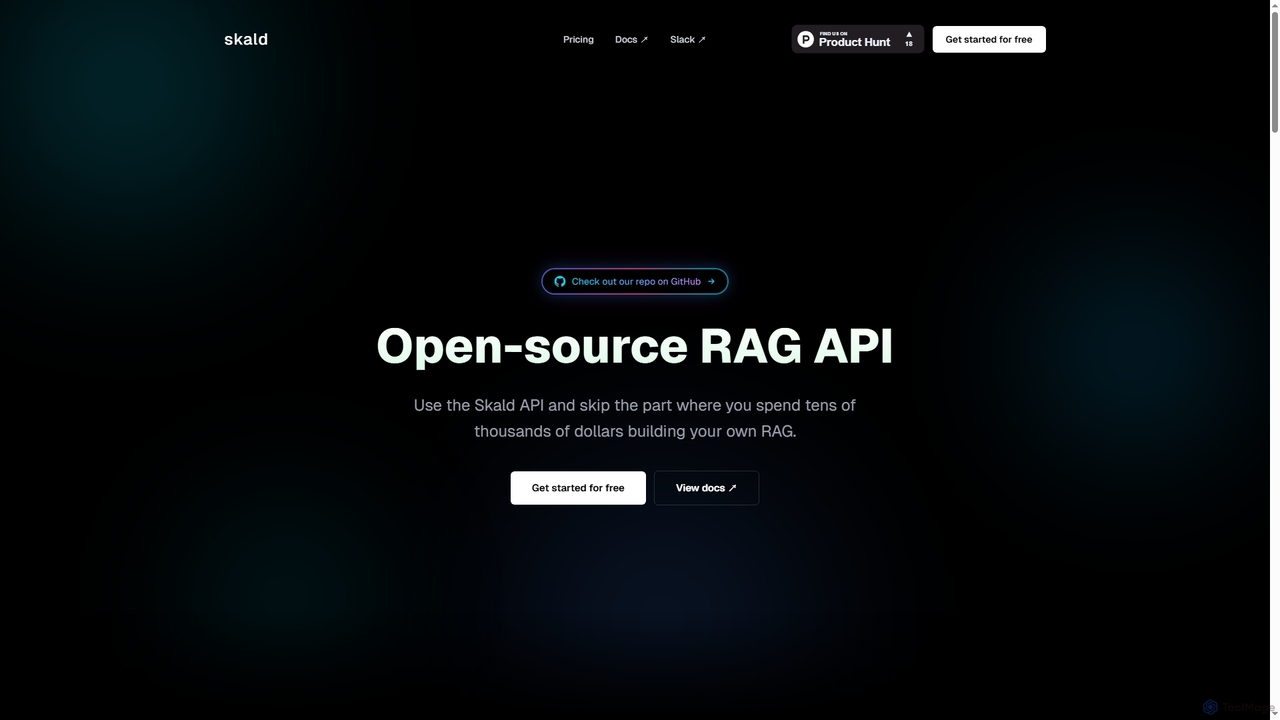
Skald
Skald is an open-source RAG API designed for developers to quickly build AI agents without the complexity of managing RAG infrastructure. It simplifies knowledge storage, context management, and semantic search, offering a powerful solution for integrating long-term memory into AI applications.
RagVectorize
Vectorize is a RAG-as-a-Service platform that simplifies building AI applications on unstructured data. It offers managed RAG pipelines, extensive data source connectors, and the flexibility to use its managed vector database or connect your own, enabling developers to deploy production-ready AI solutions quickly.
RagTwelveLabs
TwelveLabs is a powerful multimodal AI platform for video understanding. It provides APIs and SDKs for developers to build applications that can search, analyze, and generate text from video content. By understanding visuals, audio, and speech, it unlocks deep insights from large video libraries.
Api & Sdk
Asimov
Asimov provides a foundational AI search API for developers to build intelligent agents and applications. It features built-in semantic search and re-ranking for high accuracy, simple content ingestion, and robust source management. The platform is designed with enterprise-grade security and offers detailed usage tracking, making it a comprehensive solution for creating custom search experiences.
Data Management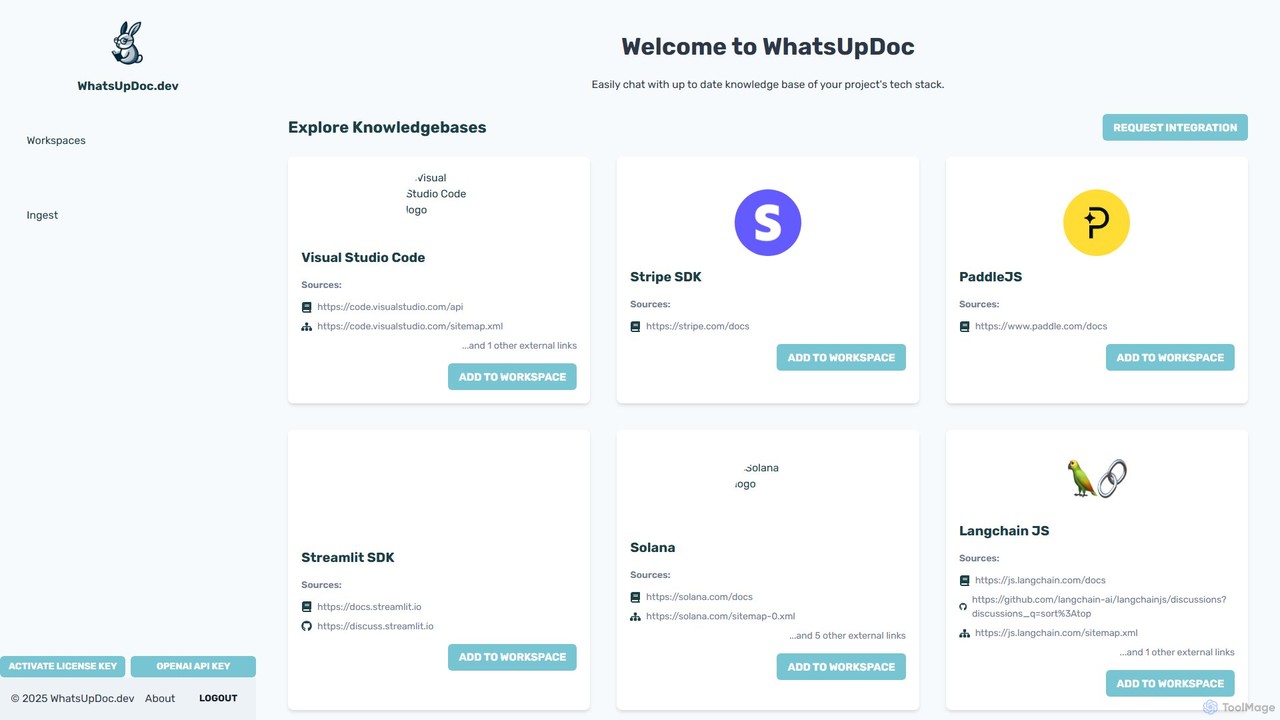
WhatsUpDoc.dev
An AI-powered tool for developers to chat directly with up-to-date technical documentation and knowledge bases. It uses a RAG model to provide instant, accurate answers from sources like official docs, GitHub discussions, and blogs, enhancing productivity and learning.
Code Assistant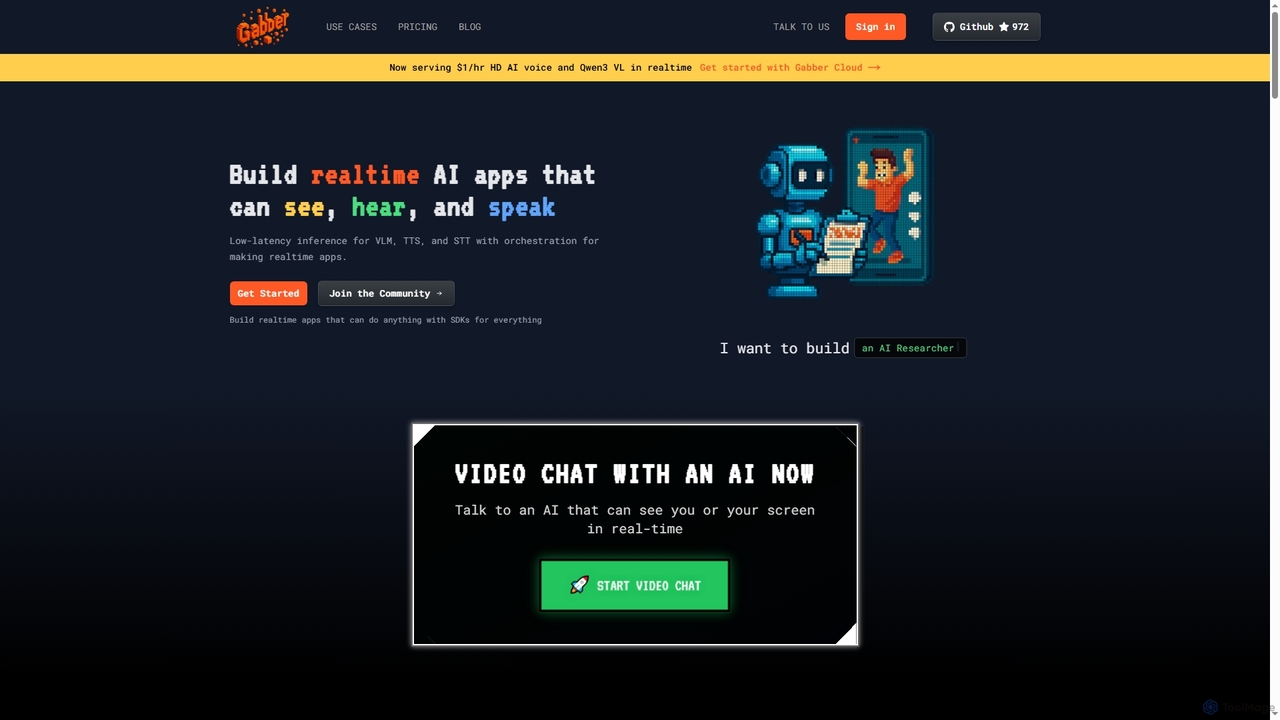
Gabber
Gabber is a powerful platform for building real-time, multimodal AI applications that can see, hear, and speak. It offers low-latency inference for Vision Language Models (VLM), Text-to-Speech (TTS), and Speech-to-Text (STT), coupled with a graph-based orchestration system for rapid development and deployment.
Conversational Ai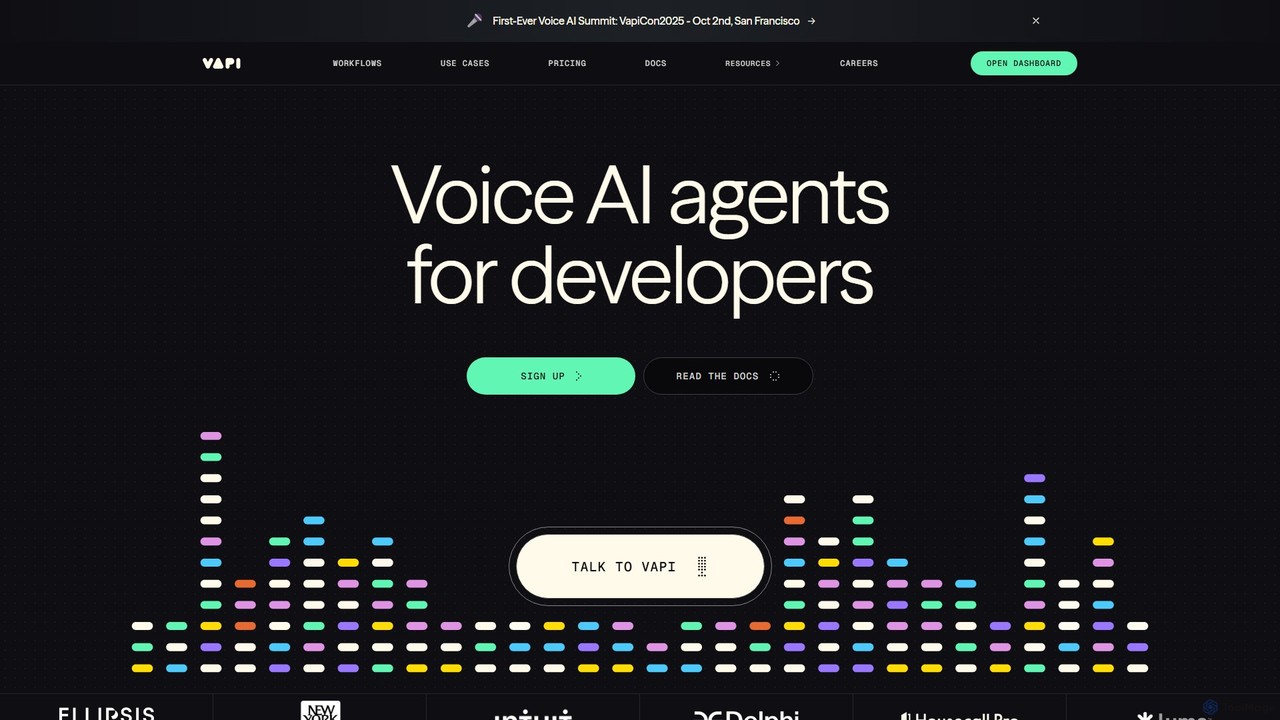
Vapi
Vapi is a developer-first API platform for building, deploying, and scaling advanced, human-like voice AI agents. It enables the creation of sophisticated conversational AI for inbound/outbound calls, in-app assistants, and more, with ultra-low latency and high configurability.
Voice Assistant
Pinecone
Pinecone is a high-performance, fully managed vector database designed for building knowledgeable AI applications at scale. It enables developers to implement advanced features like semantic search, retrieval-augmented generation (RAG), and personalized recommendations by efficiently storing and querying billions of vector embeddings in real-time.
Database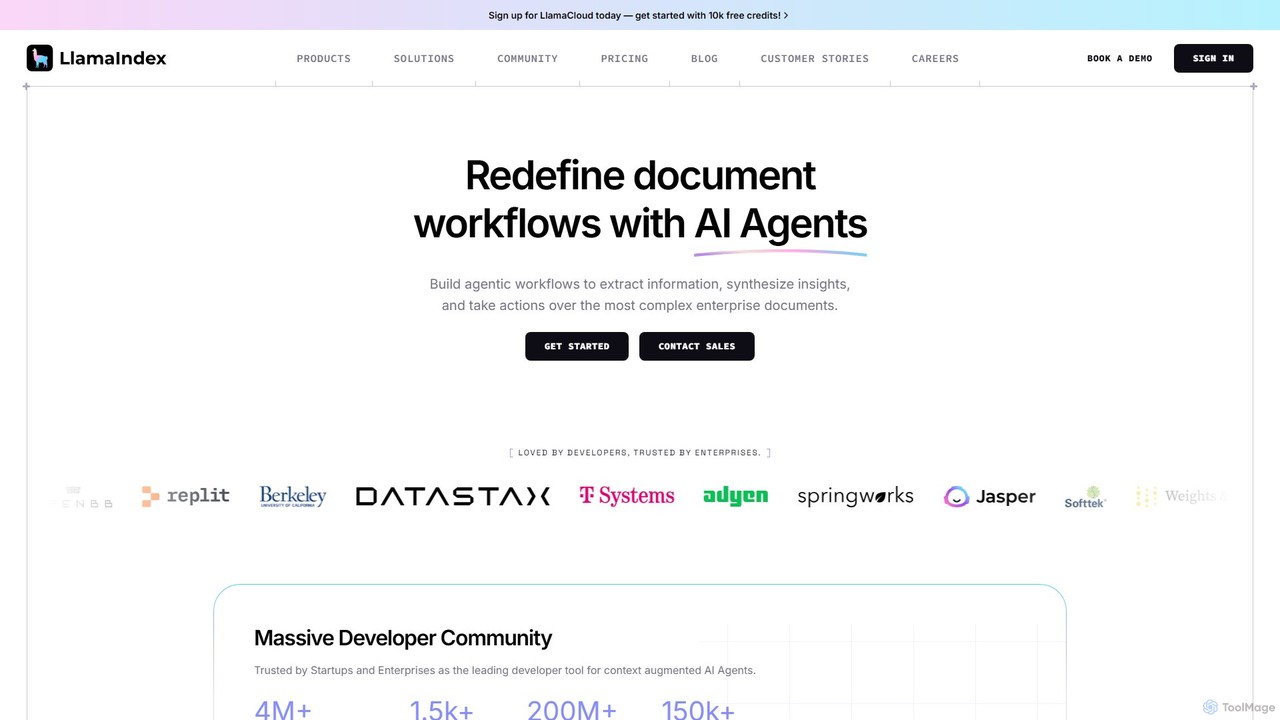
LlamaIndex
LlamaIndex is a leading data framework for developers building LLM-powered applications. It specializes in connecting large language models to private or domain-specific data sources, enabling the creation of powerful Retrieval-Augmented Generation (RAG) systems, knowledge assistants, and autonomous AI agents. It simplifies data ingestion, indexing, and querying for enterprise-grade solutions.
Data Management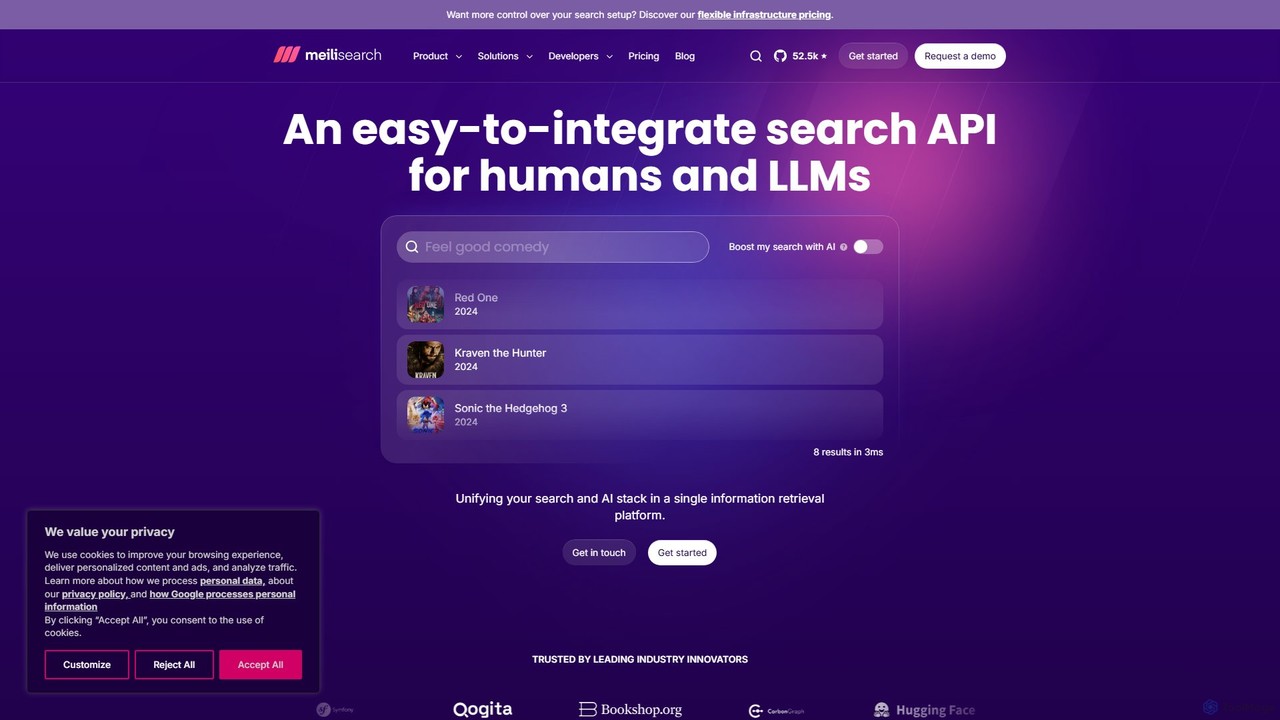
Meilisearch
Meilisearch is an open-source, lightning-fast, and AI-powered search engine. It's designed for developers to easily integrate advanced search capabilities, including full-text, semantic, and hybrid search, into any website or application. It offers an exceptional developer experience with powerful APIs and SDKs.
Database
Graphlit Comments (0)
Sign in to comment.
Sign inNo comments yet.