
OpenLIT Overview
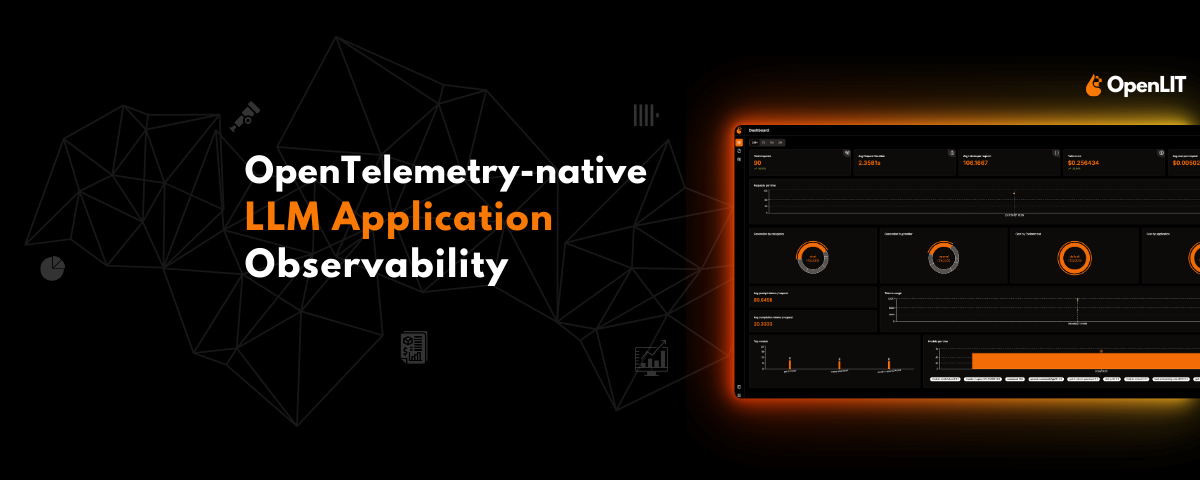
OpenLIT is a powerful open-source observability platform specifically designed for the unique challenges of developing and managing Generative AI and Large Language Model (LLM) applications. As an OpenTelemetry-native tool, it integrates seamlessly into existing monitoring ecosystems, providing a unified view of your AI stack. It empowers developers and AI engineers to streamline their workflows, from experimentation to production monitoring.
The platform is built with a privacy-first approach, allowing teams to self-host the entire solution, ensuring that sensitive data, prompts, and model interactions remain within their own infrastructure. OpenLIT addresses the entire lifecycle of AI application development by combining performance monitoring, cost management, and development utilities into a single, cohesive platform.
How to use OpenLIT
Getting started with OpenLIT is designed to be straightforward. The primary method involves a simple two-step process:
- Deploy the Platform: You can run the entire OpenLIT backend, including the UI and database, using a single Docker command:
docker-compose up -d. This sets up all the necessary components on your local machine or server. - Integrate the SDK: In your Python or TypeScript/JavaScript application, you only need to add a single line of code to begin collecting telemetry data. Simply import and call
openlit.init()at the beginning of your application's entry point. The SDK will then automatically instrument supported libraries (like OpenAI, LangChain, etc.) to capture traces, costs, and other metrics without requiring significant code changes.
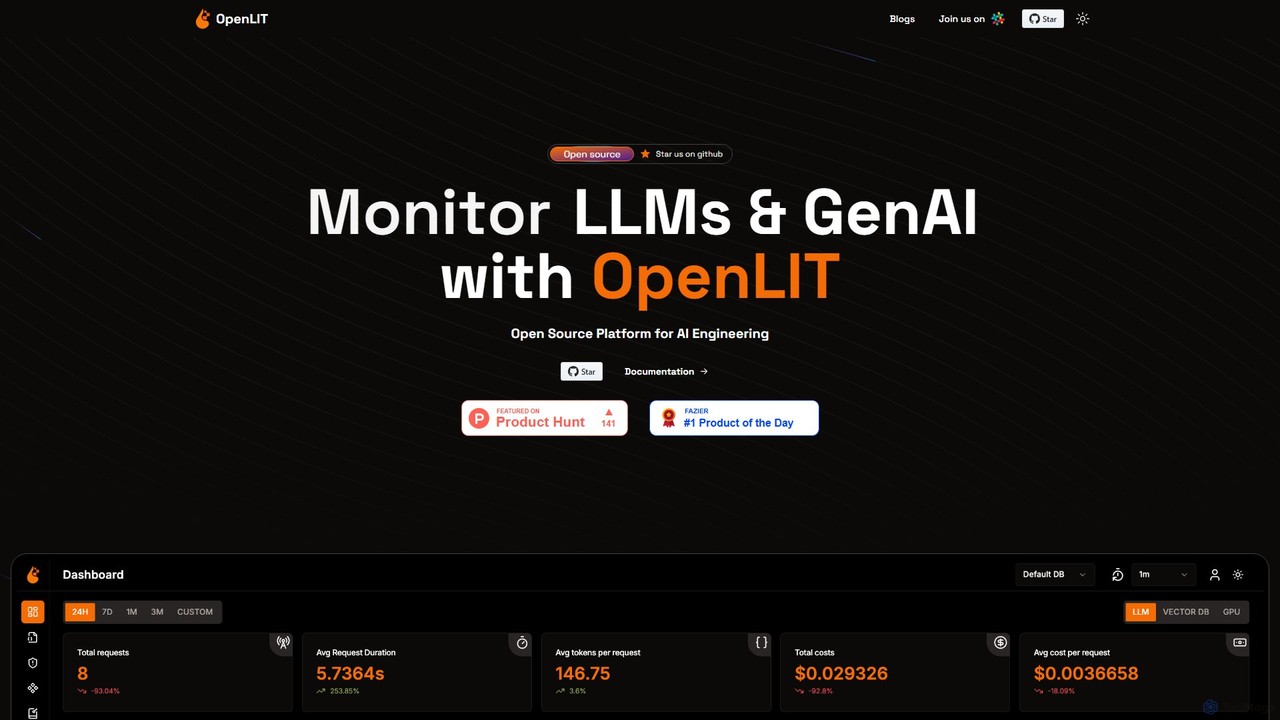
Once integrated, data will start streaming to your self-hosted OpenLIT instance, where you can visualize traces, analyze costs, and manage your prompts and secrets through its web interface.
Core Features of OpenLIT
- Application and Request Tracing: Provides end-to-end tracing of requests across different LLM providers and services, offering deep visibility into performance bottlenecks and latency.
- Detailed Cost Tracking: Automatically calculates and monitors the cost associated with LLM API calls, helping you make informed decisions to optimize your budget.
- Exception Monitoring: Captures and logs application errors with detailed stack traces, integrating them with request traces to quickly identify the root cause of issues.
- Openground Playground: A built-in tool to test and compare different LLMs side-by-side based on performance, output quality, and cost, accelerating experimentation.
- Centralized Prompt Management: A repository for storing, versioning, and managing prompts. It supports dynamic variables (e.g.,
{{variableName}}) for easy customization at runtime. - Secure Secrets Management (Vault Hub): A secure vault to store and manage API keys and other sensitive secrets, which can be easily integrated into your applications via the SDK.
- OpenTelemetry Native: Built on the OpenTelemetry standard, allowing for easy integration with popular observability platforms like Datadog, Grafana Cloud, and others.
Use Cases for OpenLIT
OpenLIT is valuable for various roles and scenarios in the AI development process:
- AI/ML Engineers: For debugging complex LLM chains, monitoring application performance in real-time, and optimizing token usage.
- DevOps and SRE Teams: To integrate AI application monitoring into their existing OpenTelemetry-based observability pipelines and ensure reliability and uptime.
- Product Managers & Finance Teams: To gain clear visibility into the operational costs of AI features and make data-driven decisions on model selection and usage limits.
- AI Researchers: To use the Openground playground for systematically experimenting with and evaluating new models and prompting techniques.
Advantages of OpenLIT
OpenLIT offers several key advantages over other solutions:
- Open Source and Self-Hosted: Provides full control over your data, ensuring privacy and security. It's transparent and free to use.
- Unified Solution: Combines observability, prompt management, and secrets management, reducing the need for multiple disparate tools.
- Low Latency & Real-Time: Designed for high performance, ensuring that monitoring does not negatively impact your application's speed.
- Granular Insights: Delivers detailed metrics on LLM, VectorDB, and even GPU performance, enabling deep optimization.
- Ease of Integration: The simple SDK integration and Docker-based deployment make it incredibly easy to adopt.
Pricing and Plans
OpenLIT is a fully open-source project and is available for free. Users can deploy and use it on their own infrastructure without any licensing fees. There are no paid tiers or enterprise plans mentioned, making it an accessible solution for individuals, startups, and large enterprises alike.
Traffic
Latest traffic
Status
Monthly traffic trend
- 2025-9: 13.2K
- 2026-1: 11.3K
- 2026-2: 5.8K
- 2026-3: 6.9K
- 2026-4: 8.9K
- 2026-5: 9.1K
Geography
Top 5 countries / regions
- 🇺🇸United States38.5%
- 🇷🇺Russia26.2%
- 🇮🇳India15.8%
- 🇵🇱Poland11.9%
- 🇩🇪Germany7.7%
Top keywords
| Keyword | Cost per click |
|---|---|
| aman aggarwal openlit | $0.00 |
| crewai tools | $0.00 |
| ollama opelit | $0.00 |
| openlit | $1.21 |
| openlit.gr | $0.00 |
OpenLIT Alternatives
Helicone
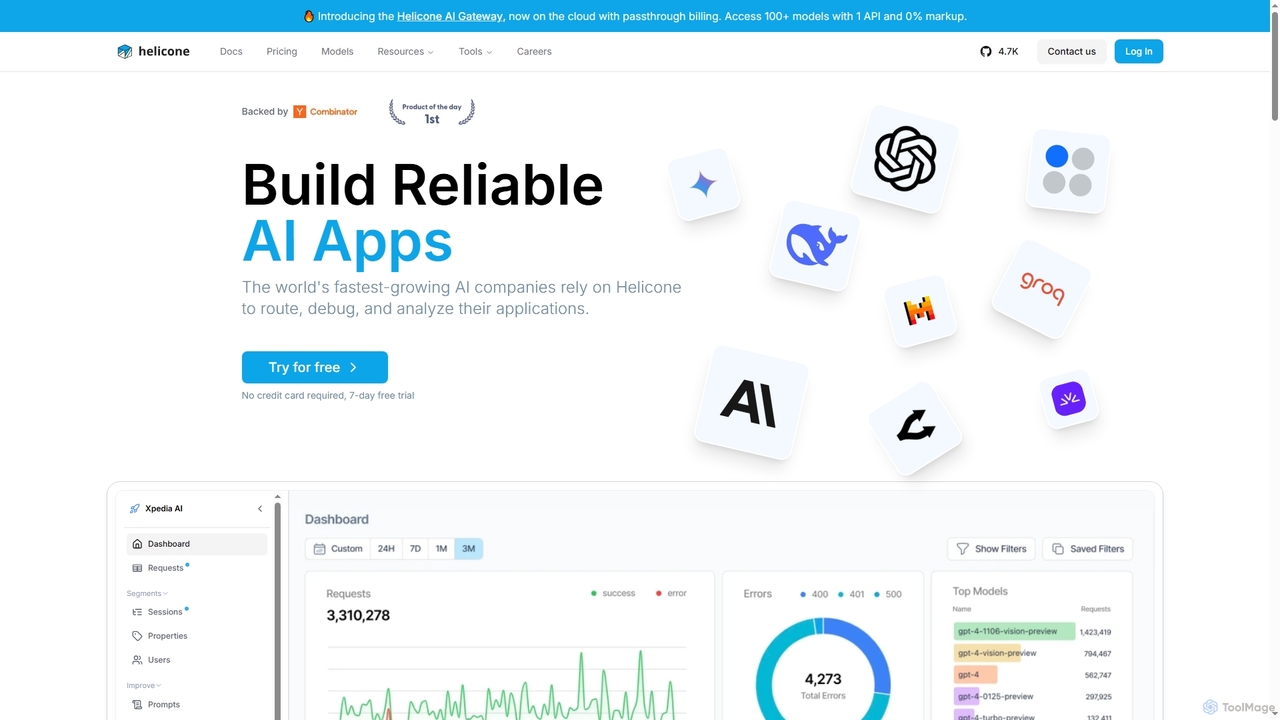
Helicone is an open-source platform offering an AI Gateway and LLM Observability for developers. It helps build reliable AI applications by providing tools to route, monitor, debug, and analyze LLM usage. Key features include a unified API for 100+ models, intelligent caching, rate limiting, prompt management, and detailed performance analytics.
Api Management
Pydantic
Pydantic is a comprehensive platform for developers, offering powerful data validation, AI development tools, and a full-stack observability solution. It enables faster, more robust application development in Python and other languages by leveraging type hints for runtime data validation and providing deep insights from local development to production.
Debugging & Testing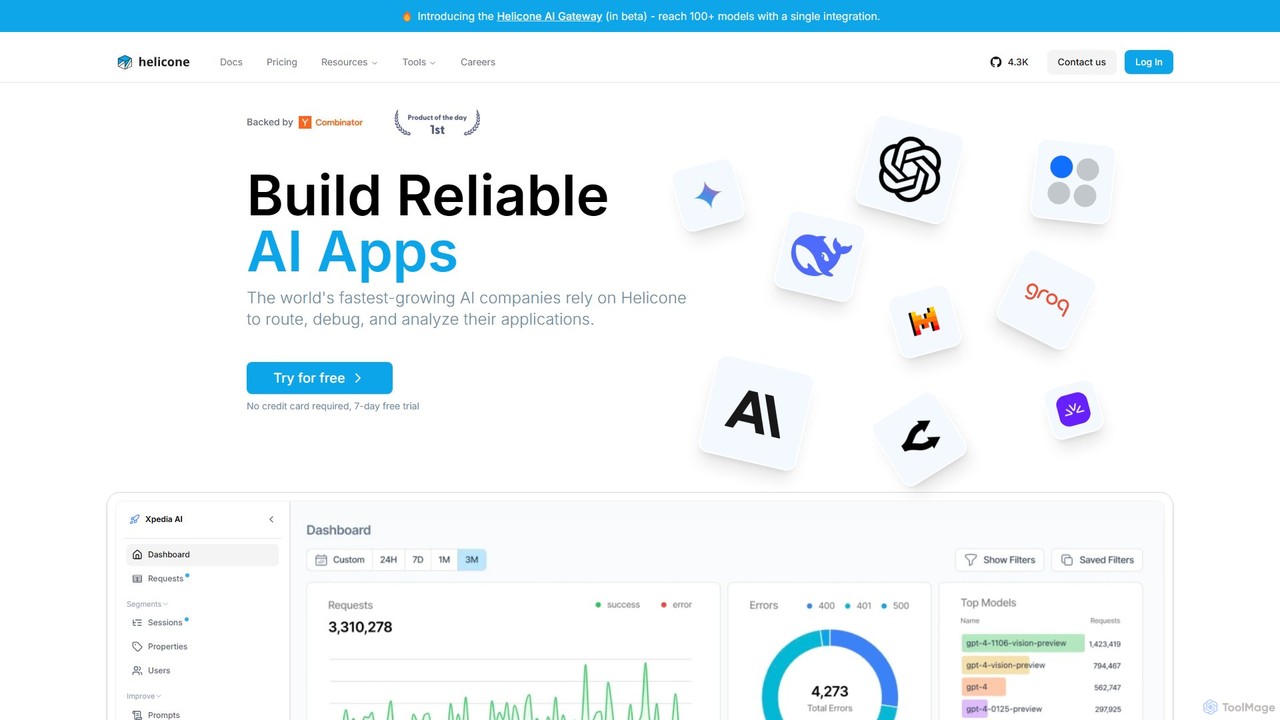
Valyr
Valyr (formerly Helicone) is an open-source LLM observability platform and AI gateway. It helps developers monitor, debug, and analyze their AI applications, providing a single integration to access over 100 models, manage costs, and improve reliability with features like caching and rate limiting.
Api Management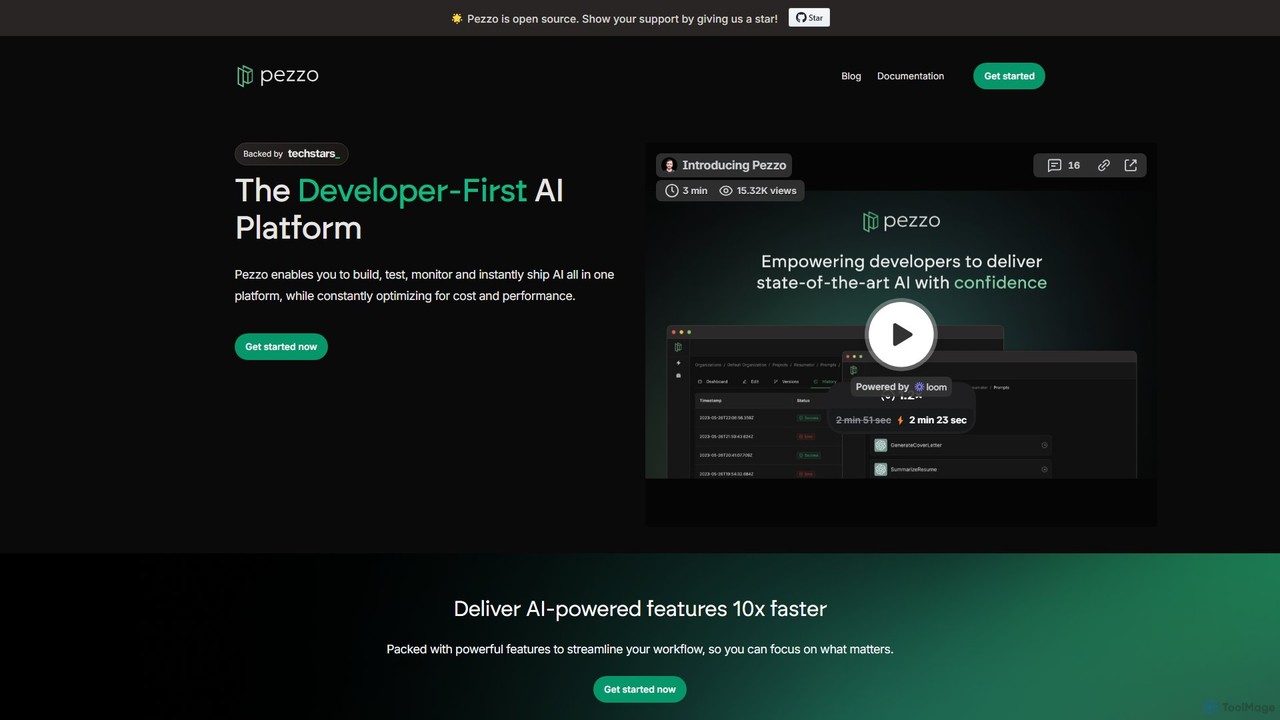
Pezzo
Pezzo is an open-source, developer-first AI platform designed to streamline the entire lifecycle of AI feature development. It enables teams to build, test, monitor, and ship AI-powered features up to 10x faster through centralized prompt management, real-time observability, and collaborative tools.
Ai Development
parseprompt.ai
ParsePrompt is an advanced platform for prompt engineering, designed for developers and AI teams. It allows you to parse, analyze, manage, and optimize your LLM prompts. Transform unstructured text prompts into structured, reusable templates, track versions, and collaborate effectively to build more reliable and cost-efficient AI applications.
Model ManagementOpenLIT Categories
OpenLIT Embed Widget
Copy this embed code to place the badge on your blog, article, or product site and send readers directly to this ToolMage detail page.

Related AI tools
Helicone
Helicone is an open-source platform offering an AI Gateway and LLM Observability for developers. It helps build reliable AI applications by providing tools to route, monitor, debug, and analyze LLM usage. Key features include a unified API for 100+ models, intelligent caching, rate limiting, prompt management, and detailed performance analytics.
Api ManagementPydantic
Pydantic is a comprehensive platform for developers, offering powerful data validation, AI development tools, and a full-stack observability solution. It enables faster, more robust application development in Python and other languages by leveraging type hints for runtime data validation and providing deep insights from local development to production.
Debugging & TestingValyr
Valyr (formerly Helicone) is an open-source LLM observability platform and AI gateway. It helps developers monitor, debug, and analyze their AI applications, providing a single integration to access over 100 models, manage costs, and improve reliability with features like caching and rate limiting.
Api Management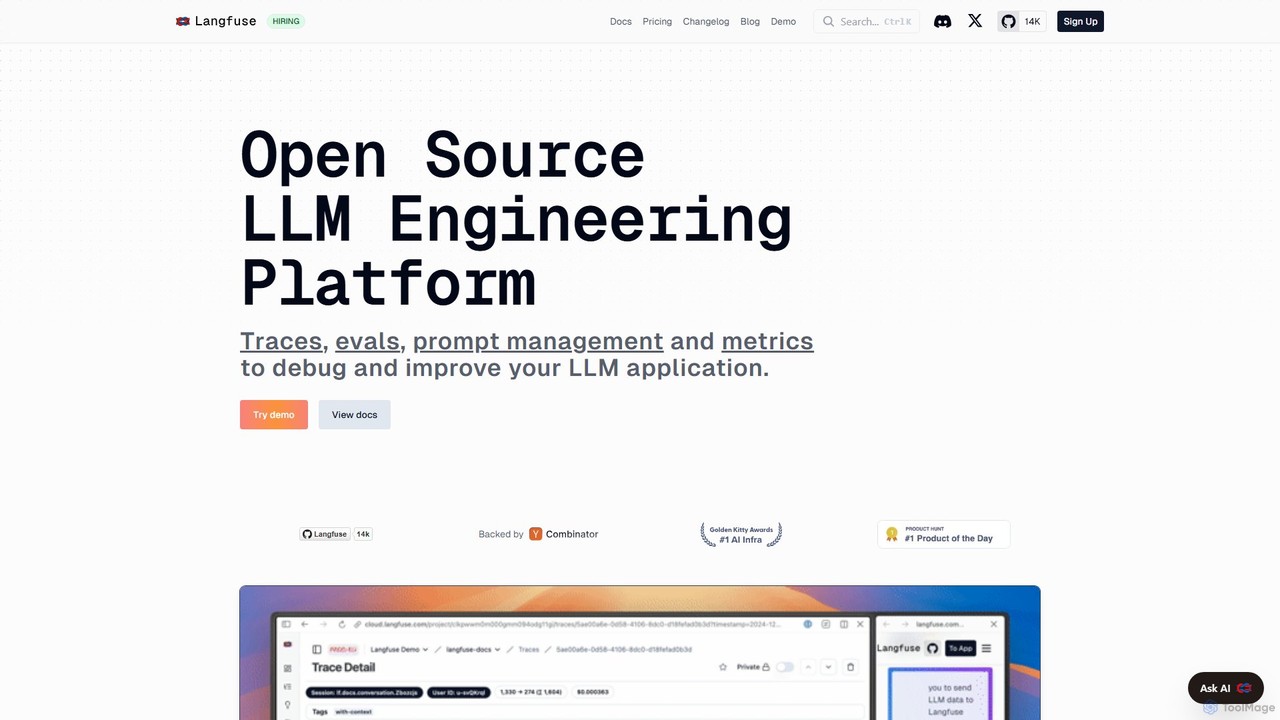
Langfuse
Langfuse is an open-source LLM engineering platform that provides comprehensive tools for debugging, evaluating, and improving LLM applications. It offers features like tracing, prompt management, evaluation frameworks, and metrics to streamline the entire development lifecycle for teams building with large language models.
Analytics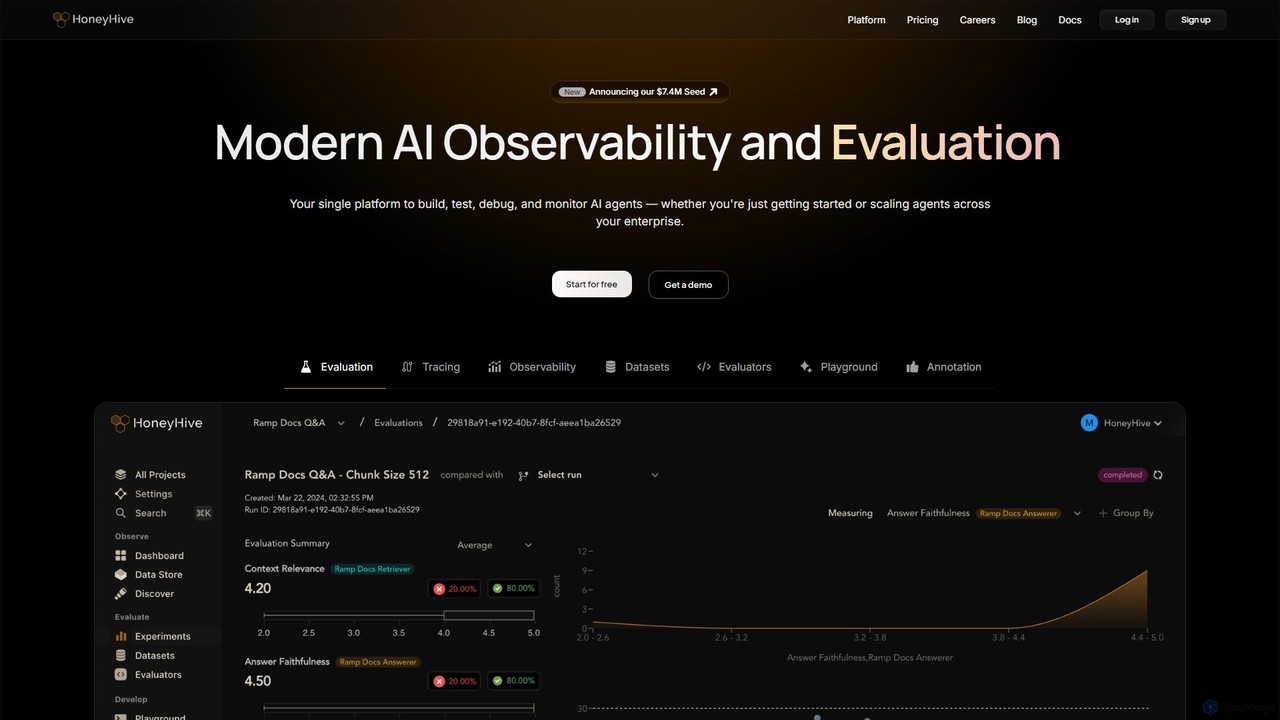
HoneyHive
HoneyHive is an all-in-one AI observability and evaluation platform for developers building with LLMs and AI agents. It provides a unified solution to build, test, debug, and monitor AI applications, from initial experiments to enterprise-scale deployment. The platform helps teams systematically measure AI quality, gain deep visibility into agent interactions, monitor performance metrics like cost and latency, and collaborate on essential assets like prompts and datasets, ensuring the confident shipment of reliable AI products.
Debugging
Jyek
Jyek is an AI agent platform that understands objectives, creates execution plans, uses tools, and delivers verifiable results for complex, multi-step tasks.
Automation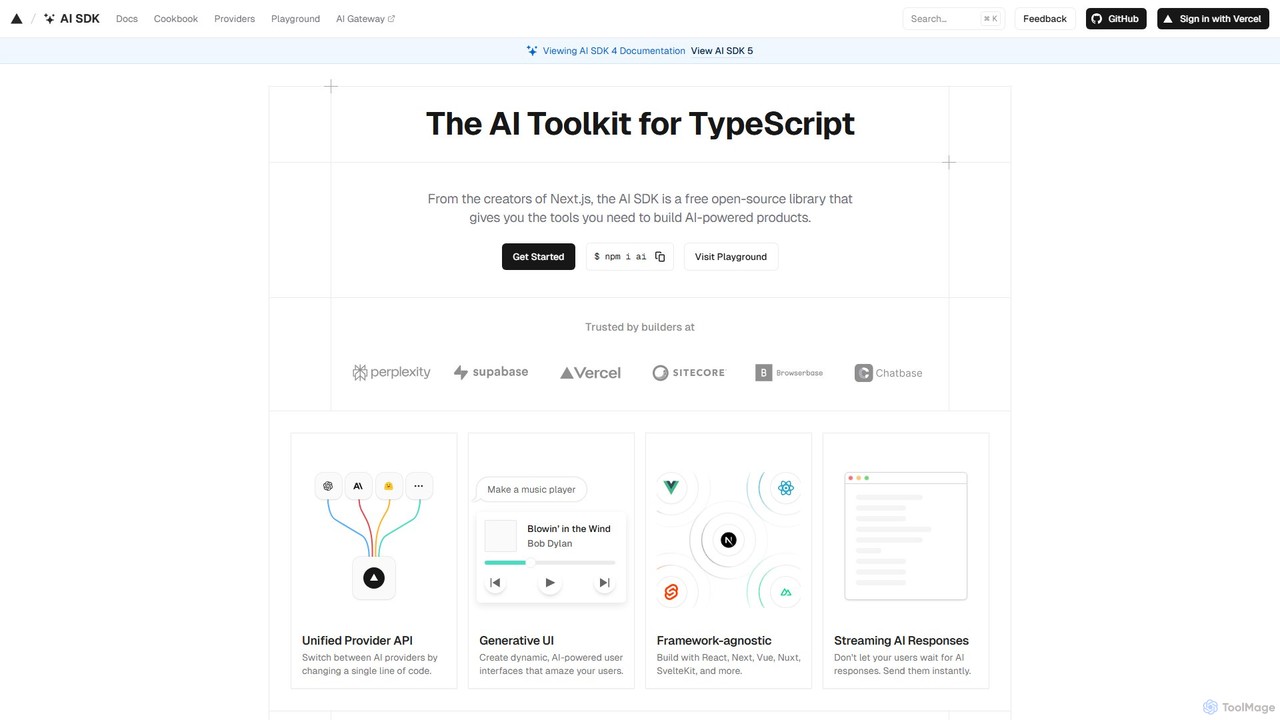
AI SDK
AI SDK by Vercel is a free, open-source TypeScript toolkit for building AI-powered applications. It provides a unified API to seamlessly integrate various large language models (LLMs) like OpenAI, Google, and Anthropic. It simplifies development with features like streaming responses, generative UI components, and tool calling, enabling developers to build and ship AI features faster across frameworks like Next.js, React, and Svelte.
Library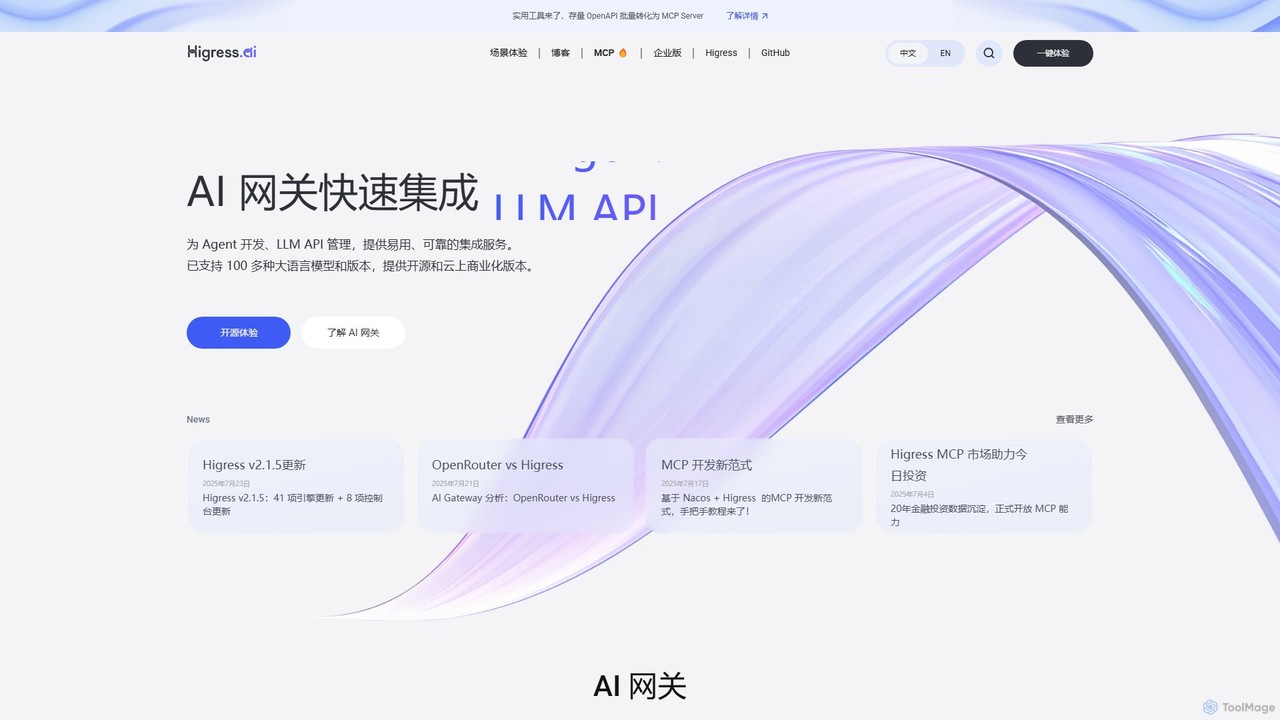
Higress.AI
Higress.AI is an advanced, open-source AI Gateway designed for developers and enterprises. It simplifies the integration and management of Large Language Models (LLMs) and AI Agents by providing a unified API proxy for over 100 models. Key features include REST to MCP conversion, semantic caching, token-based rate limiting, and a robust plugin system, enabling secure, scalable, and observable AI application infrastructure.
Model Deployment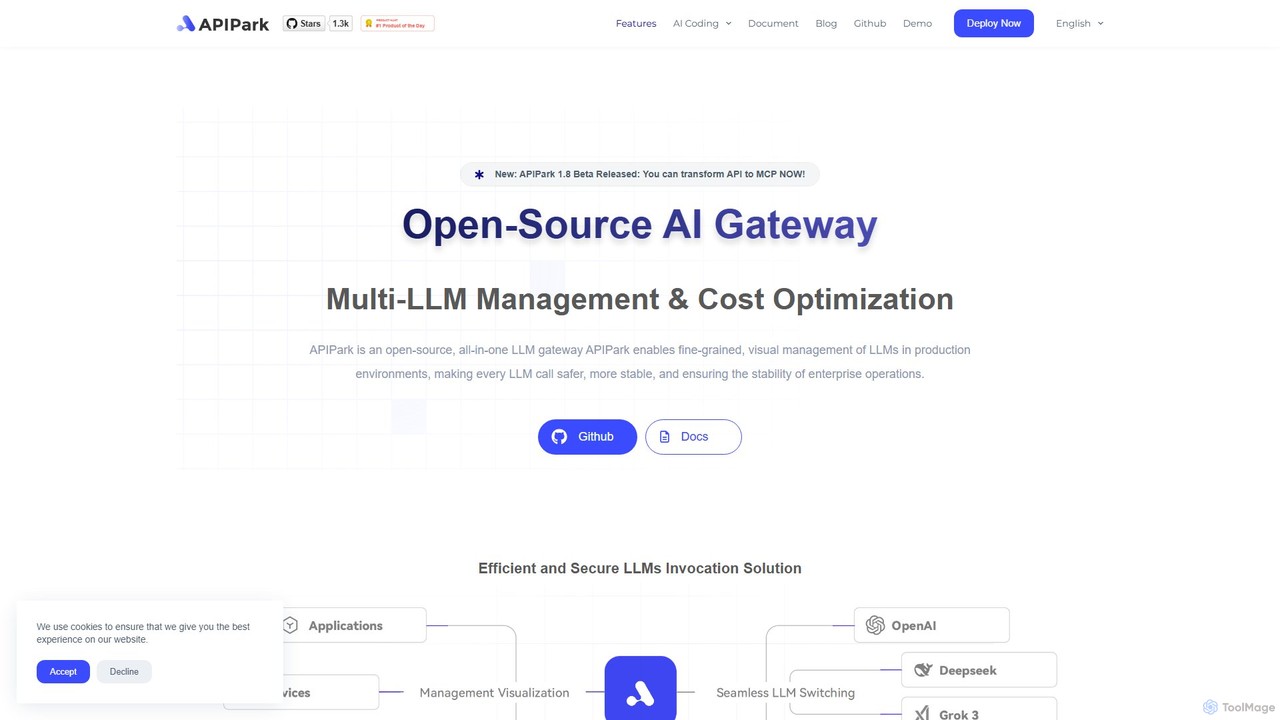
APIPark
APIPark is an open-source AI gateway and developer portal designed to help businesses manage, integrate, and deploy AI services efficiently. It centralizes LLM calls, reduces costs, and provides tools for API sharing, monitoring, and security.
Llm Gateway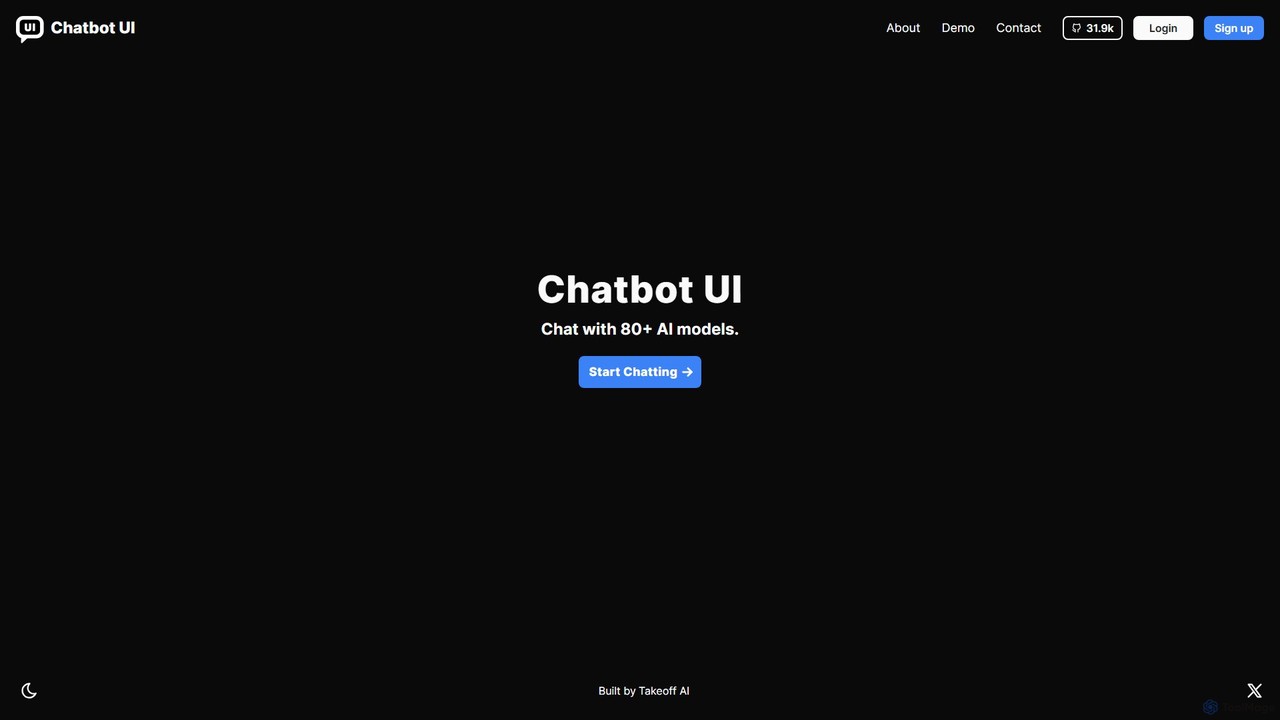
Chatbot UI
Chatbot UI is an open-source chatbot interface that allows you to connect with over 80 AI models, including those from OpenAI, Google, and Anthropic. It offers a self-hostable, customizable alternative to proprietary chat platforms, giving users full control over their data and conversations. Organize chats, create prompts, and seamlessly switch between models in a single, unified workspace.
Api Management
Falcon LLM
Falcon LLM is a family of powerful, open-source, and open-access large language models developed by the Technology Innovation Institute (TII). Known for state-of-the-art performance, scalability, and multimodality, Falcon models range from efficient edge-deployable versions to massive 180B parameter models, aiming to democratize access to advanced AI for developers, researchers, and enterprises worldwide.
Machine Learning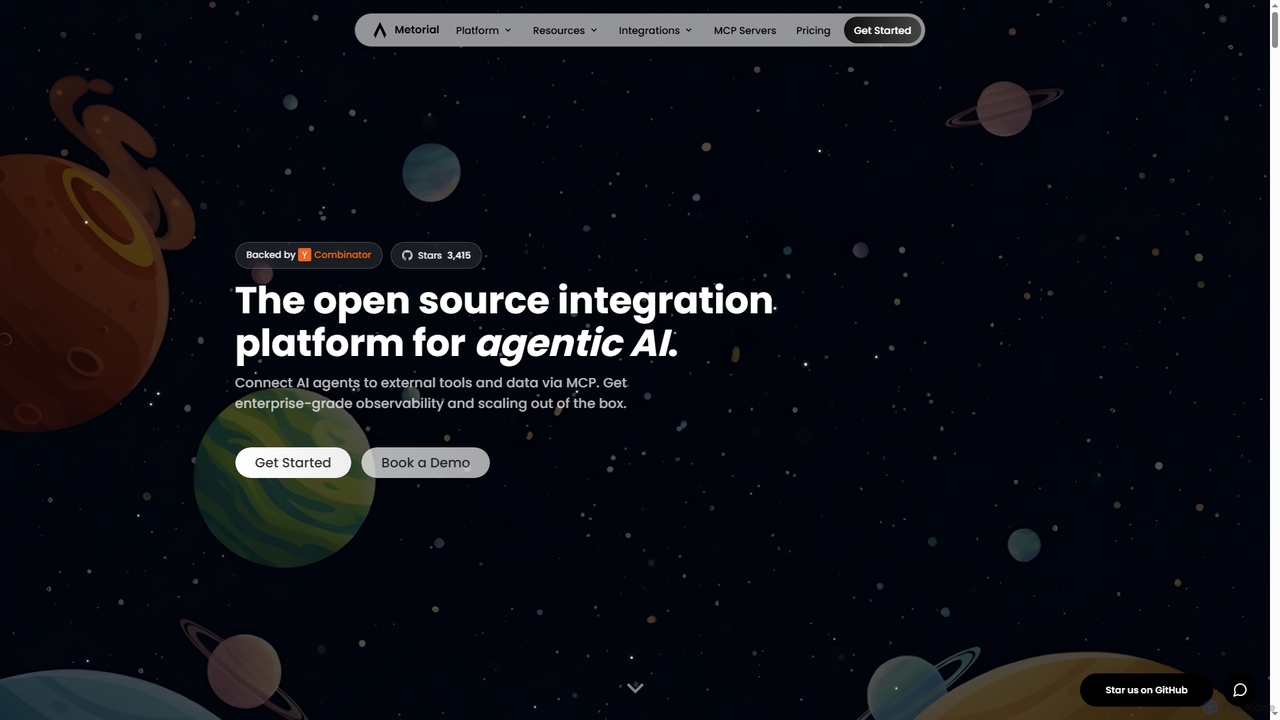
Metorial
Metorial is an integration platform for AI agents, enabling developers to quickly build, deploy, and monitor powerful agentic AI applications. It provides seamless connections to hundreds of tools, data sources, and APIs via its serverless Model Context Protocol (MCP) platform, offering robust SDKs, observability, and enterprise-grade security for scalable AI solutions.
Agentic Ai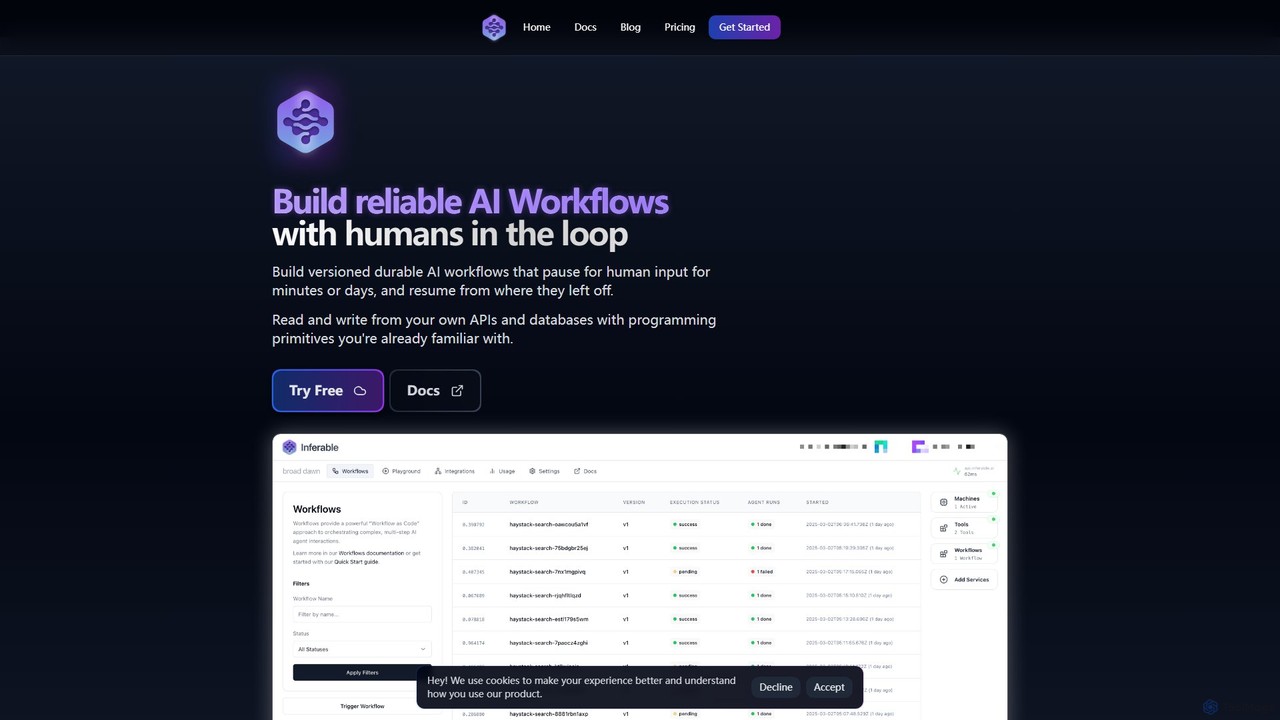
Inferable
Inferable is an open-source, self-hostable developer platform for building reliable, durable, and versioned AI agents and workflows. It enables the creation of complex, long-running processes with human-in-the-loop capabilities, structured outputs, and on-premise execution for maximum security and control.
Agent Builder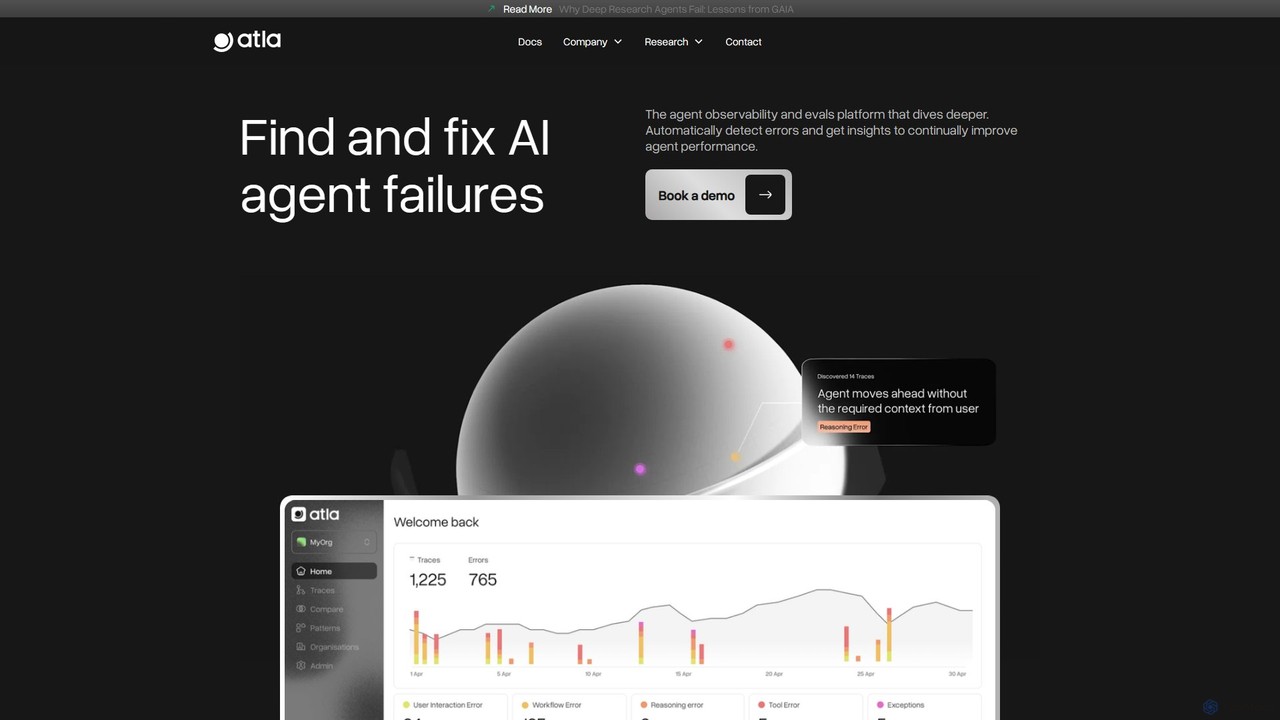
Atla AI
Atla AI is an observability and evaluation platform designed for AI agents. It helps developers find, understand, and fix agent failures by providing deep insights into their behavior. The platform automatically detects errors, identifies recurring patterns, and offers actionable suggestions to continuously improve agent performance and completion rates.
Model Evaluation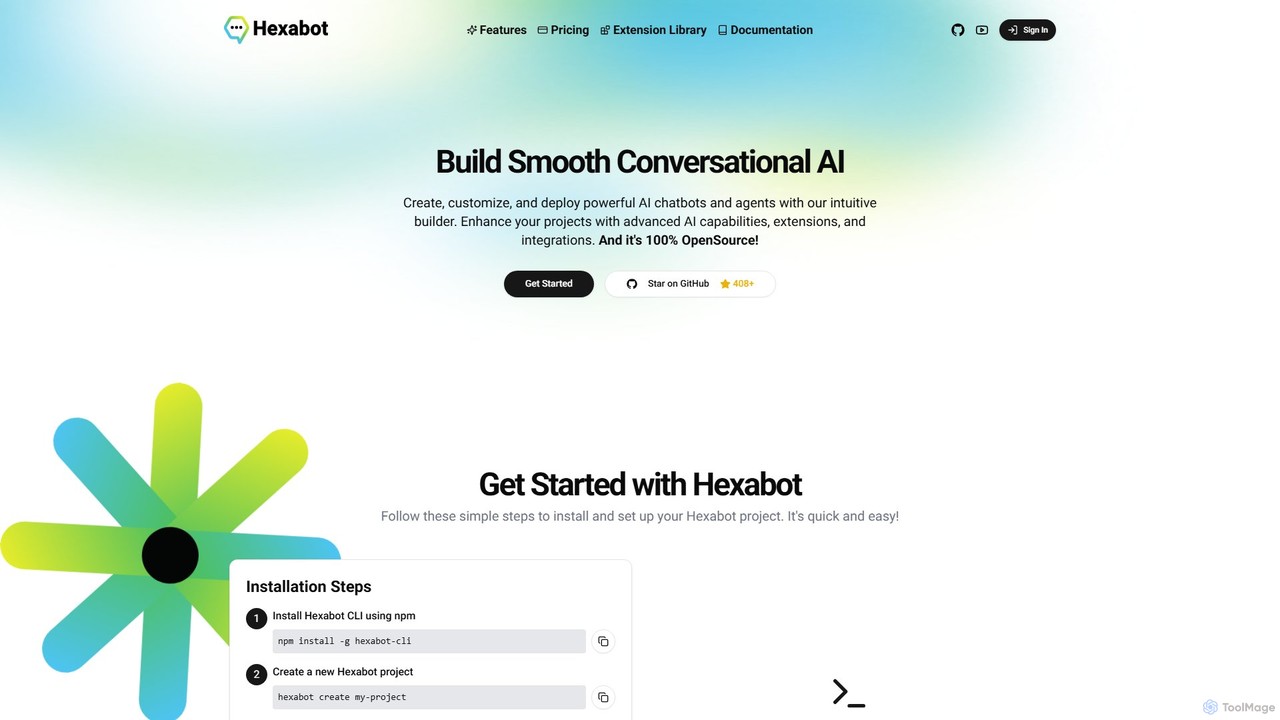
Hexabot
Hexabot is an open-source platform for building, customizing, and deploying powerful AI chatbots and agents. It offers a developer-friendly environment with a low-code visual editor, extensive extension library, and multi-channel integration, allowing for on-premise hosting to ensure full data privacy and control.
Chatbot
OpenLIT Comments (0)
Sign in to comment.
Sign inNo comments yet.