
Best 94 Api Management AI tools for Developer Tools
Popular Api Management AI tools in Developer Tools include OpenRouter, Contentful, TypingMind, Fivetran, CometAPI, Merge, Scalar, apix_drive, PricePerToken, and Eden AI, helping you work more efficiently.
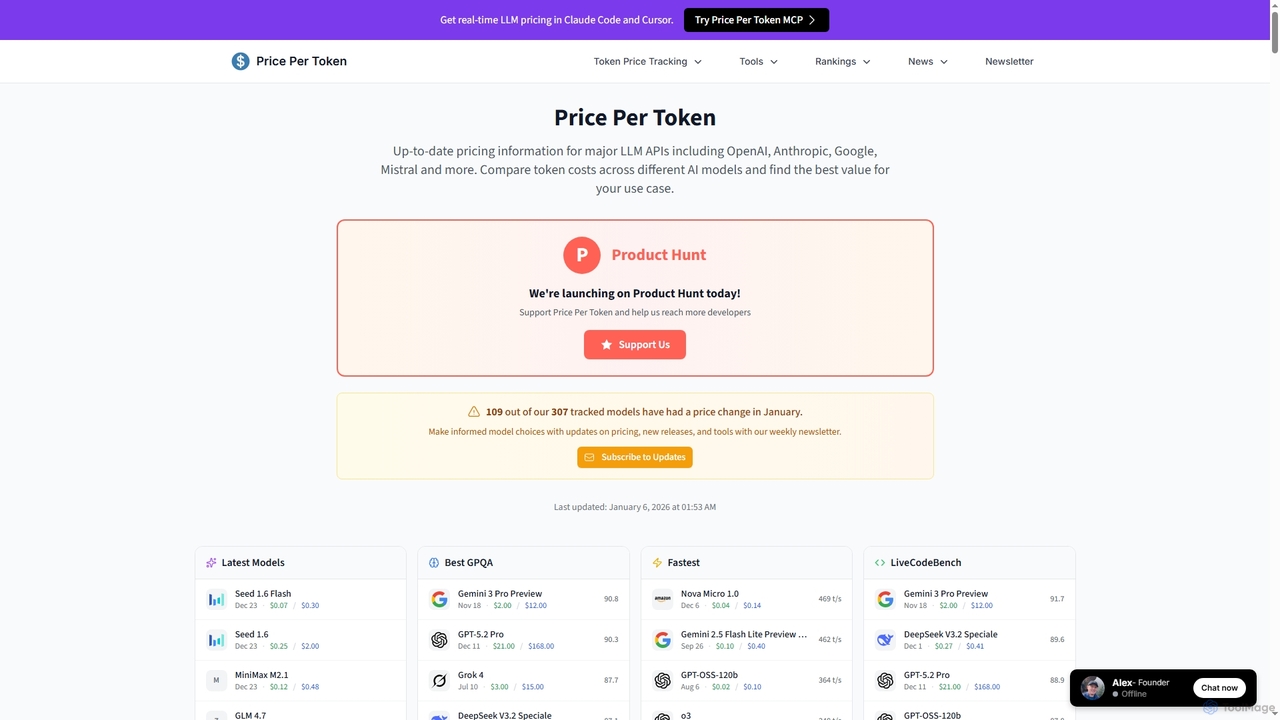
PricePerToken
PricePerToken is an essential AI tool offering real-time LLM API pricing comparisons for over 300 models. It helps developers, researchers, and businesses compare token costs, analyze performance benchmarks, and optimize their AI spending across major providers like OpenAI, Anthropic, Google, and Mistral.
Llm PricingVisits 188.4KFavorites 73Likes 59
Freemium
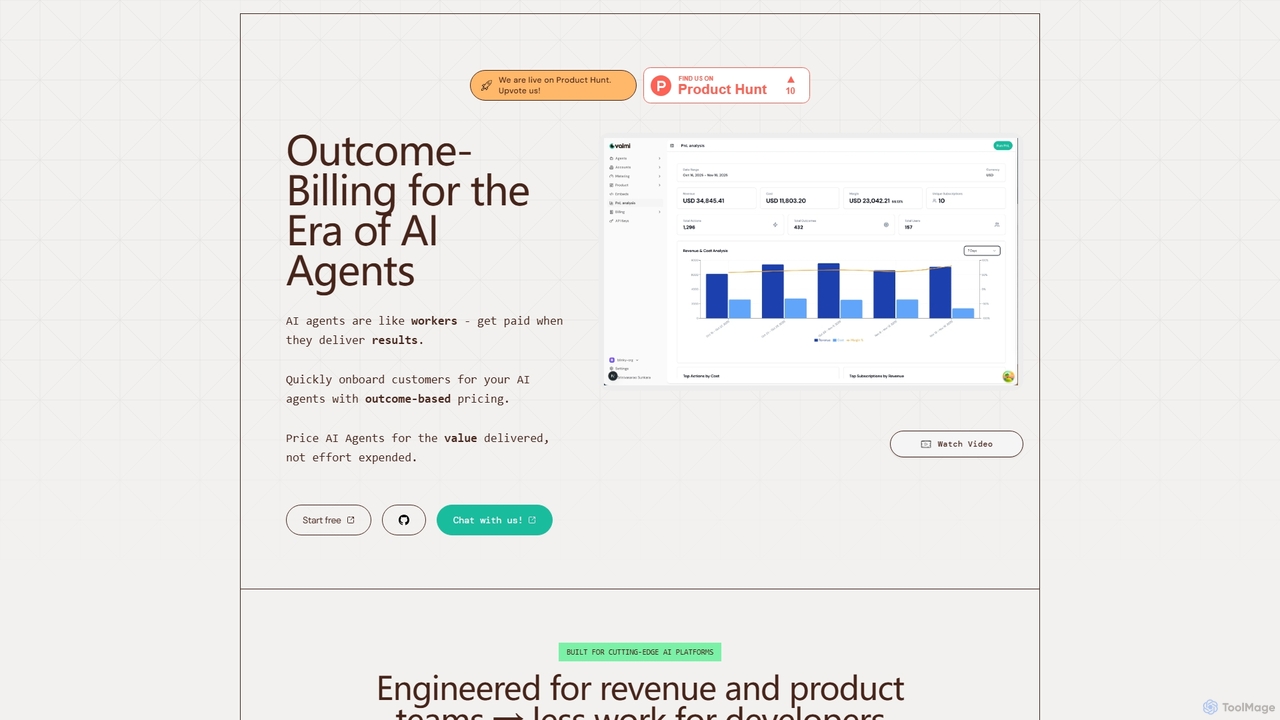
Valmi
Valmi is an outcome-billing and payments infrastructure designed for AI agents and platforms. It enables businesses to monetize AI agents based on the value they deliver, offering flexible pricing models, automated invoicing, and precise cost intelligence to optimize revenue and profitability.
Agent OrchestrationVisits 8.7KFavorites 106Likes 84
Paid
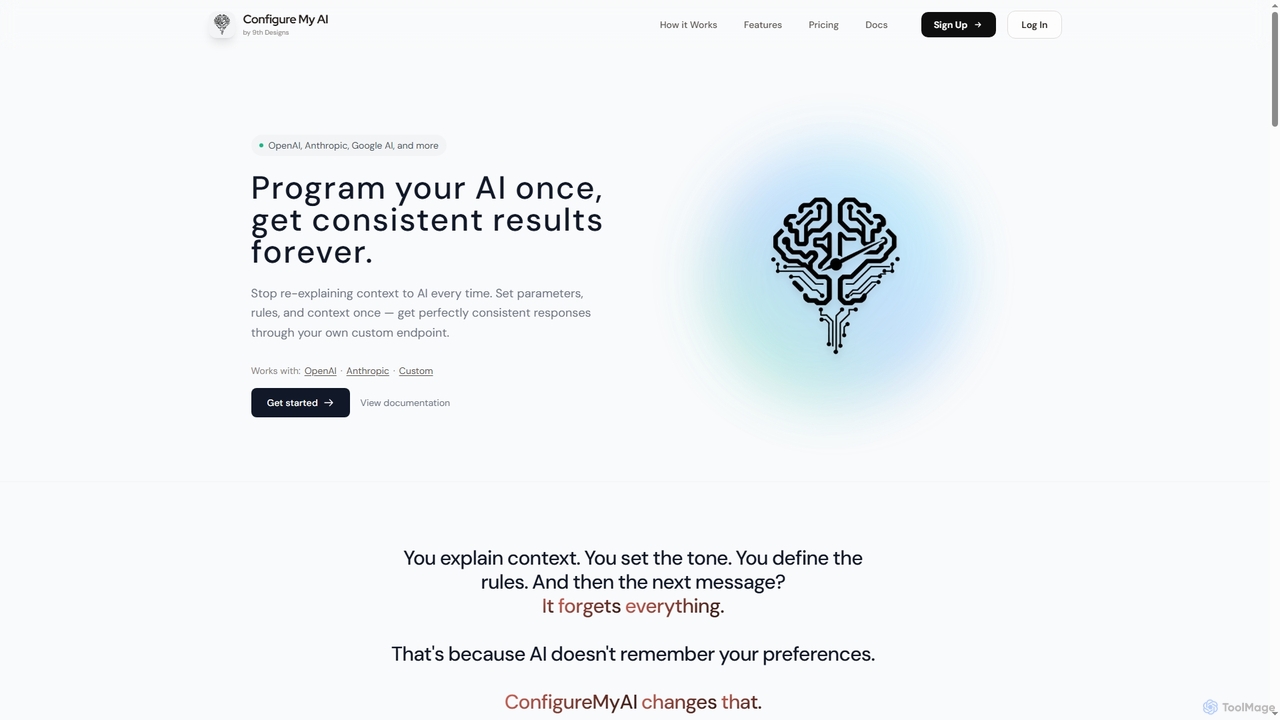
ConfigureMyAI
ConfigureMyAI is a powerful platform designed to help developers and businesses program AI assistants once and achieve consistent, on-brand results every time. It allows users to set system prompts, rules, and upload training data across multiple AI providers like OpenAI, Anthropic, and Google AI, then deploy via custom API endpoints or embeddable widgets.
Ai ConfigurationVisits 9.1KFavorites 94Likes 91
Freemium
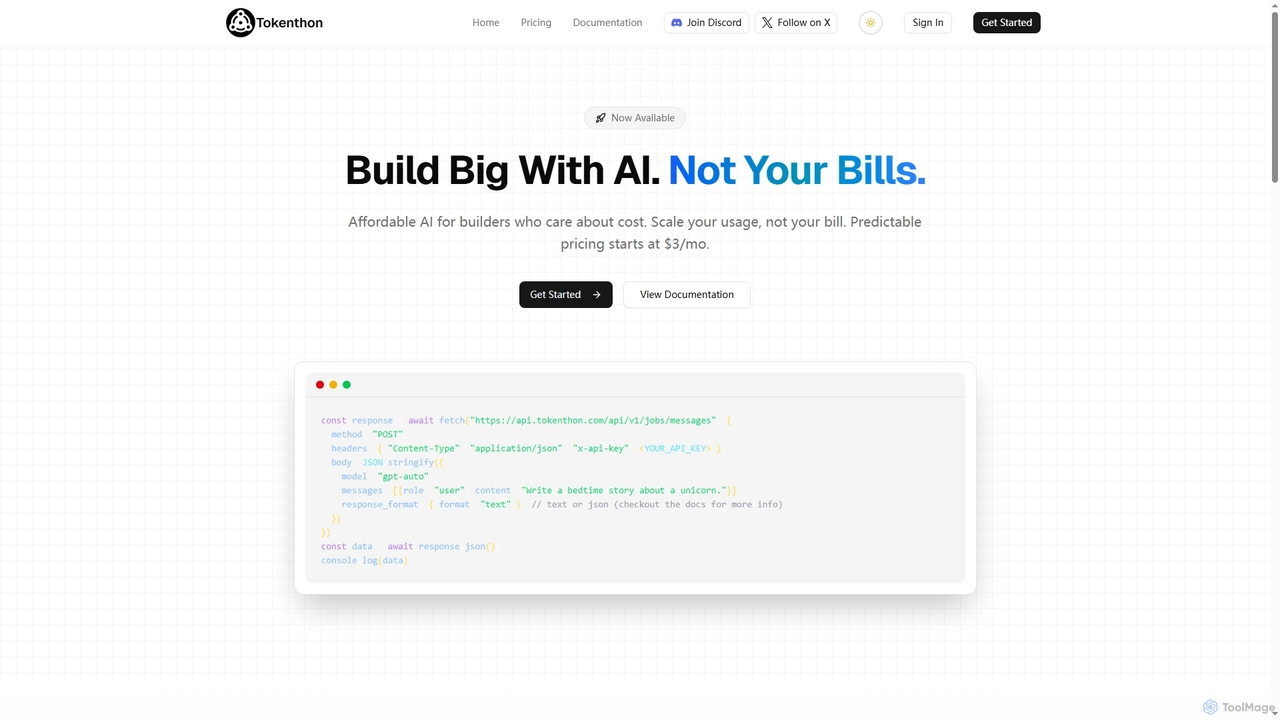
Tokenthon
Tokenthon offers an affordable and predictable AI API, providing access to GPT-5 and GPT-5 mini models with flat-rate pricing. Designed for developers and businesses needing high-volume AI requests without the risk of variable costs, it ensures budget stability for scalable applications like chatbots, content generation, and data processing.
Ai InfrastructureVisits 8.4KFavorites 107Likes 105
Freemium
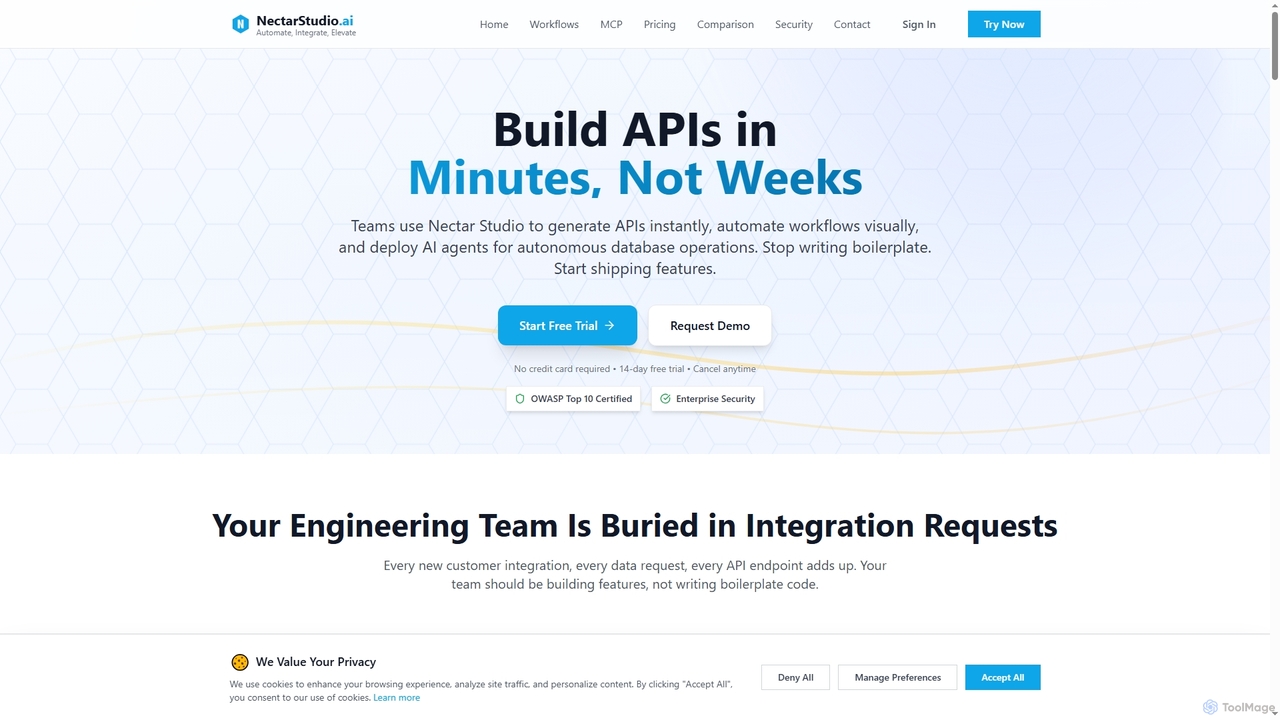
Nectarstudio
Nectarstudio is an AI-powered iPaaS platform designed for engineering teams to instantly generate bulk APIs from databases, automate workflows with a low-code visual builder, and deploy AI agents for autonomous database operations, reducing development time from weeks to minutes.
Business IntelligenceVisits 8.3KFavorites 121Likes 120
Paid
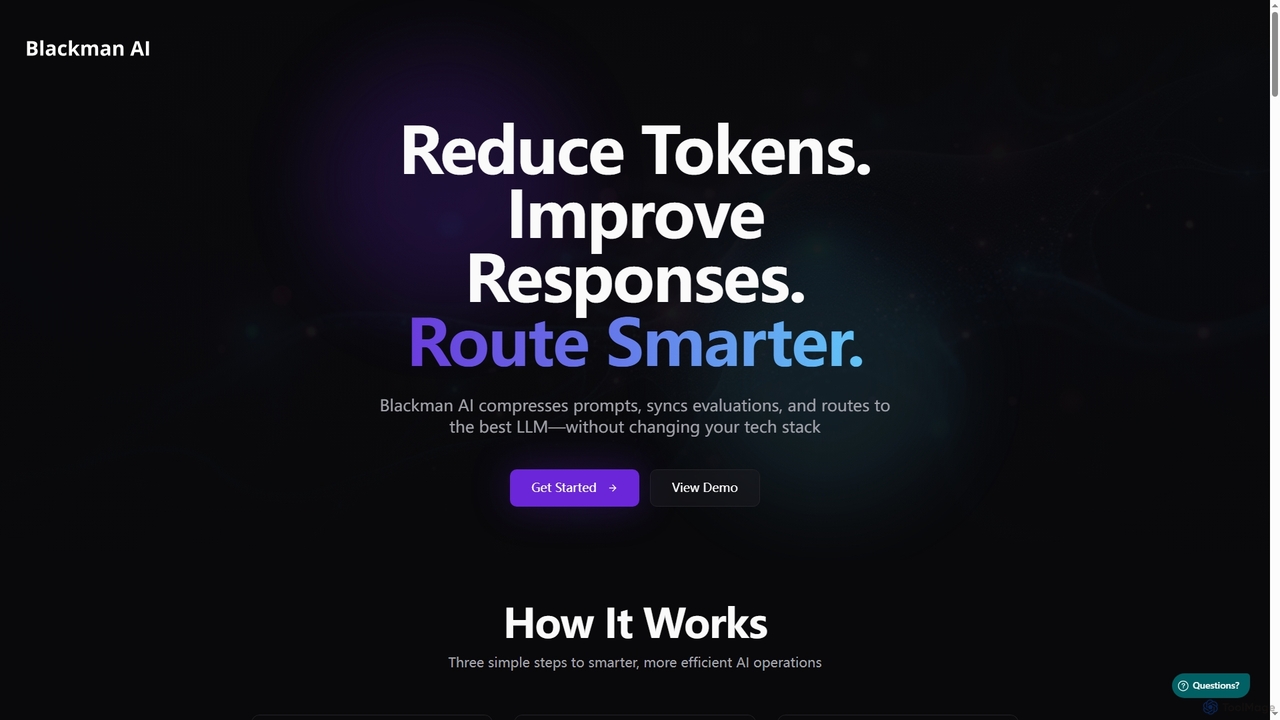
Blackman AI
Blackman AI is an intelligent platform designed to optimize AI operations by reducing token usage, improving LLM responses, and routing requests to the most cost-effective models. It provides real-time analytics and robust security features without altering your existing tech stack.
Model RoutingVisits 8.4KFavorites 137Likes 125

Freemium
Vaultic
Vaultic is a centralized prompt management platform for AI development teams. It enables users to version, test, collaborate on, and deploy AI prompts at scale, eliminating hardcoded prompts and streamlining the entire AI logic workflow from a single, organized interface.
Prompt ManagementVisits 8.9KFavorites 92Likes 95
Freemium
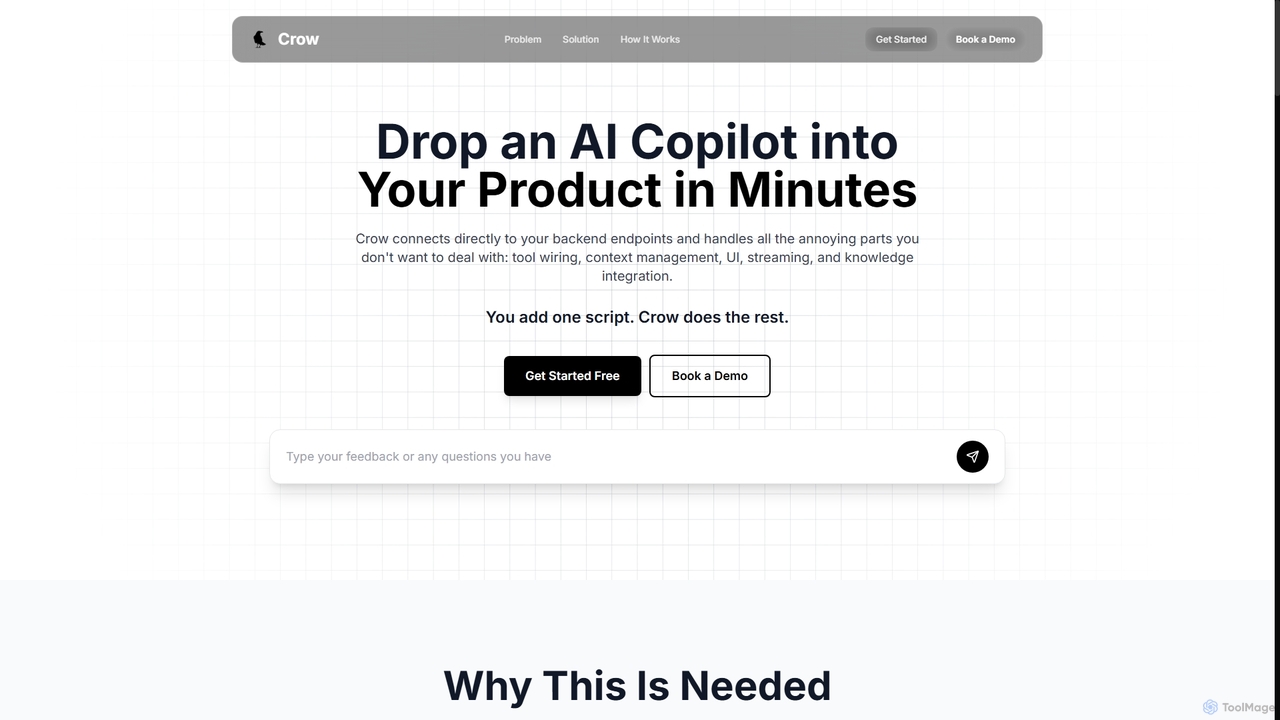
Crow
Crow is a platform that enables developers to integrate a powerful AI Copilot into their applications in minutes. It simplifies development by handling backend endpoint connections, context management, UI, and tool integration, allowing teams to deploy a fully functional AI assistant with a single script.
Customer SupportVisits 8.5KFavorites 133Likes 158
Freemium
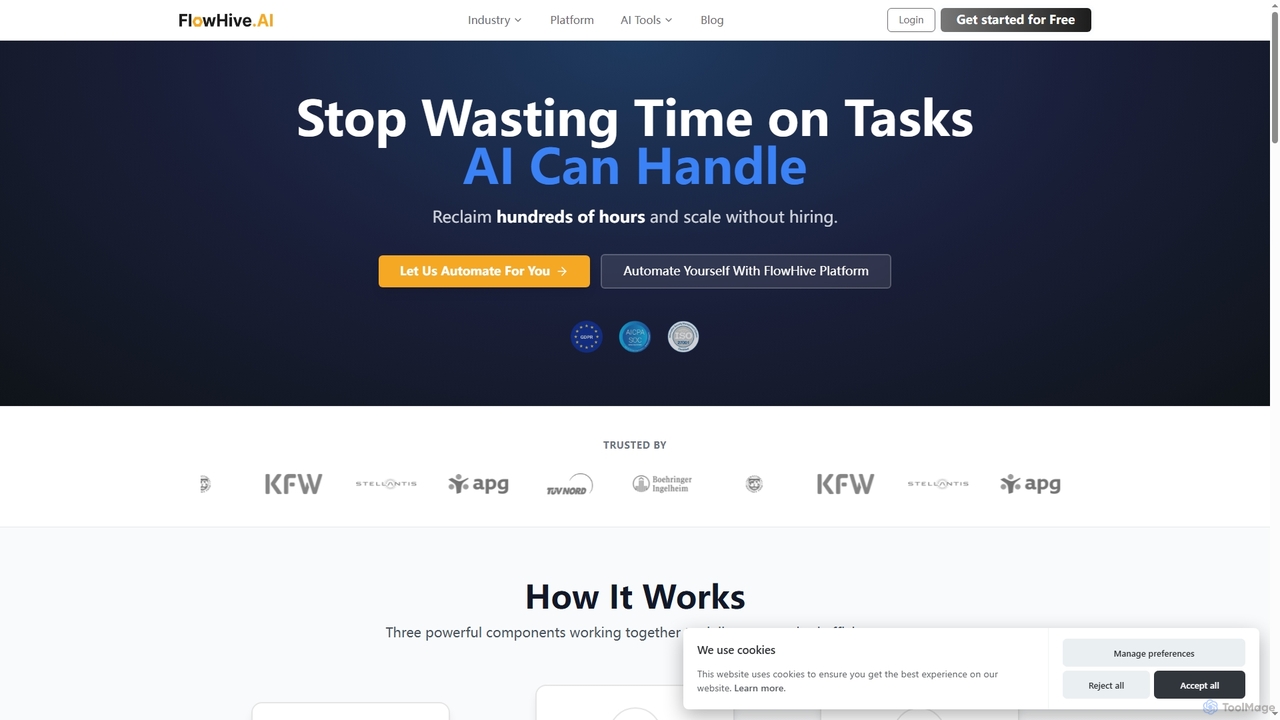
Flowhive
Flowhive is an AI workflow automation platform that integrates multiple AI models like GPT and Gemini, your company's knowledge bases, and existing tools. It allows you to build your own automated workflows or have their expert team build them for you, aiming to increase efficiency by 50% and reduce manual work.
Multi Model PlatformVisits 10.5KFavorites 150Likes 159
Paid
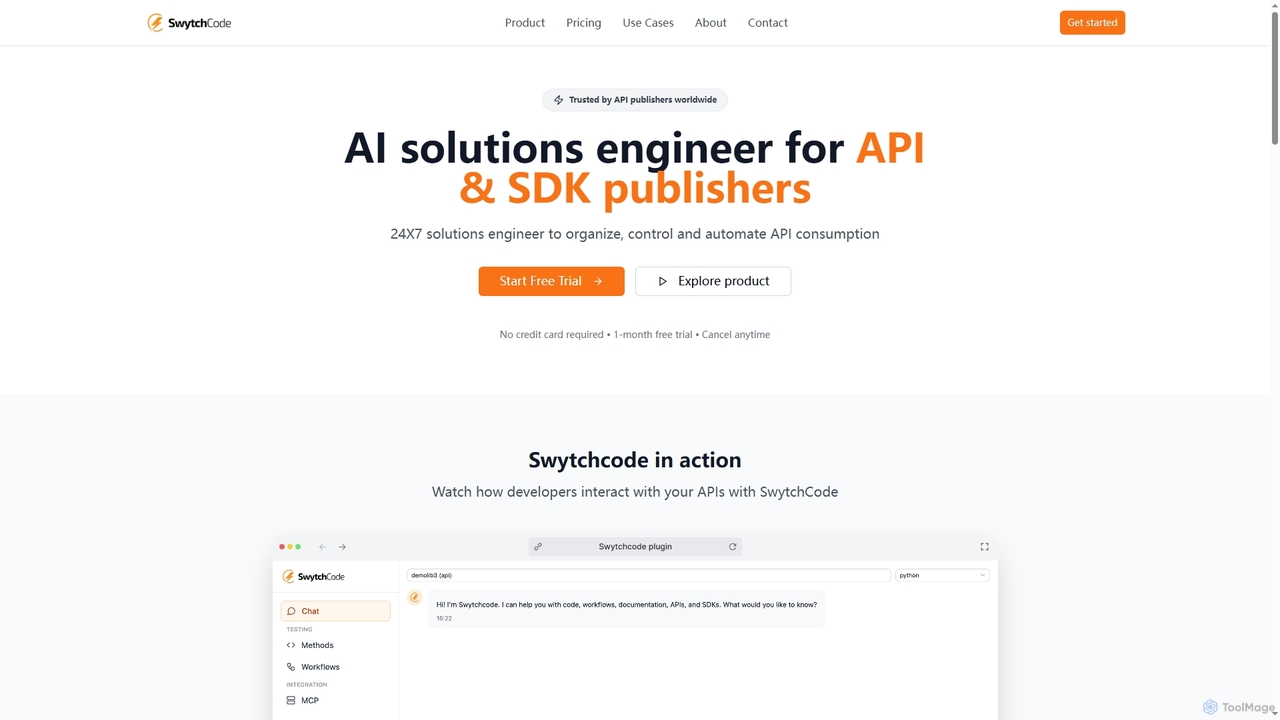
Swytchcode
Swytchcode is an AI solutions engineer designed for API and SDK publishers to streamline API consumption. It automates code generation for 15+ languages, simplifies complex integrations, and reduces support overhead. Publishers can manage APIs, create interactive playgrounds, and enable AI-API communication, significantly boosting developer adoption and cutting costs.
Customer Support AutomationVisits 19KFavorites 155Likes 169
Freemium
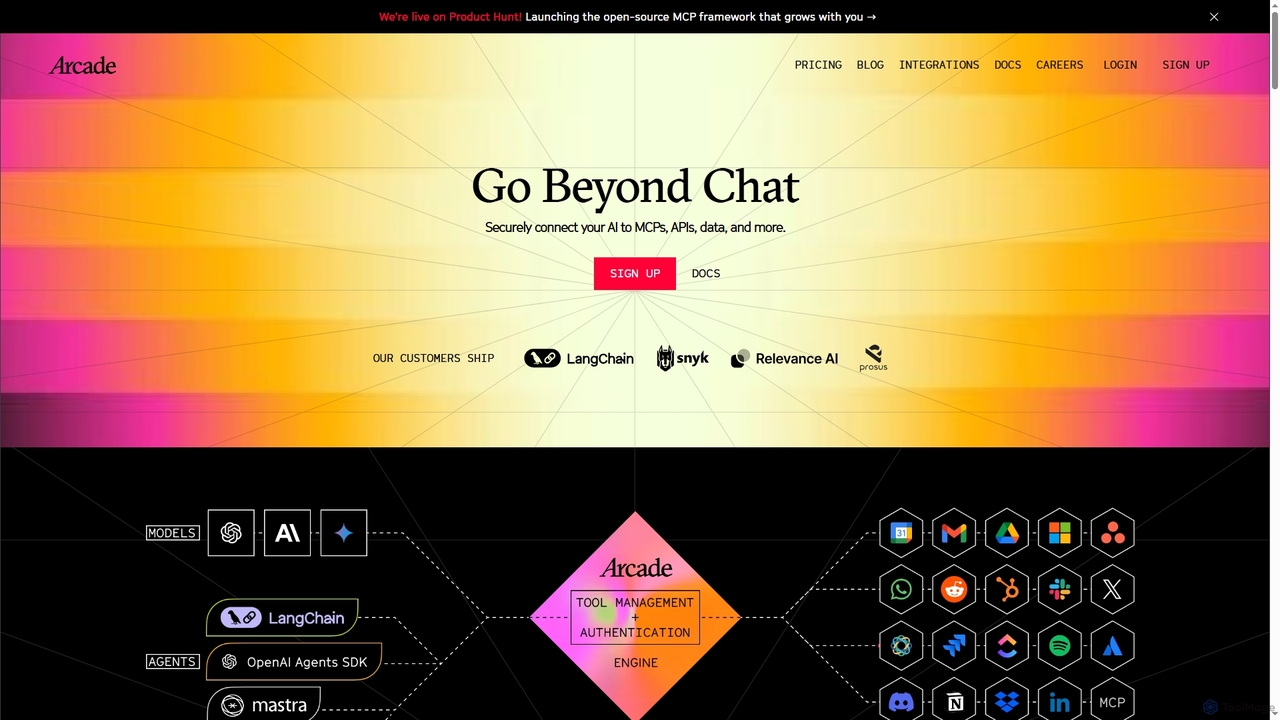
Arcade
Arcade is an AI tool-calling platform for developers, enabling AI agents to securely perform actions on behalf of users. It connects AI to services like Gmail, Slack, and APIs through pre-built connectors and a custom SDK, handling complex authentication (OAuth) automatically. This allows developers to build assistants that go beyond chat to execute real-world tasks.
FrameworkVisits 82.6KFavorites 158Likes 147
Freemium
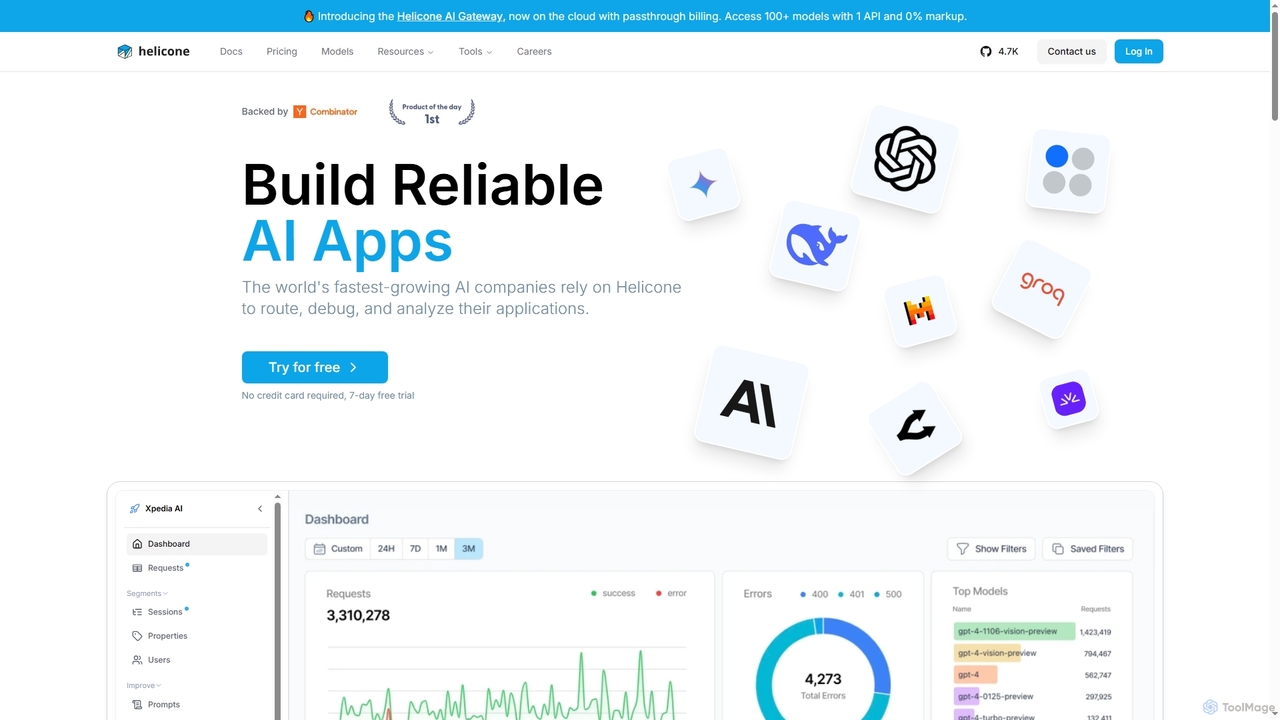
Helicone
Helicone is an open-source platform offering an AI Gateway and LLM Observability for developers. It helps build reliable AI applications by providing tools to route, monitor, debug, and analyze LLM usage. Key features include a unified API for 100+ models, intelligent caching, rate limiting, prompt management, and detailed performance analytics.
Api ManagementVisits 108.7KFavorites 156Likes 152
Freemium
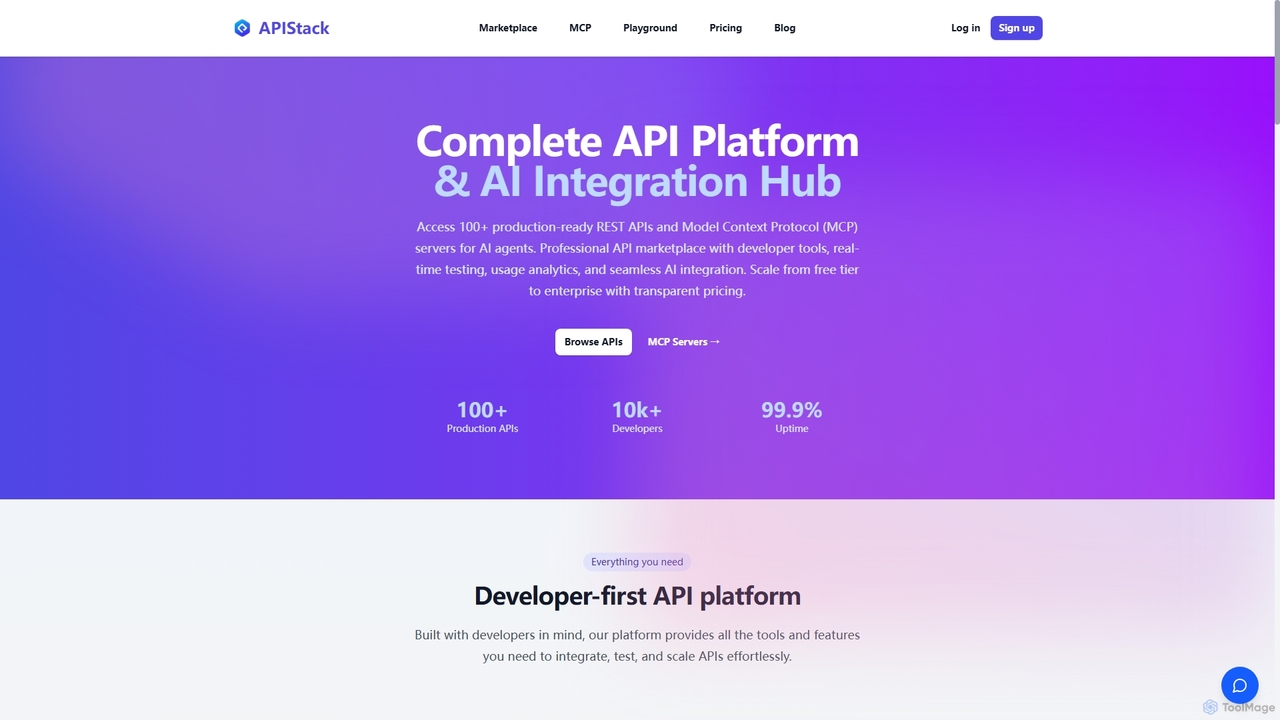
Apistack
Apistack is an enterprise API marketplace and AI integration hub, offering over 100 production-ready REST APIs. It features a developer-first platform with tools for real-time testing, usage analytics, and seamless integration with AI agents like ChatGPT and Claude via Model Context Protocol (MCP) servers.
IntegrationVisits 8.4KFavorites 154Likes 137
Free
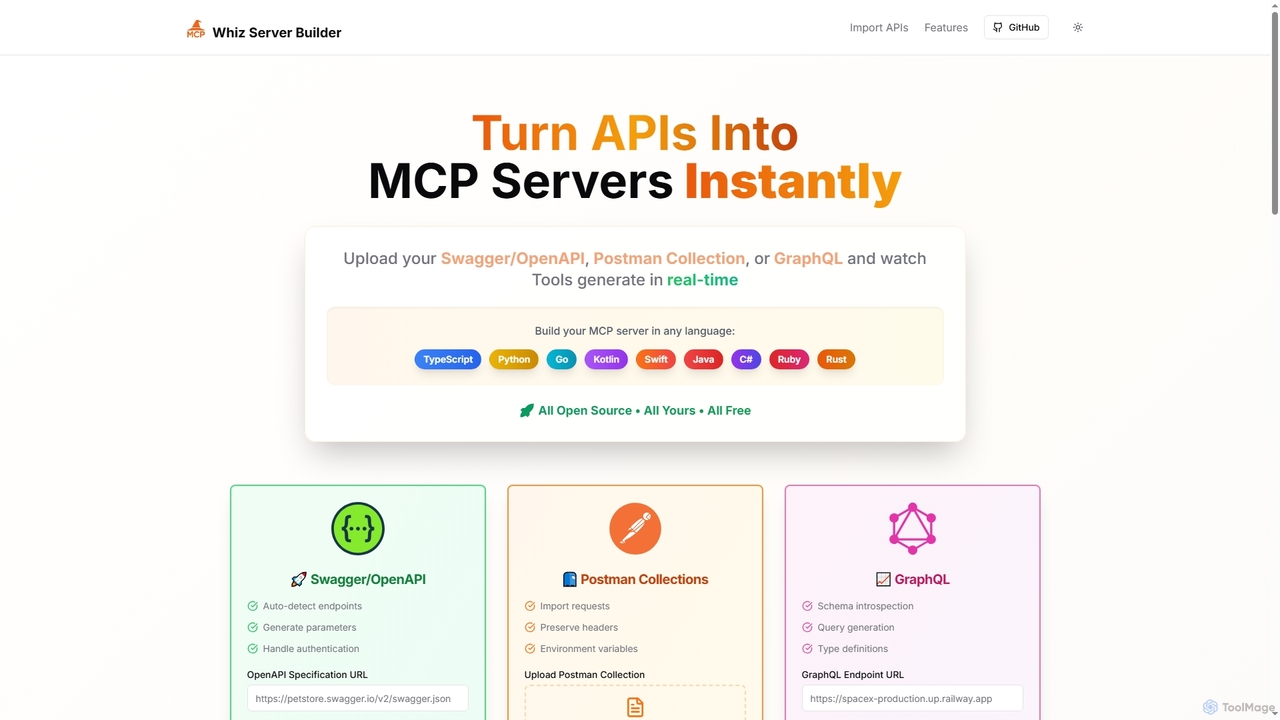
Mcpwhiz
Mcpwhiz is a free, open-source developer tool that instantly converts API specifications like Swagger/OpenAPI, Postman Collections, and GraphQL into production-ready Model Context Protocol (MCP) servers. It automates code generation in multiple languages, including TypeScript and Python, allowing developers to build context-aware applications with ease.
Server ManagementVisits 8.5KFavorites 142Likes 152

Freemium
Gtwy
Gtwy is a unified AI gateway platform providing a single API to access top models like GPT-4, Claude, and Gemini. It empowers users to build, automate, and scale AI agents and workflows with advanced features like model switching, RAG, and over 5000 integrations.
Model OrchestrationVisits 8.8KFavorites 151Likes 154
Paid
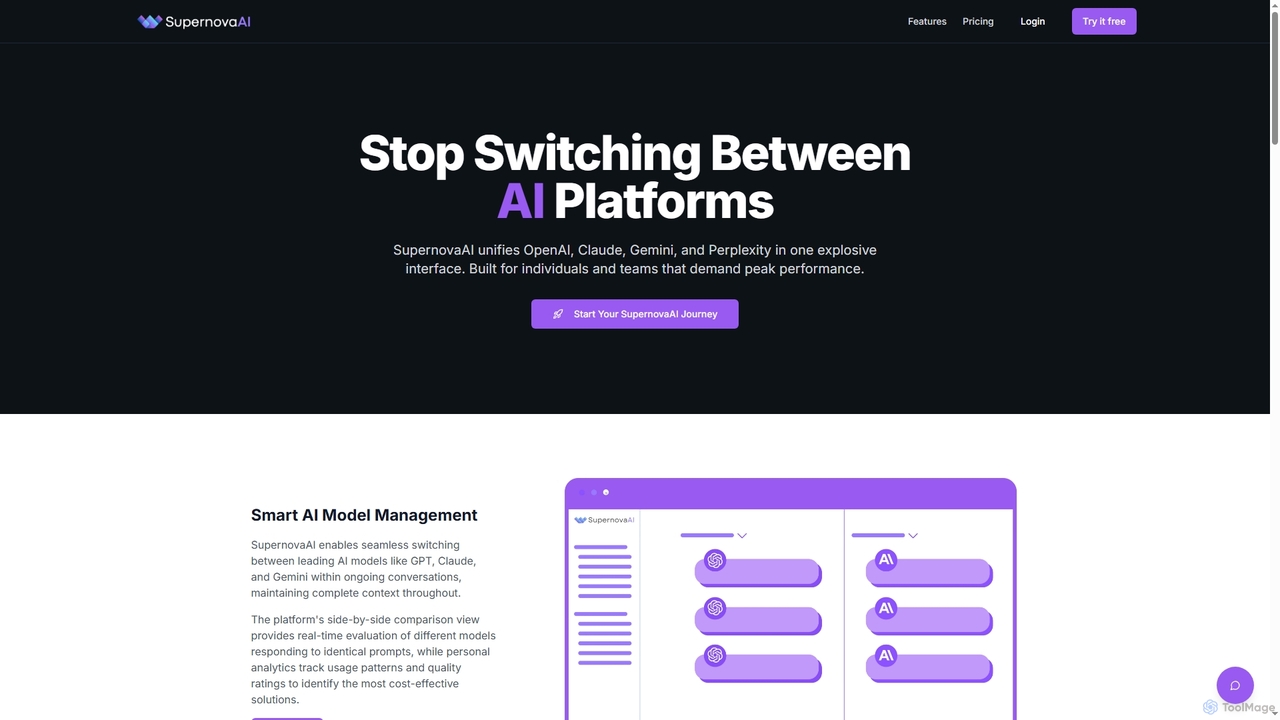
SupernovaAI
SupernovaAI is a unified platform that integrates leading AI models like OpenAI, Claude, Gemini, and Perplexity into a single, powerful interface. It enables seamless model switching, context retention, side-by-side response comparison, and cost optimization, designed for individuals and teams seeking peak AI performance and streamlined workflows.
Cost OptimizationVisits 8.4KFavorites 166Likes 150
Freemium
Alyvro
Alyvro is a technology platform specializing in modern web development with React.js and Next.js. It offers developer packages like API services and hooks for efficient application building, alongside InkVro AI, an intelligent content creation tool designed to generate powerful, well-crafted content quickly. Alyvro aims to simplify and accelerate the creation of stunning websites and digital experiences.
Api ManagementVisits 9.5KFavorites 155Likes 163
Freemium
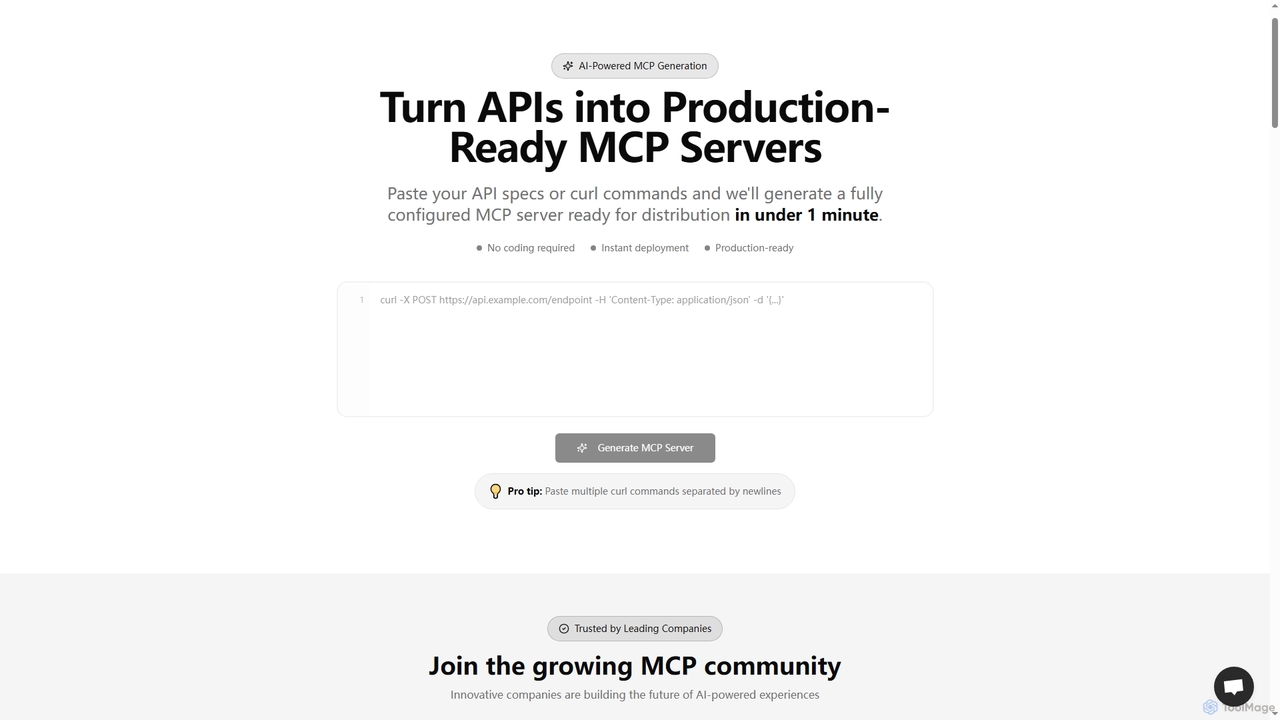
Mcpfy
An AI-powered platform that generates production-ready MCP (Model Context Protocol) servers from API specs or curl commands in under a minute. It enables businesses to securely connect their APIs and data sources with AI assistants like ChatGPT and Claude, offering instant deployment, customer analytics, and enterprise-grade security without coding.
IntegrationVisits 8.4KFavorites 162Likes 167

Freemium
AI Phantom
AI Phantom is a unified multi-modal AI platform providing access to over 100 AI models from providers like OpenAI, Google, and Anthropic through a single API. It specializes in intelligent routing, performance optimization, and real-time analytics for text, image, video, and audio generation.
Model RoutingVisits 8.5KFavorites 148Likes 144
Freemium
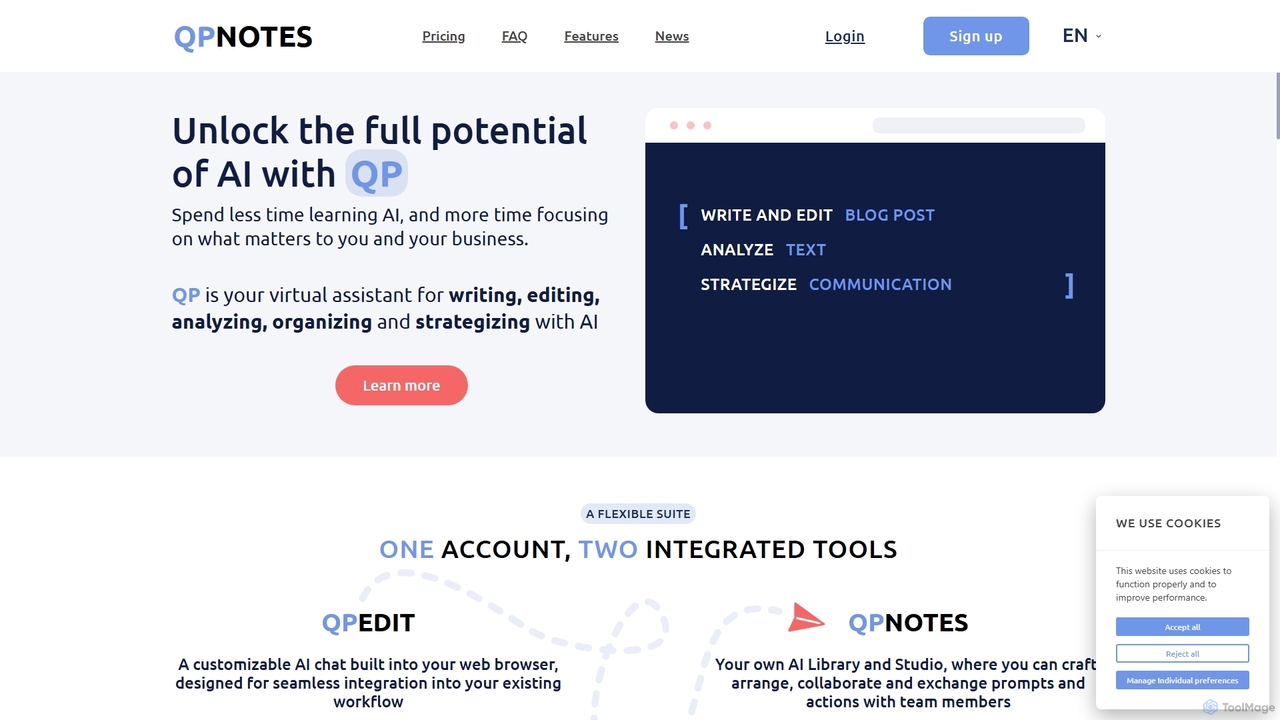
QPNOTES
QPNOTES is an all-in-one AI prompt management platform designed to save, organize, and share your AI prompts. It features QPNOTES, a central library, and QPEDIT, a browser extension, allowing users to switch between top AI models like ChatGPT, Claude, and Bard, streamlining workflows and enhancing productivity for individuals and teams.
Api ManagementVisits 8.4KFavorites 178Likes 186
Paid
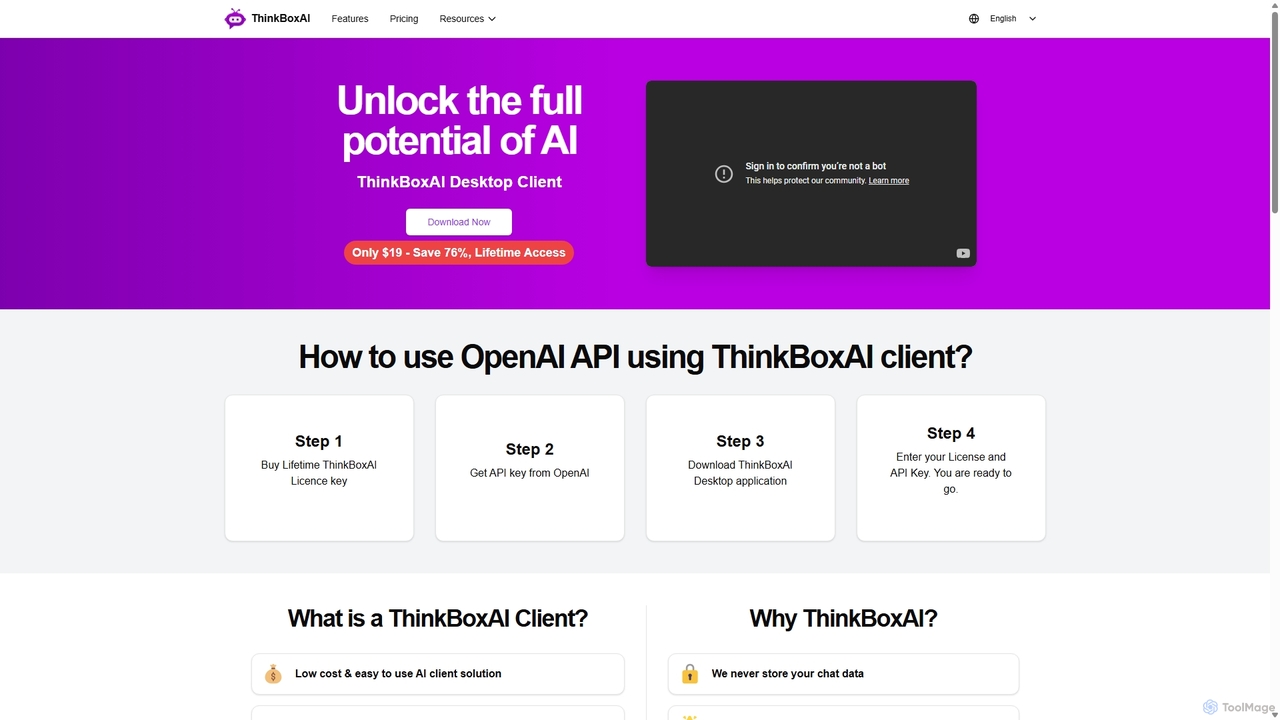
ThinkBoxAI
ThinkBoxAI is a cost-effective, privacy-focused desktop client for AI models like GPT and DALL-E. Use your own API key for a pay-as-you-go experience, avoiding monthly subscriptions. It features advanced customization, a prompt library, and cross-platform support for Windows, macOS, and Linux.
Image GenerationVisits 10.9KFavorites 173Likes 173
Freemium
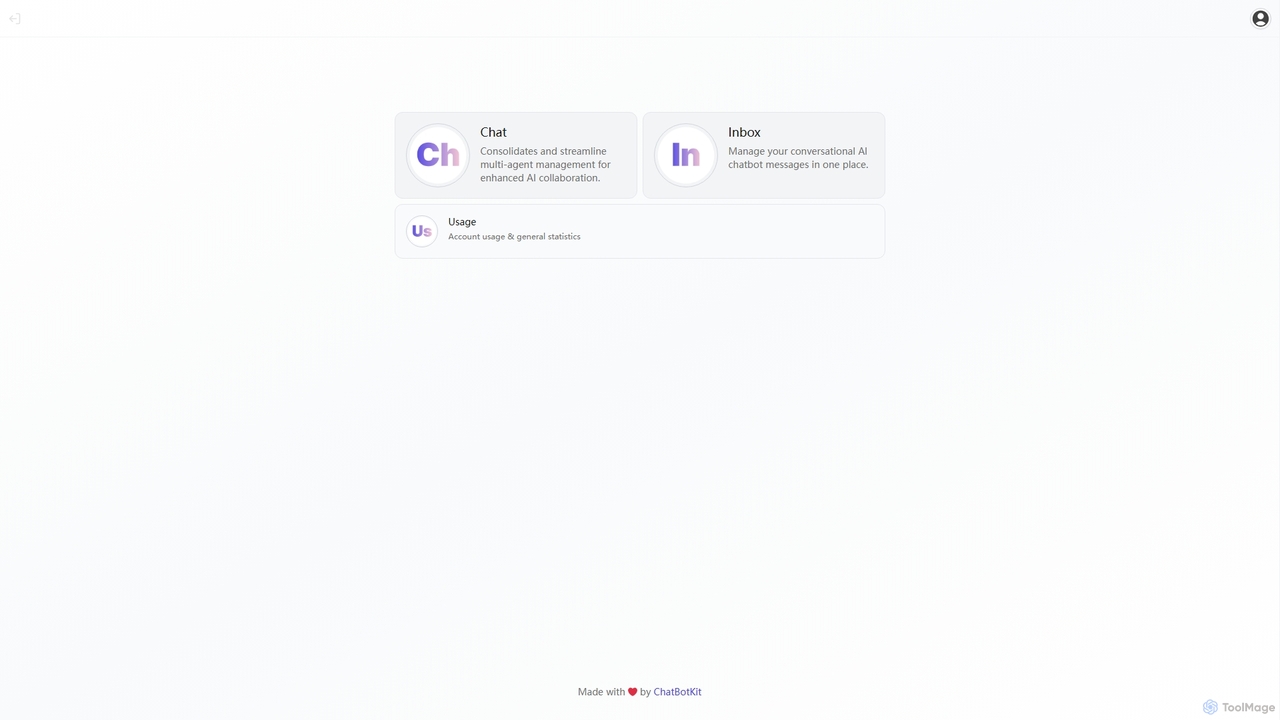
ChatBotKit Apps
ChatBotKit Apps is a comprehensive suite of tools designed to build, manage, and analyze advanced AI chatbots. It provides a centralized dashboard featuring a unified inbox for all conversations, multi-agent management for complex collaboration, and detailed usage analytics. This platform empowers businesses to streamline customer support, enhance lead generation, and automate communication workflows efficiently.
ChatbotVisits 8.3KFavorites 163Likes 159
Freemium
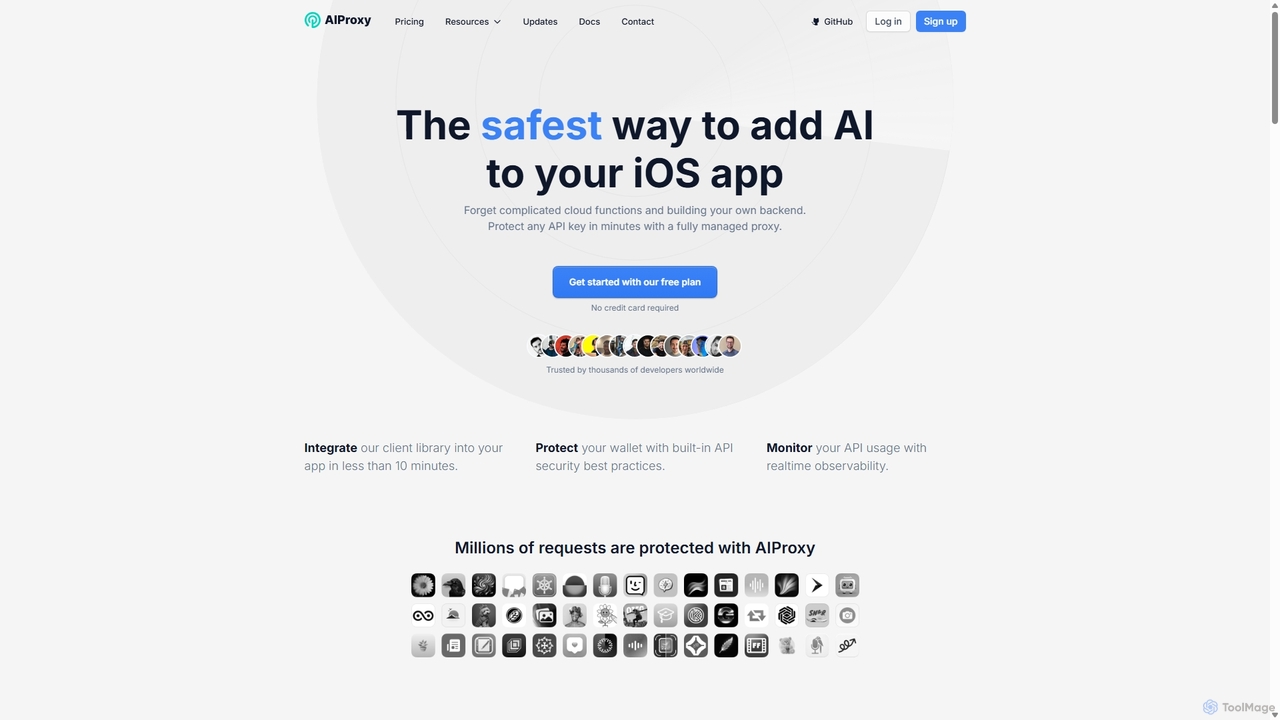
AIProxy
AIProxy is a secure API proxy for developers, designed to protect AI API keys in mobile and desktop applications. It offers robust security features like split-key encryption, rate limiting, and real-time monitoring, allowing developers to ship AI-powered apps without exposing sensitive credentials. Integration is streamlined with a Swift client library, supporting over 15 AI providers.
Api ManagementVisits 16.5KFavorites 145Likes 134
About Api Management
API Management tools are platforms designed to create, publish, maintain, monitor, and secure APIs in a controlled environment. They provide a centralized point of control for an organization's entire API lifecycle, from design and documentation to security enforcement and usage analytics. This enables businesses to securely expose data and services to partners, developers, and other applications, fostering innovation and creating new digital ecosystems. Key components typically include an API gateway, a developer portal, and robust monitoring dashboards.
Core Features
- API Gateway: Acts as a single entry point for all API requests, handling routing, composition, and protocol translation while enforcing security policies.
- Developer Portal: A self-service hub where developers can discover APIs, access interactive documentation, register applications, and obtain API keys.
- Lifecycle Management: Tools to manage the entire API lifecycle, including versioning, deployment, deprecation, and retirement of APIs.
- Security and Governance: Implements authentication and authorization standards like OAuth 2.0 and JWT, and applies rate limiting and throttling to prevent abuse.
- Analytics and Monitoring: Provides detailed dashboards to track API usage, performance metrics, error rates, and latency, offering insights into API health and adoption.
Use Cases
API Management is crucial for enterprises building a public API program to engage external developers. It's also essential for companies adopting a microservices architecture to govern communication between internal services. SaaS providers use these tools to offer robust integrations, and organizations undergoing digital transformation leverage them to modernize legacy systems by exposing them through secure, modern APIs.
How to Choose
When selecting an API Management tool, consider its deployment model (cloud, on-premise, or hybrid) to fit your infrastructure. Evaluate its security capabilities, ensuring it supports your required authentication standards. Assess its scalability and performance to handle your expected traffic load. Finally, examine the quality of the developer portal, as a positive developer experience is key to API adoption.
Featured tool rankings
Most popular



Most favorited



Most liked

Popular free tools

Api Management use cases
1
Launch a Public Partner API Program
A fintech company wants to build an ecosystem around its payment services. Using an API Management platform, their API product managers design and publish a set of secure REST APIs. The platform's developer portal allows third-party developers to easily discover the APIs, read interactive documentation, and obtain API keys in a self-service manner. The built-in API gateway enforces OAuth 2.0 security, applies rate limits based on subscription tiers, and logs every transaction. This strategy accelerates partner onboarding and creates new revenue streams by monetizing API access.
2
Govern Internal Microservices Communication
A large e-commerce enterprise is migrating from a monolithic architecture to microservices. A DevOps team implements an API Management platform to act as a central gateway for all inter-service communication. This provides a unified way to handle authentication, apply consistent rate limiting to prevent cascading failures, and gain centralized visibility into traffic patterns. Developers can now build and deploy services independently, knowing that the gateway will manage security and routing, which significantly reduces complexity and improves system resilience.
3
Monetize Data Assets via APIs
A data analytics firm possesses valuable market trend datasets. To create a new revenue stream, they use an API Management platform to package this data as a commercial API product. The platform allows them to define multiple subscription plans (e.g., Free, Pro, Enterprise) with different usage quotas and rate limits. It integrates with a payment processor to automate billing based on API consumption. The analytics dashboard provides insights into which data endpoints are most popular, helping the product team refine their offerings and pricing strategy.
4
Secure Mobile and Web Application Backends
A development team for a mobile banking app needs to ensure all communication with backend services is secure and performant. They place an API Gateway from their management platform in front of all backend APIs. This gateway acts as a policy enforcement point, terminating TLS, validating JWT tokens for every request, and protecting against common threats like SQL injection and DDoS attacks. It also provides a single point for monitoring latency and error rates, allowing the operations team to quickly identify and resolve performance bottlenecks before they impact users.
5
Accelerate Developer Onboarding and Adoption
A SaaS company wants to reduce the support overhead required to onboard new customers to their API. They utilize the Developer Portal feature of their API Management solution. This portal provides a central, branded location with comprehensive, interactive API documentation generated directly from their OpenAPI specifications. New developers can sign up, create an application, receive API keys, and test API calls in a sandbox environment, all without manual intervention from the support team. This self-service experience reduces onboarding time from days to minutes and significantly improves developer satisfaction.
6
Modernize Legacy Systems with an API Facade
A large insurance company relies on a mainframe system with a complex, outdated interface. To enable new web and mobile applications to access this data, they use an API Management platform to create an 'API facade'. The API Gateway receives modern REST/JSON requests and translates them into the SOAP/XML or other protocols required by the mainframe. This decouples new applications from the legacy system, allowing for faster development cycles. It also adds a crucial layer of security, analytics, and access control that the legacy system lacks, extending its life and value.
Related categories
Api Management FAQ
What is API Management?
API Management is the process of overseeing Application Programming Interfaces (APIs) in a secure, scalable, and controlled environment. It involves a set of tools and platforms that handle the entire API lifecycle, which includes designing, publishing, documenting, securing, and analyzing APIs. The primary goal is to allow organizations to share data and functionality securely with external developers, partners, and internal teams. A typical API Management solution includes an API Gateway, a Developer Portal, and analytics capabilities.
How to choose the right API Management tool?
Choosing the right API Management tool depends on your specific needs. Consider these key factors:
- Deployment Model: Do you need a cloud-based (SaaS), on-premise, or hybrid solution to comply with data residency or security policies?
- Security Features: Ensure the tool supports essential security standards like OAuth 2.0, OpenID Connect, and JWT, and offers robust threat protection.
- Scalability and Performance: Evaluate if the platform can handle your current and future API traffic without introducing significant latency.
- Developer Experience: A high-quality, customizable developer portal is crucial for API adoption. Check for interactive documentation and self-service features.
- Integration: Assess how well the tool integrates with your existing CI/CD pipelines, identity providers, and monitoring systems.
What is the difference between an API Gateway and API Management?
An API Gateway is a core component of a full API Management platform, but they are not the same. An API Gateway is a runtime component that acts as a single entry point for API calls. Its primary job is to route requests, enforce security policies like authentication and rate limiting, and perform protocol translation. In contrast, API Management is a broader solution that covers the entire API lifecycle. It includes the API Gateway, but also adds a developer portal for discovery and onboarding, analytics for monitoring usage, and tools for designing, versioning, and monetizing APIs.
What are the key features of an API Management platform?
A comprehensive API Management platform typically includes several key features working together:
- API Gateway: The runtime proxy that enforces policies on all API traffic.
- Developer Portal: A self-service website for developers to find, learn about, and start using your APIs.
- API Lifecycle Management: Tools for designing (e.g., with OpenAPI/Swagger), versioning, deploying, and eventually retiring APIs.
- Security: Features for authentication (API keys, OAuth 2.0), authorization, and threat protection against common attacks.
- Analytics and Monitoring: Dashboards that provide real-time and historical data on API usage, performance, and errors.
Who needs to use API Management tools?
API Management tools are valuable for a wide range of organizations and roles. Key users include:
- Enterprises with Public APIs: Companies that want to build a developer ecosystem, create new business models, or integrate with partners.
- Organizations Adopting Microservices: Teams that need to manage, secure, and monitor the complex web of communication between internal services.
- SaaS Providers: Businesses that offer their product's functionality via APIs to enable customer and third-party integrations.
- IT and DevOps Teams: Professionals responsible for governance, security, and operational stability of the company's application infrastructure.
- API Product Managers: Individuals who treat APIs as products and are responsible for their strategy, adoption, and monetization.