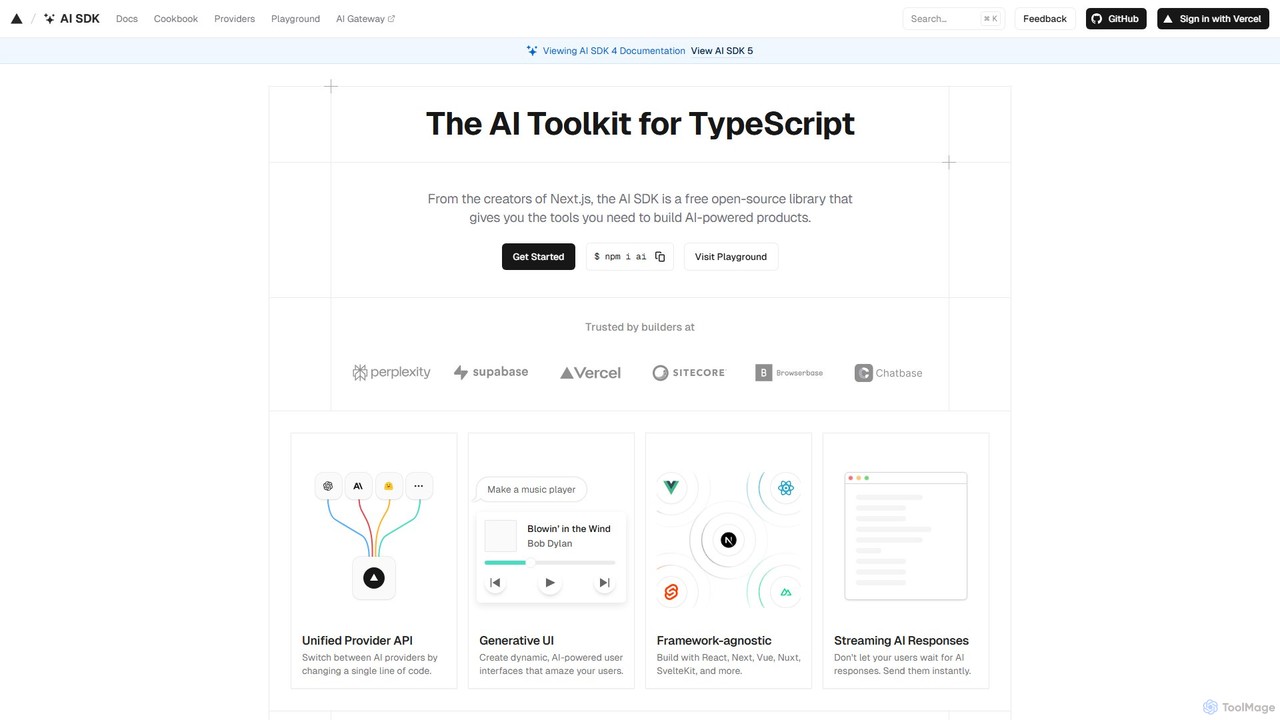
AI Libraries are essential collections of pre-written code, functions, and resources specifically designed to streamline AI development within the broader Development category. These powerful tools encapsulate complex algorithms, machine learning models, and data processing functionalities, providing ready-to-use modules for various AI tasks. They empower developers to build sophisticated AI applications more efficiently by abstracting underlying complexities, accelerating the development lifecycle, and fostering innovation. By leveraging these AI development libraries, engineers can focus on unique problem-solving rather than reinventing foundational components.
Core Features
- Pre-built Algorithms: Offer optimized implementations of common AI algorithms like neural networks and decision trees.
- Model Architectures: Provide templates and components for building various machine learning model structures.
- Data Handling Utilities: Include functions for efficient data loading, preprocessing, transformation, and augmentation.
- API Integrations: Facilitate seamless connection with other services, datasets, or hardware accelerators.
- Performance Optimization: Often include highly optimized routines for speed and resource efficiency in AI computations.
Applicable Scenarios
AI libraries are indispensable for data scientists, machine learning engineers, and software developers. They are used for rapid prototyping of machine learning models, integrating AI capabilities into existing software, and developing custom AI solutions for specific industry problems such as predictive analytics or natural language understanding.
How to Choose
When selecting an AI library, consider its framework compatibility with your existing tech stack (e.g., Python, Java). Evaluate its functionality scope to ensure it covers your required AI tasks (e.g., NLP, computer vision). Look for strong community support and comprehensive documentation for troubleshooting. Finally, assess its performance and scalability to handle your project's data volume and computational demands.