Ai Infrastructure Best in category 1 results Data Governance AI Tool

Popular AI tools in the Data Governance field of Ai Infrastructure include Pylar, etc., helping you quickly improve efficiency.

Pylar

Pylar

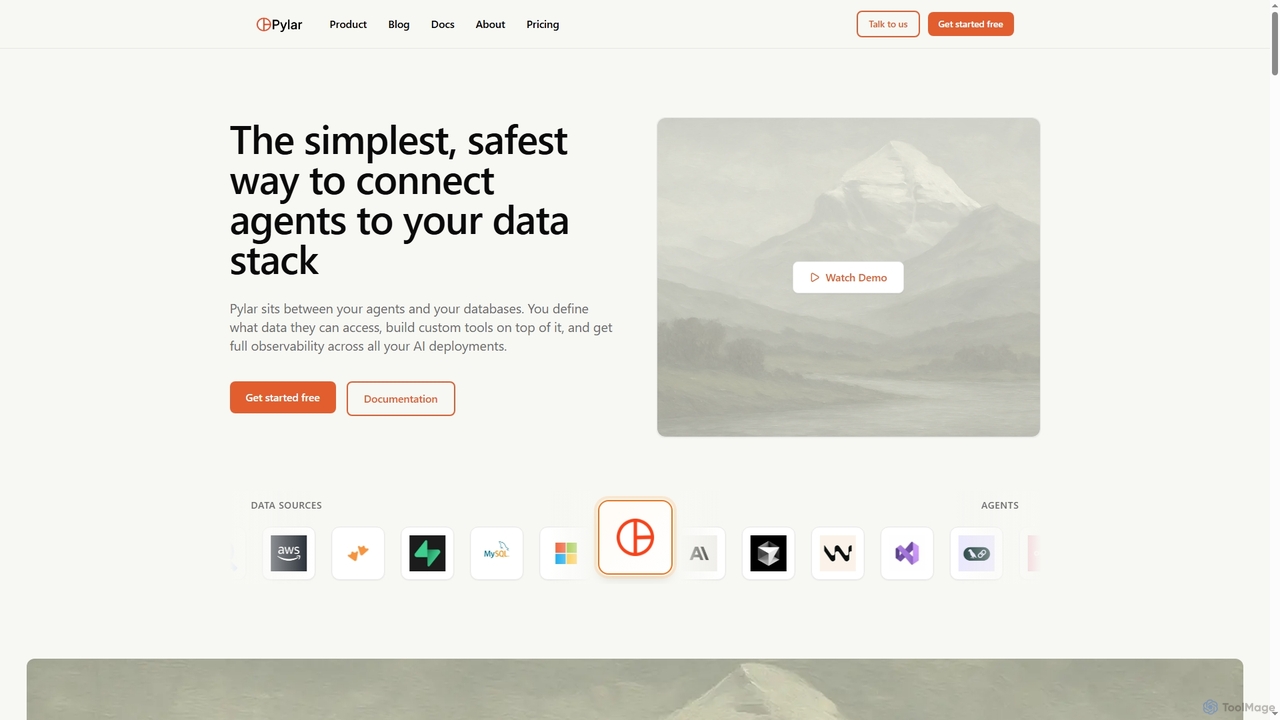
Pylar is a data governance platform that securely connects AI agents to your data stack. It allows you …

4.3K

About Data Governance

Data Governance tools are AI-powered solutions designed to manage, protect, and ensure the quality, compliance, and usability of data specifically utilized within AI systems. As a critical component of AI infrastructure, these tools establish frameworks and processes to oversee the entire lifecycle of AI-relevant data, from collection to deployment. They enable organizations to build trustworthy and ethical AI applications by maintaining data integrity, mitigating risks, and adhering to regulatory standards.

Core Features

  • Data Quality Management: Automatically identifies, cleanses, and validates data to ensure accuracy and consistency for AI model training.
  • AI Data Lineage Tracking: Provides a comprehensive audit trail of data origin, transformations, and usage within AI pipelines for transparency and explainability.
  • Compliance & Privacy Enforcement: Implements policies to ensure AI data handling adheres to regulations like GDPR, CCPA, and internal ethical guidelines.
  • Access Control & Security: Manages granular permissions for sensitive AI training datasets, preventing unauthorized access and data breaches.
  • Metadata Management for AI: Catalogs and categorizes AI-specific data assets, improving discoverability and understanding for data scientists and developers.

Applicable Scenarios

Data Governance tools are essential for enterprises developing and deploying AI, ensuring their models are built on reliable and compliant data. They are used by data scientists to verify data integrity, by compliance officers to audit AI systems for regulatory adherence, and by MLOps teams to automate data quality checks in production pipelines. These tools are vital for any organization aiming to build ethical, transparent, and legally compliant AI solutions.

How to Choose

When selecting Data Governance tools for AI, prioritize solutions that offer robust integration with your existing AI/ML platforms and data pipelines. Evaluate their capabilities for automated data quality, comprehensive data lineage tracking, and strong compliance features tailored to AI-specific regulations. Consider scalability to handle growing data volumes and the level of automation provided for policy enforcement and auditing. User-friendliness for data stewards and clear reporting capabilities are also crucial for effective implementation.

Data GovernanceUse Cases

1

Ensuring Bias-Free AI Training Data

Data scientists utilize AI data governance tools to meticulously audit large training datasets for hidden biases or underrepresentation. By analyzing demographic distributions and feature correlations, these tools help identify and mitigate data-driven biases before model deployment, ensuring fairer and more equitable AI outcomes, particularly in sensitive applications like lending or hiring.

2

Ensuring AI Model Training Data Compliance

Data scientists and compliance officers use Data Governance tools to verify that all data utilized for training AI models, especially those handling personal identifiable information (PII), adheres to strict privacy regulations like GDPR or CCPA. The tools track data consent, anonymization status, and usage restrictions, automatically flagging non-compliant datasets before they can be fed into models, thereby mitigating legal and ethical risks.

3

Automating Data Compliance for AI Models

Legal and compliance teams leverage data governance platforms to track and document the usage of personal and sensitive data within AI models. These tools automate the enforcement of data privacy regulations (e.g., GDPR, CCPA) by monitoring data access, processing, and retention, thereby reducing legal risks and ensuring ethical AI development and deployment.

4

Automating Data Quality Checks in AI Pipelines

MLOps engineers deploy Data Governance solutions to continuously monitor the quality of data flowing into production AI systems. These tools automatically detect anomalies, missing values, or schema drift in real-time, preventing corrupted or inconsistent data from impacting model performance. This proactive approach ensures AI models operate on high-quality inputs, maintaining prediction accuracy and reliability.

5

Managing AI Model Data Lineage

MLOps engineers and data auditors rely on data governance solutions to establish clear data lineage for every AI model in production. This involves tracing the origin, transformations, and versions of all data inputs, enabling quick debugging of model errors, facilitating regulatory audits, and providing transparency into how data influences model predictions.

6

Managing Granular Access to Sensitive AI Datasets

Data stewards leverage Data Governance platforms to define and enforce fine-grained access controls for sensitive AI training datasets. For instance, only specific data scientists working on a fraud detection model might have access to anonymized transaction data, while others are restricted. This ensures data security, prevents unauthorized data exposure, and maintains the confidentiality required for critical AI applications.

7

Implementing Granular Access Control for Sensitive AI Data

Data stewards and security officers use these tools to define and enforce fine-grained access policies for sensitive datasets destined for AI development. This ensures that only authorized personnel and processes can access or modify confidential information, preventing data breaches and maintaining the confidentiality of proprietary or personal data within AI workflows.

8

Establishing Data Lineage for AI Explainability & Audit

AI auditors and researchers utilize Data Governance tools to trace the complete lineage of data used in an AI model, from its source systems through all transformation steps to its final use in model training. This capability is crucial for understanding how specific data points influence model decisions, fulfilling explainable AI (XAI) requirements, and providing transparent audit trails for regulatory bodies or internal reviews.

9

Monitoring Data Quality for Real-time AI Inference

Operations teams deploy data governance platforms to continuously monitor the quality and integrity of data streams feeding real-time AI inference engines. By detecting anomalies, drifts, or corruptions in live data, these tools prevent AI models from making inaccurate predictions due to poor input quality, ensuring the reliability and performance of critical AI applications.

10

Enforcing Ethical Data Use Policies for AI Development

Enterprise architects and ethics committees implement Data Governance frameworks to codify and enforce ethical guidelines for data collection and usage in AI projects. For example, ensuring data used for facial recognition is collected with explicit consent and not used for discriminatory purposes. These tools help translate ethical principles into actionable data policies, fostering responsible AI development.

11

Facilitating Explainable AI (XAI) Data Audits

Researchers and auditors employ data governance tools to meticulously document the data inputs and pre-processing steps associated with specific AI model decisions. This capability is crucial for Explainable AI (XAI), allowing stakeholders to understand which data points contributed most to a particular outcome, thus enhancing trust and accountability in complex AI systems.

12

Streamlining Data Retention and Archival for AI Assets

IT managers and data lifecycle specialists use Data Governance tools to automate the retention, archival, and deletion policies for historical AI training datasets and model artifacts. This ensures compliance with data retention laws, optimizes storage costs by removing obsolete data, and maintains a clean, well-organized repository of AI assets for future reference or regulatory compliance.

Data GovernanceFrequently Asked Questions