Development Best in category 8 results Framework AI Tool

Popular AI tools in the Framework field of Development include LangChain、PyTorch、Angular、Chainlit、Pydantic AI、OpenSilver、AdminForth、Agents-Flex, etc., helping you quickly improve efficiency.

Free
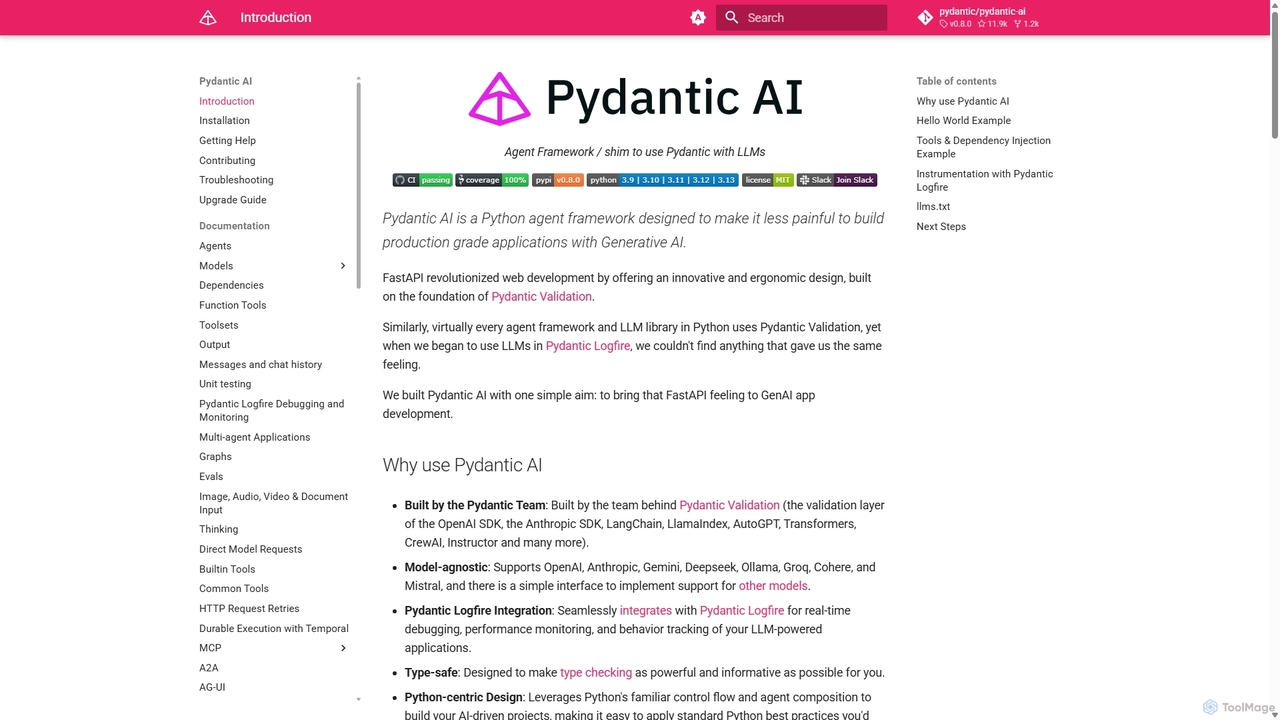
Pydantic AI

Pydantic AI

Pydantic AI is a Python agent framework from the creators of Pydantic, designed to simplify building production-grade Generative …

48.4K
AdminForth

AdminForth

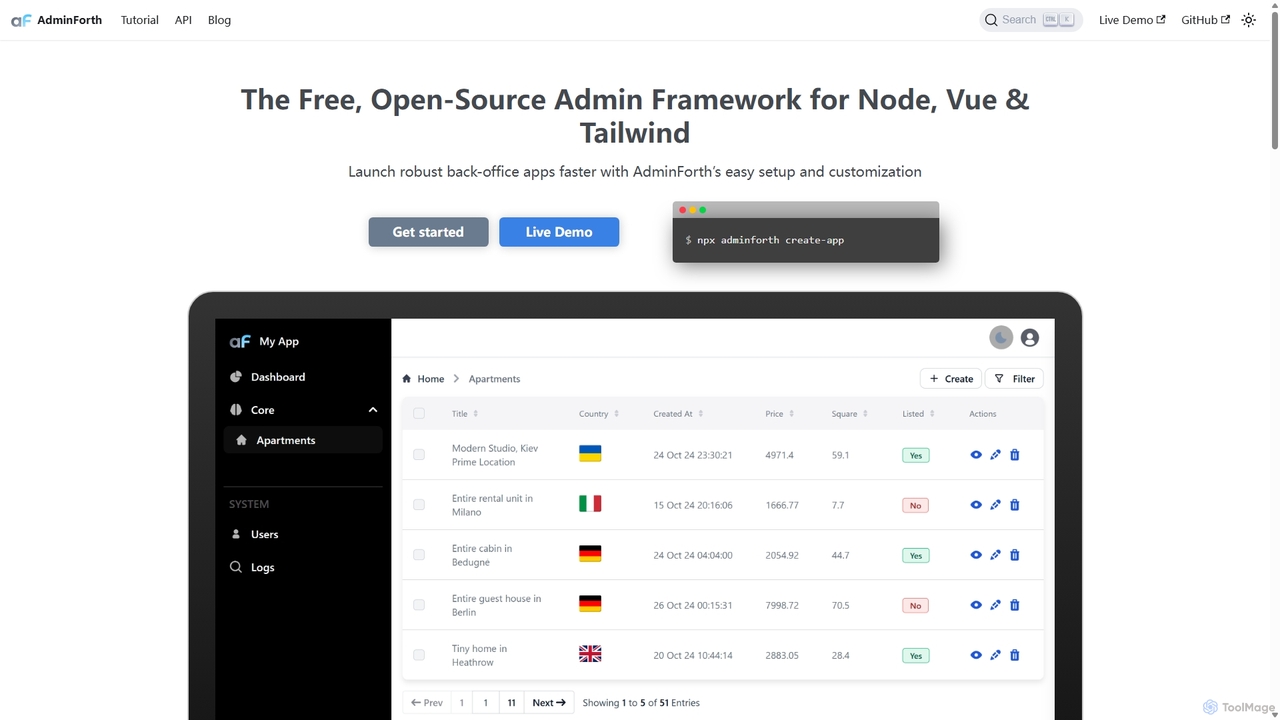
AdminForth is a powerful Vue & Node.js framework for rapidly building feature-rich admin panels. It accelerates development with …

4.2K
Free
PyTorch

PyTorch

PyTorch is an open-source machine learning framework based on the Torch library, used for applications such as computer …

1.8M
Chainlit

Chainlit

Chainlit is an open-source Python framework for developers to rapidly build and deploy production-ready conversational AI applications. It …

61.8K
OpenSilver

OpenSilver

OpenSilver is an open-source framework for modernizing legacy Microsoft Silverlight and WPF applications. It enables developers to build …

7.3K
Free
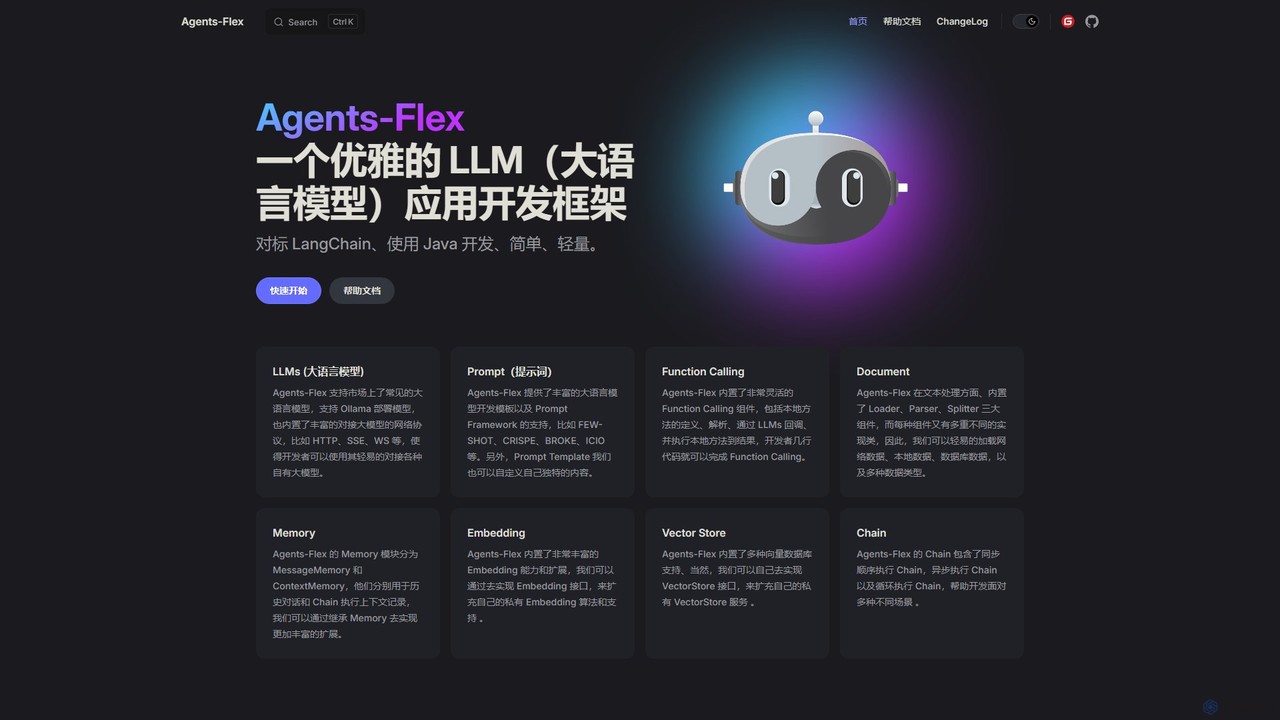
Agents-Flex

Agents-Flex

Agents-Flex is an open-source Java framework for building LLM-powered applications. As a lightweight and elegant alternative to LangChain, …

4.1K
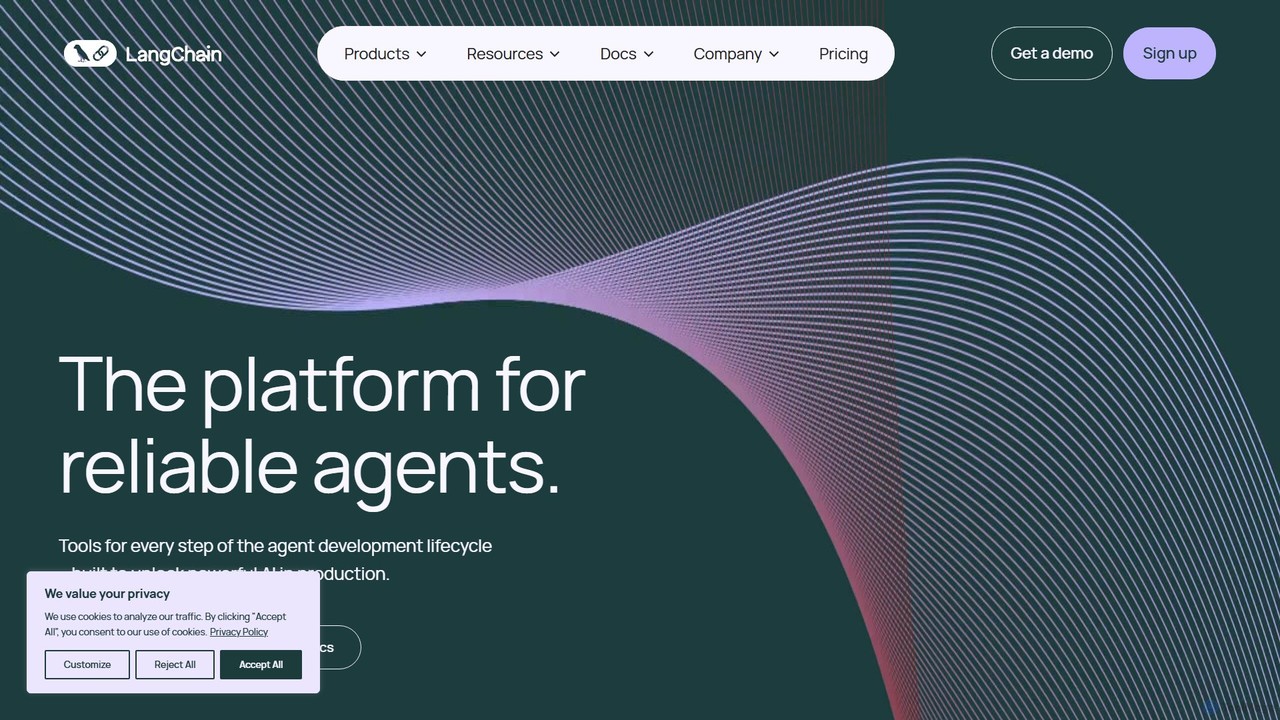
LangChain

LangChain

LangChain is a comprehensive framework and developer platform for building, deploying, and managing production-grade LLM applications. It provides …

3.2M
Free
Angular

Angular

Angular is a powerful, open-source web application framework led by the Angular Team at Google. It empowers developers …

1.2M

About Framework

AI Frameworks are comprehensive software libraries and platforms designed to simplify and accelerate the development, training, and deployment of machine learning models and AI applications. These frameworks provide pre-built components, tools, and guidelines, abstracting away much of the low-level complexity of AI development. They empower developers and researchers to efficiently build, experiment with, and scale sophisticated AI solutions across various domains.

Core Features

  • Model Building & Training: Offers high-level APIs for defining, configuring, and training complex neural network architectures and other machine learning models.
  • Data Handling & Preprocessing: Provides robust utilities for loading, transforming, augmenting, and managing large datasets essential for AI model training.
  • GPU Acceleration: Seamlessly integrates with hardware accelerators like GPUs and TPUs to significantly speed up computationally intensive model training and inference.
  • Deployment & Export: Includes tools and formats for exporting trained models, making them ready for deployment into production environments, edge devices, or cloud services.
  • Pre-trained Models & Ecosystem: Access to a rich ecosystem of pre-trained models, community support, and extensive documentation, fostering rapid development through transfer learning.

Applicable Scenarios

AI Frameworks are indispensable for data scientists and machine learning engineers building custom deep learning models for computer vision, natural language processing, and predictive analytics. They are also crucial for MLOps teams deploying and managing AI models in production, ensuring scalability and reliability. Researchers leverage frameworks for rapid prototyping and experimentation with novel AI algorithms.

How to Choose

When selecting an AI Framework, consider its ease of use and learning curve, especially for your team's expertise level. Evaluate its performance and scalability for your specific data volume and computational needs, along with the breadth of its ecosystem and community support. Assess its flexibility for custom model architectures and its compatibility with your existing infrastructure and deployment targets.

FrameworkUse Cases

1

Developing Custom Deep Learning Models

Data scientists and machine learning engineers utilize AI frameworks to design and implement novel deep learning architectures from scratch. By leveraging the framework's modular components for layers, optimizers, and loss functions, they can rapidly iterate on model designs, train them on large datasets with GPU acceleration, and fine-tune hyperparameters to achieve state-of-the-art performance for specialized tasks like medical image analysis or complex fraud detection.

2

Building Natural Language Processing (NLP) Applications

AI frameworks provide the necessary tools for developers to build sophisticated NLP applications, such as sentiment analysis engines, machine translation systems, or intelligent chatbots. They offer pre-built layers for text processing (e.g., embeddings, recurrent neural networks, transformers) and facilitate the training of models on vast text corpora, enabling the creation of AI systems that understand and generate human language effectively.

3

Prototyping Computer Vision Solutions

Researchers and engineers leverage AI frameworks to rapidly prototype and experiment with computer vision solutions. This includes tasks like object detection, image classification, and semantic segmentation. Frameworks offer pre-trained models (e.g., for image recognition), data augmentation pipelines, and efficient GPU utilization, significantly reducing the time and effort required to develop and test new visual AI algorithms for autonomous vehicles or medical diagnostics.

4

Deploying Trained Models to Production

MLOps engineers use AI frameworks to streamline the deployment of trained machine learning models into live production environments. Frameworks often provide tools for model serialization, optimization for inference, and integration with various deployment targets like cloud platforms (AWS, Azure, GCP), edge devices, or web services. This ensures that AI solutions can be efficiently scaled and maintained, delivering real-time predictions or insights to end-users.

5

Leveraging Transfer Learning for Specialized Tasks

Developers and researchers frequently use AI frameworks to apply transfer learning, adapting pre-trained models (e.g., large language models or image classifiers) to new, specialized tasks with smaller datasets. Frameworks simplify the process of loading pre-trained weights, freezing layers, and fine-tuning specific parts of the model. This significantly reduces training time and computational resources, making advanced AI accessible for niche applications like custom product recommendation systems or rare disease detection.

6

Conducting AI Research and Experimentation

Academic researchers and R&D teams rely on AI frameworks for conducting cutting-edge research and experimentation in artificial intelligence. Frameworks provide a flexible and powerful environment to implement novel algorithms, test new hypotheses, and benchmark performance against existing models. Their modular design and extensive debugging tools enable rapid iteration and exploration of complex AI concepts, pushing the boundaries of what AI can achieve.

FrameworkFrequently Asked Questions