Developer Tools Best in category 5 results Language Models AI Tool

Popular AI tools in the Language Models field of Developer Tools include Comet、Mistral AI、Falcon LLM、Zyphra、ColossalChat, etc., helping you quickly improve efficiency.

Free
Zyphra

Zyphra

Zyphra is an open-source AI research company developing high-performance, efficient foundational models. They provide state-of-the-art small language models …

20.5K
Free
ColossalChat

ColossalChat

An open-source conversational AI based on the LLaMA model and powered by the Colossal-AI framework. It offers a …

2.7K
Mistral AI

Mistral AI

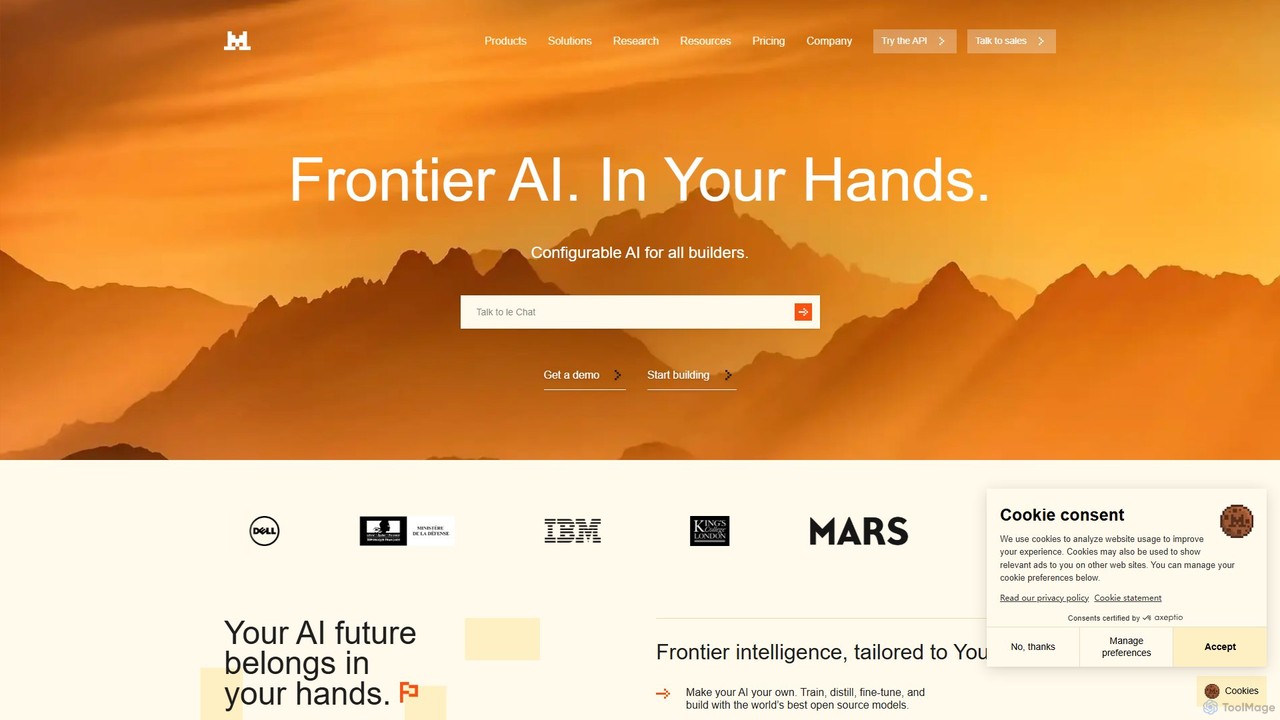
Mistral AI is a leading AI company providing open-source and high-performance large language models (LLMs). It offers a …

9.6M
Comet

Comet

Comet is a family of high-performance, open-source large language models (LLMs) developed by Perplexity AI. Designed for exceptional …

154.9M
Falcon LLM

Falcon LLM

Falcon LLM is a family of powerful, open-source, and open-access large language models developed by the Technology Innovation …

33.8K

About Language Models

Language Models are AI-powered tools that process, understand, and generate human-like text based on vast datasets. These models leverage deep learning architectures, primarily transformers, to perform complex linguistic tasks. They are invaluable for automating content creation, enhancing communication, and enabling advanced natural language understanding in various applications. As a core component within developer tools, they empower the creation of intelligent, language-aware systems.

Core Features

  • Natural Language Understanding (NLU): Accurately interprets user intent, sentiment, and entities from text input.
  • Natural Language Generation (NLG): Creates coherent, contextually relevant, and grammatically correct text outputs.
  • Text Summarization: Condenses long documents or articles into shorter, key summaries while retaining essential information.
  • Translation: Converts text from one language to another, maintaining meaning and context.
  • Code Generation: Assists developers by generating code snippets, completing functions, or translating natural language requests into programming code.

Use Cases

Language models are widely adopted across industries for tasks requiring sophisticated text processing. Developers integrate them into applications for intelligent chatbots, content automation platforms, and advanced data analysis tools. Businesses utilize them for customer service automation, marketing content generation, and internal knowledge management systems.

How to Choose

When selecting a language model, consider its specific capabilities (e.g., generation, summarization, translation), the size and quality of its training data, and its performance on benchmarks relevant to your use case. Evaluate API accessibility, integration complexity, cost, and the level of customization or fine-tuning required for optimal results.


Language ModelsUse Cases

1

Automating Customer Support Responses

Customer service teams can integrate language models into their helpdesk systems to automatically generate accurate and personalized responses to common customer queries. This reduces agent workload, speeds up resolution times, and ensures consistent communication, allowing agents to focus on more complex issues.

2

Generating Marketing Copy and Ad Creatives

Marketing professionals use language models to quickly produce diverse variations of ad headlines, product descriptions, social media posts, and email campaigns. By providing key product features or target audience insights, models can generate compelling copy that resonates with different segments, accelerating content production cycles.

3

Assisting Developers with Code Generation and Documentation

Developers leverage language models to generate boilerplate code, suggest function implementations, or translate natural language descriptions into executable code snippets. These models also assist in automatically generating comprehensive documentation for existing codebases, improving maintainability and onboarding for new team members.

4

Summarizing Research Papers and Reports

Researchers and analysts utilize language models to condense lengthy academic papers, market research reports, or internal documents into concise summaries. This enables rapid information extraction, helps in quickly grasping key findings, and supports efficient knowledge management across large volumes of text data.

5

Creating Personalized Learning Content

Educational platforms and content creators employ language models to generate tailored learning materials, quizzes, and explanations based on individual student progress and learning styles. This allows for highly personalized educational experiences, adapting content difficulty and focus to optimize engagement and comprehension.

6

Translating Multilingual Communications in Real-time

Global teams and businesses use language models for real-time translation of messages, emails, and documents across multiple languages. This facilitates seamless cross-cultural communication, breaks down language barriers in international collaborations, and ensures all stakeholders can understand and contribute effectively.

Language ModelsFrequently Asked Questions