
Skillgraph
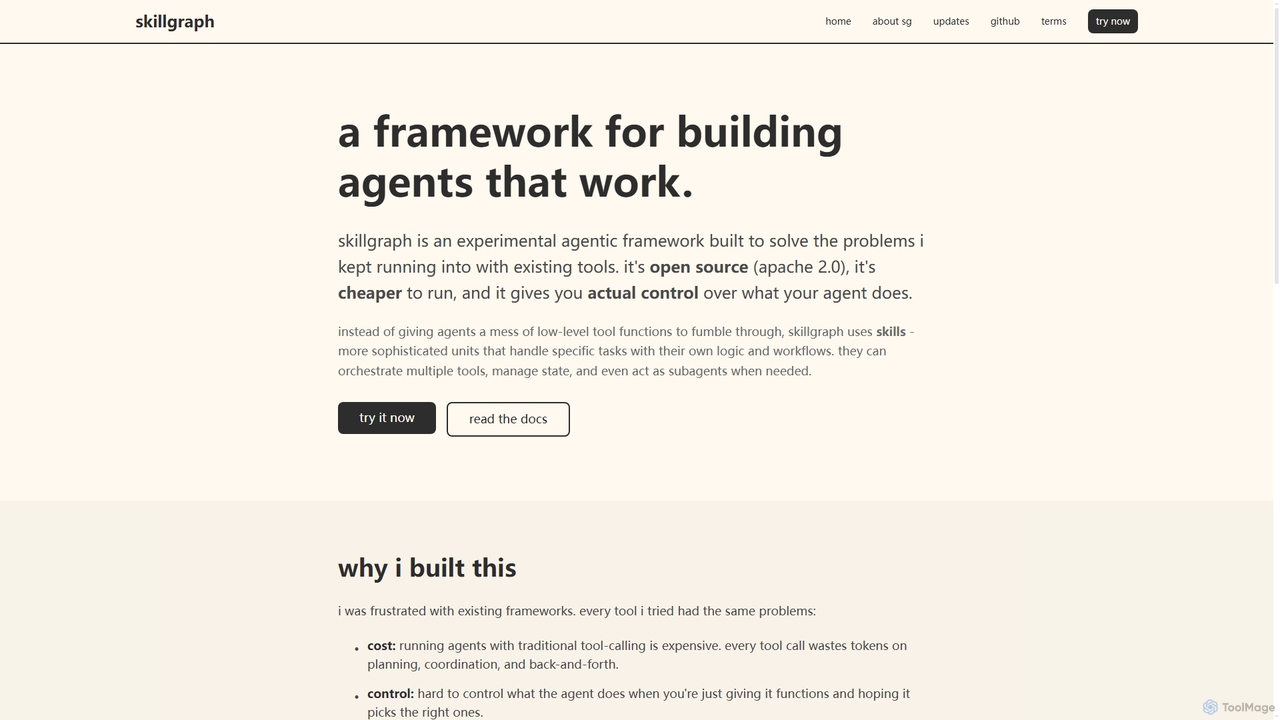
Skillgraph is an experimental, open-source AI agent framework designed to build robust, controllable, and cost-effective AI agents. It …
Skillgraph is an experimental, open-source AI agent framework designed to build robust, controllable, and cost-effective AI agents. It replaces traditional low-level tool-calling with sophisticated 'skills' that manage complex tasks, multi-turn workflows, and internal logic, offering superior control and efficiency for developers.
About Chatbot Development
Chatbot Development tools are AI-powered platforms designed to build, deploy, and manage conversational agents that interact with users through text or voice. These tools leverage natural language processing (NLP) and natural language understanding (NLU) to interpret user input, understand intent, and generate relevant responses. They enable businesses to automate customer service, streamline internal operations, and enhance user engagement across various digital channels.
Core Features
- Visual Dialogue Builders: Drag-and-drop interfaces for designing complex conversational flows without coding.
- NLP & NLU Engines: Advanced capabilities for intent recognition, entity extraction, and sentiment analysis to understand user queries.
- Multi-channel Deployment: Support for deploying chatbots across websites, messaging apps (e.g., WhatsApp, Messenger), and social media platforms.
- Integration Capabilities: APIs and connectors for seamless integration with CRM, ERP, and other backend systems.
- Training & Optimization: Tools for managing training data, testing bot performance, and continuously improving conversational accuracy.
Applicable Scenarios
Chatbot Development tools are essential for organizations looking to scale their customer interactions and automate routine tasks. They are widely used by customer support teams to handle FAQs, by marketing departments for lead qualification, and by HR for employee onboarding and internal query resolution. E-commerce businesses also leverage them to guide shoppers and provide instant product information.
How to Choose
When selecting a Chatbot Development platform, consider its ease of use and coding requirements, the robustness of its NLP/NLU capabilities, and its support for your target deployment channels. Evaluate its integration options with existing systems, scalability for future growth, and the availability of analytics and reporting features to monitor performance. Pricing models and community support are also crucial factors.
Chatbot DevelopmentUse Cases
Automating Customer Support FAQs
Customer service managers can use chatbot development platforms to build a virtual assistant that handles common customer inquiries 24/7. By training the bot on a comprehensive FAQ database, businesses can reduce call volumes by up to 60%, allowing human agents to focus on complex issues and significantly improving response times and customer satisfaction.
Generating Qualified Sales Leads
Marketing teams deploy chatbots on their websites to engage visitors, ask qualifying questions, and collect contact information. The bot guides potential leads through a pre-defined sales funnel, identifies high-intent prospects, and seamlessly hands them over to sales representatives, increasing lead conversion rates by 20-30% compared to static forms.
Streamlining HR Employee Onboarding
HR departments utilize chatbot development tools to create an internal HR bot that assists new hires with onboarding processes. The bot answers questions about company policies, benefits, and IT setup, provides access to relevant documents, and guides them through initial tasks, reducing HR workload and ensuring a smoother, more efficient onboarding experience for new employees.
Enhancing E-commerce Product Discovery
Online retailers can develop chatbots that act as personal shopping assistants. These bots help customers find products based on their preferences, answer specific product questions, provide recommendations, and even assist with order tracking. This personalized interaction improves the shopping experience, leading to higher conversion rates and reduced cart abandonment.
Delivering Interactive Educational Content
Educators and e-learning platforms use chatbot development to create interactive learning companions. These bots can quiz students on course material, provide instant feedback, explain complex concepts, and guide them through learning paths. This enhances engagement and provides a personalized learning experience, making education more accessible and effective.
Automating IT Help Desk Support
IT departments can build chatbots to automate responses to common technical support requests, such as password resets, software installation guides, or troubleshooting basic network issues. The bot provides immediate solutions, escalates complex problems to human technicians, and logs all interactions, significantly reducing resolution times and improving IT efficiency.