AIDiscoveryBoards
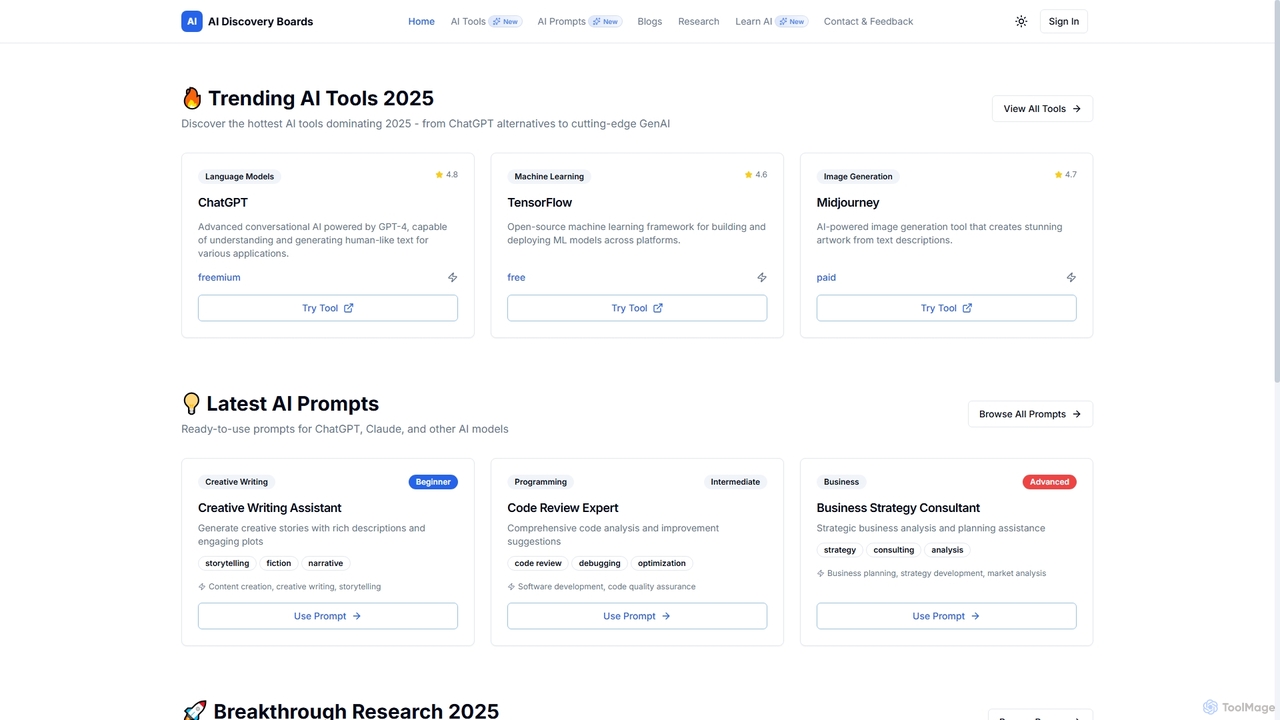
AIDiscoveryBoards is a comprehensive online platform designed to help users discover trending AI tools, explore the latest AI …
AIDiscoveryBoards is a comprehensive online platform designed to help users discover trending AI tools, explore the latest AI prompts, delve into groundbreaking AI research papers, and access curated AI learning resources. It serves as a central hub for staying updated on the rapidly evolving artificial intelligence landscape.
About Ai Tools
AI Tools for content creation are applications that leverage artificial intelligence to generate, edit, and optimize digital content. These tools utilize advanced models, such as Large Language Models (LLMs) for text and diffusion models for images, to automate and assist in creative tasks. Their primary value lies in accelerating content production, overcoming creative blocks, and enabling the creation of personalized content at scale. This allows creators and marketers to produce high-quality material more efficiently, from blog posts and social media updates to marketing visuals.
Core Features
- Text Generation: Creates written content like articles, emails, ad copy, and scripts based on user prompts.
- Image & Video Synthesis: Generates unique images, illustrations, or video clips from textual descriptions.
- Content Optimization: Analyzes and refines content for SEO, readability, grammar, and tone of voice.
- Idea & Outline Generation: Brainstorms topics, keywords, and structural outlines for articles or projects.
- Content Repurposing: Transforms existing content into different formats, such as a blog post into a video script or social media thread.
Use Cases
These tools are widely used by content marketers, social media managers, copywriters, and SEO specialists. Common applications include drafting blog posts, creating entire social media campaigns, writing product descriptions for e-commerce, and generating unique visuals for advertisements. They streamline workflows where high volumes of creative assets are needed quickly.
How to Choose
When selecting an AI tool, consider the primary content type you need (text, image, video). Evaluate the quality and coherence of the output by testing with specific prompts. Assess the user interface for ease of use and the availability of integrations with your existing platforms, such as WordPress or social media schedulers. Finally, compare pricing models (subscription vs. pay-per-use) to find one that aligns with your budget and usage frequency.

Ai ToolsUse Cases
Automating Blog Post Creation
A content marketer for a tech startup needs to publish two in-depth blog posts per week to drive organic traffic. Using an AI writing tool, they input a target keyword and a brief outline. The tool generates a comprehensive first draft, including an introduction, structured sections with subheadings, and a conclusion. The marketer then spends about 20% of their time editing, fact-checking, and adding their unique brand voice, reducing the total content creation time by over 60% and allowing them to focus on strategy and promotion.
Generating Social Media Campaign Assets
A social media manager is launching a new product campaign across Instagram, Facebook, and Twitter. They use an AI tool to generate a wide array of assets. By providing a prompt about the product's features and target audience, the AI produces 20 different ad copy variations, 15 engaging captions for posts, and a list of relevant hashtags. Simultaneously, they use an AI image generator to create a dozen unique lifestyle images featuring the product, ensuring a fresh and diverse visual feed for the campaign's duration without costly photoshoots.
Creating Marketing Email Sequences
An e-commerce brand's marketing team wants to improve customer onboarding. They use an AI writing assistant to create a 5-part welcome email sequence. They define the goal for each email (e.g., welcome, brand story, product showcase, social proof, special offer). The AI generates compelling subject lines and body copy for each email, tailored to a friendly and encouraging tone. The team then reviews and personalizes the drafts with specific product links, saving hours of copywriting time and ensuring a consistent and engaging experience for new subscribers.
Producing Video Scripts from Articles
A video creator wants to repurpose their popular blog posts into engaging YouTube videos. Instead of manually rewriting each article, they use an AI content repurposing tool. They paste the URL of a blog post, and the AI analyzes the content, extracts key points, and transforms it into a concise, conversational video script. It even suggests visual cues and storyboard ideas for each section. This process reduces scriptwriting time from hours to minutes, allowing the creator to produce more video content consistently and reach a wider audience.
Optimizing Website Copy for SEO
An SEO specialist is tasked with improving the ranking of a company's main landing pages. They use an AI content optimization tool to analyze the existing copy against top-ranking competitors. The tool identifies missing keywords, suggests improvements for headings (H1, H2), and recommends a more optimal content structure. It also provides a readability score and suggests ways to simplify complex sentences. By implementing these AI-driven recommendations, the specialist can systematically enhance each page for search engines without extensive manual research.
Designing Unique Visuals for Presentations
A business consultant needs custom illustrations for a client presentation to explain a complex workflow. Instead of using generic stock photos, they use an AI image generator. They input descriptive prompts like 'minimalist flowchart showing supply chain logistics with blue and grey tones' or 'isometric view of a smart factory with data streams'. The AI generates several high-quality, on-brand visual options in seconds. This allows the consultant to create a highly professional and visually compelling presentation that is tailored specifically to the client's context, enhancing communication and impact.