Orivfy
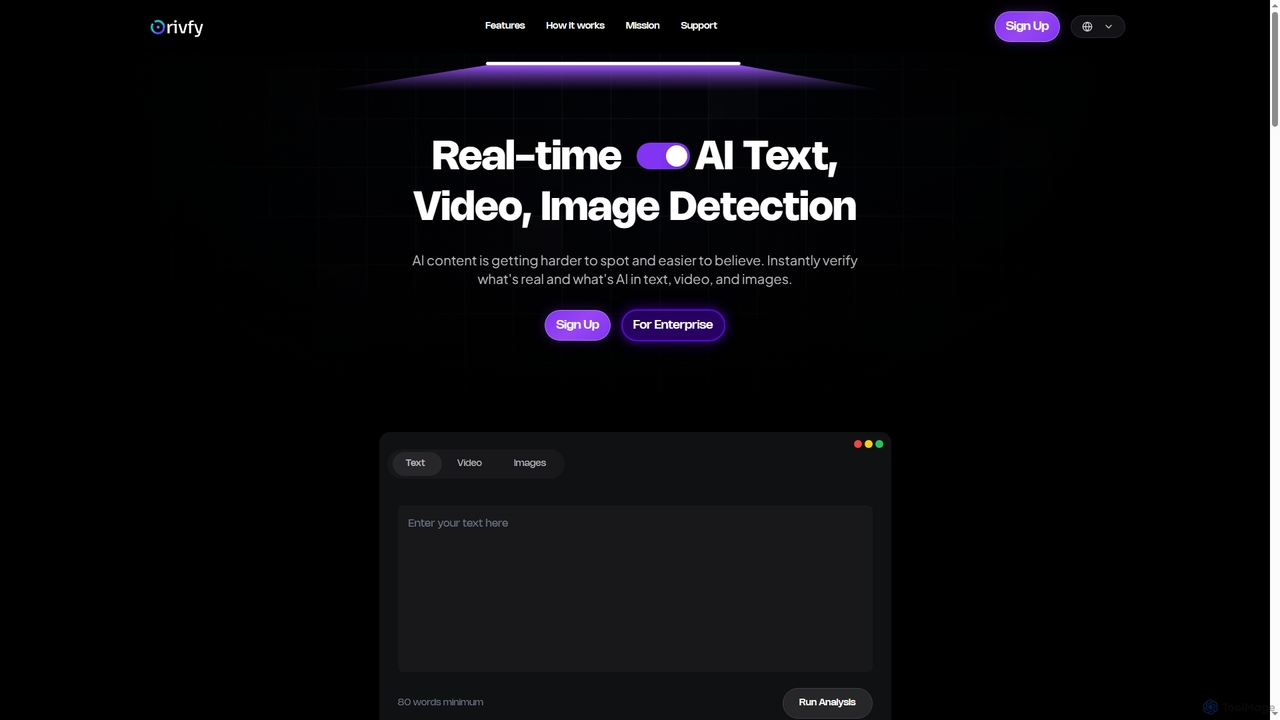
Orivfy is an advanced AI content authenticator and digital content police, designed to instantly verify whether text, video, …
Orivfy is an advanced AI content authenticator and digital content police, designed to instantly verify whether text, video, or images are human-generated or created by AI. It helps users navigate a world increasingly filled with synthetic media by providing real-time detection and detailed insights.
About Media Authenticity
Media Authenticity tools are AI-powered solutions designed to verify the originality and integrity of digital media, including images, videos, and audio. These tools leverage advanced algorithms to detect signs of manipulation, identify AI-generated content, and establish the provenance of digital assets. They play a critical role in combating misinformation, deepfakes, and digital fraud, ensuring trust and credibility in an increasingly complex media landscape. By analyzing subtle inconsistencies and digital fingerprints, they help users distinguish authentic content from fabricated or altered media.
Core Features
- Deepfake Detection: Identifies synthetic media created by AI, often used to impersonate individuals or fabricate events.
- Image & Video Manipulation Analysis: Detects alterations such as splicing, cloning, retouching, or object removal within visual content.
- AI-Generated Content Identification: Determines if an image, video, or audio file was created or significantly modified by generative AI models.
- Metadata & Provenance Tracking: Analyzes embedded data and historical records to trace the origin and modification history of media files.
- Audio Forgery Detection: Pinpoints signs of editing, splicing, or synthetic voice generation in audio recordings.
Use Cases
These tools are essential for professionals in journalism, law enforcement, and content moderation. Journalists use them to verify the authenticity of visual evidence before reporting, while legal teams rely on them to authenticate digital evidence in court. Social media platforms deploy them to identify and remove manipulated content, protecting users from misinformation and harmful deepfakes.
How to Choose
When selecting Media Authenticity tools, consider the accuracy and reliability of their detection algorithms, the range of media types supported (images, video, audio, specific formats), and the speed of analysis. Evaluate their reporting capabilities, ease of integration with existing workflows, and the level of technical expertise required. Scalability and the ability to handle large volumes of media are also crucial for enterprise-level applications.

Media AuthenticityUse Cases
Verifying News & Journalistic Content
Fact-checkers and journalists use these tools to quickly analyze images and videos submitted by sources or found online, ensuring their authenticity before publication and preventing the spread of misinformation. This helps maintain public trust in media reporting by confirming the integrity of visual evidence.
Authenticating Legal & Forensic Evidence
Law enforcement agencies and legal professionals employ media authenticity tools to validate the integrity of digital evidence, such as surveillance footage or crime scene photos. This ensures that the evidence hasn't been tampered with, providing a reliable basis for court proceedings and investigations.
Detecting Deepfakes in Social Media
Content moderators on social platforms utilize these tools to automatically scan vast amounts of user-generated content, identifying and flagging deepfakes or manipulated videos that violate platform policies or spread disinformation. This protects users from harmful content and maintains the integrity of online communities.
Protecting Brand Reputation & IP
Marketing teams and brand managers use media authenticity solutions to monitor the web for unauthorized or manipulated use of their brand logos, product images, or promotional videos. This proactive approach helps safeguard their intellectual property and public image from misuse or damaging alterations.
Validating Insurance Claims Media
Insurance adjusters apply these tools to verify the authenticity of photos and videos submitted by claimants for property damage or accident claims. This helps to detect fraudulent submissions, streamline the claims process, and ensure fair and accurate payouts based on genuine evidence.
Ensuring Integrity of Academic & Scientific Data
Researchers and academic publishers use these tools to scrutinize visual data, such as microscopy images or experimental videos, submitted for publication. This ensures that the data has not been altered or fabricated, upholding scientific rigor and the credibility of research findings.