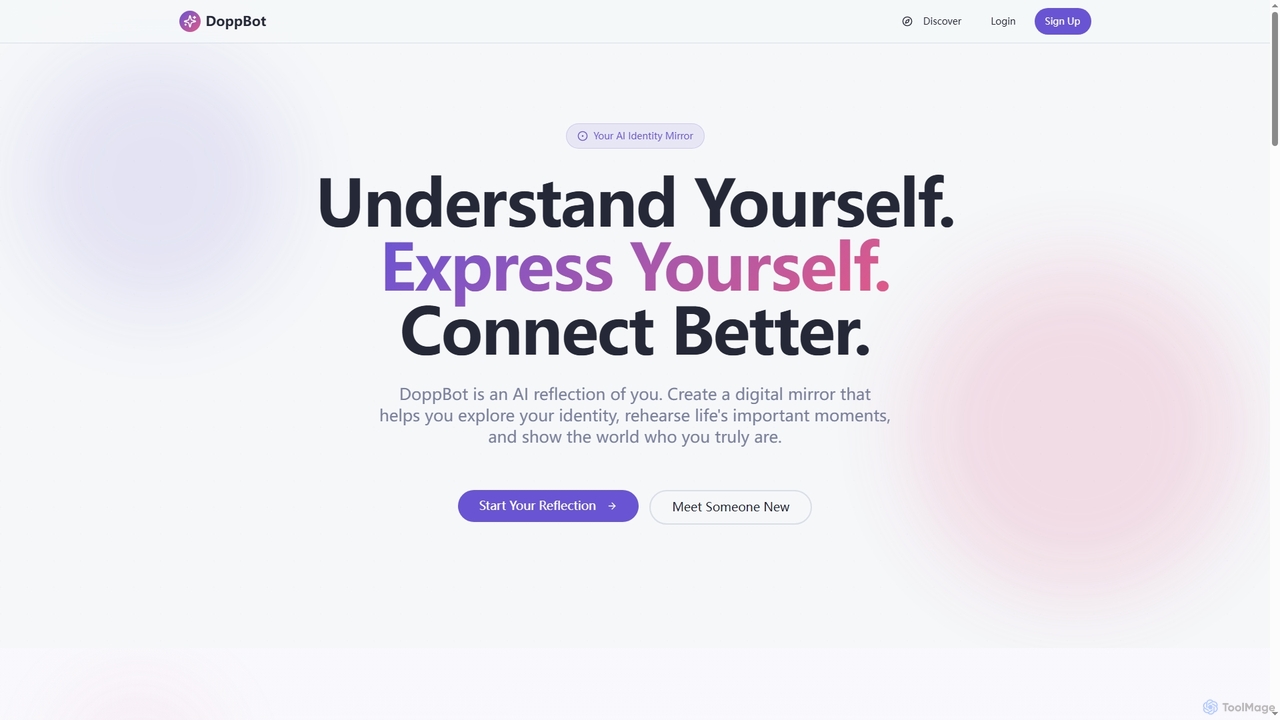
DoppBot
DoppBot is an innovative AI reflection tool that creates a digital mirror of your identity. It helps users …
DoppBot is an innovative AI reflection tool that creates a digital mirror of your identity. It helps users understand themselves better, express their true self, and improve interactions by providing a safe space to explore thoughts, rehearse conversations, and preserve personal legacies.
About Digital Identity
Digital Identity tools are AI-powered solutions designed to manage, verify, and authenticate an individual's or entity's online presence. These tools leverage advanced artificial intelligence, machine learning, and biometric technologies to establish and maintain trusted digital personas. They play a crucial role in enhancing security, preventing fraud, and streamlining user experiences across various digital platforms. By automating complex verification processes, Digital Identity tools ensure secure and seamless interactions in the digital realm.
Core Features
- Biometric Verification: Utilizes facial recognition, fingerprint scanning, or voice analysis for secure identity authentication.
- Fraud Detection: Employs AI algorithms to identify and flag suspicious activities, preventing identity theft and fraudulent transactions.
- Identity Lifecycle Management: Manages the entire journey of a digital identity, from creation and verification to authentication and revocation.
- Decentralized Identity (DID): Enables users to control their own identity data, enhancing privacy and reducing reliance on central authorities.
- Risk-Based Authentication: Dynamically adjusts authentication requirements based on the assessed risk level of a user's activity.
Applicable Scenarios
Digital Identity tools are essential for industries requiring high levels of security and compliance, such as finance, healthcare, and government. They are used by banks for Know Your Customer (KYC) processes, by e-commerce platforms for secure login and transaction verification, and by healthcare providers for patient data access control. These tools also support secure remote work environments and online education platforms.
How to Choose
When selecting a Digital Identity solution, consider its compliance with global regulations (e.g., GDPR, CCPA), the robustness of its security features (e.g., encryption, multi-factor authentication), and its integration capabilities with existing systems. Evaluate the accuracy and speed of its verification processes, the user experience it offers, and its scalability to accommodate future growth. Prioritize solutions that offer strong privacy protections and a clear roadmap for emerging identity standards.
Digital IdentityUse Cases
Streamlining Customer Onboarding in Financial Services
Financial institutions, such as banks and fintech companies, utilize Digital Identity tools to automate and accelerate their Know Your Customer (KYC) and Anti-Money Laundering (AML) processes. New customers can verify their identity remotely using AI-powered document verification and biometric checks, reducing manual review times by up to 70% and improving conversion rates for account openings. This ensures regulatory compliance while offering a seamless user experience.
Enhancing Secure Access for Enterprise Employees
Large enterprises deploy Digital Identity solutions to provide secure and convenient access to internal systems and applications for their employees, especially in remote or hybrid work setups. By integrating AI-powered multi-factor authentication (MFA) and continuous behavioral biometrics, companies can ensure that only authorized personnel access sensitive data, significantly reducing the risk of unauthorized access and data breaches. This improves security posture without hindering productivity.
Preventing Online Fraud and Account Takeovers
E-commerce platforms and social media networks leverage Digital Identity tools to combat sophisticated online fraud schemes, including account takeovers (ATO) and synthetic identity fraud. AI-powered behavioral analytics monitor user patterns and anomalies in real-time, flagging suspicious login attempts or unusual transactions. This proactive approach helps protect user accounts and financial assets, minimizing losses for both consumers and businesses by detecting fraudulent activities before they cause significant damage.
Facilitating Secure E-Government Services
Government agencies are increasingly adopting Digital Identity solutions to provide citizens with secure and convenient access to online public services, such as tax filing, social security benefits, and voting. These tools enable robust identity verification for sensitive government interactions, reducing the need for in-person visits and paper-based processes. By ensuring the authenticity of users, they enhance trust in digital governance and improve the efficiency of public service delivery.
Securing Healthcare Data and Patient Access
Healthcare providers leverage Digital Identity tools to ensure the secure and compliant access to sensitive patient health information (PHI). AI-powered identity verification and access management systems authenticate medical professionals and patients, granting appropriate access levels while adhering to strict privacy regulations like HIPAA. This prevents unauthorized data breaches, improves data integrity, and streamlines patient portals, enhancing trust and operational efficiency in healthcare.
Verifying Age and Identity for Online Content and Services
Online platforms offering age-restricted content (e.g., gaming, adult entertainment) or services (e.g., alcohol delivery) use Digital Identity tools for robust age and identity verification. AI-powered solutions can quickly and accurately confirm a user's age and identity through document scans and liveness detection, ensuring compliance with legal requirements and protecting minors. This automated process enhances user experience by providing quick access while maintaining strict regulatory adherence.