Best of the Year 2 results Directories AI Tools

Popular AI tools in the Directories field include AI Agent Store、LunarList, etc., helping you quickly improve efficiency.

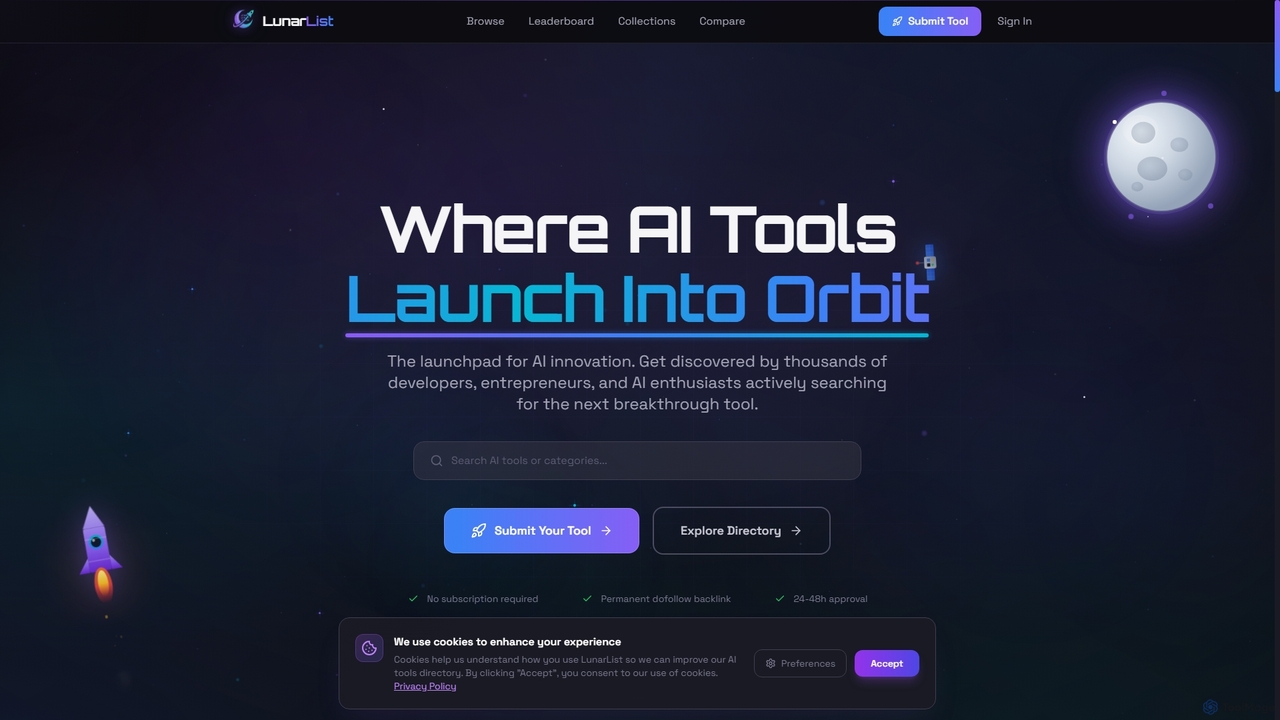
LunarList

LunarList

LunarList is a premier AI tools directory and launchpad designed to connect innovative AI solutions with a global …

2.5K
Free
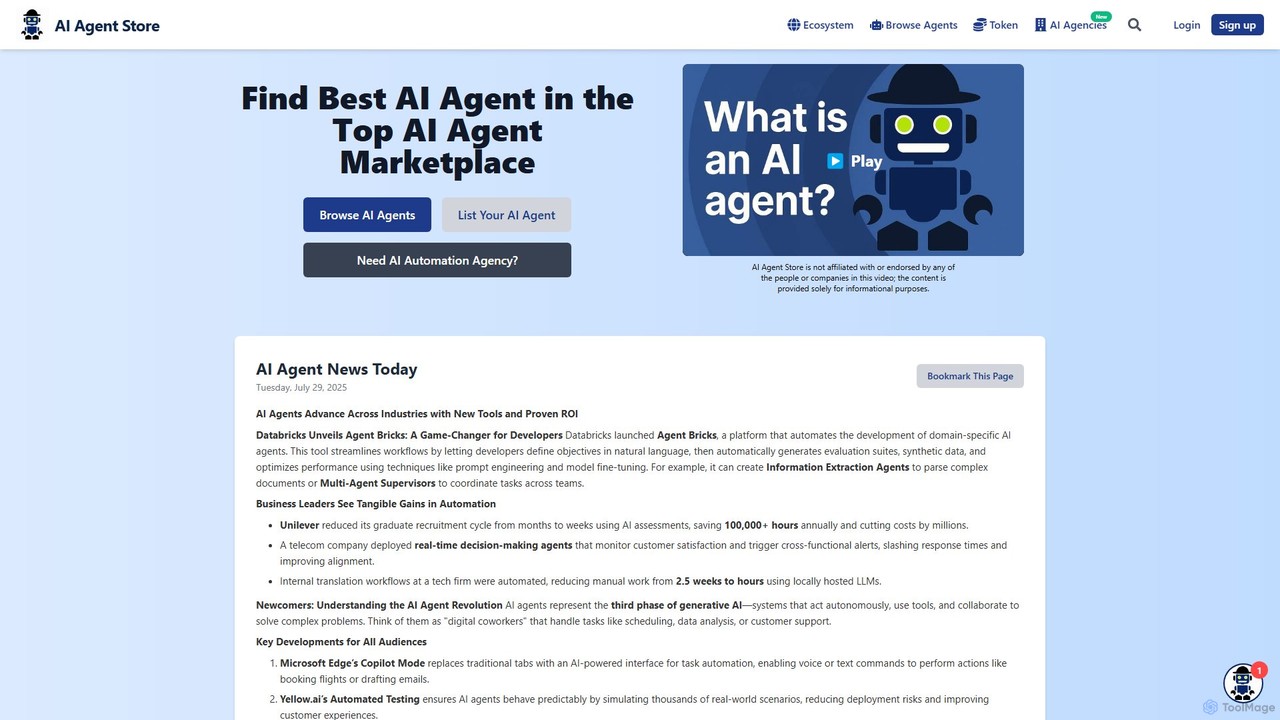
AI Agent Store

AI Agent Store

AI Agent Store is a comprehensive marketplace and directory for discovering, comparing, and acquiring AI agents. It serves …

296.5K

About Directories

AI Directories are specialized platforms designed to aggregate, categorize, and review a vast array of artificial intelligence tools. These platforms function as comprehensive databases, utilizing structured data and search filters to help users efficiently discover and compare AI solutions. They provide a centralized hub for exploring tools across different functions, from content creation to data analysis, saving users significant time in research. By offering detailed descriptions, user ratings, and feature comparisons, AI Directories empower individuals and businesses to make informed decisions when selecting software.

Core Features

  • Comprehensive Tool Database: Gathers and organizes a wide range of AI tools from various domains into a single, searchable repository.
  • Advanced Filtering and Search: Enables users to find specific tools based on criteria like category, features, pricing, and integrations.
  • User Reviews and Ratings: Provides community-driven feedback and expert analysis to assess the quality and performance of tools.
  • Side-by-Side Comparison: Allows users to directly compare the features, pricing, and specifications of multiple AI tools.
  • Trend and News Curation: Often includes sections for new arrivals, trending tools, and articles on the AI industry landscape.

Use Cases

AI Directories are essential for marketers, developers, content creators, and entrepreneurs seeking specific AI solutions to enhance their workflows. They are also valuable resources for researchers, students, and investors tracking the rapidly evolving AI market. For instance, a startup founder can use a directory to analyze competitors, while a content creator can find the most suitable AI writer or image generator for their projects.

How to Choose

When selecting an AI Directory, consider the comprehensiveness and update frequency of its database. Evaluate the quality of its search and filtering capabilities—the more granular, the better. Assess the authenticity and depth of user reviews and ratings. Finally, consider the platform's user interface and overall experience, ensuring it is easy to navigate and find the information you need efficiently.

DirectoriesUse Cases

1

Discovering a Tool for a Specific Task

A social media manager needs an AI tool to generate engaging captions for Instagram posts. They use an AI directory, navigate to the 'Social Media' or 'Copywriting' category, and filter the results by features like 'tone adjustment' and 'hashtag generation'. By comparing the top 3-4 tools based on user reviews and pricing, they can quickly identify a solution that fits their workflow and budget, saving hours of manual research on general search engines.

2

Conducting Market and Competitor Analysis

A product manager at a tech startup is tasked with developing a new AI-powered project management tool. They use several AI directories to perform market research. By analyzing the 'Project Management' category, they can identify key players, common features, pricing strategies, and gaps in the market. This structured information allows them to build a comprehensive competitive landscape, validate their product idea, and define a unique value proposition without spending weeks manually gathering data.

3

Finding Alternatives to an Existing Tool

A small business is using an AI chatbot for customer service, but finds its pricing model has become too expensive as their traffic grows. The business owner uses an AI directory to find alternatives. They filter for 'Chatbots' and specifically look for tools with 'pay-per-conversation' or 'scalable' pricing plans. The directory's comparison feature allows them to see how different tools stack up in terms of features like CRM integration and language support, facilitating a switch to a more cost-effective solution.

4

Staying Updated on AI Industry Trends

An AI enthusiast and blogger wants to write an article about the latest innovations in generative AI. Instead of sifting through countless news sites, they visit the 'New' or 'Trending' sections of a major AI directory. Here, they can quickly see recently launched tools, identify emerging categories (like 'AI Music Generators'), and spot trends in features and technology. This curated view provides a reliable and efficient source of information for their content, ensuring their articles are timely and relevant.

5

Building a Tech Stack for a New Project

A freelance developer is starting a new web application project that requires several AI capabilities: text summarization, image recognition, and language translation. They use an AI directory to build their tech stack. They search for APIs in each category, filtering by programming language (e.g., Python) and integration-friendliness. The directory helps them discover tools that are known to work well together and provides links to documentation, accelerating the development and integration process significantly.

6

Academic Research on the AI Tool Ecosystem

A university student is writing a thesis on the growth of AI SaaS (Software as a Service) platforms. AI directories serve as a primary data source. The student can systematically browse categories to quantify the number of tools in different niches (e.g., AI for healthcare vs. AI for finance), track the emergence of new categories over time, and analyze common pricing models. This structured data is far more reliable and easier to process than scraping thousands of individual company websites, providing a solid foundation for academic analysis.

DirectoriesFrequently Asked Questions