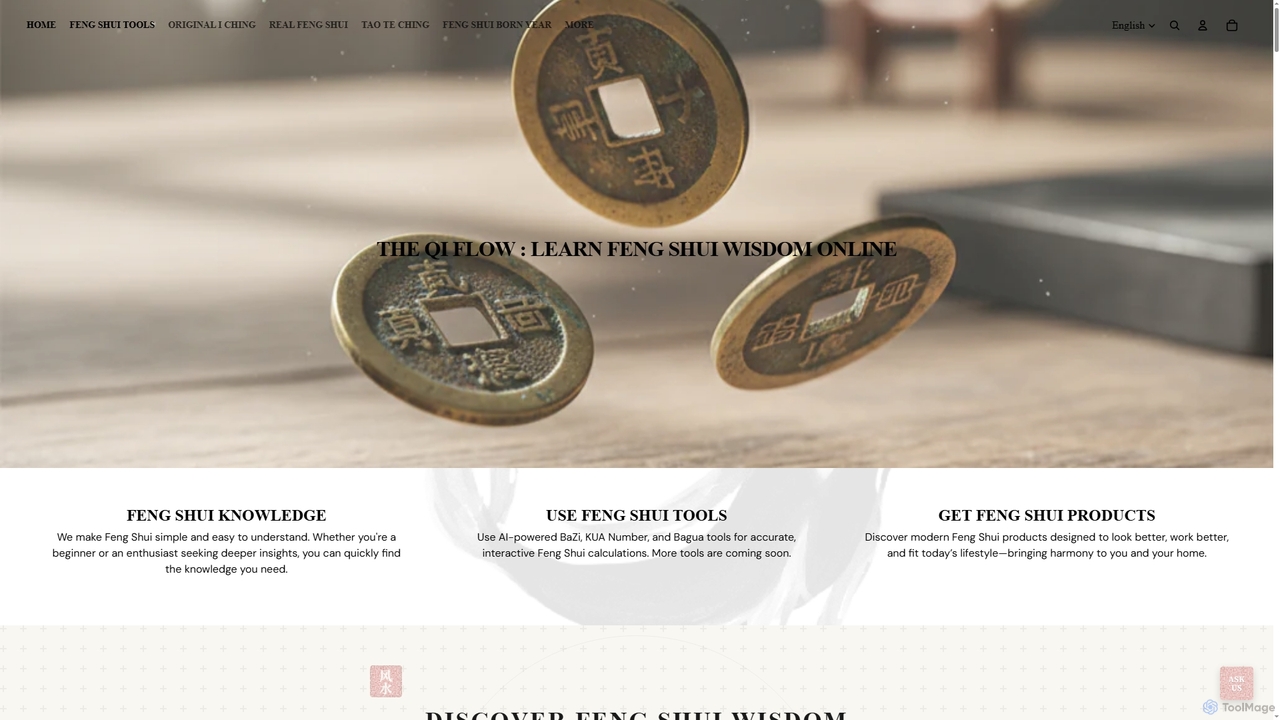
AI Feng Shui tools are advanced applications that leverage artificial intelligence to analyze and optimize living and working spaces according to traditional Feng Shui principles. These sophisticated tools utilize complex algorithms to interpret spatial layouts, environmental factors, and personal astrological data, providing personalized recommendations for enhancing harmony, well-being, and prosperity. By automating the intricate calculations and interpretations traditionally performed by human masters, AI Feng Shui tools aim to demystify the ancient art of geomancy, making its profound insights accessible for modern design and lifestyle choices, ultimately influencing positive outcomes.
Core Features
- Spatial Analysis: AI-driven assessment of floor plans, room orientations, and external surroundings to identify auspicious and inauspicious energy flows (Qi).
- Personalized Recommendations: Tailored advice on colors, materials, furniture placement, and auspicious directions based on individual birth data (e.g., Kua number, Bazi) and specific life goals.
- Element Balancing Suggestions: Proposing specific adjustments to balance the five elements (wood, fire, earth, metal, water) within a space, correcting imbalances and enhancing positive energies.
- Auspicious Date Selection: AI-assisted identification of favorable dates for significant events like moving into a new home, commencing renovations, or launching a new business venture, maximizing success potential.
- Virtual Layout Simulation: Visualize proposed Feng Shui adjustments in 2D or 3D models, sometimes with augmented reality, to see their potential impact and aesthetic integration before physical implementation.
Applicable Scenarios
Homeowners and renters frequently use these tools for optimizing their living spaces, from furniture arrangement and decor choices to color schemes, aiming to foster a more harmonious and supportive environment for family life and personal growth. Interior designers and architects integrate AI Feng Shui insights to create balanced, aesthetically pleasing, and energetically optimized designs for residential and commercial clients, adding a unique value proposition. Businesses and entrepreneurs leverage these tools to arrange office layouts, retail spaces, or even factory floors, aiming to enhance productivity, employee well-being, customer flow, and overall business prosperity by aligning with beneficial energy patterns.
How to Choose
When selecting an AI Feng Shui tool, it's crucial to consider the depth and authenticity of its analytical capabilities, such as whether it accurately incorporates classical Feng Shui schools like Flying Stars or Eight Mansions, alongside personal Bazi or Kua number calculations. Evaluate the user interface for its intuitiveness, ease of interpretation, and the clarity of its recommendations, ensuring they are actionable. Look for tools that offer extensive customization options, allowing for specific goal-setting, and the ability to simulate changes virtually. Additionally, verify the tool's data privacy policies, especially when inputting personal information, and consider its integration capabilities with other design software or platforms for a seamless workflow.