PlsFixAI
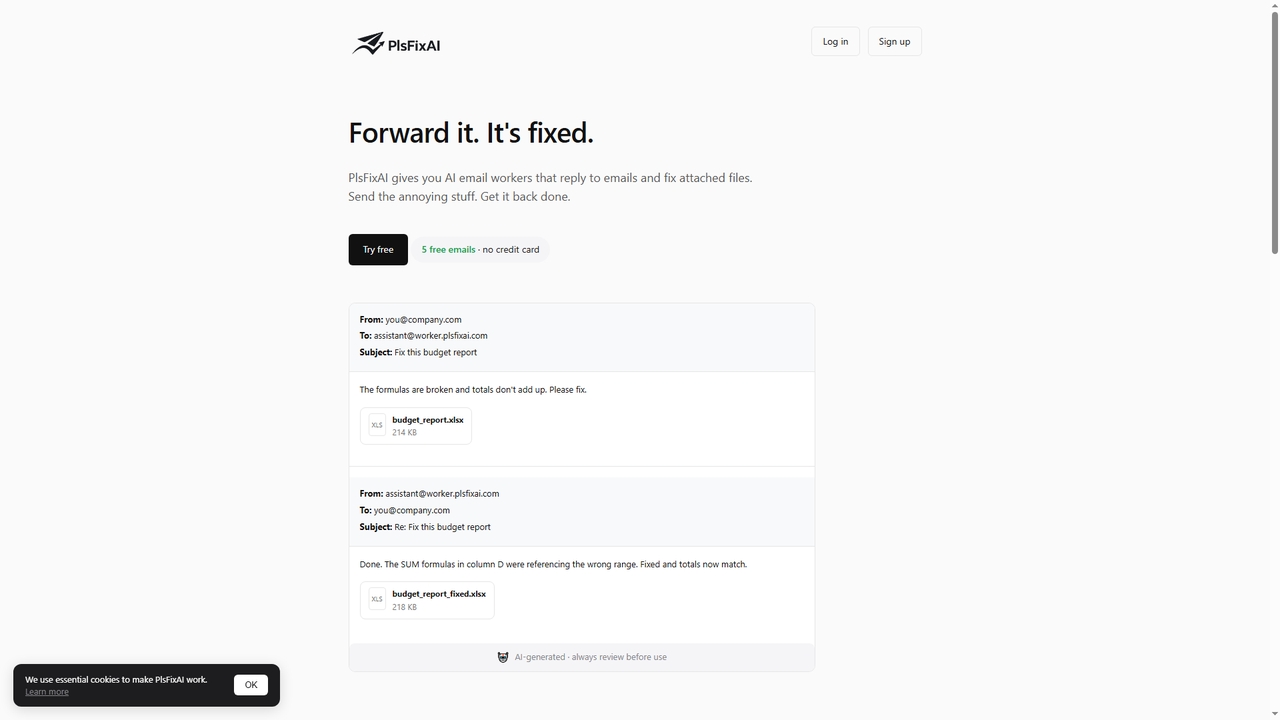
PlsFixAI is an AI-powered email assistant that automates tedious email tasks. Forward emails or CC your dedicated AI …
PlsFixAI is an AI-powered email assistant that automates tedious email tasks. Forward emails or CC your dedicated AI worker, and it will reply with drafts, fix errors in attached documents (PDFs, Word, Excel), summarize reports, and proofread text. It's designed to handle routine work so you can focus on what matters.
LangPDF
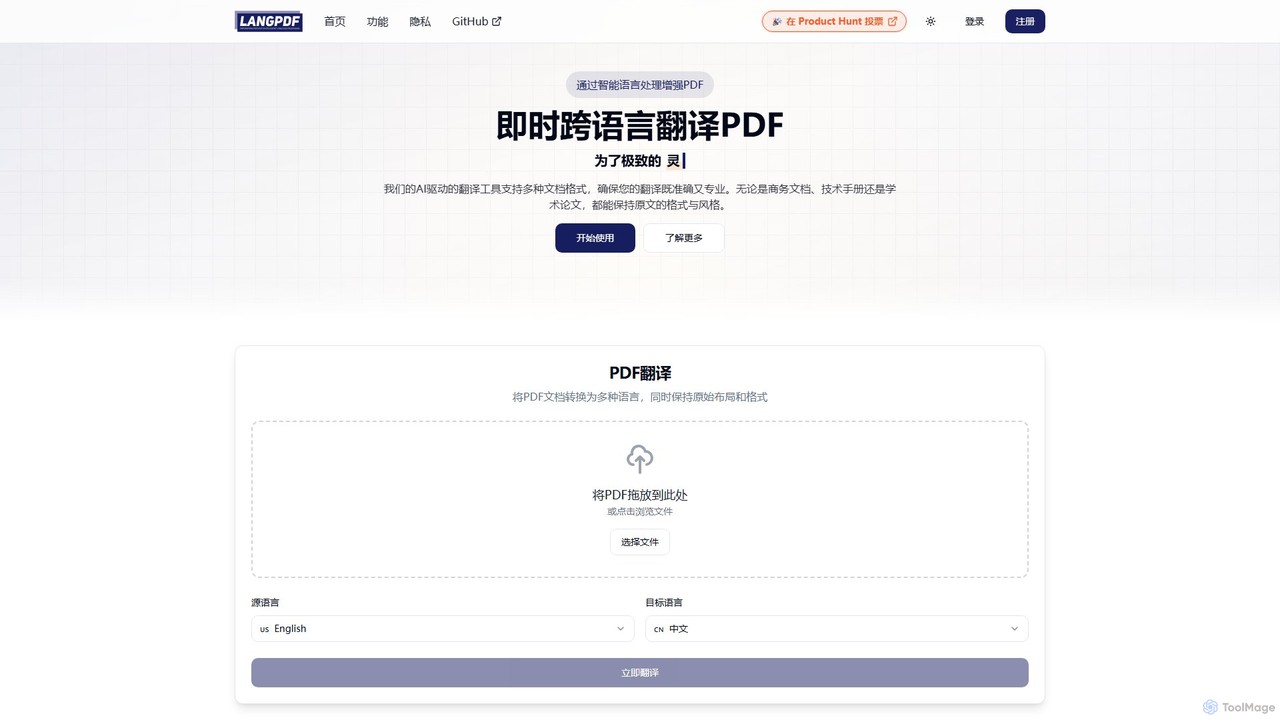
LangPDF is an AI-powered document translation tool that instantly translates PDFs and other documents into over 20 languages. …
LangPDF is an AI-powered document translation tool that instantly translates PDFs and other documents into over 20 languages. It specializes in preserving the original layout, formatting, tables, and images, ensuring professional and accurate results for business, academic, and technical content.
About Editing
AI Editing tools are applications that leverage natural language processing (NLP) to intelligently proofread, refine, and enhance written documents. Unlike basic spell checkers, these tools analyze context, grammar, style, and tone to provide comprehensive suggestions for improvement. They help users elevate the quality of their writing, ensuring clarity, consistency, and impact across various types of content. Many advanced tools can also adapt to specific style guides and check for plagiarism, acting as a sophisticated writing assistant.
Core Features
- Contextual Grammar & Spell Check: Identifies and corrects complex grammatical errors that traditional checkers miss.
- Style & Tone Adjustment: Provides suggestions to make writing more formal, casual, confident, or persuasive.
- Clarity & Conciseness Enhancement: Rephrases convoluted sentences and removes redundant words to improve readability.
- Consistency Checking: Ensures uniform terminology, formatting, and style across a single document or multiple files.
- Plagiarism Detection: Scans text against a vast database of online sources to identify potential unoriginal content.
Use Cases
These tools are widely used by content creators for polishing blog posts, marketing teams for ensuring brand voice consistency in copy, and academics for proofreading research papers and theses. In a business context, they are valuable for refining reports, proposals, and important email communications to maintain professionalism.
How to Choose
When selecting an AI Editing tool, consider the depth of its linguistic analysis and the range of suggestions it offers. Evaluate its integration capabilities with your existing writing platforms like Google Docs or Microsoft Word. Also, assess its ability to support custom style guides for team-wide consistency and review its data privacy policies, especially when handling sensitive documents.

EditingUse Cases
Polishing Academic Research Papers
A university researcher preparing a manuscript for journal submission uses an AI Editing tool to elevate the paper's quality. The tool goes beyond basic grammar checks, suggesting alternative phrasing for clarity, ensuring consistent use of technical terminology as defined by the field, and checking for passive voice overuse. It also helps reformat citations to match the journal's specific style guide (e.g., APA, MLA), significantly reducing the manual proofreading time and increasing the likelihood of acceptance by ensuring the document meets high academic standards.
Ensuring Brand Voice Consistency in Marketing
A corporate marketing team uses an AI Editing tool with a custom style guide feature. Before publishing blog posts, social media updates, or newsletters, all content is run through the tool. It automatically flags phrases that don't match the brand's upbeat tone, corrects industry jargon to customer-friendly language, and ensures product names are always capitalized correctly. This process automates a crucial part of the brand management workflow, ensuring all external communications are consistent and professional without requiring a human editor for every piece of content.
Streamlining Legal Document Review
A paralegal at a law firm is tasked with reviewing a 100-page contract for consistency. Instead of manually reading through it multiple times, they use an AI Editing tool. The tool is configured to check for consistent use of defined terms (e.g., 'The Tenant' vs. 'Lessee'), correct formatting of clauses, and ensure uniform date and currency formats. The AI can scan the entire document in minutes, generating a report of all inconsistencies. This drastically reduces the risk of human error in critical legal documents and frees up the paralegal's time for more substantive tasks.
Improving Internal Business Communications
An HR manager needs to draft a company-wide announcement about a new policy. To ensure the message is clear, professional, and empathetic, they use an AI Editing tool. The tool helps rephrase complex jargon into plain language, adjusts the tone to be supportive rather than authoritarian, and checks for any potentially ambiguous phrasing that could cause confusion. The result is a well-crafted communication that is easily understood by all employees, fostering trust and ensuring smooth implementation of the new policy.
Enhancing Technical Documentation for Clarity
A technical writer is creating a user manual for a new software product. They use an AI Editing tool to simplify complex technical descriptions and ensure the instructions are easy for non-expert users to follow. The tool suggests breaking down long, multi-step sentences into shorter, clearer bullet points. It also flags inconsistent terminology (e.g., switching between 'click' and 'select') and helps maintain a consistent, instructional tone throughout the document. This improves the user experience and reduces the number of support tickets related to unclear documentation.
Checking for Plagiarism in Student Essays
An educator uses an AI Editing tool's built-in plagiarism checker to review a batch of student essays. Instead of manually searching for phrases online, the tool automatically scans each document and compares it against a massive database of academic papers, websites, and publications. It generates a report highlighting any passages that match existing sources and provides a similarity score. This allows the educator to quickly identify potential academic integrity issues, provide targeted feedback to students, and uphold the institution's academic standards efficiently.