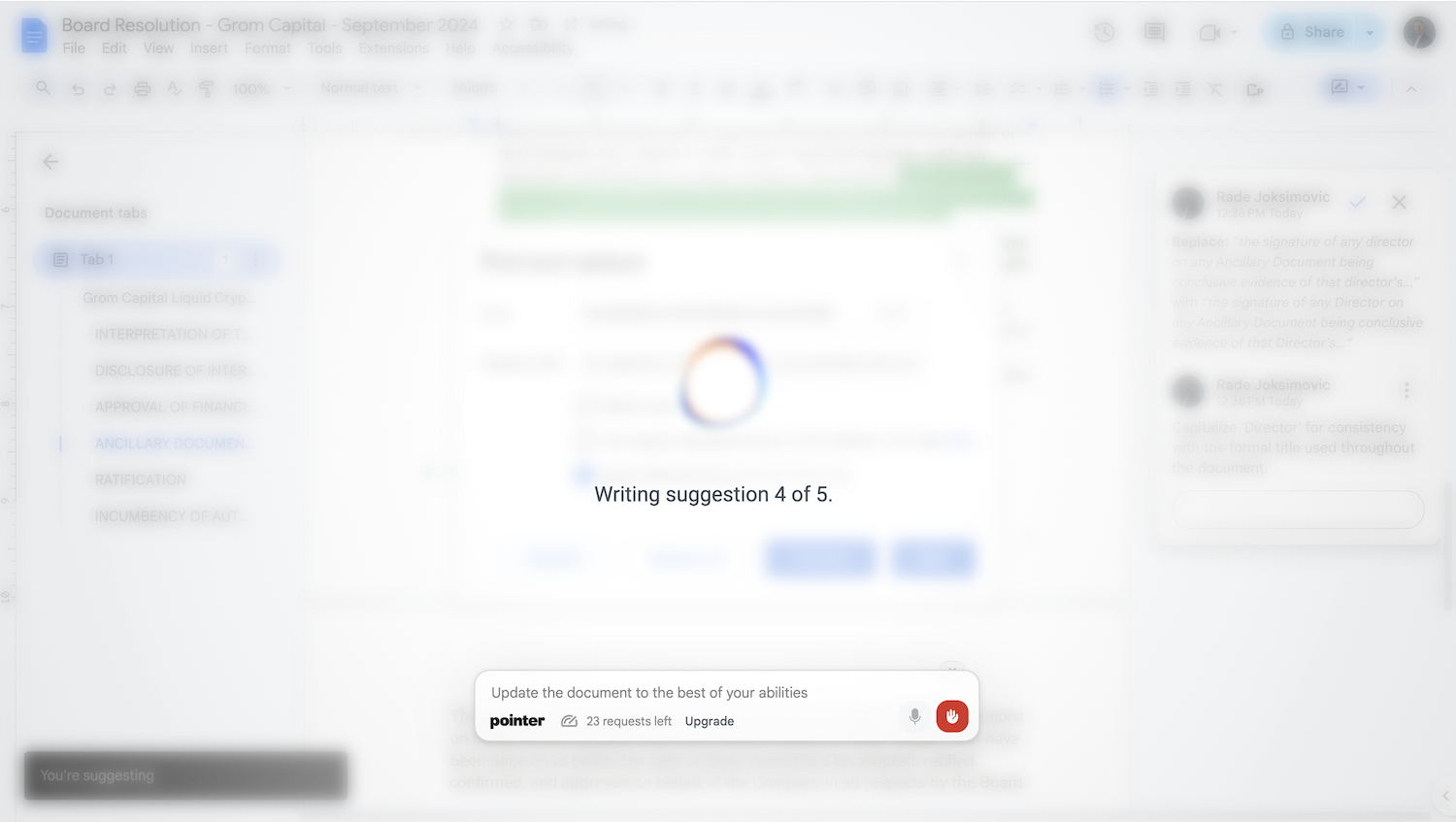
Document Tools are AI-powered applications designed to streamline and enhance various aspects of document creation, management, and analysis. These tools leverage advanced artificial intelligence, including natural language processing (NLP) and machine learning, to automate tasks that traditionally require significant manual effort. From generating summaries and drafting content to extracting critical information and ensuring linguistic accuracy, AI document tools significantly boost productivity and improve the quality of textual data across diverse industries.
Core Features
- Content Generation: Automatically drafts summaries, reports, emails, or creative text based on prompts or existing documents.
- Data Extraction & OCR: Accurately identifies and extracts specific data points (e.g., names, dates, amounts) from unstructured documents, including scanned images.
- Document Analysis: Provides insights into document content, such as sentiment analysis, topic modeling, or identifying key themes and entities.
- Automated Proofreading & Editing: Detects and corrects grammatical errors, stylistic inconsistencies, and suggests improvements for clarity and conciseness.
- Intelligent Search & Retrieval: Enables users to quickly find relevant information within large document repositories using natural language queries.
Use Cases
Professionals across legal, finance, healthcare, and marketing sectors utilize AI document tools to manage vast amounts of information. For instance, legal teams can rapidly review contracts, financial analysts can extract data from quarterly reports, and marketing specialists can generate diverse content variations for campaigns. These tools are invaluable for anyone dealing with high volumes of textual data, aiming to reduce manual processing time and enhance decision-making.
How to Choose
When selecting an AI document tool, consider its core functionalities (e.g., generation vs. extraction), the types of documents you handle, and its integration capabilities with existing workflows. Evaluate the accuracy of its AI models, especially for critical tasks like data extraction, and assess its scalability to meet future demands. Finally, compare pricing models and ensure the tool offers robust security and compliance features for sensitive information.