Sanitize Email
Sanitize Email is an enterprise-grade AI-powered email validation service designed to enhance deliverability, reduce bounce rates, and protect …
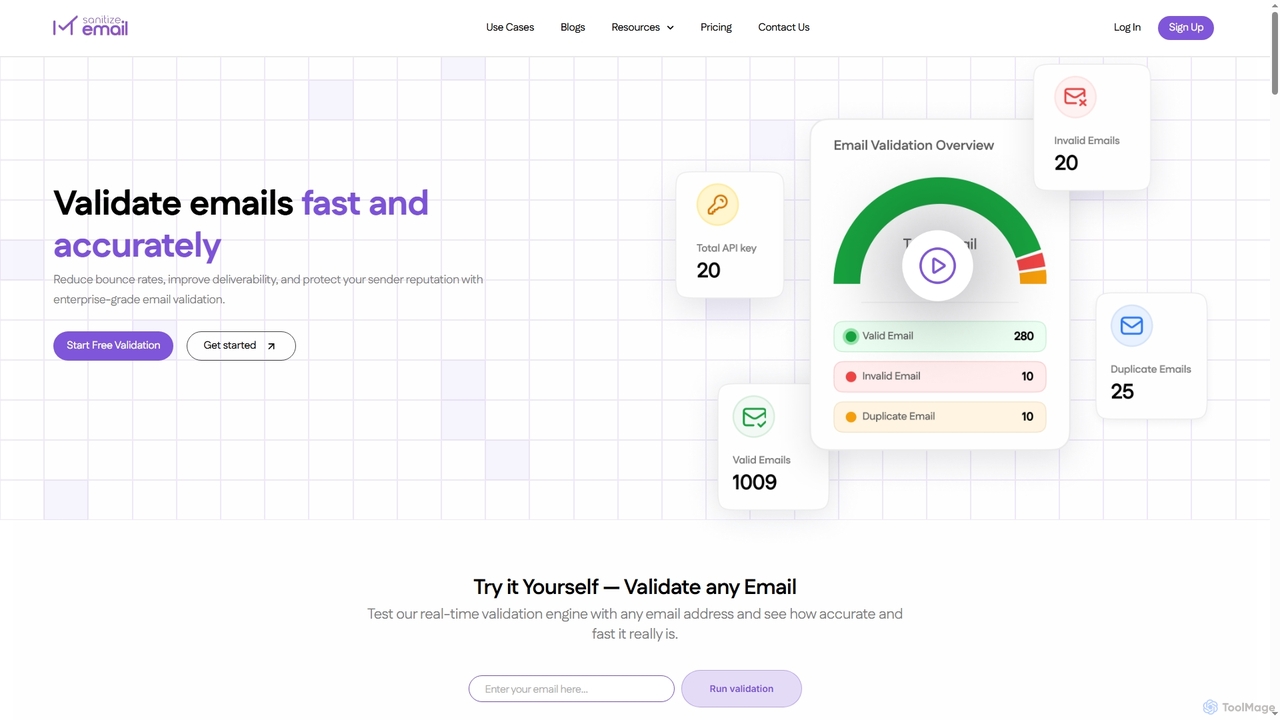
Sanitize Email is an enterprise-grade AI-powered email validation service designed to enhance deliverability, reduce bounce rates, and protect sender reputation. It offers fast, accurate bulk email verification, API integration, and fraud mitigation, ensuring your messages reach real customers and optimize marketing campaigns.
About Validation
Email validation tools are specialized AI-powered solutions designed to meticulously verify the authenticity and deliverability of email addresses within an email marketing list. These sophisticated tools leverage advanced algorithms to perform comprehensive checks, identifying syntax errors, validating domain existence, detecting spam traps, flagging disposable emails, and pinpointing other indicators of invalid or risky addresses. By proactively ensuring the pristine quality of email lists, these tools are instrumental in significantly reducing bounce rates, safeguarding sender reputation, and dramatically improving the overall effectiveness and ROI of email campaigns, positioning them as an indispensable component of any robust email marketing strategy.
Core Features
- Syntax Validation: Automatically checks email addresses against RFC standards to ensure correct formatting and structural integrity, preventing delivery failures due to malformed addresses.
- Domain Verification: Confirms that the email domain (e.g., @example.com) is legitimate, active, and properly configured to receive emails, including MX record checks.
- SMTP Connection & Mailbox Check: Simulates a connection to the mail server to determine if the mailbox is active and accepting messages, without actually sending an email, offering real-time deliverability insights.
- Spam Trap & Honeypot Detection: Identifies and flags email addresses specifically designed to catch spammers or monitor email activity, protecting your sender reputation from blacklisting.
- Disposable Email Address (DEA) Detection: Recognizes and filters out temporary or single-use email addresses from services like Mailinator, which can inflate list size and degrade engagement metrics.
- Role-Based Email Detection: Flags generic email addresses like info@, support@, or admin@, which often have lower engagement and can indicate shared inboxes.
Applicable Scenarios
Email validation tools are indispensable for a wide array of professionals and organizations heavily reliant on digital communication. Marketing teams utilize them extensively before launching new campaigns, ensuring high deliverability and maximizing engagement rates. Sales departments leverage these tools to verify lead contact information, reducing wasted outreach efforts. Customer support teams use them to maintain accurate user databases, improving communication efficiency. Furthermore, any business collecting email addresses via sign-up forms, lead magnets, or event registrations benefits immensely from proactively validating their lists to prevent wasted resources, maintain a positive sender reputation, and comply with email service provider policies.
How to Choose
When selecting an email validation tool, prioritize its accuracy rate and the breadth of checks it performs, such as real-time API validation for immediate verification versus efficient bulk list processing. Evaluate its seamless integration capabilities with your existing email marketing platforms (e.g., Mailchimp, HubSpot) and CRM systems. Carefully consider the pricing models, which typically scale with volume, and assess the quality of customer support, detailed reporting, and analytics features offered. Finally, ensure the tool adheres to critical data privacy regulations like GDPR, CCPA, and CAN-SPAM to guarantee legal and ethical data handling practices.

ValidationUse Cases
Reducing Bounce Rates for Marketing Campaigns
Marketing managers preparing for a major email campaign can use validation tools to clean their subscriber lists. By running the entire list through the validator, they identify and remove invalid, inactive, or spam trap email addresses before sending. This proactive step ensures that emails only reach legitimate inboxes, drastically reducing bounce rates, protecting sender reputation, and improving campaign deliverability and ROI.
Verifying New Leads from Sign-up Forms
Businesses often collect email addresses through website sign-up forms or lead generation efforts. Implementing real-time email validation API directly into these forms prevents invalid or fake emails from entering the CRM system. This ensures that sales teams receive high-quality leads with verifiable contact information, saving time and resources on follow-ups to non-existent addresses and improving lead conversion rates.
Maintaining CRM Data Quality and Accuracy
Customer Relationship Management (CRM) systems accumulate vast amounts of customer data over time, including email addresses that can become outdated or invalid. Data analysts or CRM administrators can periodically use bulk email validation to audit and cleanse their CRM database. This process ensures that customer communication channels remain effective, preventing failed deliveries and maintaining a reliable, up-to-date customer contact list for personalized outreach.
Protecting Sender Reputation from Spam Traps
Email service providers (ESPs) closely monitor sender reputation, which can be severely damaged by hitting spam traps or sending to honeypot addresses. Email marketers can leverage validation tools specifically for spam trap detection before importing new lists or reactivating old ones. This critical step helps identify and remove these dangerous addresses, safeguarding the sender's IP and domain reputation from blacklisting and ensuring future email deliverability.
Filtering Out Disposable Email Addresses for Service Sign-ups
Online services and platforms often face issues with users signing up using disposable email addresses (DEAs) to bypass registration limits or access free trials multiple times. Product managers or platform administrators can integrate real-time validation to detect and block DEAs during the registration process. This helps maintain the integrity of user accounts, prevents abuse of services, and ensures that users provide genuine contact information for long-term engagement.
Improving Deliverability for Transactional Emails
E-commerce businesses rely heavily on transactional emails (order confirmations, shipping updates, password resets) for customer communication. A high bounce rate for these critical emails can lead to poor customer experience and operational issues. By validating customer email addresses at the point of purchase or account creation, businesses ensure that these essential communications always reach their intended recipients, enhancing customer satisfaction and operational efficiency.