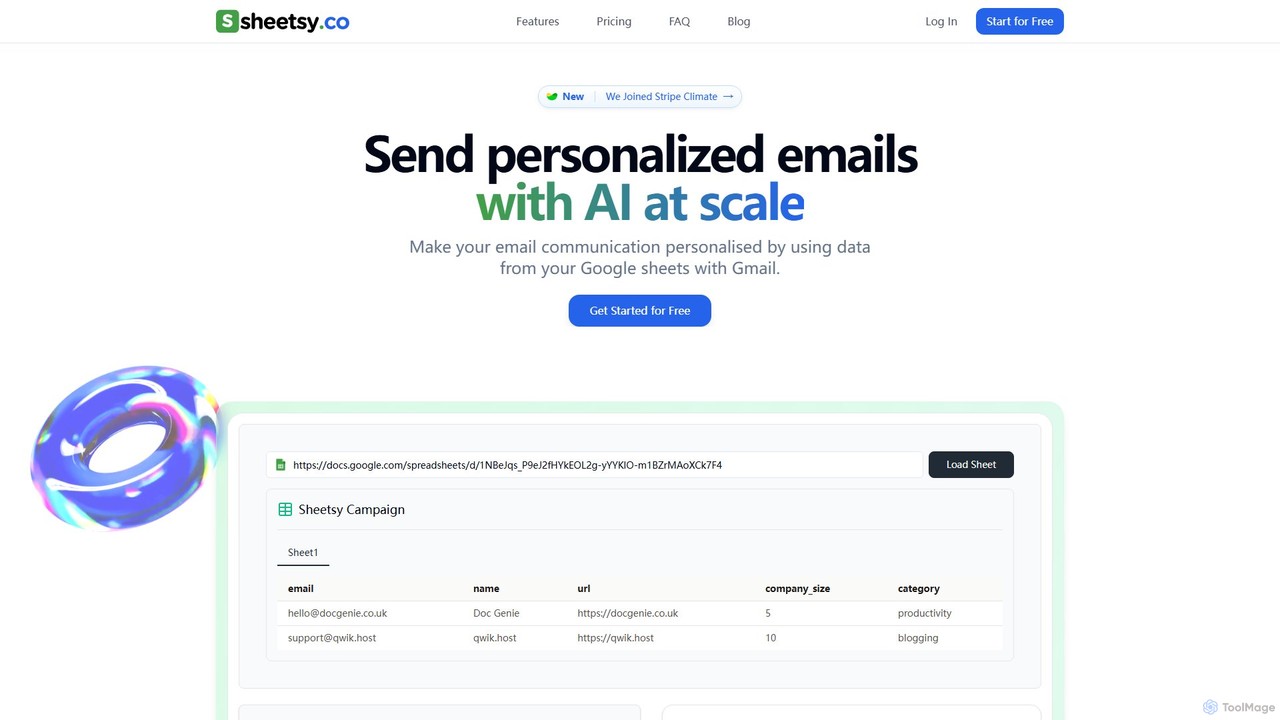
Personalization tools for email marketing leverage advanced AI to tailor email content, offers, and timing to individual recipients, moving beyond generic mass mailings. These sophisticated solutions meticulously analyze vast amounts of user data, including browsing history, purchase behavior, demographic information, and past engagement, to craft highly relevant and engaging messages. The primary objective is to significantly enhance email open rates, click-through rates, and conversion rates, ultimately fostering deeper customer loyalty and reducing unsubscribe rates. By dynamically adapting every aspect of an email, from compelling subject lines and personalized greetings to specific product recommendations and call-to-actions, these tools ensure each communication resonates uniquely and powerfully with its intended audience, driving more effective and impactful email campaigns.
Core Features
- Dynamic Content Generation: AI-driven engines automatically create and insert personalized text blocks, images, product recommendations, and special offers directly into emails, ensuring relevance for each subscriber.
- Advanced Behavioral Segmentation: Automatically groups subscribers into highly specific segments based on real-time actions, such as abandoned carts, recent purchases, specific page views, or content consumption, enabling hyper-targeted messaging.
- Predictive Analytics for Optimal Timing: Utilizes machine learning to forecast individual user preferences, predict future actions, and determine the optimal time to send emails for maximum engagement and conversion.
- Personalized Subject Line Optimization: Generates unique, compelling, and highly relevant subject lines for each recipient, significantly improving email open rates by capturing individual interest.
- Automated A/B Testing & Optimization: Continuously tests different personalized elements, layouts, and strategies across various segments to identify and automatically implement the most effective variations, maximizing campaign performance.
Applicable Scenarios
These tools are indispensable for e-commerce businesses aiming to drastically reduce abandoned cart rates and increase average order value by sending timely, tailored product suggestions and incentives. Content publishers and media companies utilize personalization to deliver highly relevant article recommendations, video suggestions, or newsletter summaries based on individual reading and viewing history, boosting readership and engagement. SaaS companies deploy personalization in their onboarding sequences, highlighting relevant features based on a user's in-app behavior and progress, thereby fostering faster adoption and long-term retention. Furthermore, any business focused on deepening customer relationships, driving repeat purchases, or maximizing the ROI of their email campaigns will find these AI-powered personalization tools invaluable for creating truly impactful one-to-one communication.
How to Choose
When selecting an AI personalization tool for email marketing, prioritize its data integration capabilities, ensuring seamless connectivity with your existing CRM, e-commerce platforms, and analytics systems to build a comprehensive, unified customer view. Evaluate the sophistication and accuracy of its AI algorithms for behavioral analysis, predictive modeling, and content generation, as these directly impact the quality and effectiveness of personalization. Consider the level of customization and flexibility it offers in defining personalization rules, segment criteria, and email templates, allowing for brand consistency and creative control. Finally, assess its scalability and performance to efficiently handle your current and anticipated subscriber volumes, campaign complexity, and data processing needs without compromising speed or accuracy.