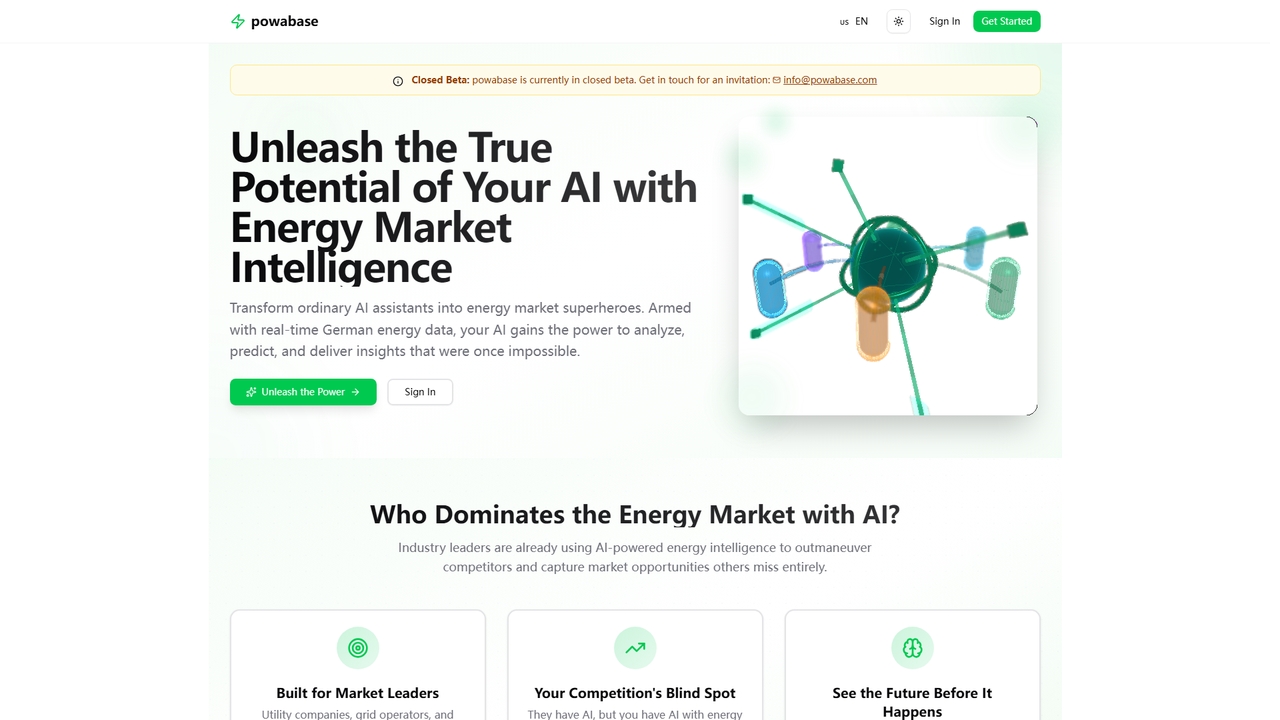
Powabase
An energy market intelligence platform that transforms AI assistants into experts by providing real-time, integrated German energy data. Currently in closed beta.
Business IntelligenceVisits 4.2KFavorites 12Likes 8
Popular Energy AI tools include Zeitview and Powabase, helping you work more efficiently.
An energy market intelligence platform that transforms AI assistants into experts by providing real-time, integrated German energy data. Currently in closed beta.
Business Intelligence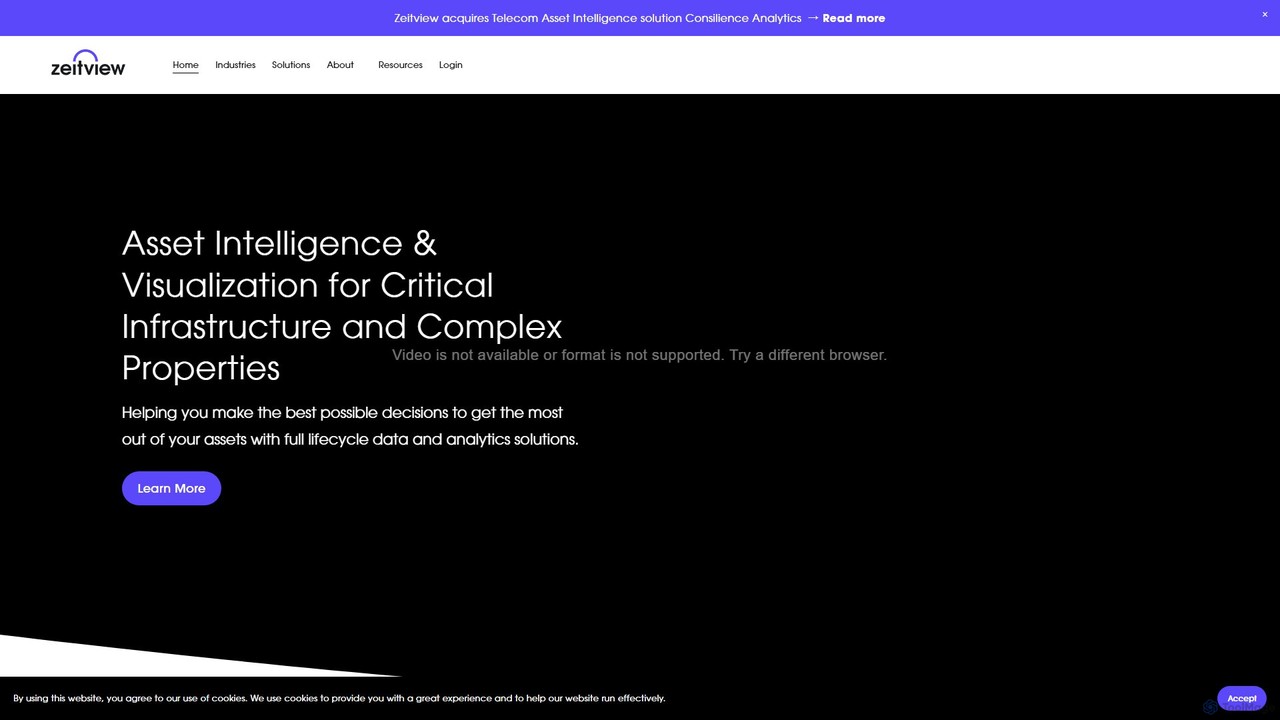
Zeitview provides AI-powered asset intelligence and visualization for critical infrastructure. By combining aerial data capture from drones and aircraft with advanced analytics, it offers actionable insights for the solar, wind, property, telecom, and utility industries, helping optimize performance, reduce costs, and enhance safety.
Asset ManagementEnergy AI tools are advanced platforms that leverage artificial intelligence to optimize various aspects of the energy sector, from generation and distribution to consumption and sustainability. These tools utilize machine learning, predictive analytics, and data processing to enhance efficiency, reliability, and decision-making across the entire energy value chain. They empower utilities, renewable energy producers, and industrial consumers to manage resources more effectively, reduce operational costs, and accelerate the transition to cleaner energy systems.
AI in the energy sector is applied across diverse scenarios, from large-scale power generation to individual consumption. Utilities use these tools for grid modernization and demand-side management, while renewable energy companies leverage them for optimizing farm layouts and predicting output. Industrial facilities implement AI for real-time energy monitoring and process optimization to reduce their carbon footprint and operational expenses.
When selecting AI energy tools, consider the specific challenges you aim to address, such as grid stability, renewable integration, or energy efficiency. Evaluate the tool's data integration capabilities with existing infrastructure, its scalability to handle growing data volumes, and the accuracy of its predictive models. Additionally, assess compliance with industry regulations and the level of technical expertise required for implementation and ongoing management.
Renewable energy operators, such as those managing solar or wind farms, utilize AI tools to forecast energy output with greater precision. By analyzing real-time weather data, historical performance, and grid conditions, AI algorithms can predict fluctuations in generation. This enables operators to optimize energy dispatch, reduce curtailment, and ensure a more stable and predictable supply to the grid, maximizing revenue and resource utilization.
Utility companies and industrial plant managers deploy AI for predictive maintenance of critical energy assets like transformers, turbines, and transmission lines. Sensors collect operational data, which AI models analyze to detect subtle anomalies and predict potential equipment failures before they occur. This proactive approach minimizes unplanned downtime, extends asset lifespan, reduces maintenance costs, and enhances overall grid reliability and safety.
Grid operators use AI-powered systems to dynamically balance electricity supply and demand across smart grids. These tools analyze real-time consumption patterns, generation forecasts, and market prices to optimize energy flow, prevent overloads, and integrate distributed energy resources more effectively. The result is a more resilient, efficient, and responsive power grid that can adapt to changing conditions and reduce energy waste.
Facility managers in commercial and large residential buildings leverage AI to optimize heating, ventilation, and air conditioning (HVAC) systems, lighting, and other energy-consuming equipment. AI analyzes occupancy patterns, external weather, and historical energy usage to adjust settings autonomously, ensuring comfort while significantly reducing energy consumption. This leads to substantial cost savings and a lower carbon footprint for the building.
Energy traders and producers in the oil and gas sector use AI to forecast global demand, supply, and price movements. By processing vast datasets including geopolitical events, economic indicators, and historical market trends, AI models provide more accurate predictions. This supports strategic decision-making in production planning, inventory management, and trading strategies, mitigating risks and optimizing profitability.
Companies across various industries utilize AI tools to monitor, report, and actively reduce their carbon emissions. AI analyzes energy consumption data, operational processes, and supply chain activities to identify emission hotspots and recommend actionable reduction strategies. This helps organizations meet sustainability goals, comply with environmental regulations, and improve their corporate social responsibility profile.
AI Energy tools are software solutions that apply artificial intelligence, primarily machine learning and data analytics, to optimize operations within the energy sector. They are designed to enhance efficiency, reliability, and sustainability across energy generation, transmission, distribution, and consumption. These tools help manage complex energy systems, predict future trends, and automate decision-making for better resource utilization.
AI tools improve energy efficiency by analyzing vast amounts of data from sensors, meters, and operational systems to identify patterns and inefficiencies. They can optimize processes like power generation, predict equipment failures to prevent energy waste, and intelligently manage energy consumption in buildings or industrial facilities. By providing real-time insights and automating adjustments, AI ensures energy is used more effectively, reducing overall consumption and costs.
The main applications of AI in the energy sector include smart grid management for balancing supply and demand, predictive maintenance for critical infrastructure, forecasting renewable energy output (solar, wind), optimizing energy consumption in commercial and industrial settings, and enhancing exploration and production in oil and gas. AI also plays a crucial role in energy trading, risk management, and accelerating the development of new energy technologies.
AI significantly contributes to renewable energy integration by improving the predictability and stability of intermittent sources like solar and wind. AI models forecast generation based on weather, optimize the dispatch of renewable power, and manage grid fluctuations caused by their variable nature. This enables grids to absorb higher percentages of renewable energy, reducing reliance on fossil fuels and supporting decarbonization efforts.
AI Energy tools address several critical challenges, including the intermittency of renewable energy sources, the complexity of managing modern grids, the need for increased energy efficiency, and the high costs associated with infrastructure maintenance. They also help in mitigating climate change by enabling better carbon emission monitoring and reduction strategies, and in optimizing resource allocation in volatile energy markets.