WhatNovel
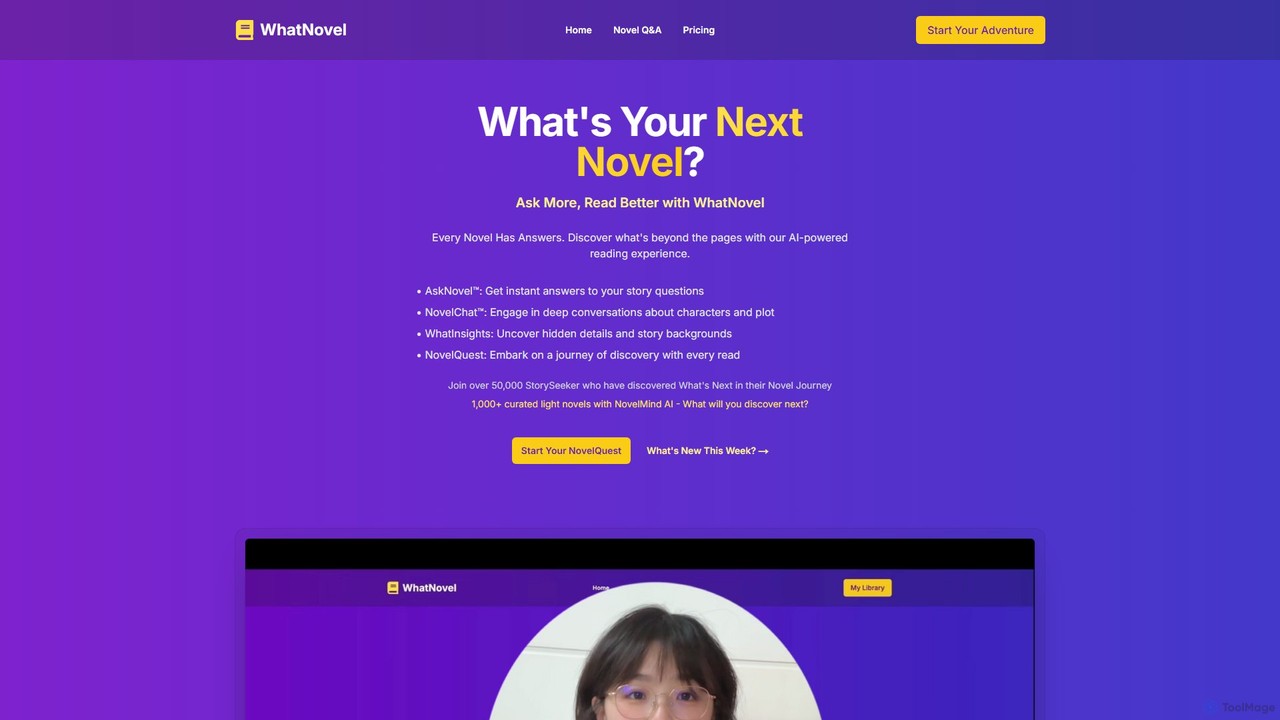
WhatNovel is an AI-powered platform that revolutionizes the reading experience for novel enthusiasts, particularly fans of light and …
WhatNovel is an AI-powered platform that revolutionizes the reading experience for novel enthusiasts, particularly fans of light and web novels. It offers interactive features like AI-driven Q&A about plots and characters (AskNovel™), AI-generated character visualizations (Flux & Phi models), and a global community chat (NovelChat™). Discover, discuss, and dive deeper into your favorite stories with personalized insights and immersive tools.
Naria
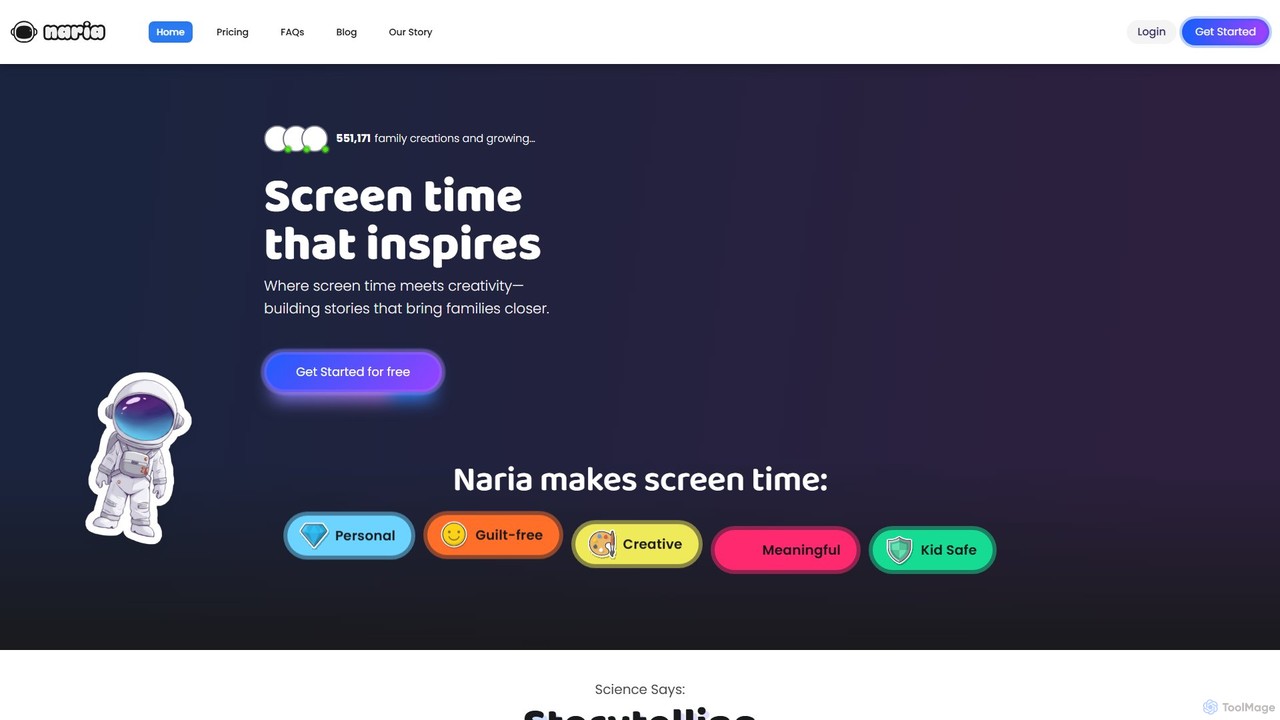
Naria is an AI-powered storytelling platform that transforms screen time into a creative and educational experience for families. …
Naria is an AI-powered storytelling platform that transforms screen time into a creative and educational experience for families. It allows users to create personalized characters and stories, fostering literacy, creativity, and emotional intelligence in children through interactive and collaborative fun.
illuminovel
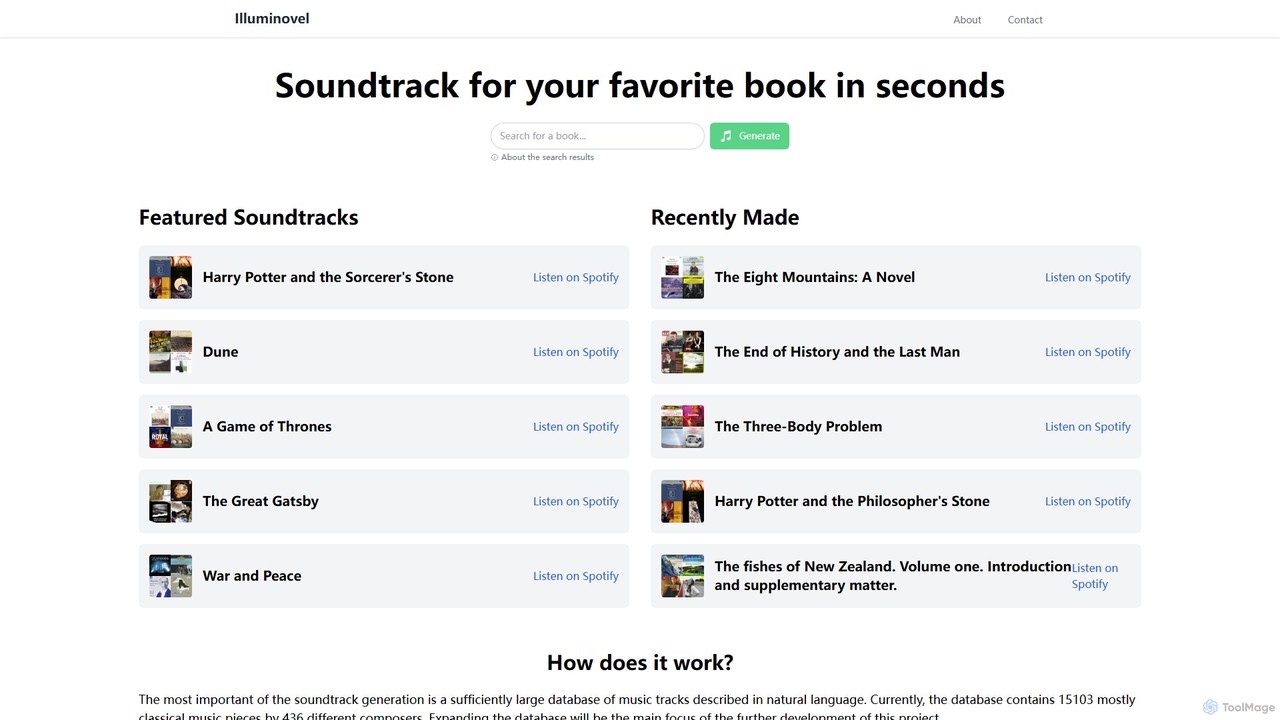
Illuminovel is a unique AI-powered tool that enhances your reading experience by generating custom soundtracks and character illustrations …
Illuminovel is a unique AI-powered tool that enhances your reading experience by generating custom soundtracks and character illustrations for your favorite books. Simply enter a book's title to receive a curated Spotify playlist that matches its mood and themes. It also uses advanced AI like Gemini to analyze book text and create stunning visual representations of characters, bringing the literary world to life in both sound and sight.
About Books
AI Books tools are a category of AI-powered applications designed to enhance various aspects of book creation, consumption, and interaction. Leveraging natural language processing and generative AI, these tools can assist with writing, summarizing, editing, and personalizing the reading experience. They empower authors, readers, and publishers to streamline workflows and discover new literary possibilities within the broader entertainment landscape.
Core Features
- AI Writing Assistance: Generates text, brainstorms plot ideas, develops characters, or suggests stylistic improvements for authors.
- Content Summarization: Automatically condenses lengthy books, articles, or chapters into concise summaries, saving reading time.
- Personalized Recommendations: Analyzes reading history and preferences to suggest new books, authors, or genres tailored to individual tastes.
- Editing & Proofreading: Identifies and corrects grammar errors, spelling mistakes, punctuation issues, and suggests stylistic enhancements.
- Text-to-Speech Conversion: Transforms written book content into natural-sounding audio, creating accessible audiobook versions.
Use Cases
These tools are invaluable for authors seeking creative inspiration or efficiency in drafting, students and researchers needing to quickly grasp key information from extensive texts, and avid readers looking for curated content. Publishers also utilize them for pre-publication checks and content adaptation.
How to Choose
When selecting an AI Books tool, consider its primary function (writing, reading, editing), the accuracy and quality of its AI output, language support, integration capabilities with your existing platforms, and its pricing model. Evaluate user reviews for reliability and ease of use.
BooksUse Cases
Creative Story Generation
An aspiring novelist uses an AI writing assistant to generate initial plot outlines, character backstories, and dialogue prompts, overcoming writer's block and accelerating the drafting process. This allows them to explore multiple creative directions quickly and focus on refining their narrative, saving weeks of brainstorming time.
Academic Text Summarization
A university student employs an AI summarizer to quickly extract key arguments and findings from multiple research papers and textbook chapters, significantly reducing study time for exams and essays. This ensures they grasp core concepts without reading every word, improving efficiency by up to 50%.
Personalized Reading Discovery
An avid reader leverages an AI recommendation engine that analyzes their past reads and ratings to suggest new books and authors from niche genres, expanding their literary horizons. This helps them discover hidden gems they might otherwise miss, enriching their reading journey with highly relevant content.
Efficient Book Editing & Proofreading
An independent author utilizes an AI editing tool to identify grammatical errors, stylistic inconsistencies, and punctuation mistakes in their manuscript, ensuring a polished final draft before publication. This process significantly reduces the time and cost associated with professional human editing, making self-publishing more accessible.
Content Repurposing for Marketing
A book marketer uses AI to transform excerpts from a newly published book into engaging social media captions, blog post snippets, or email newsletter content, reaching a wider audience. This automates content creation for various platforms, ensuring consistent messaging and saving hours of manual adaptation.
Interactive Language Learning with Literature
A language learner uses an AI tool to translate complex sentences or explain cultural nuances within a foreign language novel, enhancing comprehension and vocabulary acquisition. This interactive approach makes learning more engaging and contextual, allowing learners to immerse themselves in authentic texts without constant dictionary lookups.