
Entrepreneurship Best in category 1 results Problem Solving AI Tool

Popular AI tools in the Problem Solving field of Entrepreneurship include Hustle Hunter, etc., helping you quickly improve efficiency.

Hustle Hunter

Hustle Hunter

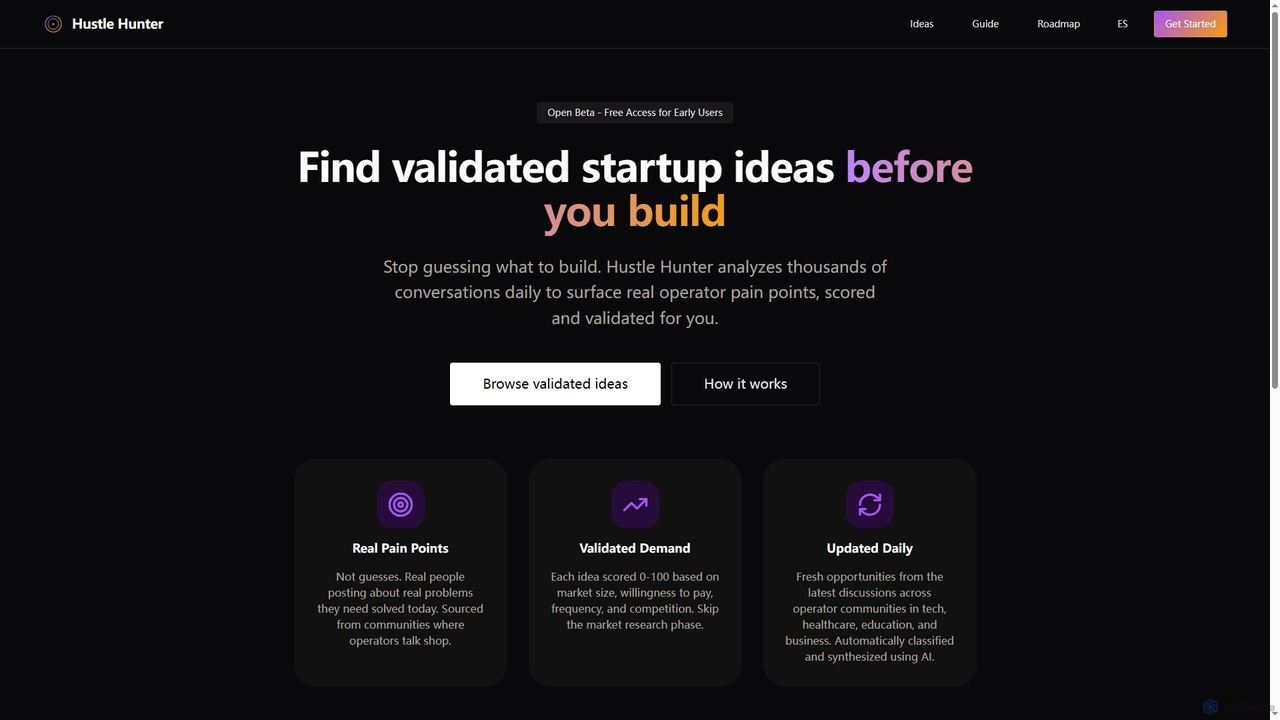
Hustle Hunter is an AI-powered platform designed for solo founders to discover validated startup ideas. It analyzes thousands …

2.7K

About Problem Solving

AI-powered Problem Solving tools are designed to systematically analyze complex issues and generate actionable insights. They leverage advanced algorithms, machine learning, and data analytics to identify patterns, predict outcomes, and propose data-backed solutions. These tools empower entrepreneurs and businesses to make informed decisions, optimize strategies, and overcome operational hurdles, significantly enhancing efficiency and decision quality.

Core Features

  • Root Cause Analysis: Automatically identifies underlying factors contributing to a problem.
  • Predictive Modeling: Forecasts potential outcomes of different scenarios and solutions.
  • Solution Generation: Proposes innovative and data-backed solutions to identified problems.
  • Decision Support Systems: Provides structured insights and recommendations for optimal choices.
  • Scenario Planning & Simulation: Allows users to test various strategies in a simulated environment.

Applicable Scenarios

Entrepreneurs and businesses utilize these tools for strategic planning, operational optimization, and risk management. They are crucial for diagnosing bottlenecks in supply chains, formulating competitive market entry strategies, and improving product development prioritization.

How to Choose

When selecting an AI problem-solving tool, consider its ability to handle your specific problem complexity and scope. Evaluate its data integration capabilities with existing systems, the actionability of its proposed solutions, and the intuitiveness of its user interface and customization options.

Problem SolvingUse Cases

1

Optimizing Supply Chain Logistics

A manufacturing startup uses AI to analyze historical data on production, inventory, and shipping, identifying bottlenecks and predicting demand fluctuations. The tool recommends optimal inventory levels and routing strategies, reducing costs and improving delivery times, crucial for maintaining competitiveness in the entrepreneurial landscape.

2

Optimizing Supply Chain Logistics

A manufacturing company's logistics manager uses AI problem-solving tools to analyze historical shipping data, identify common delays, and predict potential disruptions. The tool suggests optimized routes, inventory levels, and carrier selections, reducing operational costs by 15% and improving delivery times.

3

Predicting Customer Churn

An e-commerce business employs Problem Solving AI to analyze customer behavior, purchase history, and interaction data. The AI identifies customers at high risk of churning and suggests personalized retention strategies, such as targeted offers or proactive support outreach, directly impacting revenue and customer lifetime value for entrepreneurs.

4

Predicting and Preventing Customer Churn

A SaaS startup's customer success team employs AI to analyze user behavior, support interactions, and subscription data. The tool identifies high-risk customers likely to churn, pinpoints the root causes (e.g., specific feature issues, lack of engagement), and recommends personalized retention strategies, leading to a 10% reduction in churn rate.

5

Strategic Market Entry Analysis

An entrepreneur planning to launch a new product uses AI to analyze market trends, competitor strategies, and consumer demographics. The tool provides insights into optimal pricing, target segments, and potential market barriers, informing a data-driven entry strategy that minimizes risks and maximizes success for new ventures.

6

Strategic Market Entry Analysis

An entrepreneur planning international expansion utilizes AI problem-solving platforms to evaluate various market entry strategies. The tool analyzes economic indicators, competitive landscapes, regulatory environments, and consumer preferences in target regions, providing data-driven recommendations for the most viable and profitable approach.

7

Identifying Operational Inefficiencies

A service-based company utilizes AI to monitor workflow processes, resource allocation, and employee performance data. The AI pinpoints inefficient steps, underutilized resources, or recurring issues, recommending process improvements to boost productivity and reduce operational costs, a common challenge for growing entrepreneurial ventures.

8

Diagnosing IT System Performance Issues

An IT operations team uses AI tools to monitor system logs, network traffic, and application performance metrics. The AI automatically detects anomalies, identifies the root cause of performance bottlenecks or outages, and suggests specific configuration changes or resource allocations, minimizing downtime and improving system reliability.

9

Financial Risk Assessment & Forecasting

A small business owner uses AI to analyze financial statements, market indicators, and economic forecasts. The tool predicts cash flow issues, identifies potential financial risks, and generates various future scenarios, aiding in proactive financial planning and strategic decision-making crucial for entrepreneurial stability and growth.

10

Improving Product Development Prioritization

A product manager leverages AI problem-solving to analyze user feedback, market demand, and development costs. The tool helps identify which features will deliver the highest user satisfaction and business value, while considering resource constraints, enabling more strategic and impactful product roadmap decisions.

11

Personalized Product Development Insights

A tech startup developing a new app uses AI to analyze user feedback, feature requests, and usage patterns. The tool identifies unmet user needs and prioritizes features for development, ensuring the product evolves based on data-driven insights, which is vital for rapid iteration and market fit in entrepreneurship.

12

Optimizing Marketing Campaign Return

A marketing team uses AI to analyze past campaign performance, audience demographics, and conversion data. The tool identifies underperforming elements, suggests improvements in targeting, messaging, and channel allocation, and predicts the potential ROI of different campaign adjustments, leading to more effective ad spend.

Problem SolvingFrequently Asked Questions