Hustle Hunter
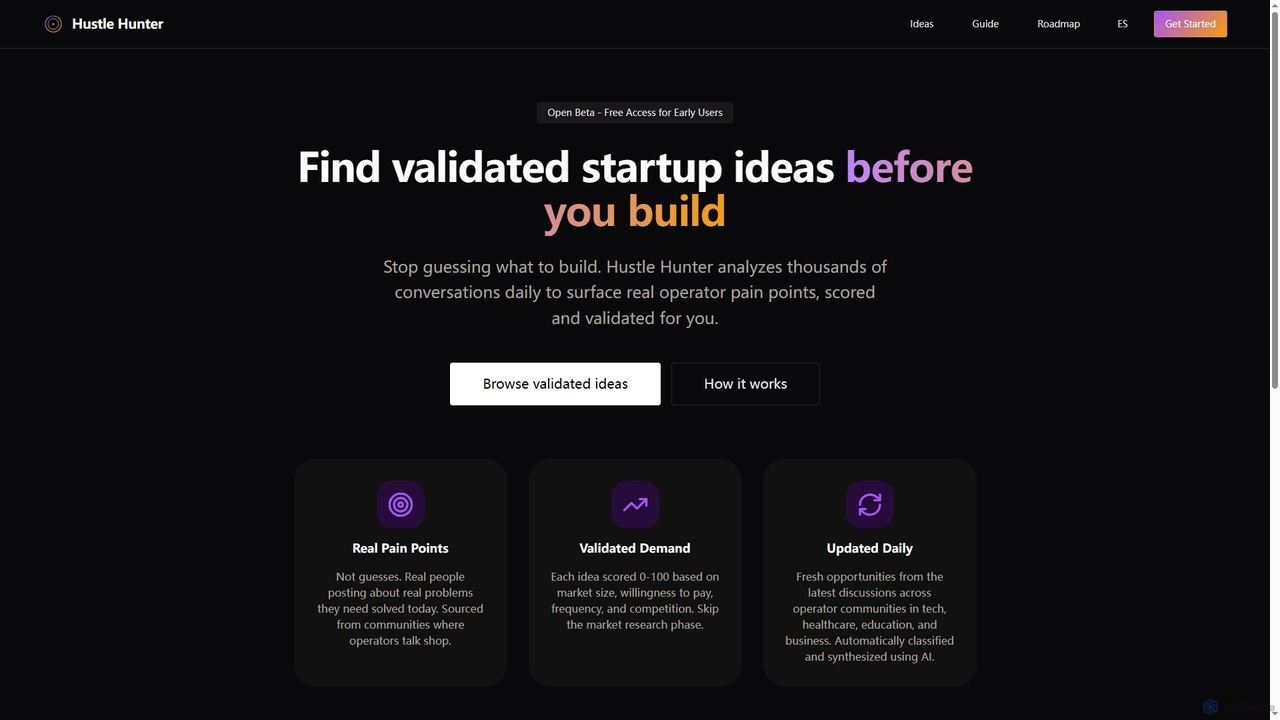
Hustle Hunter is an AI-powered platform designed for solo founders to discover validated startup ideas. It analyzes thousands …
Hustle Hunter is an AI-powered platform designed for solo founders to discover validated startup ideas. It analyzes thousands of online conversations daily to identify real operator pain points, scoring them based on market size, willingness to pay, frequency, and competition, helping entrepreneurs build solutions with confirmed demand.
Aibizgen
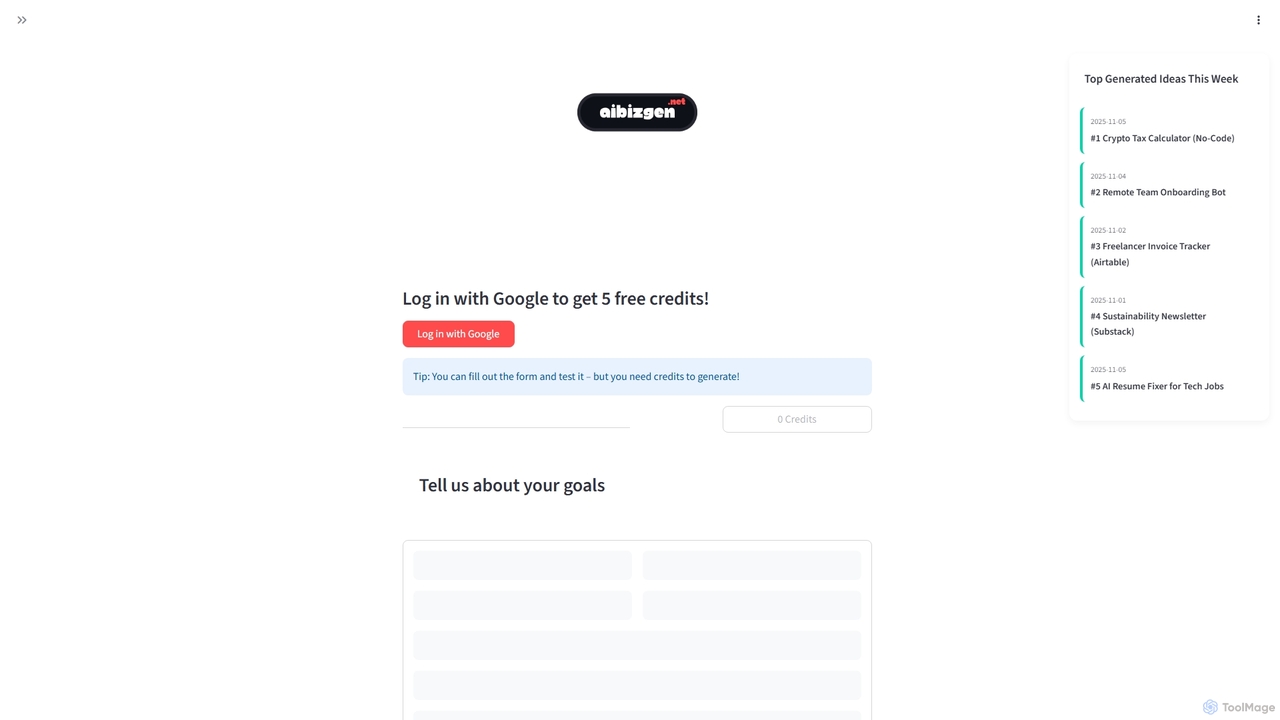
Aibizgen is an AI-powered business idea generator designed to help entrepreneurs and side hustlers quickly discover profitable, no-code …
Aibizgen is an AI-powered business idea generator designed to help entrepreneurs and side hustlers quickly discover profitable, no-code business concepts. It eliminates guesswork by leveraging advanced AI to generate tailored business plans based on user goals, enabling rapid launch of ventures like crypto tax calculators or remote team onboarding bots.
About Entrepreneurship
Entrepreneurship AI tools are a category of artificial intelligence-powered solutions designed to support individuals and startups throughout their entrepreneurial journey. These tools leverage advanced algorithms and machine learning to automate tasks, provide insights, and streamline various business processes. They empower founders to make data-driven decisions, optimize resource allocation, and accelerate growth from ideation to market entry. By integrating AI, entrepreneurs can overcome common challenges and build resilient, scalable ventures more efficiently.
Core Features
- Business Plan Generation: AI assists in structuring comprehensive business plans, market analysis, and financial projections.
- Market Research & Analysis: Tools analyze vast datasets to identify market trends, competitor strategies, and target audience insights.
- Automated Marketing & Sales: AI-driven platforms create personalized marketing content, manage campaigns, and optimize sales funnels.
- Financial Modeling & Forecasting: Generate accurate financial models, predict revenue, and manage cash flow with AI-powered analytics.
- Legal & Compliance Assistance: AI helps navigate legal requirements, draft basic contracts, and ensure regulatory compliance for startups.
Use Cases
Entrepreneurship AI tools are utilized across various stages of business development. Early-stage founders use them for validating business ideas and creating initial pitches. Growing startups leverage these tools for scaling marketing efforts, optimizing customer acquisition, and managing financial health. Established small businesses can also benefit from AI for continuous market analysis and operational efficiency improvements.
How to Choose
Selecting the right Entrepreneurship AI tool involves evaluating several factors. Consider the specific stage of your business (ideation, launch, growth) and the core challenges you aim to solve. Assess the tool's feature set, ensuring it aligns with your needs for market research, financial planning, or marketing automation. Evaluate ease of use, integration capabilities with existing platforms, and the scalability of its solutions. Finally, compare pricing models and customer support to find a solution that offers the best value and long-term support for your venture.
EntrepreneurshipUse Cases
Generating a Comprehensive Business Plan for a New Venture
A first-time founder needs to articulate their vision and strategy to potential investors. Using an entrepreneurship AI tool, they input their business idea, target market, and basic financial assumptions. The AI then generates a structured business plan, complete with market analysis, competitive landscape, operational strategy, and detailed financial projections, saving weeks of manual research and writing.
Generating Comprehensive Business Plans
A first-time founder needs to articulate their vision and strategy to potential investors. Using an AI entrepreneurship tool, they input their business idea, target market, and financial assumptions. The AI then generates a structured business plan, complete with market analysis, competitive landscape, operational strategy, and financial projections, significantly reducing the time and expertise required for this critical document.
Validating Business Ideas with Market Insights
Aspiring entrepreneurs can use AI market research tools to quickly analyze industry trends, identify unmet customer needs, and assess the competitive landscape. By inputting their business concept, the AI generates comprehensive reports on market size, potential customer segments, and SWOT analysis, helping founders validate their ideas before significant investment. This process saves weeks of manual research and provides data-backed confidence.
Conducting Rapid Market Research for Product Launch
A product manager is preparing to launch a new SaaS solution and needs to understand market demand and competitor positioning quickly. The AI tool analyzes vast amounts of online data, including social media trends, news articles, and competitor websites, to provide insights into target audience preferences, emerging opportunities, and potential market gaps, informing product features and marketing messages.
Conducting Rapid Market Research and Validation
A startup is exploring a new product idea and needs to quickly assess market demand and competitive positioning. An AI tool can analyze vast amounts of online data, including social media trends, news articles, and competitor websites, to provide insights into target audience preferences, market gaps, and potential challenges. This allows the entrepreneur to validate their concept with data-driven evidence before committing significant resources.
Automating Content Creation for Startup Marketing
Startup marketing teams often have limited resources. AI content generation tools enable them to produce high-quality blog posts, social media updates, and email newsletters rapidly. By providing a few keywords or a brief outline, the AI drafts engaging copy, allowing marketers to maintain a consistent online presence and attract potential customers without extensive writing efforts, significantly boosting content output.
Creating a Compelling Investor Pitch Deck
A startup CEO is seeking Series A funding and needs a professional, data-driven pitch deck to impress venture capitalists. The entrepreneurship AI tool helps structure the narrative, suggests key data points to highlight, and generates visually appealing slides with charts and graphs based on uploaded financial data and business milestones, significantly reducing design time and enhancing persuasive power.
Crafting Persuasive Investor Pitch Decks
An entrepreneur is preparing for a crucial fundraising round and needs a compelling pitch deck. AI tools can assist by generating engaging content for each slide, suggesting relevant data points, and even designing visual layouts. By inputting key company information and funding goals, the AI helps create a professional and impactful presentation that effectively communicates the startup's value proposition and growth potential to investors.
Streamlining Financial Projections and Budgeting
Founders need robust financial plans to secure funding and manage growth. AI financial modeling tools help entrepreneurs create accurate revenue forecasts, expense budgets, and cash flow statements. These tools can simulate various scenarios, such as different pricing strategies or market conditions, providing clear insights into financial viability and potential risks, which is crucial for investor presentations and strategic planning.
Developing a Tailored Digital Marketing Strategy
A small e-commerce business owner wants to expand their online presence and attract more customers. The AI tool analyzes their product catalog, target demographics, and existing marketing efforts. It then recommends specific channels (e.g., Instagram ads, email campaigns, SEO keywords), suggests content topics, and outlines a phased marketing strategy designed to maximize ROI and customer engagement.
Automating Early-Stage Marketing Content Creation
A lean startup team needs to establish an online presence and attract early adopters but lacks dedicated marketing resources. An AI entrepreneurship tool can generate social media posts, blog outlines, email marketing copy, and ad creatives based on product descriptions and target audience profiles. This automation ensures consistent brand messaging and frees up the team to focus on product development and customer engagement.
Optimizing Customer Acquisition through Personalized Outreach
Small businesses and startups can leverage AI sales and marketing platforms to identify high-potential leads and personalize outreach campaigns. The AI analyzes customer data to segment audiences, recommend optimal communication channels, and even draft tailored email sequences. This targeted approach increases conversion rates and builds stronger customer relationships more efficiently than generic mass marketing.
Automating Financial Forecasting and Budgeting
A startup CFO needs to accurately forecast revenue and expenses for the next fiscal year and manage cash flow effectively. The AI tool integrates with accounting software, analyzes historical financial data, and applies predictive models to generate detailed financial forecasts, budgets, and cash flow statements. This enables proactive financial planning and identifies potential funding needs or surplus.
Streamlining Financial Forecasting and Budgeting
A startup founder needs to manage cash flow and project future financial performance to secure funding and make strategic decisions. AI tools can integrate with accounting software to analyze historical data, predict revenue and expenses, and create detailed financial forecasts. This helps in identifying potential financial risks, optimizing budget allocation, and providing clear financial transparency to stakeholders.
Assisting with Legal Document Generation and Compliance
Navigating legal complexities is a common challenge for new businesses. AI legal assistance tools can help entrepreneurs generate standard legal documents like non-disclosure agreements (NDAs), terms of service, or privacy policies. They also provide guidance on regulatory compliance relevant to the startup's industry and location, reducing the need for expensive legal consultations for routine tasks.
Drafting Legal Documents for Business Operations
A new entrepreneur requires standard legal documents like non-disclosure agreements (NDAs) or service contracts but lacks legal expertise. An entrepreneurship AI tool provides templates and assists in drafting these documents by prompting for specific details, ensuring legal compliance and accuracy. This significantly reduces legal costs and accelerates the onboarding of partners or employees.
Drafting Essential Legal Documents
A startup requires various legal documents, such as Non-Disclosure Agreements (NDAs) for potential partners or Terms of Service for its website, but legal fees are prohibitive. An AI-powered legal assistant can generate customized, legally sound documents by asking a series of guided questions. This ensures compliance, protects intellectual property, and allows the startup to operate securely without incurring high initial legal costs.
Enhancing Operational Efficiency with AI-driven Project Management
For growing teams, managing projects and tasks efficiently is critical. AI-powered project management tools can automate task assignments, predict project timelines, and identify potential bottlenecks based on team performance data. This allows entrepreneurs to optimize resource allocation, ensure projects stay on track, and improve overall team productivity, leading to faster product development and delivery.