
Enqufy
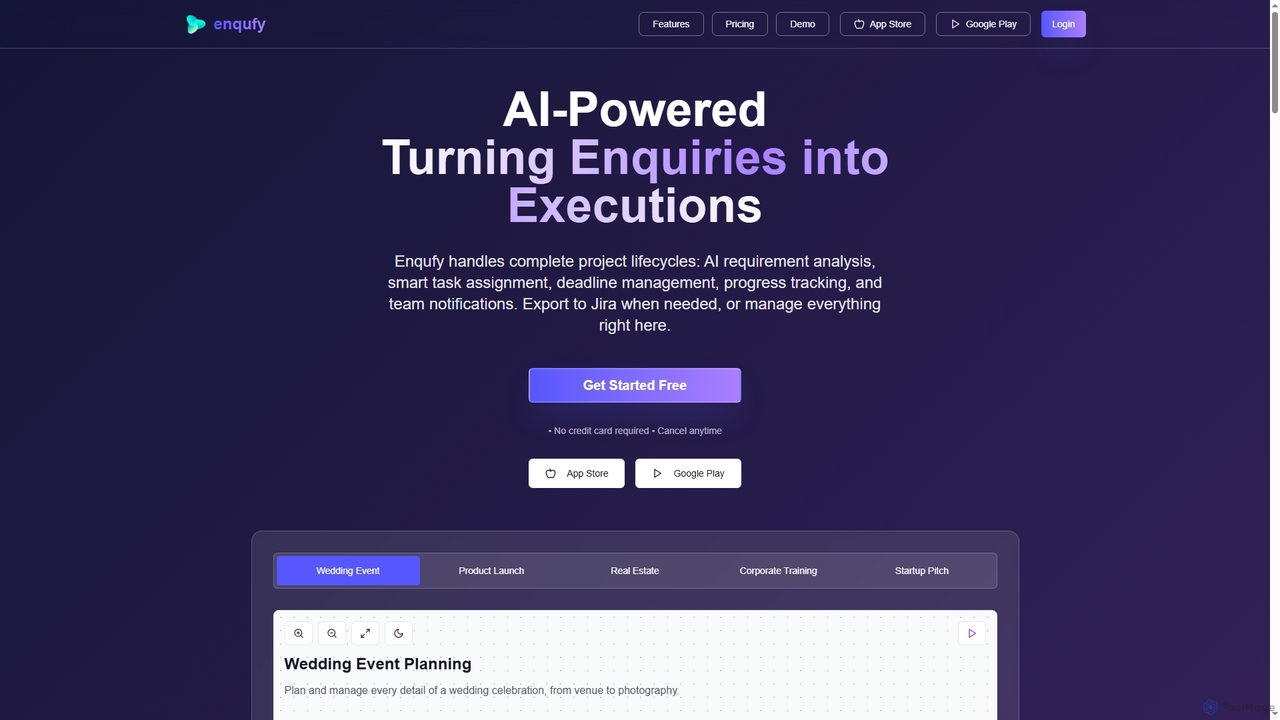
Enqufy is an AI-powered workflow automation platform designed to transform enquiries into structured, actionable project lifecycles. It streamlines …
Enqufy is an AI-powered workflow automation platform designed to transform enquiries into structured, actionable project lifecycles. It streamlines task assignment, deadline management, and team collaboration, offering real-time progress tracking and performance analytics for businesses of all sizes. Available on web and mobile, it enhances efficiency and productivity across diverse industries.
About Planning
AI Planning tools are specialized applications within event management that automate and optimize the foundational stages of organizing an event. These tools leverage machine learning algorithms to analyze data, predict outcomes, and generate actionable insights for tasks like budgeting, scheduling, and resource allocation. They empower organizers to make data-driven decisions from the outset, significantly reducing manual research and mitigating potential risks before they arise. This focus on the pre-event phase distinguishes them from broader event management platforms.
Core Features
- Predictive Budgeting: Analyzes historical data and market trends to forecast event costs with high accuracy.
- Intelligent Venue Scouting: Recommends optimal venues based on capacity, budget, attendee demographics, and accessibility.
- Automated Agenda & Timeline Creation: Generates logical and engaging event schedules by considering speaker availability, session dependencies, and audience engagement patterns.
- Resource Allocation Optimization: Suggests the most efficient distribution of staff, equipment, and materials based on projected needs.
- Risk Assessment & Mitigation: Identifies potential logistical or financial risks early in the planning process and proposes contingency plans.
Use Cases
These tools are invaluable for corporate event planners, conference organizers, wedding planners, and festival production managers. They are used to lay the groundwork for large-scale conferences by modeling attendee flow, for planning multi-day festivals by optimizing stage schedules, or for creating detailed project plans for high-stakes product launches. Any professional tasked with the strategic inception of an event benefits from their analytical capabilities.
How to Choose
When selecting an AI Planning tool, consider the complexity of your events. Evaluate the tool's data analysis capabilities—does it offer robust forecasting and what-if scenarios? Assess its integration potential with other software like CRMs or marketing automation platforms. Also, consider the user interface's intuitiveness and the level of customization available for reporting and dashboards to ensure it aligns with your specific planning workflow.
PlanningUse Cases
Planning a Corporate Sales Conference
A corporate event manager is tasked with organizing an annual sales conference for 500 attendees from different regions. Using an AI Planning tool, they input attendee location data, budget constraints, and desired conference dates. The AI analyzes flight and accommodation costs, suggesting the most cost-effective host city and dates. It then generates a shortlist of suitable venues with capacity and AV equipment matching the requirements. Finally, it drafts a multi-track agenda by analyzing past conference feedback to schedule popular topics during peak engagement slots, reducing planning time by over 40%.
Optimizing a Multi-Day Music Festival Layout
A festival production team needs to plan the logistics for a three-day music festival with multiple stages and over 50,000 daily visitors. They use an AI Planning tool to model crowd flow and optimize the placement of stages, food vendors, restrooms, and emergency exits. The AI simulates various scenarios to prevent bottlenecks and ensure smooth movement. It also helps create the performance schedule by analyzing artist genres and popularity to minimize sound bleed between stages and sequence acts to build energy throughout the day, enhancing attendee experience and safety.
Drafting a Wedding Day Timeline
A professional wedding planner is managing a complex wedding with multiple locations: a ceremony at a church, photos at a park, and a reception at a hotel. They use an AI Planning tool to create a minute-by-minute timeline. By inputting vendor arrival times, travel durations between locations, and key event moments (e.g., vows, first dance), the AI generates a synchronized schedule for the couple, vendors, and wedding party. It automatically flags potential conflicts, such as insufficient travel time or overlapping vendor setups, allowing the planner to resolve issues proactively and ensure a seamless event.
Forecasting Budget for a Non-Profit Gala
A non-profit organization is planning its annual fundraising gala. The event coordinator uses an AI Planning tool's predictive budgeting feature. They input the target number of guests, desired catering level, and entertainment options. The tool analyzes historical cost data from similar local events and vendor pricing trends to generate a detailed budget forecast. It breaks down estimated costs for venue rental, catering, AV, and marketing. The AI also runs 'what-if' scenarios, showing how changing the guest count or catering choice impacts the total budget, enabling the organization to make informed financial decisions and maximize fundraising potential.
Scheduling a Global Virtual Summit
An online education company is organizing a 24-hour virtual summit for a global audience. The event planner uses an AI tool to create an optimal schedule. The AI analyzes the geographic distribution of registered attendees and suggests a schedule that maximizes live participation by placing keynote sessions in time slots that overlap with the waking hours of the largest audience segments. It also helps group related sessions into thematic blocks and automatically schedules breaks, preventing attendee fatigue and ensuring a coherent and engaging learning experience across all time zones.
Identifying Key Influencers for a Product Launch
A marketing agency is planning a launch event for a new tech gadget. To maximize media buzz, they use an AI Planning tool to identify the most relevant influencers and journalists to invite. The tool scans social media and news outlets, analyzing content for relevance to the product's niche, audience engagement rates, and sentiment. It generates a prioritized list of potential attendees, complete with contact information and engagement metrics. This data-driven approach replaces hours of manual research and ensures the invitation list is composed of individuals with the highest potential impact, optimizing the event's PR outcome.