Finance Best in category 3 results Credit Management AI Tool

Popular AI tools in the Credit Management field of Finance include Harbr、Natic、Aicreditrepair, etc., helping you quickly improve efficiency.

Natic

Natic

Natic is a software studio dedicated to crafting innovative utility applications that enhance daily productivity, streamline development workflows, …

3.2K
Aicreditrepair

Aicreditrepair

Aicreditrepair is an AI-powered platform designed to simplify and automate the credit repair process. It intelligently analyzes your …

3.2K
Harbr

Harbr

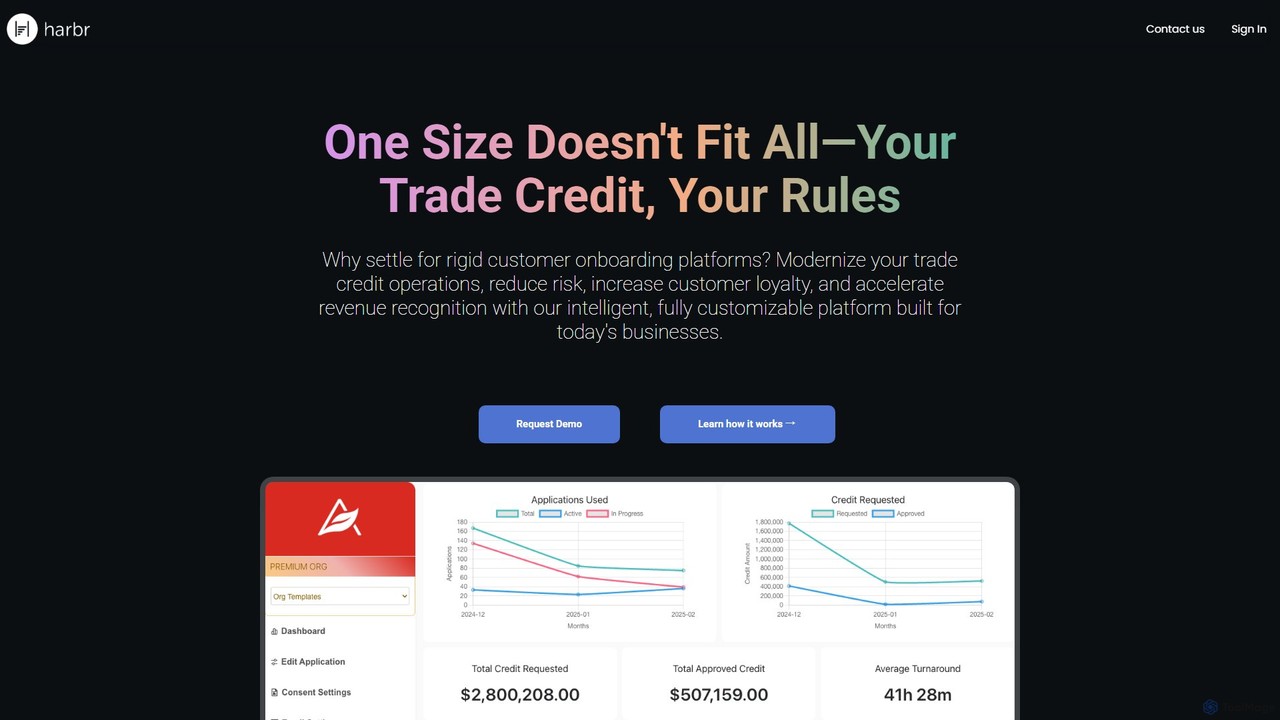
Harbr is an intelligent, fully customizable trade credit management platform. It leverages AI and automation to help businesses …

7.9K

About Credit Management

Credit Management tools are AI-powered platforms designed to automate and optimize the entire credit lifecycle, from application to collection. They leverage machine learning algorithms to analyze vast datasets, enabling highly accurate credit risk assessment and scoring. This allows lenders and businesses to make faster, data-driven decisions, significantly reducing default rates and improving portfolio health. These systems often incorporate predictive analytics to proactively identify potential risks before they escalate.

Core Features

  • Automated Credit Scoring: Utilizes AI to assess creditworthiness based on traditional and alternative data sources.
  • Predictive Default Analysis: Forecasts the probability of a borrower defaulting on a loan or payment.
  • Real-time Portfolio Monitoring: Continuously tracks the credit health of an entire loan or customer portfolio.
  • Automated Underwriting: Streamlines the process of evaluating and approving or denying credit applications.
  • Compliance Automation: Helps ensure adherence to financial regulations such as KYC (Know Your Customer) and AML (Anti-Money Laundering).

Use Cases

These tools are essential for financial institutions like banks and credit unions, fintech companies offering lending services, and B2B enterprises managing trade credit. Credit analysts, loan officers, and risk managers use them to evaluate new applicants, manage credit limits for existing customers, and maintain a healthy overall credit portfolio.

How to Choose

When selecting a Credit Management tool, consider its data integration capabilities with your existing systems and external data sources. Evaluate the accuracy and customizability of its AI models for your specific risk appetite. Ensure it meets all relevant regulatory compliance standards and offers the scalability to grow with your business volume.

Credit ManagementUse Cases

1

Automating Small Business Loan Underwriting

A fintech lender uses an AI credit management platform to streamline its small business loan application process. The tool automatically ingests and analyzes applicants' financial statements, real-time bank transaction data, and industry benchmarks. Its machine learning model assesses risk and generates a credit score in minutes, a process that previously took days. This allows the lender to provide faster funding decisions, serve more clients, and reduce manual underwriting costs by over 70%.

2

Real-time B2B Trade Credit Assessment

A large manufacturing company integrates an AI credit management tool into its sales process. When a new corporate customer requests payment terms, the sales team can instantly generate a risk profile. The AI analyzes the customer's payment history, financial stability, and market data to recommend a suitable credit limit and terms. This minimizes the risk of late payments or defaults in B2B transactions and empowers the sales team to close deals faster with confidence.

3

Proactive Portfolio Risk Management

A regional bank employs an AI platform to continuously monitor its entire consumer loan portfolio. The system tracks thousands of data points for each borrower, including payment behavior and external economic indicators. It uses predictive analytics to identify customers who are showing early signs of financial distress and are at a higher risk of future default. This enables the bank's risk team to proactively reach out with support or restructuring options, reducing overall portfolio losses.

4

Dynamic Credit Limit Adjustments for BNPL Services

An e-commerce platform offering a "Buy Now, Pay Later" (BNPL) option uses an AI credit management tool to manage user credit limits dynamically. The system analyzes a user's purchase history, repayment behavior, and browsing patterns in real-time. Based on this data, it can automatically increase the credit limit for reliable customers to encourage larger purchases or decrease it for users exhibiting risky behavior, optimizing revenue while controlling risk.

5

Optimizing Debt Collection Strategies

A collections agency leverages an AI tool to enhance its recovery process. The platform segments delinquent accounts based on factors like the likelihood of payment, the best time to contact, and the most effective communication channel (call, email, or SMS). By tailoring the collection strategy for each individual, the agency increases its recovery rate, improves operational efficiency, and ensures compliance with communication regulations.

6

Streamlining KYC and AML Compliance

A global financial institution uses an AI-powered credit management system to automate its Know Your Customer (KYC) and Anti-Money Laundering (AML) checks. During customer onboarding, the tool verifies identities against global databases and screens for sanctions or political exposure. It also monitors ongoing transactions in real-time to detect unusual patterns indicative of fraudulent or illicit activities, automatically flagging them for review and ensuring regulatory adherence.

Credit ManagementFrequently Asked Questions