Synchronymax
Synchronymax is an AI Agent Platform designed to augment your workforce with specialized AI agents. It enhances productivity …
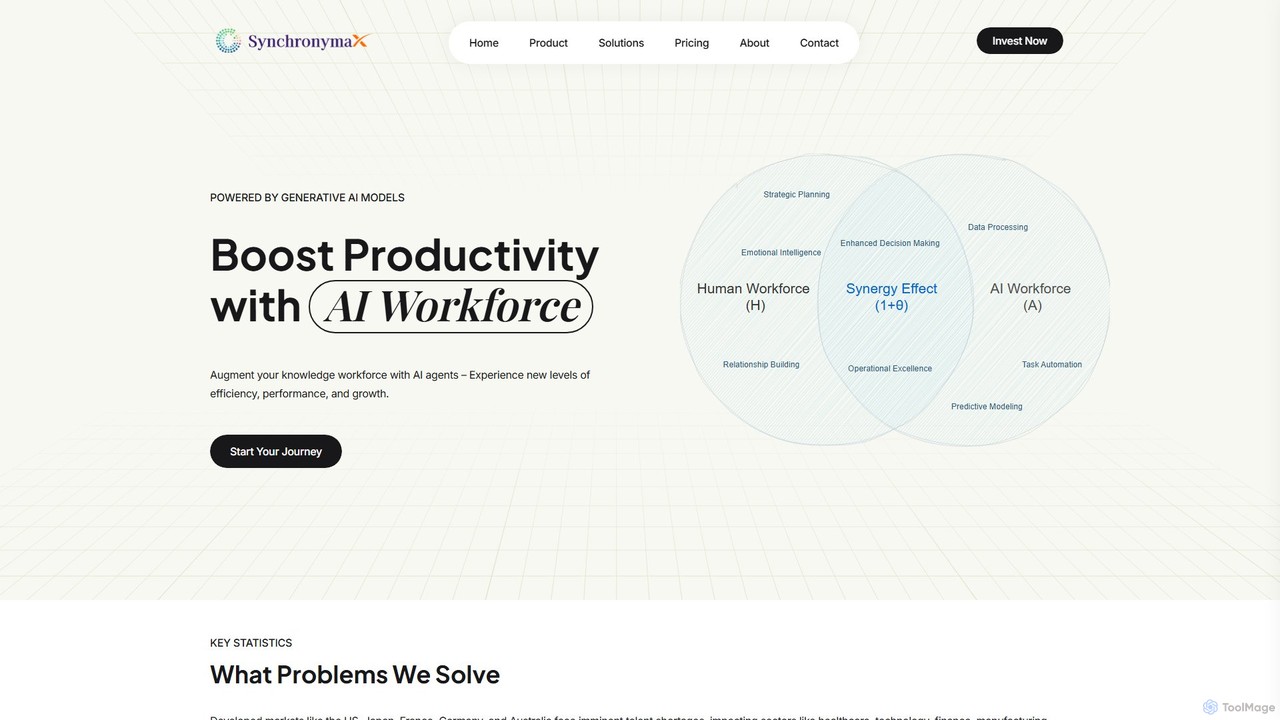
Synchronymax is an AI Agent Platform designed to augment your workforce with specialized AI agents. It enhances productivity and bridges skill gaps by automating business processes, providing real-time decision support, and integrating seamlessly with existing systems across industries like healthcare, finance, and technology.
plutis
plutis is an AI-powered Point of Sale (POS) system designed to revolutionize business management for retail, restaurants, and …
plutis is an AI-powered Point of Sale (POS) system designed to revolutionize business management for retail, restaurants, and service industries. It goes beyond simple transactions by providing intelligent sales forecasting, automated inventory management, and deep customer analytics to drive growth and efficiency.
About Management
AI Management tools in finance are specialized platforms that use machine learning and data analysis to automate and optimize financial oversight and decision-making. These tools process vast amounts of financial data to identify trends, predict outcomes, and streamline complex management tasks. They empower businesses and individuals to manage assets, assess risks, and forecast financial performance with greater accuracy and efficiency. This leads to more informed strategic planning and improved financial health.
Core Features
- Predictive Forecasting: Utilizes historical data and market trends to generate accurate financial forecasts for revenue, cash flow, and expenses.
- Automated Portfolio Management: Continuously monitors investment portfolios and automatically rebalances assets based on predefined risk tolerance and market conditions.
- AI-driven Risk Assessment: Identifies and quantifies financial risks, such as credit default or market volatility, by analyzing complex datasets.
- Intelligent Expense Tracking: Automatically categorizes expenses, detects anomalies, and identifies opportunities for cost savings.
Use Cases
These tools are widely used by corporate finance departments for strategic planning, investment firms for portfolio optimization, and financial analysts for market research. Small businesses also leverage them for automated bookkeeping and cash flow management, while individuals use them for personal wealth management and investment tracking.
How to Choose
When selecting an AI Management tool for finance, consider its integration capabilities with your existing accounting or banking systems. Evaluate the sophistication of its analytical models and its suitability for your specific needs (e.g., portfolio management vs. corporate finance). Also, assess the user interface's intuitiveness and the provider's data security protocols.
ManagementUse Cases
Automating Portfolio Risk Analysis for Investment Firms
An investment manager at a hedge fund uses an AI Management tool to continuously monitor a diverse portfolio of assets. The AI analyzes real-time market data, news sentiment, and economic indicators to calculate risk exposure for each holding. When the portfolio's overall risk score exceeds a predefined threshold, the system automatically suggests rebalancing actions, such as selling high-risk assets and acquiring more stable ones. This process reduces manual analysis time by hours each day and enables faster, data-driven responses to market volatility, ultimately protecting client capital.
Intelligent Cash Flow Forecasting for Corporate Finance
A corporate finance team uses an AI Management tool to predict future cash flow. By integrating with the company's ERP and accounting software, the tool analyzes historical transaction data, sales pipelines, and seasonal trends. It generates a rolling 12-month cash flow forecast, highlighting potential shortfalls or surpluses. This allows the CFO to make proactive decisions, such as securing a line of credit in advance of a predicted cash crunch or investing excess cash strategically. The AI's accuracy surpasses traditional spreadsheet models, leading to better working capital management.
Automated Expense Categorization and Anomaly Detection
A small business owner connects their bank accounts and credit cards to an AI Management tool. The platform automatically ingests all transactions, uses natural language processing to understand transaction descriptions, and categorizes them for tax purposes (e.g., 'Office Supplies', 'Travel', 'Software Subscriptions'). The AI also learns the business's typical spending patterns and flags unusual transactions, such as a duplicate charge or an unexpectedly large purchase, for manual review. This eliminates hours of manual data entry each month and helps prevent fraudulent charges.
Personalized Investment Strategy Generation for Individuals
An individual investor uses an AI-powered financial management app to plan for retirement. After inputting their age, income, risk tolerance, and retirement goals, the AI model simulates thousands of market scenarios. It then recommends a diversified portfolio of ETFs and mutual funds tailored to the user's profile. The app provides a clear rationale for its recommendations and shows projected growth over time. It also sends alerts to the user when market shifts suggest a need to adjust their strategy, empowering them to manage their long-term investments with confidence.
AI-Powered Due Diligence for Mergers and Acquisitions
A private equity firm evaluating a potential acquisition uses an AI management platform to accelerate the due diligence process. Analysts upload financial statements, contracts, and internal documents from the target company into the system. The AI scans thousands of pages in minutes, extracting key financial metrics, identifying potential risks in contract clauses (like change-of-control provisions), and flagging inconsistencies across documents. This allows the deal team to focus their attention on critical issues, significantly reducing the time and manual effort required for thorough due diligence.
Strategic Financial Scenario Modeling for CFOs
A Chief Financial Officer (CFO) uses an AI management tool for strategic planning. The tool allows the CFO to model various financial scenarios, such as the impact of a 10% increase in material costs, a new market entry, or a potential economic downturn. The AI simulates the effects of these variables on the company's profit and loss statement, balance sheet, and cash flow. This provides a dynamic, data-backed foundation for board-level discussions and helps the company prepare contingency plans for a range of possible futures, enhancing financial resilience.