
Daylit
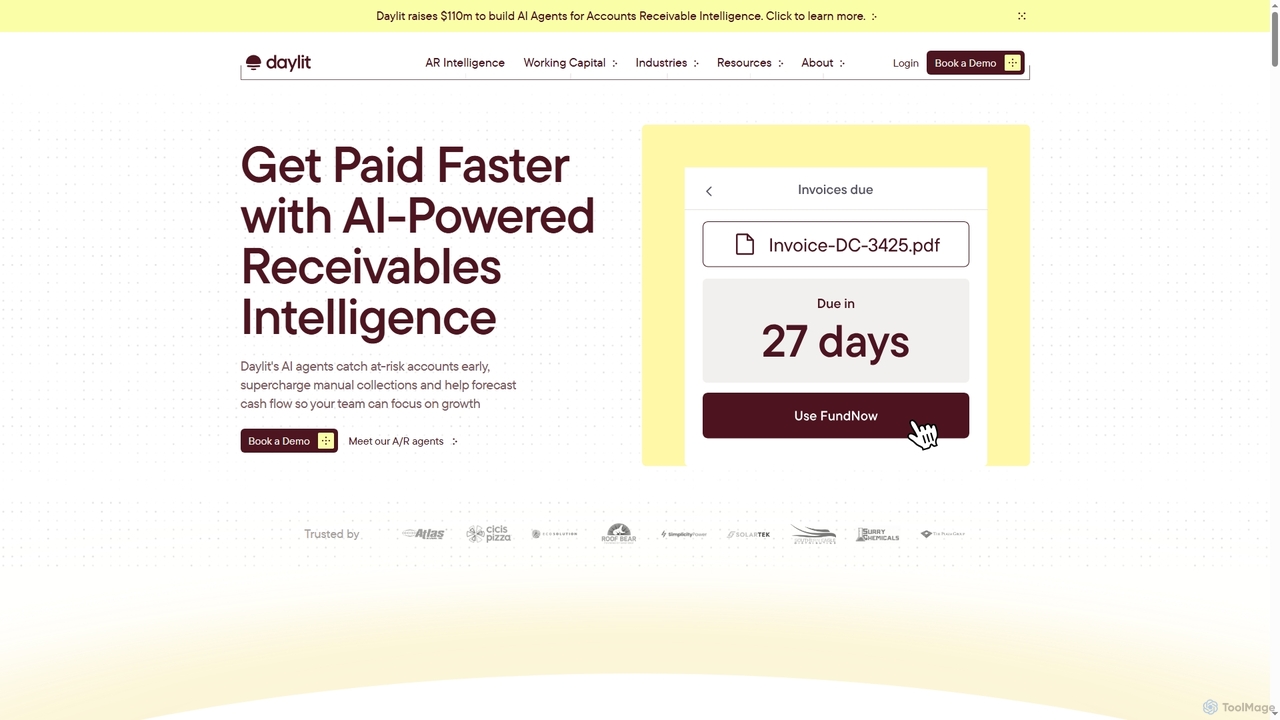
Daylit is an AI-powered platform for accounts receivable intelligence and working capital solutions. It uses AI agents to …
Daylit is an AI-powered platform for accounts receivable intelligence and working capital solutions. It uses AI agents to automate collections, track receivables, forecast cash flow, and identify at-risk accounts, helping businesses get paid faster and optimize financial operations.
About Working Capital
AI Working Capital tools are specialized platforms that use machine learning to analyze, forecast, and optimize a company's short-term liquidity. These tools process data from accounts receivable, accounts payable, and inventory to provide predictive insights into cash flow. This enables businesses to improve their cash conversion cycle, reduce financing costs, and make proactive financial decisions. Unlike general accounting software that records past events, these tools focus on predicting future cash positions and recommending actions to enhance operational efficiency.
Core Features
- Cash Flow Forecasting: Utilizes AI models to predict future cash inflows and outflows with high accuracy.
- AR & AP Automation: Automates invoice processing, collection reminders, and payment scheduling to accelerate cash cycles.
- Dynamic Discounting Analysis: Identifies and recommends optimal early payment discount opportunities from suppliers.
- Credit Risk Assessment: Analyzes customer payment behavior to predict late payments and assess creditworthiness.
- Inventory Optimization: Recommends ideal inventory levels to minimize holding costs and free up cash.
Applicable Scenarios
These tools are crucial for finance departments in industries like manufacturing, retail, and wholesale distribution where managing inventory and payment cycles is critical. For example, a CFO can use them to simulate the impact of different payment terms on liquidity, while a finance manager can automate the dunning process for overdue invoices, improving collection efficiency.
Selection Criteria
When choosing an AI Working Capital tool, evaluate its integration capabilities with your existing ERP and accounting systems. Assess the accuracy and transparency of its forecasting models. Consider the level of automation for AR/AP processes and ensure the platform complies with robust data security standards like SOC 2 or ISO 27001.
Working CapitalUse Cases
Automating Accounts Receivable Collections
A finance team at a mid-sized B2B service company uses an AI Working Capital tool to reduce their Days Sales Outstanding (DSO). The platform integrates with their accounting software, analyzes customer payment histories, and automatically sends personalized payment reminders. It predicts which invoices are at high risk of late payment, allowing the collections team to prioritize their follow-up calls. This proactive approach reduces manual effort and accelerates cash inflow, improving overall liquidity.
Optimizing Supplier Payment Schedules
A manufacturing company's treasury department uses an AI tool to manage accounts payable more strategically. The system analyzes cash flow forecasts, supplier payment terms, and dynamic discounting opportunities. Instead of paying all invoices on a fixed schedule, the AI recommends the optimal payment date for each supplier. This allows the company to hold onto cash longer when needed or capture valuable early payment discounts, effectively using their capital to reduce costs or improve liquidity.
Real-time Cash Flow Forecasting for SMEs
A small e-commerce business owner connects their bank accounts, payment gateways, and accounting software to an AI Working Capital platform. The tool provides a continuously updated, real-time cash flow forecast, eliminating the need for manual spreadsheet management. It visualizes future cash positions, highlighting potential shortfalls weeks in advance. This allows the owner to make timely decisions, such as delaying a non-essential purchase or securing a short-term credit line, ensuring the business remains solvent during periods of fluctuating sales.
Proactive Liquidity Risk Management
A corporate CFO uses an AI platform for scenario planning and stress testing the company's working capital. The tool can simulate the impact of various events, such as a sudden drop in sales, a major customer defaulting on payment, or supply chain disruptions. By running these simulations, the CFO can identify potential liquidity gaps in advance and develop contingency plans, such as arranging backup credit facilities or adjusting inventory strategies, making the company more resilient to market volatility.
Optimizing Inventory Levels to Free Up Cash
A retail company with multiple warehouses uses an AI tool to optimize its inventory management. The system analyzes historical sales data, seasonality, supplier lead times, and demand forecasts to recommend optimal stock levels for each product at each location. This prevents both overstocking, which ties up cash in unsold goods, and stockouts, which lead to lost sales. By maintaining a leaner, more efficient inventory, the company frees up significant working capital that can be reinvested into growth initiatives.
Managing Dynamic Supply Chain Finance
A large enterprise in the consumer goods sector leverages an AI platform to offer dynamic financing to its suppliers. The tool assesses the financial health and payment risk of each supplier in real-time. Based on this analysis and the enterprise's own cash position, it offers flexible early payment options. Smaller suppliers can choose to get paid earlier at a small discount, improving their own cash flow, while the enterprise strengthens its supply chain and potentially earns a return on its spare cash, optimizing its working capital from both sides.