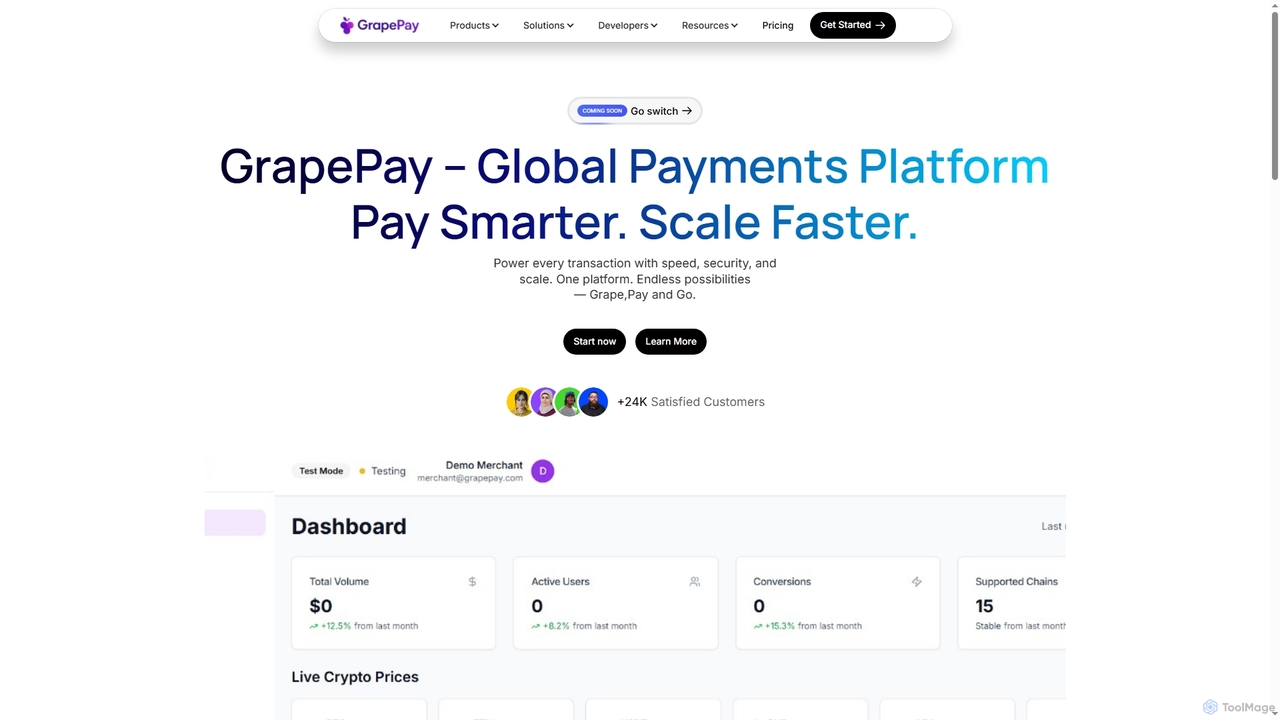
Grapepay
Grapepay is a comprehensive payment platform designed to empower businesses with fast, secure, and scalable transaction processing. It …
Grapepay is a comprehensive payment platform designed to empower businesses with fast, secure, and scalable transaction processing. It offers a suite of products including payment gateways, POS solutions, subscription management, and invoicing, serving diverse industries from startups to global enterprises.

Gostex
Gostex offers white-label fintech solutions, empowering businesses with customizable payment gateways, AI-based customer support, and robust card management …
Gostex offers white-label fintech solutions, empowering businesses with customizable payment gateways, AI-based customer support, and robust card management systems. It focuses on enhancing customer experiences, streamlining operations, and ensuring high security and compliance for financial services.
About Payment Processing
AI Payment Processing tools are a specialized category of Fintech solutions that use artificial intelligence to automate and optimize online transactions. They leverage machine learning models for real-time fraud detection, predictive analytics, and intelligent payment routing. This enhances security, increases transaction success rates, and reduces operational costs for businesses. Unlike traditional gateways, these tools can adapt to new fraud patterns and dynamically optimize payment flows to maximize revenue.
Core Features
- AI-Powered Fraud Detection: Proactively identifies and blocks suspicious transactions using behavioral analysis and machine learning, going beyond static rules.
- Intelligent Payment Routing: Automatically selects the optimal payment gateway for each transaction to maximize approval rates and minimize fees.
- Automated Chargeback Management: Uses AI to analyze dispute reasons, gather evidence, and automate responses to recover revenue.
- Predictive Revenue Analytics: Provides insights into customer lifetime value, churn risk, and payment trends to inform business strategy.
- Smart Dunning: Intelligently retries failed subscription payments at optimal times and with tailored communication to reduce churn.
Use Cases
These tools are essential for e-commerce platforms, subscription-based services (SaaS), online marketplaces, and any business processing a high volume of online transactions. For example, a global e-commerce store uses it to reduce cross-border transaction failures, while a SaaS company employs it to decrease involuntary churn from failed recurring payments.
How to Choose
When selecting a tool, evaluate its integration capabilities with your existing e-commerce platform or CRM. Assess the accuracy of its fraud detection model and its ability to handle your transaction volume without latency. Also, verify its adherence to security standards like PCI DSS and data privacy regulations such as GDPR.
Payment ProcessingUse Cases
Automating Fraud Prevention for E-commerce Stores
An e-commerce manager for a high-volume online store is facing increasing fraudulent orders and costly chargebacks. By implementing an AI payment processing tool, they can analyze hundreds of data points for each transaction in real-time, including IP address, device fingerprint, and purchase history. The system's machine learning model automatically identifies and blocks high-risk orders before they are processed. This results in a significant reduction in chargeback rates, often by over 70%, and frees up staff from tedious manual review processes.
Reducing Churn for Subscription-Based Services (SaaS)
A SaaS business owner notices a high rate of involuntary churn due to failed recurring payments from expired cards or temporary bank issues. They use an AI payment tool with a smart dunning feature. This system analyzes the reason for each payment failure and automatically retries the transaction at optimal times when it's most likely to succeed. For more persistent issues, it can trigger automated, personalized emails to customers requesting they update their payment information. This proactive approach significantly recovers failed payments, reducing monthly churn and increasing customer lifetime value.
Optimizing Global Payment Success Rates
A company expanding internationally struggles with low payment approval rates in different regions due to varying bank preferences and local regulations. They adopt an AI payment platform with intelligent routing. Based on historical performance data across a network of processors, the system dynamically sends each transaction to the local acquirer most likely to approve it. It considers factors like card type, country of origin, and transaction amount to make the best choice in milliseconds. This leads to a direct increase in the overall transaction success rate, often by 5-15%, improving customer experience and boosting international revenue.
Streamlining Marketplace Payouts and Compliance
An online marketplace operator needs to manage complex payouts to thousands of sellers while ensuring Know Your Customer (KYC) and Anti-Money Laundering (AML) compliance. They use an AI-powered platform that automates the entire seller onboarding process, using AI to verify identities and bank details. The system also handles split payments and commission calculations accurately for every transaction. This automation reduces payout errors and administrative overhead, ensures the marketplace remains compliant with financial regulations, and provides a seamless, trustworthy experience for sellers.
Gaining Actionable Insights from Transaction Data
A marketing manager wants to understand customer spending patterns and predict future revenue more accurately. They use the predictive analytics dashboard of their AI payment tool. The platform processes vast amounts of transaction data to identify high-value customer segments, visualize seasonal trends, and forecast cash flow. These insights allow the manager to make data-driven decisions, such as tailoring marketing campaigns to specific customer groups or optimizing pricing strategies, ultimately leading to more effective resource allocation and business growth.
Automating Invoice Processing and Reconciliation
A B2B company's finance department spends significant manual effort creating, sending, and reconciling invoices. By deploying an AI tool, they can automate the entire accounts receivable cycle. The system automatically generates and sends invoices based on contract terms, sends intelligent payment reminders, and uses machine learning to match incoming payments with outstanding invoices, even with partial payments or missing reference numbers. This drastically reduces manual data entry, accelerates cash flow, and provides real-time visibility into the company's financial health.