Velona
Velona is an AI-powered fleet management platform that transforms traditional monitoring into proactive, intelligent operations. It leverages specialized …
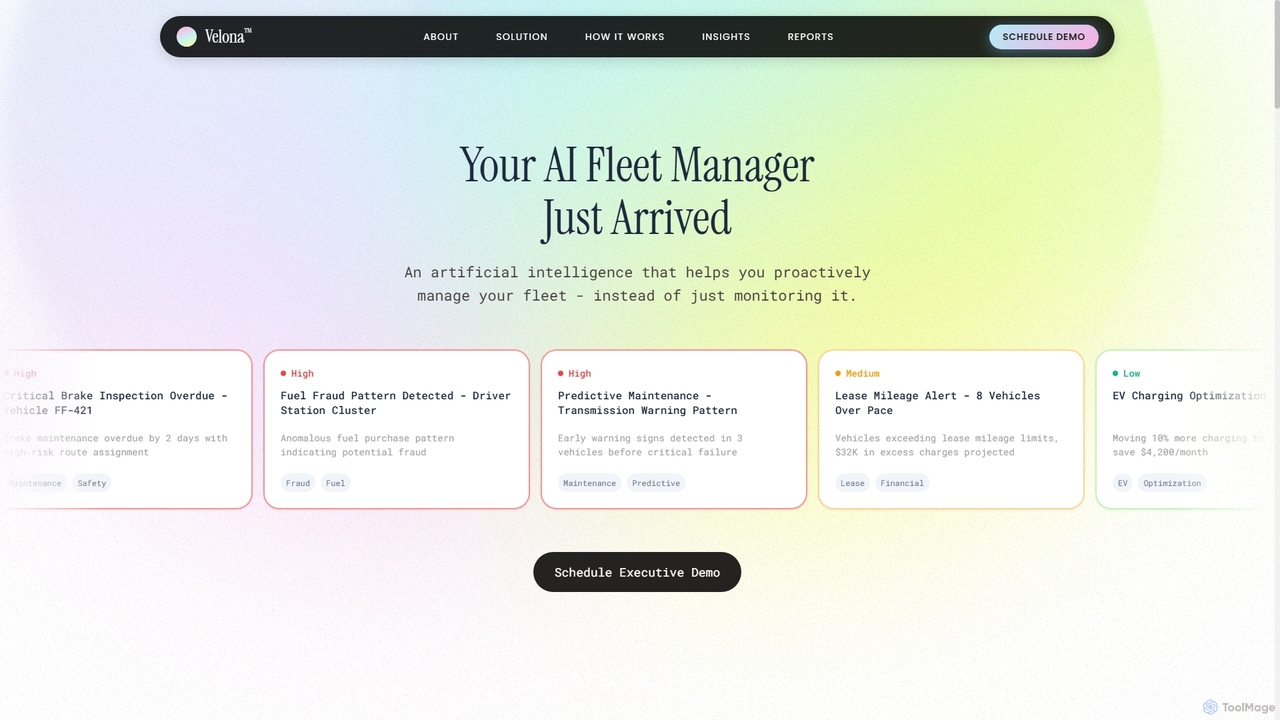
Velona is an AI-powered fleet management platform that transforms traditional monitoring into proactive, intelligent operations. It leverages specialized AI agents to detect fraud, predict maintenance needs, optimize fuel consumption, enhance driver safety, ensure compliance, and identify significant cost-saving opportunities across your entire fleet. Velona provides actionable insights and step-by-step plans through a simple, conversational interface.
About Fleet Management
Fleet Management tools are AI-powered systems designed to optimize the efficiency, safety, and performance of vehicle fleets. These platforms utilize machine learning algorithms to analyze data from telematics devices, sensors, and external sources like traffic and weather. By processing this information, they provide predictive insights for maintenance, automate route planning, and monitor driver behavior in real-time. This data-driven approach helps businesses reduce operational costs, enhance asset utilization, and ensure regulatory compliance.
Core Features
- Predictive Maintenance: Analyzes vehicle sensor data to forecast potential component failures before they occur, enabling proactive servicing.
- AI-Powered Route Optimization: Calculates the most efficient routes by considering real-time traffic, delivery windows, vehicle capacity, and fuel consumption.
- Driver Behavior Analysis: Uses telematics and camera data to monitor driving patterns, identify risky behaviors, and provide targeted coaching for safety improvement.
- Fuel Management: Tracks fuel consumption, detects anomalies like idling or potential theft, and suggests strategies to improve fuel economy.
- Automated Dispatching: Intelligently assigns tasks and vehicles based on location, availability, and job priority to minimize response times.
Use Cases
These tools are essential for industries reliant on transportation and logistics, such as long-haul trucking, last-mile delivery services, and public transit authorities. Construction companies also use them to manage heavy machinery, while field service businesses optimize technician dispatch. Any organization managing a fleet of vehicles can leverage this technology to improve operational control and reduce expenses.
How to Choose
When selecting a Fleet Management tool, consider the size and type of your fleet. Evaluate the platform's integration capabilities with your existing systems, such as TMS or ERP. Assess the depth of its analytical features, including the accuracy of predictive maintenance and the sophistication of route optimization. Finally, consider the user interface for both managers and drivers, as well as the provider's customer support and scalability options.
Fleet ManagementUse Cases
Optimize Long-Haul Trucking Routes
A logistics manager for a national shipping company uses an AI fleet management tool to plan multi-state delivery routes. The system analyzes real-time traffic data, weather forecasts, driver hours-of-service (HOS) limitations, and scheduled fuel stops. It generates an optimized route that avoids projected congestion and ensures compliance, reducing estimated travel time by 15% and cutting fuel costs. The manager can also monitor progress in real-time and receive alerts for any unexpected delays, allowing for proactive communication with customers.
Predict Maintenance for a Delivery Van Fleet
A fleet operator for a local courier service receives an AI-generated alert that a specific van's brake pads are wearing down 30% faster than the average for that model. The system analyzed telematics data on braking frequency and force. This allows the operator to schedule proactive maintenance for the van during its next scheduled downtime, preventing a potential on-road failure. This avoids costly emergency repairs, service disruptions, and potential safety incidents, ultimately extending the vehicle's lifespan.
Improve Driver Safety with AI Coaching
A public transit authority implements an AI fleet management system with in-cab cameras. The system automatically detects risky behaviors like harsh braking, rapid acceleration, and mobile phone use. Instead of punitive measures, the system generates a weekly safety score for each driver and provides personalized, short video clips highlighting specific areas for improvement. This data-driven coaching approach leads to a 40% reduction in safety-related incidents within six months and lowers insurance premiums for the authority.
Automate Dispatch for a Field Service Business
A plumbing company with 50 technicians uses an AI dispatching tool integrated with their fleet management system. When a new service request comes in, the AI instantly analyzes the job requirements, technician skill sets, current locations, and real-time traffic. It automatically assigns the best-suited and closest technician, sending job details directly to their mobile device. This eliminates manual dispatching, reduces travel time between jobs by 20%, and allows the company to fit more service calls into each day, increasing revenue.
Manage Fuel Consumption for a Construction Fleet
A construction site manager uses an AI fleet tool to monitor the fuel usage of heavy machinery like excavators and bulldozers. The system flags excessive idling times, which account for a significant portion of fuel waste. It also compares fuel consumption against operational data to detect potential fuel theft or mechanical issues causing inefficiency. By addressing these issues, the company reduces its monthly fuel expenditure by 12% and improves the overall carbon footprint of its operations.
Ensure Regulatory Compliance with Automated Logs
A cross-border freight company relies on an AI fleet management system to automate Electronic Logging Device (ELD) management. The system automatically records driver hours of service (HOS) and alerts both the driver and the fleet manager of impending violations. It also simplifies the creation of International Fuel Tax Agreement (IFTA) reports by automatically tracking mileage per jurisdiction. This automation minimizes the risk of costly fines, reduces administrative workload, and ensures the company remains compliant with complex transportation regulations.