PlatePose
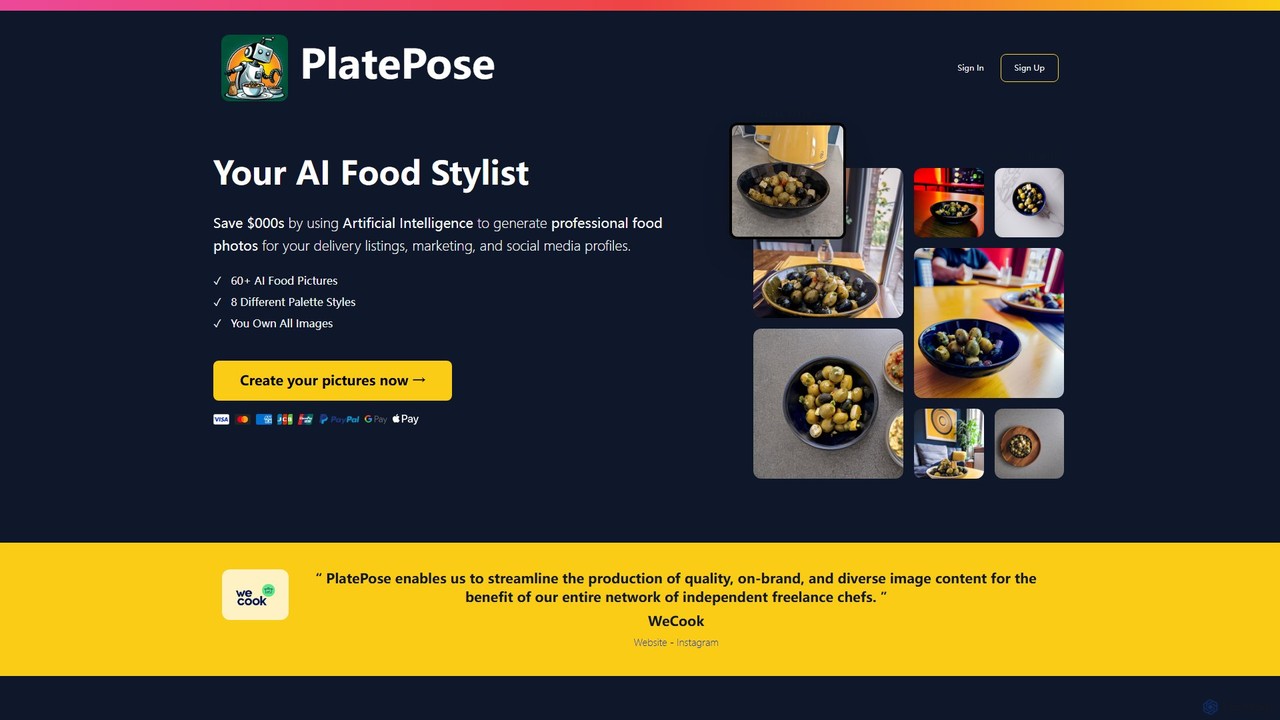
PlatePose is an AI-powered food stylist that transforms simple smartphone photos of your dishes into dozens of professional, …
PlatePose is an AI-powered food stylist that transforms simple smartphone photos of your dishes into dozens of professional, high-quality food photographs. Ideal for restaurants, ghost kitchens, and food influencers, it saves significant time and money compared to traditional photoshoots, providing a wealth of marketing content for social media and delivery menus.
About Restaurant Tech
Restaurant Tech refers to a suite of AI-powered and digital solutions designed to optimize operations, enhance customer experience, and drive efficiency within the food and beverage industry. These tools leverage technologies like AI, IoT, and automation to streamline everything from order management and inventory control to personalized marketing and staff scheduling. They empower restaurants, cafes, and bars to reduce operational costs, improve service quality, and make data-driven decisions. By integrating various digital components, Restaurant Tech creates a more connected and responsive dining ecosystem.
Core Features
- Automated Order & POS: Streamline order taking, payment processing, and kitchen communication for faster service.
- Inventory & Supply Chain Management: Optimize stock levels, track ingredients, and predict demand to minimize waste and costs.
- Customer Relationship Management (CRM): Personalize guest experiences, manage loyalty programs, and gather feedback effectively.
- Staff Management & Scheduling: Automate shift planning, time tracking, and payroll integration for operational efficiency.
- Data Analytics & Reporting: Provide insights into sales trends, customer behavior, and operational performance for strategic planning.
Use Cases
A restaurant chain uses AI-powered POS systems to manage peak hour orders efficiently, significantly reducing customer wait times and improving order accuracy. Similarly, a cafe implements inventory management software to track coffee bean consumption in real-time, automatically reordering supplies before they run out, thus preventing stockouts and ensuring smooth operations.
How to Choose
Consider the solution's Integration Capability with existing POS, accounting, or reservation systems to avoid data silos. Evaluate Scalability to ensure it can grow with your business, from a single outlet to multiple locations. Prioritize User-Friendliness with intuitive interfaces that require minimal staff training. Finally, assess Support & Security, including vendor support quality and robust data security measures.
Restaurant TechUse Cases
Automating Order Taking and Payment Processing
A busy fast-casual restaurant implements an AI-driven self-ordering kiosk and mobile app. Customers can browse menus, customize orders, and pay directly, reducing cashier queues and freeing up staff to focus on food preparation and service. This significantly improves order accuracy and speeds up service during peak hours, leading to higher customer satisfaction and increased throughput.
Optimizing Inventory and Reducing Food Waste
A fine dining establishment uses an AI-powered inventory management system that tracks ingredient usage, monitors expiry dates, and predicts future demand based on sales data and seasonal trends. This allows the chef to precisely order supplies, minimizing spoilage and significantly cutting down on food waste and associated costs, while ensuring fresh ingredients are always available.
Personalizing Customer Experience and Loyalty Programs
A cafe chain deploys a CRM system integrated with its POS. It collects customer preferences, purchase history, and feedback. This data enables the cafe to offer personalized promotions, remember favorite orders, and manage a tiered loyalty program, fostering stronger customer relationships and repeat business, ultimately increasing customer lifetime value.
Streamlining Staff Scheduling and Labor Cost Management
A multi-location restaurant group utilizes AI-driven staff scheduling software. The system considers staff availability, skill sets, labor laws, and predicted demand to create optimal schedules, ensuring adequate coverage while minimizing overtime and labor costs. It also simplifies shift swaps and communication among team members, leading to improved employee satisfaction and operational efficiency.
Enhancing Kitchen Efficiency and Workflow
A high-volume restaurant integrates a Kitchen Display System (KDS) with its order management. Orders from various channels (POS, online, delivery apps) are routed to the KDS, displaying preparation steps and timings. This visual management reduces errors, speeds up food preparation, and ensures dishes are served fresh and simultaneously, significantly improving kitchen throughput and customer satisfaction.
Leveraging Data Analytics for Menu Optimization
A restaurant owner uses an analytics platform that aggregates sales data, customer feedback, and ingredient costs. The AI analyzes menu item popularity, profitability, and customer preferences, providing insights to optimize menu pricing, remove underperforming dishes, and introduce new, high-demand items, directly impacting revenue and customer satisfaction.