ToolMage
Sign in

Best 2 Recipe Generation AI tools for Food & Cooking

Popular Recipe Generation AI tools in Food & Cooking include TasteOS and CookMate AI, helping you work more efficiently.

TasteOS
Freemium

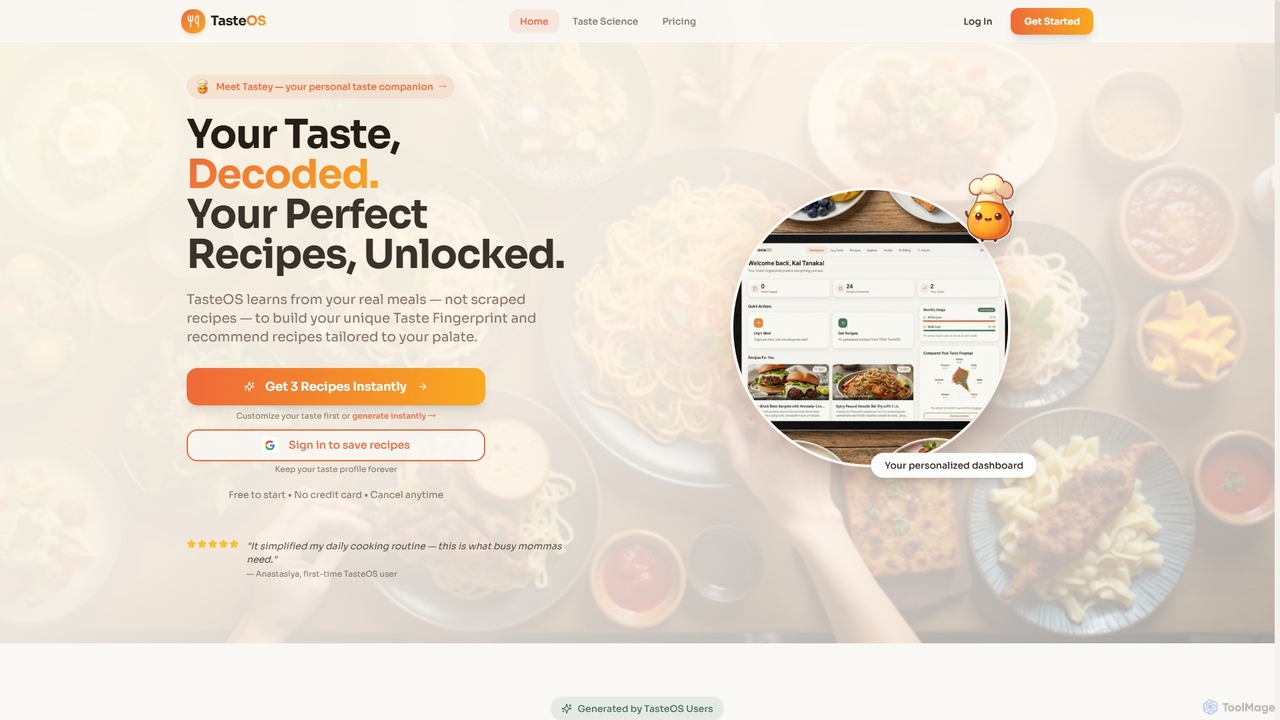
TasteOS

TasteOS is a personalized AI recipe generator that decodes your unique taste profile by learning from your real meals. It creates tailored recipes, helps you cook with existing ingredients, and adapts to your evolving palate, offering a truly custom culinary experience.

Recipe Generation
Visits 7.6KFavorites 38Likes 39
CookMate AI

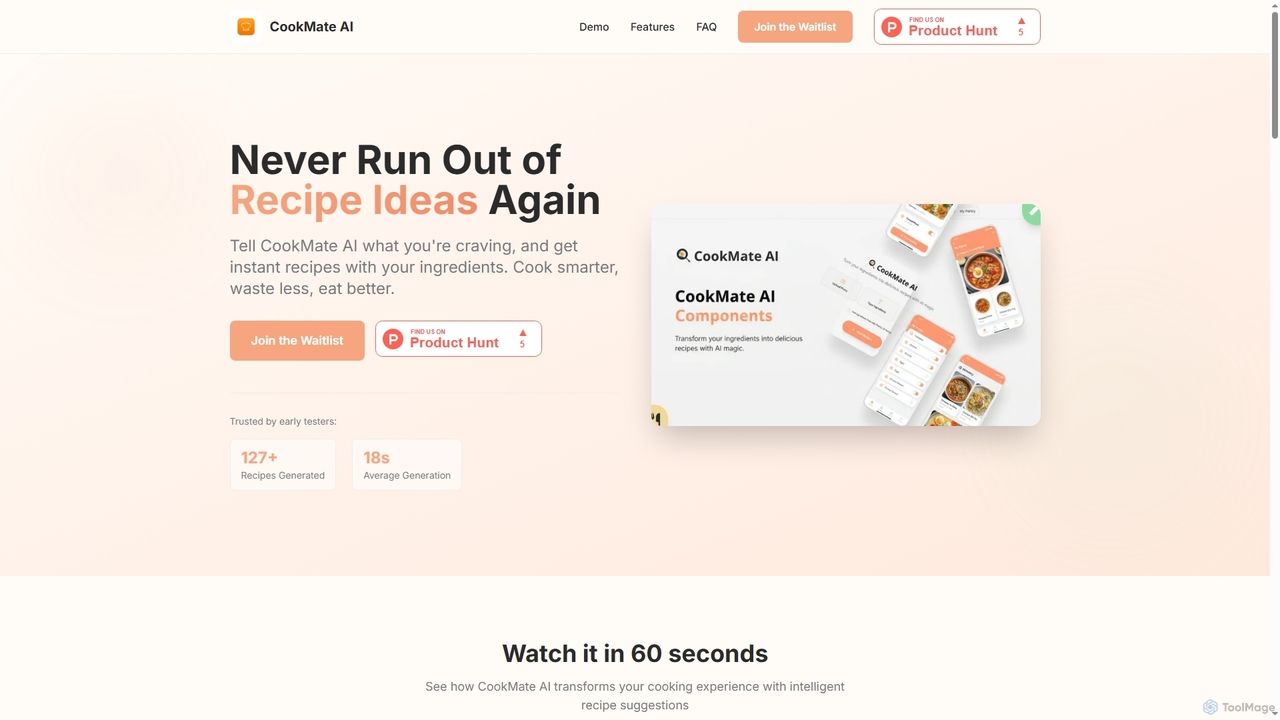
CookMate AI

CookMate AI is an intelligent platform that provides personalized recipe suggestions based on your cravings, available ingredients, and dietary preferences. Utilizing AI, it helps users cook smarter, reduce food waste by transforming leftovers, and plan meals efficiently. It supports both text and voice input, ingredient photo uploads, and features a digital pantry to track items and suggest future meals.

Recipe Generation
Visits 6KFavorites 140Likes 114

About Recipe Generation

Recipe Generation tools are AI-powered platforms that automatically create new and unique recipes based on user inputs. Leveraging advanced natural language processing and vast culinary databases, these tools can interpret ingredients, dietary preferences, cuisine styles, and even cooking methods to suggest innovative dishes. They offer immense value to home cooks seeking inspiration, professionals experimenting with flavors, and businesses aiming to personalize meal offerings, streamlining the creative process in the kitchen.

Core Features

  • Ingredient-Based Suggestions: Generates recipes using a list of ingredients provided by the user.
  • Dietary & Allergen Filters: Creates recipes adhering to specific dietary needs (e.g., vegan, keto) or avoiding allergens.
  • Cuisine Style Customization: Allows users to specify desired cuisine types (e.g., Italian, Mexican, Asian fusion).
  • Nutritional Analysis: Provides estimated calorie counts and macronutrient breakdowns for generated recipes.
  • Meal Planning Integration: Helps build multi-day meal plans based on preferences and available ingredients.

Use Cases

These tools are invaluable for home cooks looking to reduce food waste by utilizing leftover ingredients, or for those with specific dietary restrictions needing tailored meal ideas. Food bloggers and content creators can rapidly generate unique recipe concepts for their platforms, while professional chefs can explore novel flavor combinations and menu ideas without extensive manual research.

How to Choose

When selecting an AI recipe generation tool, consider the breadth and quality of its ingredient database, the flexibility of its customization options for dietary needs and cuisine styles, and the accuracy of its nutritional information. Evaluate the user interface for ease of input and recipe readability, and check for integration capabilities with other meal planning or grocery list apps to ensure a seamless cooking experience.

Recipe Generation use cases

1

Personalized Meal Planning for Dietary Needs

A home cook with a gluten allergy and a preference for vegetarian meals struggles to find diverse recipes. Using an AI recipe generator, they input their dietary restrictions and available ingredients, receiving a week's worth of unique, compliant, and varied meal suggestions, saving hours of manual searching and ensuring adherence to their health requirements.

2

Content Creation for Food Bloggers

A food blogger needs fresh, engaging recipe ideas weekly to maintain audience interest. They use an AI recipe generator to explore trending ingredients, generate fusion cuisine concepts, or create seasonal dishes. This allows them to quickly produce a steady stream of original content, reducing creative block and significantly cutting down on recipe development time.

3

Innovative Menu Development for Restaurants

A restaurant chef wants to introduce a new seasonal menu item using surplus local produce. By inputting the available ingredients and desired cuisine profile into an AI recipe generator, they receive several innovative dish concepts. This accelerates the menu development process, inspires creativity, and helps minimize food waste by efficiently utilizing ingredients.

4

Efficient Recipe Creation for Meal Kit Services

A meal kit company aims to expand its offerings with new, diverse recipes that cater to various customer preferences. They leverage AI recipe generation to quickly prototype recipes based on ingredient availability, target calorie counts, and popular cuisine trends. This enables rapid product diversification and ensures a constant flow of fresh options for subscribers.

5

Customized Nutritional Plans for Dietitians

A dietitian needs to create highly personalized meal plans for clients with specific health goals, such as weight management or diabetes control. They use an AI recipe generator to input client data, dietary restrictions, and nutritional targets, generating tailored recipes and full meal plans that are both healthy and appealing, improving client adherence and outcomes.

6

Reducing Food Waste with Pantry Ingredients

A busy individual wants to cook dinner but only has a few random ingredients in their fridge and pantry. Instead of ordering takeout or making an extra grocery trip, they input their available items into an AI recipe generator. The tool provides several viable and creative recipe options, helping them utilize existing food, save money, and reduce household food waste.

Recipe Generation FAQ

What are AI Recipe Generation tools?

AI Recipe Generation tools are software applications that use artificial intelligence, particularly natural language processing and machine learning, to automatically create new and unique recipes. Users provide inputs such as available ingredients, dietary preferences, cuisine types, or desired meal categories, and the AI generates a recipe, often including instructions, ingredient lists, and sometimes nutritional information. They differ from traditional recipe databases by actively creating novel combinations rather than just retrieving existing ones.

How do AI recipe generators create new recipes?

AI recipe generators work by analyzing vast datasets of existing recipes, ingredient properties, flavor pairings, and cooking techniques. They use machine learning algorithms to identify patterns and relationships between ingredients and methods. When a user provides inputs (e.g., "chicken, broccoli, pasta, Italian, healthy"), the AI processes these requests, predicts compatible ingredients and steps based on its learned knowledge, and then constructs a coherent, novel recipe that fits the specified criteria. Some advanced models can even learn from user feedback to refine their suggestions.

What kind of recipes can AI recipe generation tools create?

AI recipe generation tools are highly versatile and can create a wide array of recipes. This includes dishes based on specific ingredients you have on hand, recipes tailored to various dietary restrictions (e.g., vegan, keto, gluten-free, low-carb), and meals from diverse global cuisines (e.g., Mediterranean, Asian, Latin American). They can also generate recipes for different meal types like breakfast, lunch, dinner, desserts, or snacks, and even suggest innovative fusion dishes by combining elements from different culinary traditions.

How do AI recipe generators compare to traditional recipe websites?

Traditional recipe websites primarily serve as databases for existing, often human-curated and tested recipes. Users search for specific dishes or ingredients and retrieve pre-written instructions. In contrast, AI recipe generators actively *create* new recipes on demand. This means they can offer highly personalized suggestions based on unique combinations of ingredients or dietary needs that might not exist in a traditional database, fostering greater creativity and adaptability, especially for using up leftovers or adhering to very specific requirements.

Who can benefit most from using AI recipe generation tools?

A wide range of individuals and professionals can benefit from AI recipe generation tools. Home cooks can use them to reduce food waste by utilizing leftover ingredients, discover new dishes, or easily adhere to complex dietary restrictions. Food bloggers and content creators can generate fresh ideas for their platforms. Professional chefs and restaurant owners can explore innovative menu concepts. Dietitians and nutritionists can create personalized meal plans for clients, and meal kit services can streamline their recipe development process, offering more diverse and tailored options.