Generative Art Best in category 1 results Audio Generation AI Tool

Popular AI tools in the Audio Generation field of Generative Art include Co-Producer, etc., helping you quickly improve efficiency.

Co-Producer

Co-Producer

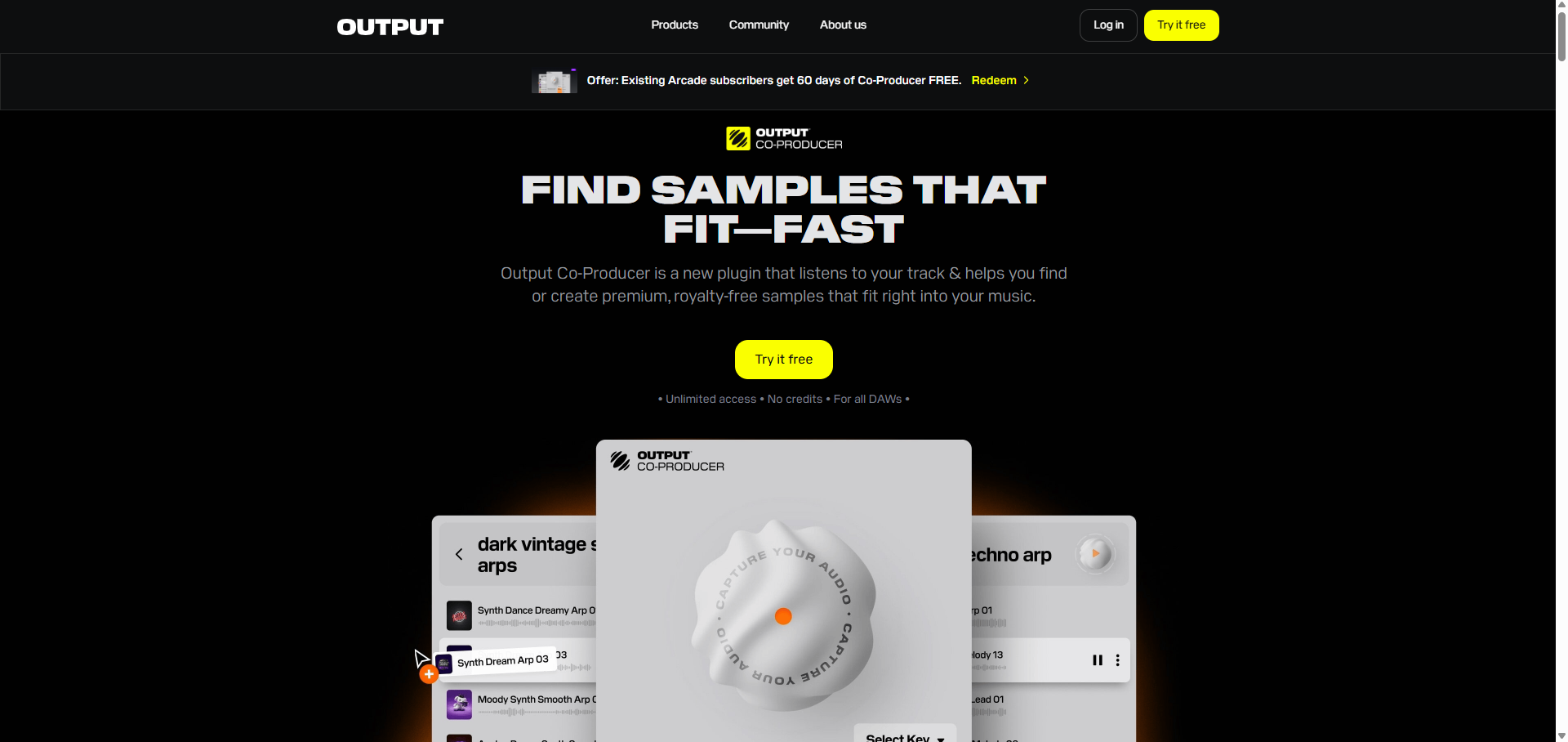
Co-Producer by Output is an AI-powered music creation assistant designed to accelerate the production workflow. It helps producers …

2.7K

About Audio Generation

Audio Generation tools are a class of AI applications that create new sound content, including music, speech, and sound effects, from user inputs like text. They leverage deep learning models to synthesize complex audio waveforms and musical structures based on descriptive prompts. This technology enables creators to produce royalty-free background music, generate realistic voiceovers, or design unique soundscapes for games and films without traditional recording. As a key part of Generative Art, these tools democratize audio production, offering a powerful alternative to stock audio libraries.

Core Features

  • Text-to-Music Generation: Create original musical pieces in various genres and moods from simple text descriptions.
  • Sound Effect Synthesis: Generate custom sound effects (SFX) based on prompts, such as "a spaceship door opening" or "footsteps on gravel."
  • AI Voice & Speech Synthesis: Produce realistic human-like speech from text, with options for different voices, accents, and emotional tones.
  • Style & Parameter Control: Specify musical styles, instruments, tempo, and other parameters to guide the audio creation process.

Use Cases

Audio Generation tools are widely used by content creators for YouTube videos and podcasts to generate unique, copyright-free background music. Game developers and filmmakers employ them for rapid prototyping of soundscapes and creating specific audio assets. Musicians also use them as a source of inspiration, generating new melodies or rhythmic patterns to build upon.

How to Choose

When selecting an Audio Generation tool, evaluate the audio quality and realism by listening to samples. Assess the level of customization and control over parameters like genre, mood, and voice. Also, check the supported output formats (e.g., MP3, WAV) and carefully review the licensing terms to ensure they permit your intended commercial use.

Audio GenerationUse Cases

1

Creating Royalty-Free Music for Video Content

A content creator or social media manager needs unique background music for a new video but lacks a budget for licensing tracks. They use a text-to-music generator, inputting prompts like "upbeat, lo-fi hip hop for a study vlog" or "dramatic, cinematic score for a product reveal." The AI generates several high-quality, copyright-clear tracks in minutes. This allows them to find the perfect fit and publish their content without worrying about copyright strikes, saving both time and money.

2

Designing Custom Sound Effects for Games

An indie game developer is creating a sci-fi game and needs a wide range of unique sound effects for actions and environments. Instead of searching stock libraries, they use an AI sound effect generator. By inputting prompts like "laser pistol firing with a slight echo" or "holographic interface activation," they can generate specific audio assets instantly. This process allows for rapid iteration and helps build a cohesive and original soundscape for the game, significantly speeding up the audio design workflow.

3

Generating Realistic Voiceovers for E-Learning

An instructional designer is creating an online training module that requires clear and consistent narration. Instead of hiring voice actors, which can be costly and time-consuming for revisions, they use an AI voice generator. They input the script, select a professional-sounding voice, and adjust pacing. If the script changes, they can regenerate only the updated sentences in seconds. This results in a high-quality, consistent voiceover for the entire course, making updates easy and highly cost-effective.

4

Prototyping Melodies for Music Production

A music producer is experiencing writer's block and needs inspiration for a new track. They use an AI music generator to quickly prototype ideas. By providing prompts like "sad piano melody in C minor" or "funky bassline at 120 BPM," the tool generates several short musical loops. The producer can listen to these variations, select the most promising ones, and export them as MIDI or audio files. This serves as a powerful creative starting point, allowing them to build upon the AI-generated ideas in their Digital Audio Workstation (DAW).

5

Creating Audio Ads for Digital Marketing

A digital marketer for a small business needs to produce a short audio ad for a podcast sponsorship. With no audio production experience, they turn to AI tools. First, they use an AI voice generator to create a clear and engaging narration of their ad copy. Then, they use a text-to-music tool to generate a suitable jingle or background track with a prompt like "catchy, upbeat corporate jingle." They can easily combine these elements to assemble a professional-sounding audio ad in under an hour, enabling rapid A/B testing of different scripts and music styles.

6

Generating Immersive Soundscapes for Podcasts

A producer of a narrative fiction podcast needs to create immersive background audio to set the scene for listeners. Instead of layering multiple individual sound effect tracks, which is time-consuming, they use an AI audio generator. With a single, detailed prompt like "a bustling medieval market with distant blacksmith sounds and chatter," the tool generates a complete, layered ambient track. This method provides a unique audio identity for the production and allows the producer to quickly create rich soundscapes that enhance storytelling and listener immersion.

Audio GenerationFrequently Asked Questions