ToolMage
Sign in

Best 1 Text Generation AI tools for Generative

Popular Text Generation AI tools in Generative include PolyGPT, helping you work more efficiently.

PolyGPT
Free

PolyGPT

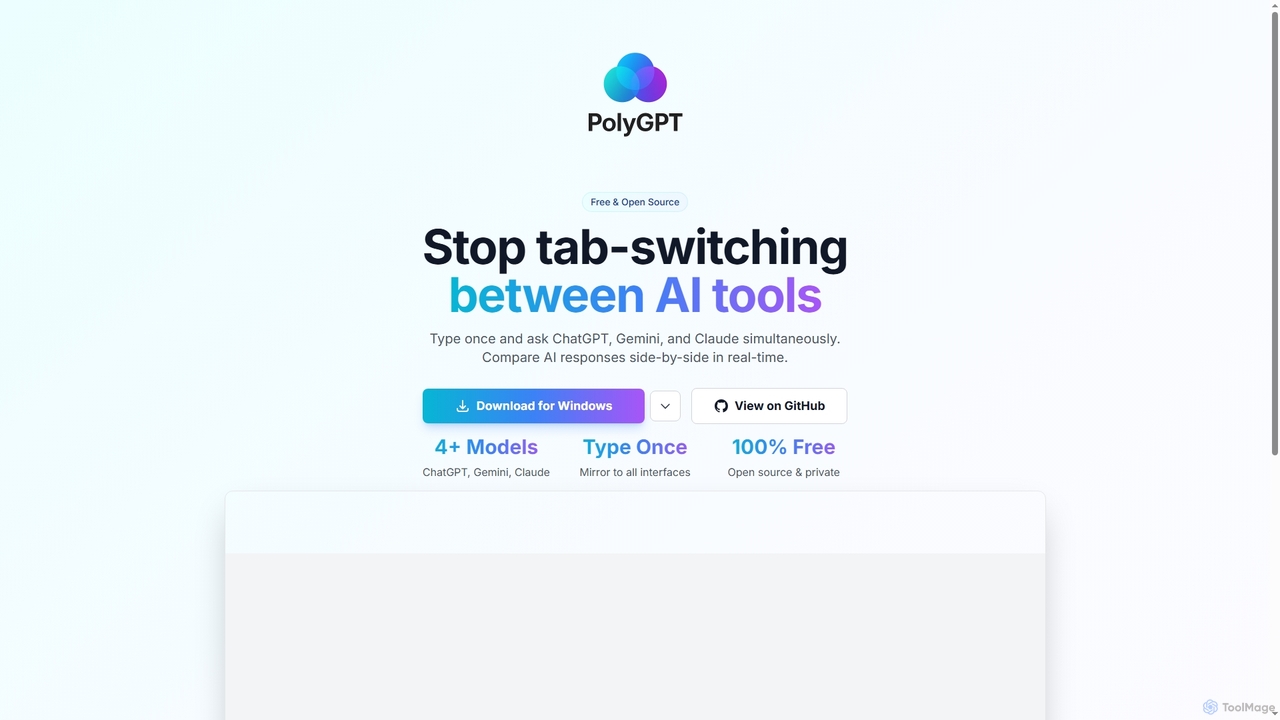
PolyGPT is a free and open-source desktop application that allows users to chat with multiple AI models, including ChatGPT, Gemini, and Claude, simultaneously. It eliminates tab-switching by enabling users to type a prompt once and receive side-by-side, real-time responses from various AIs for easy comparison and enhanced productivity.

Open Source
Visits 11.3KFavorites 170Likes 167

About Text Generation

Text Generation tools are a core subset of generative AI, leveraging advanced artificial intelligence to automatically produce human-like written content. These tools utilize sophisticated natural language processing (NLP) and machine learning models, often based on large language models (LLMs), to understand prompts and generate coherent, contextually relevant, and grammatically correct text. They empower users to rapidly create diverse forms of content, from marketing copy and articles to code and creative narratives, significantly accelerating content creation workflows across various industries.

Core Features

  • Content Creation: Generates articles, blog posts, marketing copy, social media updates, and product descriptions from simple prompts.
  • Summarization: Condenses long documents, reports, or articles into concise summaries, extracting key information efficiently.
  • Paraphrasing & Rewriting: Rephrases existing text to improve clarity, change tone, or avoid plagiarism while retaining original meaning.
  • Code Generation: Assists developers by generating code snippets, functions, or even entire scripts based on natural language descriptions.
  • Creative Writing: Produces poems, stories, scripts, and song lyrics, offering inspiration and overcoming writer's block.

Applicable Scenarios

Text Generation tools are indispensable for content creators, marketers, developers, and customer service professionals. Marketers use them to quickly draft ad copy, email campaigns, and social media posts. Content writers leverage them for generating article outlines, first drafts, or overcoming writer's block. Developers find them useful for automating repetitive coding tasks or generating documentation. Customer support teams can use them to draft quick, personalized responses to common inquiries.

How to Choose

When selecting a Text Generation tool, consider the specific types of content you need to produce and the required output quality. Evaluate its language support, customization options for tone and style, and integration capabilities with your existing workflows. Look for tools that offer robust editing features, clear pricing models, and a user-friendly interface to ensure it meets your specific content creation demands.

Text Generation use cases

1

Generating Marketing Copy for Social Media

Social media managers often need to produce a high volume of engaging posts daily. Text Generation tools allow them to input product features or campaign themes and instantly generate multiple variations of captions, hashtags, and calls-to-action tailored for platforms like Instagram, Twitter, or LinkedIn. This significantly reduces the time spent on copywriting, enabling more frequent and diverse content updates and improving audience engagement.

2

Drafting Personalized Email Campaigns at Scale

Marketing teams can utilize Text Generation tools to create personalized email content for large subscriber segments. By feeding the tool customer data points (e.g., purchase history, browsing behavior) and campaign objectives, it can generate unique subject lines, body paragraphs, and product recommendations for each recipient. This automation enhances personalization, leading to higher open rates and conversion rates compared to generic mass emails.

3

Summarizing Research Papers and Reports

Researchers, students, and business analysts frequently encounter lengthy documents that require quick comprehension. Text Generation tools can process dense academic papers, market research reports, or internal documents and extract the most critical information, presenting it as a concise summary. This capability saves hours of reading time, allowing users to grasp core concepts rapidly and make informed decisions faster.

4

Automating Product Descriptions for E-commerce

E-commerce businesses with extensive product catalogs face the challenge of writing unique, SEO-friendly descriptions for thousands of items. Text Generation tools can take basic product specifications (e.g., material, color, features) and generate compelling, descriptive text that highlights benefits and includes relevant keywords. This automation ensures consistency, improves search engine visibility, and frees up human copywriters for more strategic tasks.

5

Assisting Developers with Code Snippet Generation

Software developers can leverage Text Generation tools to accelerate coding by generating boilerplate code, functions, or even entire scripts from natural language prompts. For instance, a developer might describe "a Python function to sort a list of numbers," and the tool provides the corresponding code. This reduces repetitive coding, helps with learning new languages, and allows developers to focus on more complex problem-solving.

6

Overcoming Writer's Block for Creative Content

Content creators, novelists, and screenwriters often struggle with writer's block or need fresh ideas. Text Generation tools can serve as a creative partner, generating plot ideas, character descriptions, dialogue options, or even entire story outlines based on initial concepts. This provides a springboard for human creativity, helping to explore different narrative paths and maintain a consistent flow of creative output.

Text Generation FAQ

What are Text Generation tools?

Text Generation tools are AI-powered applications that automatically produce written content based on user prompts or input data. They leverage advanced natural language processing (NLP) and machine learning models, particularly large language models (LLMs), to understand context, generate human-like text, and perform tasks like writing articles, summaries, marketing copy, and even code. They are a key component of the broader generative AI landscape, specifically focused on textual output.

How do Text Generation tools work?

Text Generation tools typically work by using sophisticated neural networks, often trained on vast datasets of text and code. When a user provides a prompt, the AI analyzes the input, predicts the most probable sequence of words, and generates coherent text that aligns with the given context, style, and desired output length. This process involves understanding semantics, grammar, and factual information to produce relevant and high-quality content.

What are the main benefits of using Text Generation tools?

The main benefits of using Text Generation tools include significantly increased content creation speed, enhanced productivity, and the ability to generate diverse content at scale. They help overcome writer's block, ensure content consistency, and can be used to automate repetitive writing tasks, freeing up human resources for more strategic work. Additionally, they can assist in generating ideas, summarizing information, and even translating or paraphrasing text efficiently.

How do Text Generation tools differ from AI Chatbots?

While both Text Generation tools and AI Chatbots utilize large language models, their primary functions differ. Text Generation tools are designed for one-way content creation, focusing on producing various forms of written output based on specific prompts. AI Chatbots, on the other hand, are built for interactive, conversational exchanges, aiming to understand user queries and provide real-time, context-aware responses in a dialogue format. Text generation is about creating content; chatbots are about facilitating conversation.

What should I consider when choosing a Text Generation tool?

When choosing a Text Generation tool, consider your specific content needs, such as the types of text you'll generate (e.g., marketing, creative, technical) and the required quality. Evaluate the tool's language support, customization options for tone and style, and its ability to integrate with your existing platforms. Also, assess the pricing model, user-friendliness, and the availability of features like plagiarism checks or SEO optimization to ensure it aligns with your workflow and budget.