ToolMage
Sign in

Best 1 Policy & Standards AI tools for Governance

Popular Policy & Standards AI tools in Governance include Frontier Model Forum, helping you work more efficiently.

Frontier Model Forum
Free

Frontier Model Forum

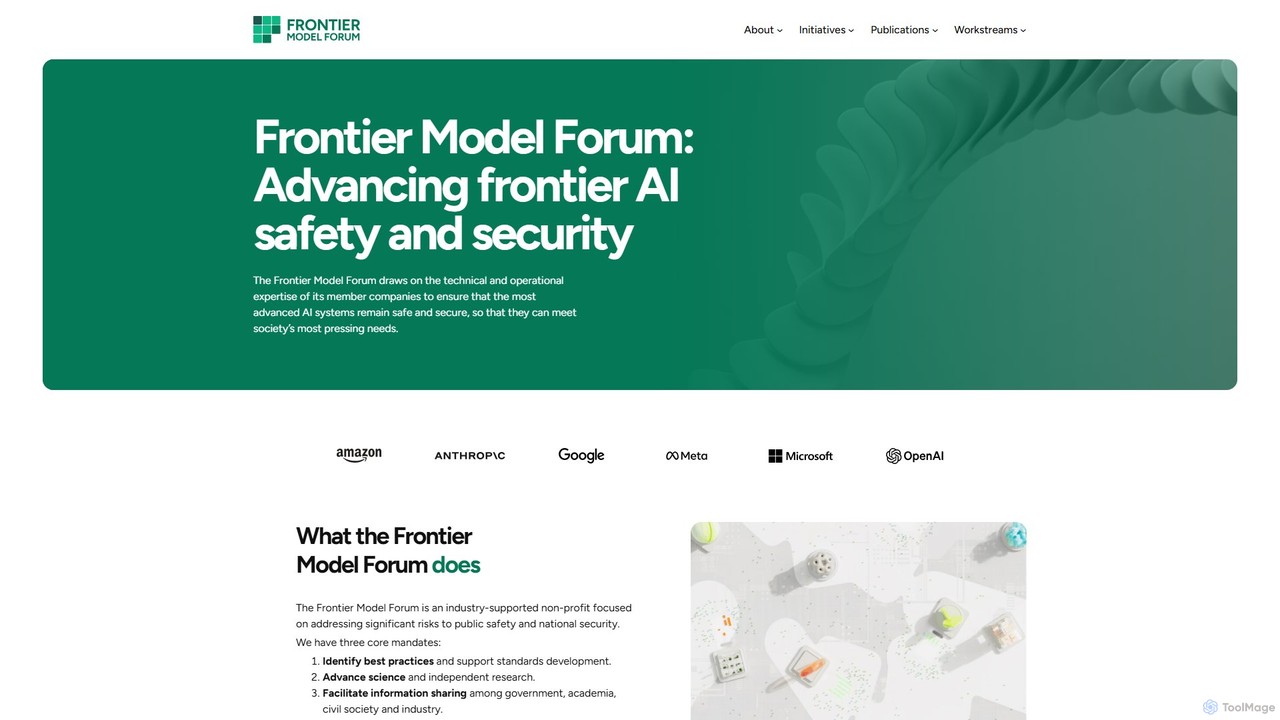
The Frontier Model Forum is an industry-led non-profit organization dedicated to ensuring the safe and responsible development of advanced AI systems. Founded by leading AI companies, it focuses on advancing AI safety research, identifying best practices for security, and facilitating collaboration among industry, government, academia, and civil society to mitigate risks and harness AI's benefits for humanity.

Forums & Collaboration
Visits 13.1KFavorites 120Likes 114

About Policy & Standards

Policy & Standards AI tools are specialized platforms designed to help organizations define, implement, and monitor ethical guidelines, regulatory compliance, and internal governance frameworks for AI systems. These tools leverage artificial intelligence to analyze policies, identify potential risks, and ensure adherence to legal and ethical requirements across the AI lifecycle. They enable proactive management of AI's societal impact, fostering responsible innovation and building trust. By automating compliance checks and providing auditable trails, they significantly mitigate legal and reputational exposure.

Core Features

  • Policy Definition & Management: Tools to create, store, version, and update AI policies and ethical guidelines.
  • Compliance Monitoring: Automatically check AI models, data, and processes against regulations (e.g., GDPR, AI Act) and internal standards.
  • Ethical AI Assessment: Evaluate AI systems for bias, fairness, transparency, and accountability metrics.
  • Risk Identification & Mitigation: Proactively flag potential policy violations, ethical risks, or non-compliant AI behaviors.
  • Audit Trail & Reporting: Generate comprehensive, immutable records and reports for regulatory bodies and internal stakeholders.

Applicable Scenarios

These tools are crucial for organizations developing or deploying AI, especially in regulated industries like finance, healthcare, and government. They are used by compliance officers, legal teams, AI ethicists, and development leads to ensure AI systems meet legal, ethical, and internal standards. Examples include ensuring data privacy in AI models, assessing algorithmic fairness, and maintaining continuous regulatory adherence.

How to Choose

When selecting Policy & Standards AI tools, consider the scope of compliance (specific regulations, ethical frameworks), integration capabilities with existing AI development pipelines, and customization options for internal policies and risk models. Evaluate the robustness of reporting and audit trail features, as well as the tool's ability to scale with your organization's AI initiatives and evolving regulatory landscape.

Policy & Standards use cases

1

Ensuring Data Privacy Compliance in AI Models

A Data Privacy Officer or AI Ethicist uses Policy & Standards AI tools to ensure that AI models processing sensitive customer data comply with regulations like GDPR and CCPA. The tool automatically scans the AI model's data inputs, processing logic, and outputs against predefined privacy regulations and internal policies. It flags potential violations, such as unauthorized data access or insufficient anonymization, providing actionable recommendations for remediation. This reduces legal risk, avoids hefty fines, and builds customer trust by ensuring robust data privacy.

2

Automating Bias Detection and Fairness Assessment for AI Algorithms

An AI Development Lead or Diversity & Inclusion Officer uses these tools to address concerns about algorithmic bias in AI systems used for loan applications or hiring. The tool integrates with the AI model, analyzing its training data and decision-making process for statistical biases related to protected attributes (e.g., gender, race). It generates fairness metrics, identifies disparate impact, and suggests mitigation strategies to ensure equitable treatment across all user groups. This promotes ethical AI, prevents reputational damage, and ensures fair access to opportunities.

3

Developing and Enforcing Internal Ethical AI Guidelines

A Head of AI Strategy or Legal Counsel uses Policy & Standards platforms to establish clear internal ethical guidelines for all AI projects, covering transparency, accountability, and human oversight. The platform provides templates and frameworks for drafting ethical AI policies and helps integrate these policies into the AI development lifecycle, ensuring developers adhere to them. It can also monitor project documentation and code for alignment with these internal standards. This fosters a culture of responsible AI innovation, ensures consistent ethical practices across projects, and reduces internal conflicts.

4

Monitoring AI System Performance Against Regulatory Standards

A Compliance Manager or AI Operations Engineer in a critical sector (e.g., finance, healthcare) uses these tools to ensure AI systems continuously meet specific performance and safety standards set by regulatory bodies. The tool continuously monitors the AI system's output, accuracy, and reliability metrics. It compares these against predefined regulatory thresholds and alerts stakeholders if performance deviates, indicating a potential compliance breach or safety concern. It also logs all monitoring activities for audit purposes, ensuring ongoing regulatory compliance and operational safety.

5

Assessing AI Supply Chain Risks and Third-Party Compliance

A Procurement Manager or Vendor Risk Analyst uses Policy & Standards tools to ensure that third-party AI components or services comply with internal policies and relevant regulations. The tool helps evaluate external AI solutions by assessing their data handling practices, model transparency, and security protocols against predefined compliance questionnaires and risk frameworks. It can automate vendor risk scoring and highlight areas of non-compliance, mitigating supply chain risks and protecting the organization from third-party liabilities. This ensures end-to-end compliance across the entire AI ecosystem.

6

Generating Audit Trails and Compliance Reports for AI Deployments

An Internal Auditor or Regulatory Affairs Specialist uses Policy & Standards AI tools to demonstrate to auditors or regulators that their AI systems are developed and operated in a compliant and ethical manner. The tool automatically collects and organizes data related to AI model development, training data, policy adherence checks, and decision-making processes. It then generates comprehensive, auditable reports that clearly document compliance efforts, risk assessments, and mitigation actions, simplifying the audit process. This streamlines regulatory reporting, provides transparency, and proves due diligence in AI governance.

Policy & Standards FAQ

What are Policy & Standards AI tools?

Policy & Standards AI tools are specialized software solutions that help organizations manage the ethical, legal, and internal governance aspects of their AI systems. They typically feature capabilities for defining AI policies, monitoring compliance with regulations like GDPR or the upcoming AI Act, assessing ethical considerations such as bias and fairness, and generating comprehensive audit trails. These tools are crucial for fostering responsible AI development and deployment, mitigating risks, and ensuring accountability across the AI lifecycle.

How do Policy & Standards AI tools differ from general AI Governance platforms?

While Policy & Standards AI tools are a core component of AI Governance, they focus specifically on the definition, implementation, and enforcement of rules and guidelines. General AI Governance platforms encompass a broader scope, including risk management, accountability frameworks, decision-making processes, and strategic oversight. Policy & Standards tools provide the granular mechanisms for ensuring specific policies (e.g., data privacy, ethical use, bias mitigation) are met, whereas governance platforms offer the overarching framework for managing AI responsibly across the enterprise.

What key regulations can Policy & Standards AI tools help with?

Policy & Standards AI tools are designed to assist with a wide range of regulations and standards. These include data privacy laws like the General Data Protection Regulation (GDPR) and the California Consumer Privacy Act (CCPA), emerging AI-specific regulations such as the EU AI Act, and industry-specific compliance frameworks (e.g., HIPAA for healthcare, SOX for finance). Beyond legal compliance, they also help organizations adhere to internal ethical AI principles, responsible innovation guidelines, and corporate social responsibility standards, ensuring a holistic approach to AI governance.

How can Policy & Standards AI tools help mitigate AI bias?

Policy & Standards AI tools play a critical role in mitigating AI bias by providing mechanisms for detection, assessment, and remediation. They can analyze training data for inherent biases, evaluate model outputs for disparate impact across different demographic groups, and quantify fairness metrics. These tools often integrate with AI development pipelines to flag potential bias issues early on, suggest debiasing techniques, and enforce ethical guidelines that promote equitable outcomes. By offering auditable records of bias assessments and mitigation efforts, they help organizations build more fair and trustworthy AI systems.

Who typically uses Policy & Standards AI tools?

Policy & Standards AI tools are primarily used by professionals responsible for ensuring the ethical, legal, and operational integrity of AI systems within an organization. This includes compliance officers, legal counsel, AI ethicists, data privacy officers, and risk managers. Additionally, AI development leads and product managers leverage these tools to embed compliance and ethical considerations directly into the AI development lifecycle. These tools are vital for any organization that wants to build and deploy AI responsibly, especially those operating in highly regulated industries.