Resistbot
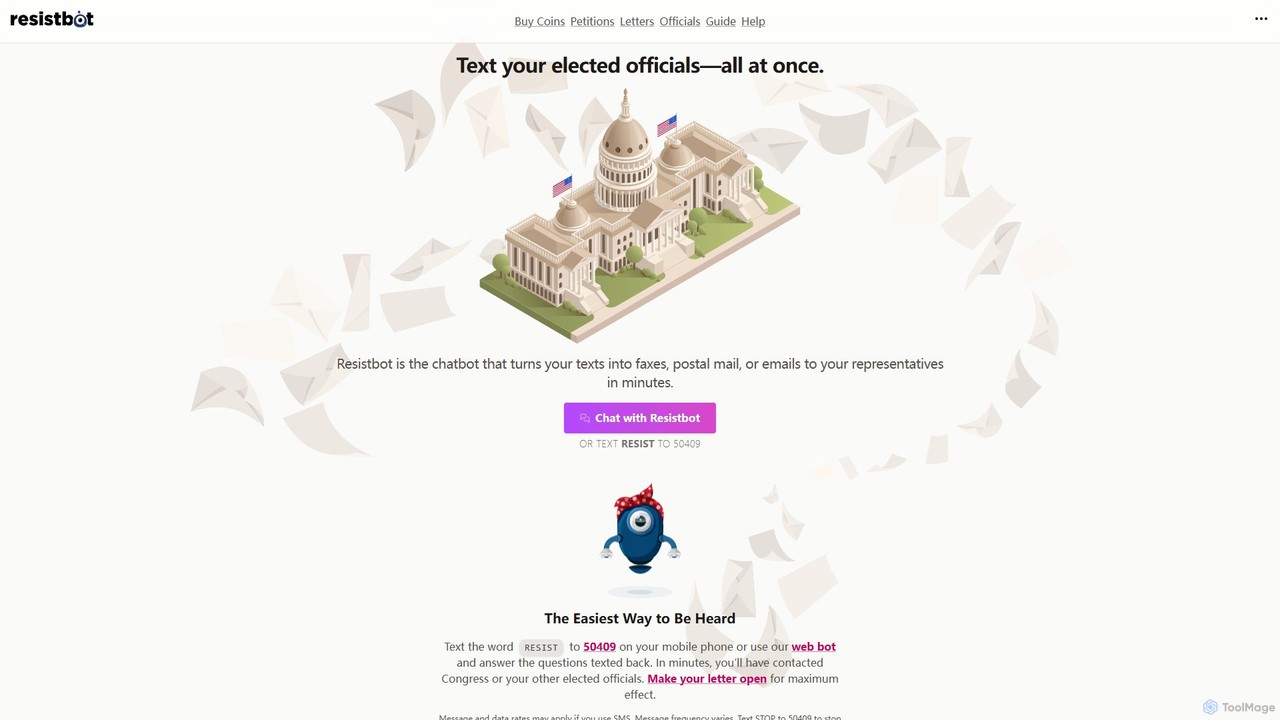
Resistbot is a chatbot that empowers users to contact their elected officials in the U.S. via text, web, …
Resistbot is a chatbot that empowers users to contact their elected officials in the U.S. via text, web, or app. It turns your messages into official emails, faxes, or postal mail. With AI-powered letter writing, campaign creation, and voter services, it simplifies civic engagement and makes your voice heard by representatives in minutes.
About Civic Tech
Civic Tech tools are AI-powered applications designed to strengthen the connection between citizens and government. They leverage technology to facilitate public participation, increase government transparency, and improve the delivery of public services. By making complex data understandable and creating new channels for communication, these tools empower individuals and communities to engage more effectively in the democratic process. This focus on citizen empowerment distinguishes Civic Tech from broader government IT solutions.
Core Features
- Citizen Reporting & Feedback: Enables users to report non-emergency issues like potholes or graffiti and provide structured feedback on public policies.
- Data Transparency Portals: Visualize complex government data, such as budgets and spending, making it accessible and understandable for the general public.
- Digital Participation Platforms: Host online forums, polls, and collaborative drafting processes for laws and regulations, fostering direct citizen involvement.
- Public Service Navigation: AI-driven guides and chatbots that help citizens find, understand, and apply for government services and benefits.
- Community Mobilization: Provides platforms for organizing local initiatives, volunteer efforts, and advocacy campaigns around civic issues.
Applicable Scenarios
Civic Tech is utilized by municipal governments to gather resident feedback, non-profit organizations to advocate for policy changes, journalists to investigate public data, and community groups to organize local improvements. For example, a city might deploy an app for reporting infrastructure problems, while an advocacy group could use a platform to analyze and publicize campaign finance data.
Selection Criteria
When selecting a Civic Tech tool, consider its accessibility and ease of use for a diverse, non-technical audience. Evaluate its data security and privacy policies rigorously. Ensure the tool's features align with your specific engagement goals, whether it's data visualization or public consultation. Also, assess its scalability to handle a large user base and its potential for integration with existing government systems.
Civic TechUse Cases
Streamlining Urban Issue Reporting
A city resident uses a Civic Tech mobile app to report a broken streetlight. They simply take a photo, and the app's AI uses computer vision to identify the object and GPS to log the precise location. The report is automatically categorized and routed to the correct public works department without manual intervention. The resident receives a confirmation and a tracking number, allowing them to monitor the repair status, which significantly improves service efficiency and citizen satisfaction.
Enhancing Public Budget Transparency
A local watchdog organization or journalist uses an AI-powered Civic Tech platform to analyze the city's annual budget data, which is often released in complex spreadsheets. The tool automatically cleans, structures, and visualizes the data into interactive charts and graphs. This allows them to easily identify spending trends, compare departmental allocations year-over-year, and uncover potential anomalies, making it possible to create data-driven reports that inform the public and hold officials accountable.
Facilitating Online Public Consultations
A municipal planning department seeks public input on a new zoning proposal. They use a digital participation platform to host the consultation. The platform's AI employs Natural Language Processing (NLP) to analyze thousands of submitted comments. It automatically groups feedback by key themes (e.g., traffic concerns, green space, housing density) and measures public sentiment for each, providing policymakers with a clear, structured summary of community opinion to inform their decision-making.
Guiding Citizens to Social Services
A non-profit organization embeds an AI-powered chatbot on its website to assist vulnerable populations. Individuals seeking help can interact with the chatbot to determine their eligibility for various government benefits, such as housing assistance, food stamps, or unemployment aid. The chatbot asks simple, guided questions in multiple languages and directs users to the correct application forms and resources, simplifying a complex and often intimidating process.
Monitoring Election Integrity with AI
An independent electoral commission or civic group uses an AI tool to monitor social media for disinformation during an election cycle. The system analyzes vast amounts of public data to detect coordinated inauthentic behavior, identify emerging false narratives, and flag content for review by human fact-checkers. This enables a rapid response to misinformation, helping to protect the integrity of the electoral process and ensure voters have access to accurate information.
Organizing Community-Led Climate Initiatives
A local environmental group uses a Civic Tech platform to coordinate a city-wide tree-planting initiative. The tool allows them to map suitable public spaces, manage volunteer sign-ups and schedules, and track the number of trees planted in different neighborhoods. The platform's dashboard visualizes the collective impact, fostering a sense of community achievement and providing concrete data to present to the city council when advocating for more green policies.