Evaari
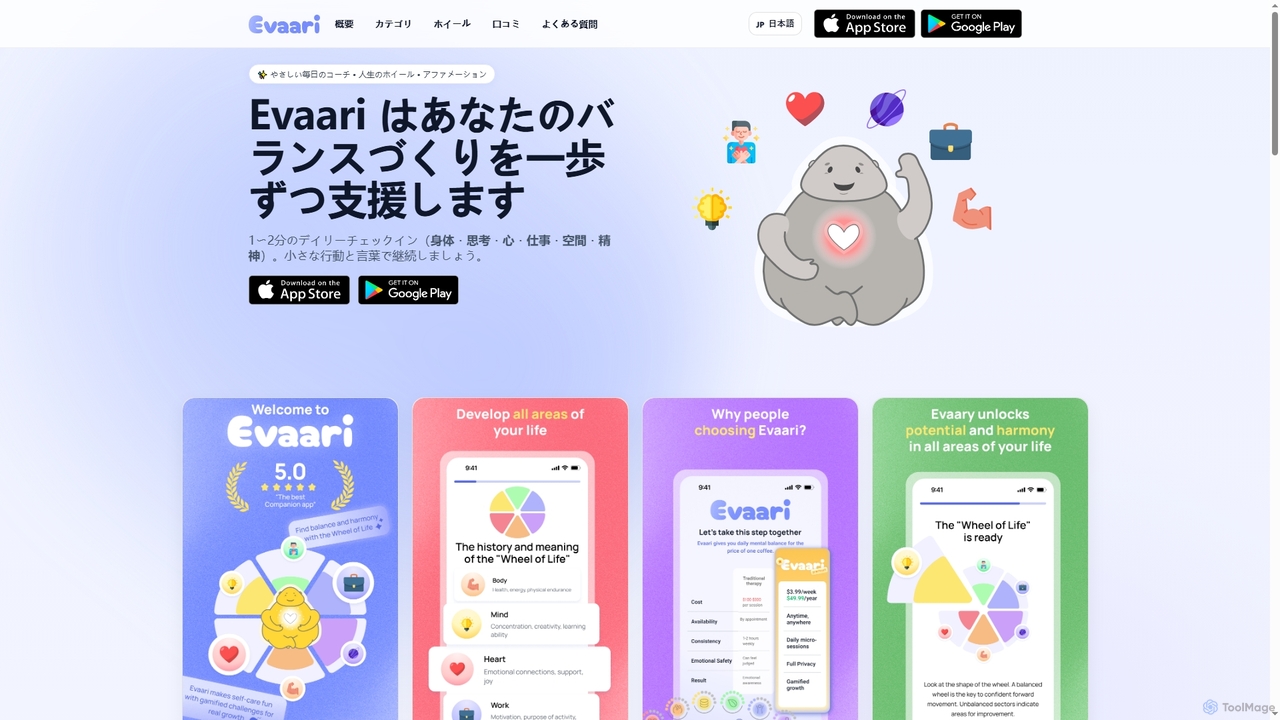
Evaari is an AI-powered personal development coach designed to help users achieve life balance through gentle, daily guidance. …
Evaari is an AI-powered personal development coach designed to help users achieve life balance through gentle, daily guidance. It utilizes a dynamic "Wheel of Life" approach across six key categories—Body, Mind, Heart, Work, Space, and Spirit—to suggest small, actionable steps and foster lasting positive habits.
Timstral
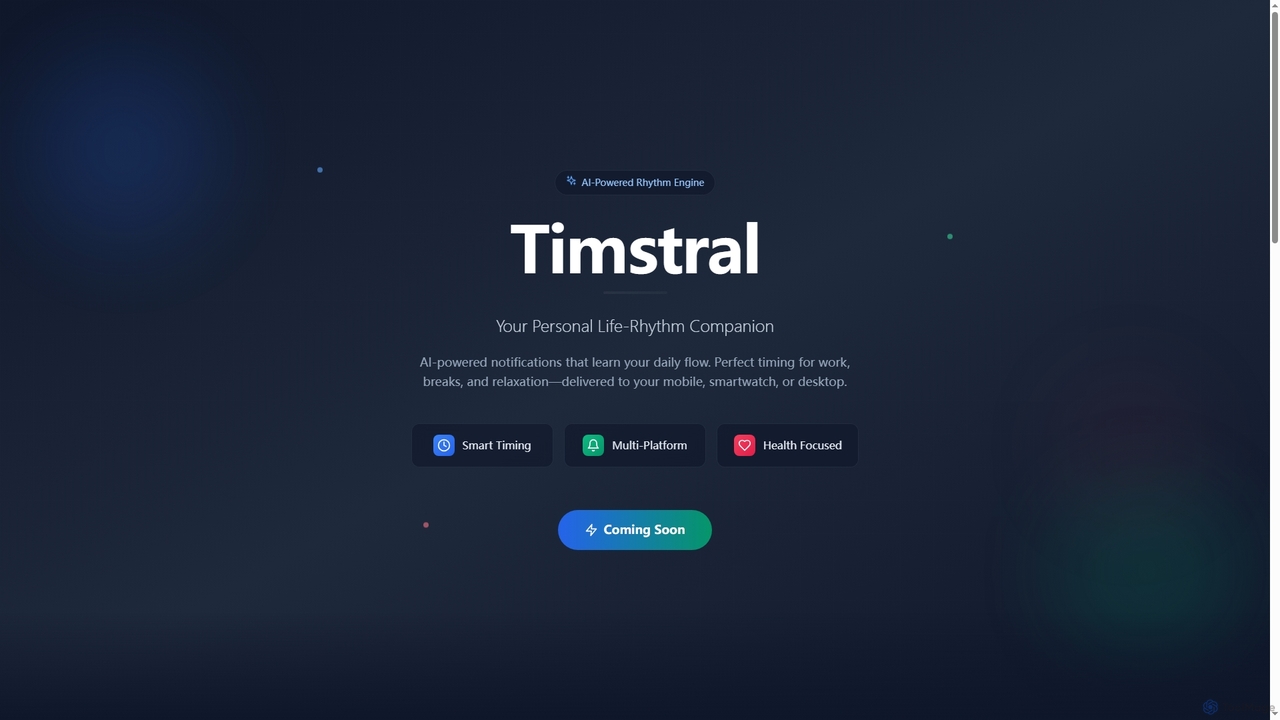
Timstral is an AI-powered life-rhythm companion that learns your daily flow to deliver perfectly timed smart notifications. It …
Timstral is an AI-powered life-rhythm companion that learns your daily flow to deliver perfectly timed smart notifications. It helps you balance work, breaks, and relaxation across mobile, smartwatch, and desktop, promoting productivity and well-being without feeling like a strict tracker.

therabot.me
Therabot.me is an AI-powered mental wellness companion designed to provide a safe, anonymous, and supportive space for users. …
Therabot.me is an AI-powered mental wellness companion designed to provide a safe, anonymous, and supportive space for users. It functions as an empathetic chatbot, offering conversations, guided exercises based on CBT and mindfulness, and mood tracking to help manage daily stress, anxiety, and other emotional challenges. It's available 24/7, making mental health support accessible anytime.
About Health And Wellness
AI Health and Wellness tools are applications that leverage artificial intelligence to provide personalized health insights, fitness coaching, and mental well-being support. These tools process user-provided data, biometric information from wearables, and behavioral patterns using machine learning algorithms to deliver tailored recommendations. They empower users to proactively manage their physical and mental health by offering accessible, data-driven guidance on everything from nutrition and exercise to stress management and sleep quality.
Core Features
- Personalized Plans: Generates custom workout routines and meal plans based on individual goals, biometrics, and preferences.
- Symptom Analysis: Offers preliminary guidance by analyzing user-reported symptoms to suggest potential next steps, not for diagnosis.
- Mental Health Support: Provides access to AI chatbots for conversational support, mood tracking, and guided mindfulness exercises.
- Biometric Data Insights: Connects with wearables to analyze trends in sleep, heart rate, and activity, turning raw data into actionable advice.
- Nutrition Tracking: Simplifies calorie counting and macronutrient monitoring through food logging and barcode scanning.
Applicable Scenarios
These tools are widely used by individuals for personal fitness tracking, stress reduction, and sleep optimization. Fitness coaches and nutritionists also utilize them to monitor client progress and provide data-informed advice. Furthermore, they serve as valuable aids for people managing chronic conditions by helping them track symptoms and adhere to health regimens between doctor visits.
Selection Criteria
When choosing a Health and Wellness AI tool, prioritize data privacy and security to ensure your sensitive information is protected. Verify that the tool's recommendations are backed by scientific evidence or medical professionals. Check for compatibility with your existing smart devices and health apps for seamless data integration. Finally, consider the user interface—it should be intuitive enough for consistent daily use.
Health And WellnessUse Cases
Creating a Personalized Fitness and Nutrition Plan
A user aiming to build muscle and improve their diet inputs their goals, current weight, height, and activity level into an AI fitness app. The system analyzes this data and generates a comprehensive 4-week plan, including specific weightlifting exercises for each day and a detailed meal plan with recipes that match their caloric and macronutrient targets. The AI adjusts the plan weekly based on the user's logged performance and feedback, ensuring continuous progress.
Receiving On-Demand Mental Health Support
An individual dealing with daily stress and anxiety uses an AI-powered mental wellness chatbot. When feeling overwhelmed, they can initiate a conversation to articulate their feelings. The AI uses Natural Language Processing to understand their concerns and responds with empathetic guidance, leading them through a 5-minute guided breathing exercise or a Cognitive Behavioral Therapy (CBT) technique to reframe negative thoughts. The app also tracks their mood over time to identify patterns.
Performing a Preliminary Symptom Check
A parent notices their child has a mild fever and a rash. Instead of immediately searching online forums, they use a certified AI symptom checker. They answer a series of dynamic questions about the symptoms' nature, duration, and accompanying signs. The AI compares this information against a vast medical database to provide a list of potential, non-diagnostic possibilities and offers clear guidance, such as "Monitor at home" or "Consult a pediatrician within 24 hours," helping them make an informed decision.
Analyzing and Improving Sleep Quality
A user struggling with fatigue syncs their smartwatch with an AI sleep analysis tool. Each morning, the app presents a detailed breakdown of their previous night's sleep, including time spent in light, deep, and REM stages, and notes any interruptions. The AI identifies patterns, such as poor deep sleep on days with late-night caffeine intake, and provides actionable recommendations like "Avoid caffeine after 3 PM" or "Try a 10-minute wind-down meditation before bed" to improve their sleep score.
Managing Dietary Needs with AI Nutrition Tracking
A person recently diagnosed with diabetes needs to carefully monitor their carbohydrate intake. They use an AI nutrition app to log their meals by simply taking photos of their food. The AI's computer vision identifies the food items and estimates portion sizes, automatically calculating the nutritional information, including carbs, sugar, and fiber. The app provides real-time feedback, helping them stay within their daily targets and suggesting healthier food swaps to better manage their condition.
Practicing Guided Meditation and Mindfulness
A busy professional wants to incorporate mindfulness into their daily routine but struggles to find the time. They use an AI meditation app that asks about their current emotional state and how much time they have—whether it's 3 minutes between meetings or 20 minutes before bed. Based on their input, the AI selects a suitable guided meditation session, such as a quick focus exercise or a longer session for deep relaxation, personalizing the practice to fit their immediate needs and schedule.