
Ai Assistant Best in category 1 results Smart Notifications AI Tool

Popular AI tools in the Smart Notifications field of Ai Assistant include Timstral, etc., helping you quickly improve efficiency.

Timstral

Timstral

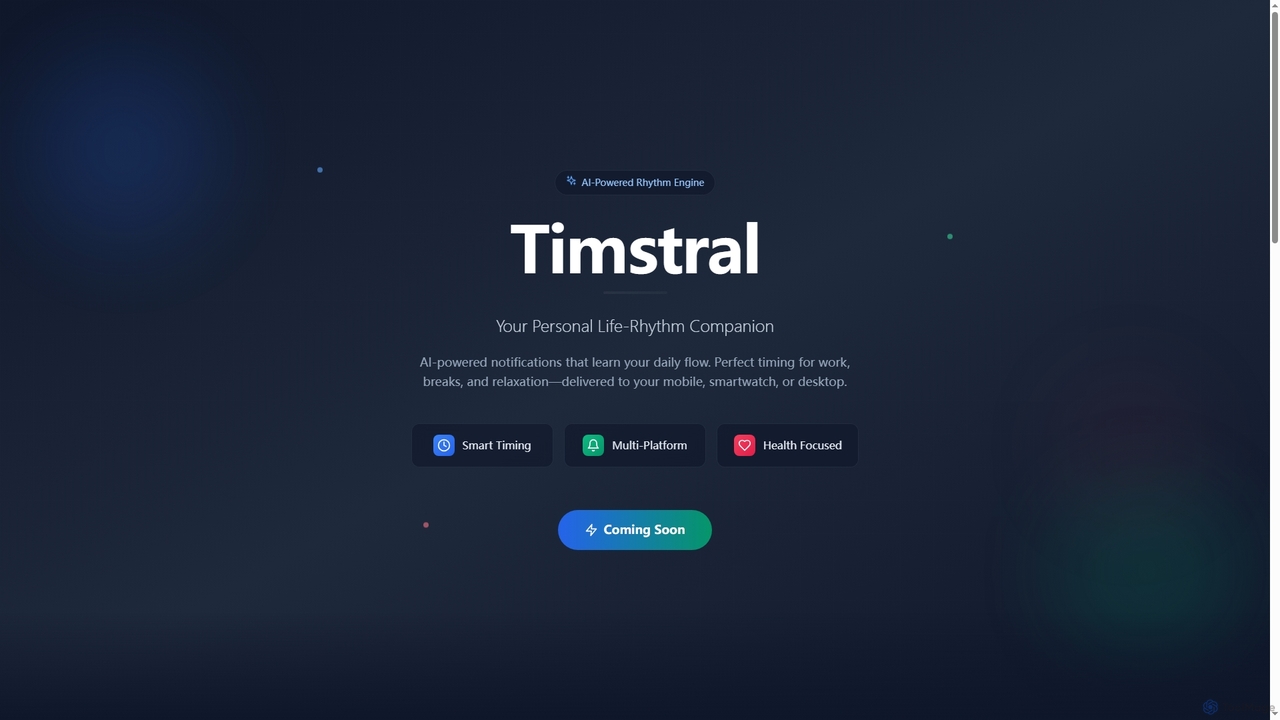
Timstral is an AI-powered life-rhythm companion that learns your daily flow to deliver perfectly timed smart notifications. It …

2.9K

About Smart Notifications

Smart Notifications are AI-powered tools designed to deliver highly personalized, timely, and relevant alerts to users, often as a proactive component of an AI Assistant. Leveraging machine learning, these tools analyze user behavior, preferences, and contextual data to ensure notifications are not only delivered but also acted upon. They aim to cut through digital noise, enhancing user engagement and driving specific outcomes by providing actionable insights precisely when needed.

Core Features

  • Personalized Delivery: AI algorithms tailor notification content, timing, and channel based on individual user profiles and past interactions.
  • Contextual Relevance: Analyzes real-time data (e.g., location, activity, time of day) to ensure notifications are pertinent to the user's current situation.
  • Channel Optimization: Automatically selects the most effective communication channel (email, SMS, push, in-app) for each notification and user.
  • Engagement Prediction: Predicts the likelihood of user interaction with a notification, adjusting delivery strategies to maximize open rates and actions.
  • A/B Testing & Optimization: Continuously tests different notification variants to identify the most effective messages and delivery methods.

Use Cases

Businesses use smart notifications to reduce churn by proactively addressing potential issues, while e-commerce platforms leverage them for personalized product recommendations or abandoned cart reminders. They are also crucial for SaaS companies to onboard users effectively and highlight feature adoption.

How to Choose

When selecting a smart notification tool, consider its AI sophistication for personalization and context, the range of supported communication channels, integration capabilities with existing CRM or marketing platforms, and its analytics dashboard for performance tracking. Scalability and compliance with privacy regulations are also vital.

Smart NotificationsUse Cases

1

Enhancing E-commerce Customer Engagement

An e-commerce manager uses smart notification tools to automatically send alerts to customers who abandoned their carts or viewed specific products. The AI analyzes browsing history, purchase patterns, and real-time inventory to notify users about price drops, limited stock, or complementary products, delivered via their preferred channel (e.g., push notification for urgent deals, email for broader recommendations). This proactive approach significantly increases conversion rates and customer loyalty by providing timely, relevant incentives.

2

Reducing Customer Churn with Proactive Alerts

A SaaS company uses smart notifications to identify users at risk of churning based on their usage patterns. The AI system automatically sends personalized in-app messages or emails offering tutorials, feature highlights, or direct support, proactively re-engaging users before they cancel their subscription.

3

Optimizing SaaS Onboarding and Retention

A SaaS product manager implements smart notifications to guide new users through the onboarding process. The system tracks user progress and engagement within the application, sending personalized tips, feature highlights, or reminders for incomplete setup steps. If a user shows signs of disengagement, the AI triggers a targeted notification offering assistance or showcasing a relevant use case, thereby improving feature adoption and reducing churn by providing timely, helpful nudges.

4

Optimizing E-commerce Abandoned Cart Recovery

An online retailer deploys smart notifications to send highly targeted reminders to customers who have left items in their shopping carts. The AI analyzes browsing history and purchase intent to personalize the message, offer a relevant discount, and choose the optimal time and channel (e.g., SMS or email) for maximum conversion.

5

Improving Healthcare Appointment Adherence

A healthcare provider utilizes smart notifications to send intelligent appointment reminders to patients. Instead of generic alerts, the system considers patient history, typical travel times, and even local traffic conditions to send reminders at optimal times via SMS or a secure app notification. It can also prompt patients to confirm or reschedule, reducing no-show rates and optimizing clinic schedules by providing highly contextual and actionable information.

6

Enhancing User Onboarding for Mobile Apps

A mobile app developer utilizes smart notifications to guide new users through the onboarding process. Based on initial interactions, the AI sends timely push notifications or in-app messages suggesting next steps, highlighting key features, or offering tips, ensuring users quickly understand and adopt the app's core functionalities.

7

Personalizing Financial Alerts for Banking Customers

A bank employs smart notification technology to offer personalized financial alerts to its customers. The AI monitors spending patterns, account balances, and market trends to notify users about unusual transactions, potential overdrafts, or relevant investment opportunities. For example, a notification might alert a user about a subscription renewal or a significant market shift affecting their portfolio, empowering them with timely information for better financial management and security.

8

Personalizing Content Recommendations for Media Platforms

A streaming service or news platform employs smart notifications to recommend personalized content. The AI analyzes viewing history, preferences, and real-time trends to send push notifications or email digests about new shows, articles, or live events that are highly relevant to individual users, increasing content consumption.

9

Streamlining Internal Team Communication

A project manager uses smart notifications within a team collaboration platform to cut through communication noise. The AI analyzes project deadlines, team member roles, and individual task assignments to prioritize and deliver critical updates, task reminders, or urgent alerts only to relevant team members. This ensures that important information, such as a blocking issue or a looming deadline, reaches the right person at the right time, preventing delays and improving team efficiency.

10

Automating Critical System Alerts for IT Operations

An IT operations team uses smart notifications to receive critical system alerts. Instead of generic warnings, the AI prioritizes alerts based on severity, potential impact, and historical data, then routes them to the appropriate on-call engineer via their preferred channel (e.g., Slack, SMS), reducing response times for critical incidents.

11

Enhancing Smart Home Security and Automation

A homeowner integrates smart notifications with their smart home system for enhanced security and automation. The AI learns daily routines and occupancy patterns, sending alerts only when unusual activity is detected (e.g., a door opening when no one is expected home) or when a device needs attention (e.g., a smart thermostat detecting an abnormal temperature drop). This reduces false alarms and provides peace of mind by delivering truly intelligent and actionable security and status updates.

12

Driving Engagement for Event Registrations and Reminders

An event management platform leverages smart notifications to boost registration and attendance. The system sends personalized invitations to potential attendees based on their interests, followed by timely reminders about upcoming events, schedule changes, or speaker updates via email or in-app messages, maximizing participation.

Smart NotificationsFrequently Asked Questions