
RiskRegister
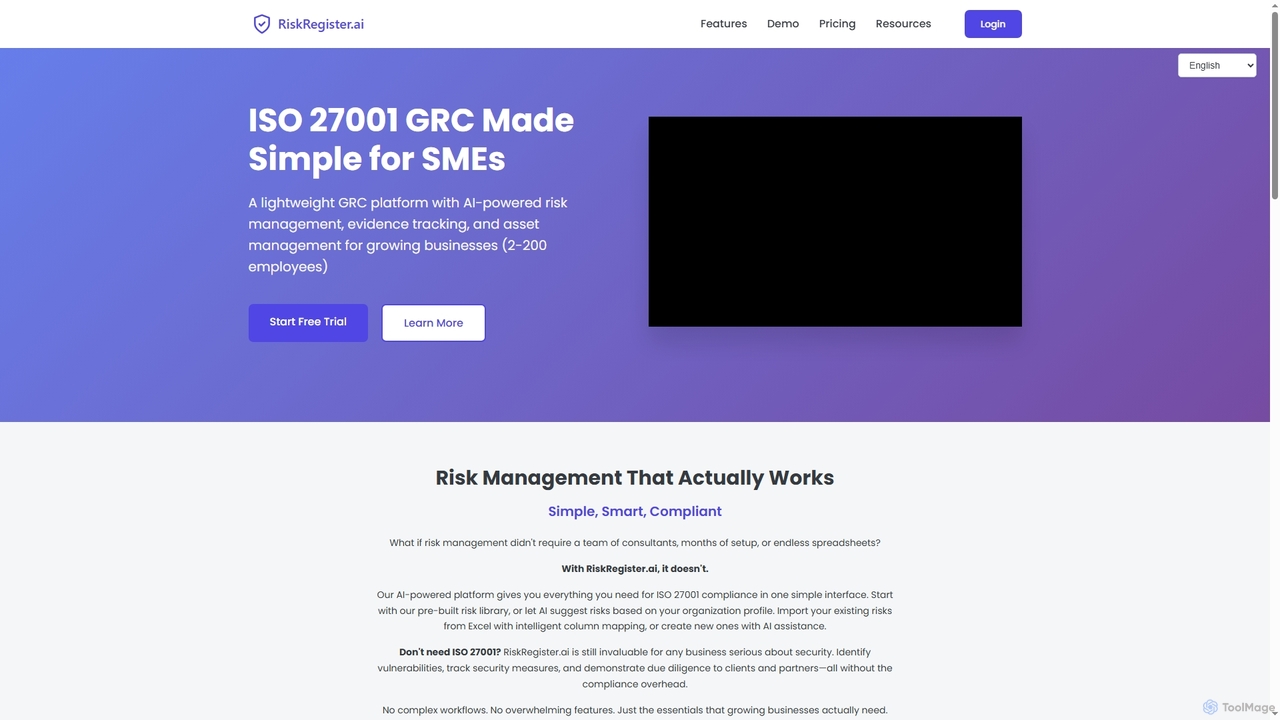
RiskRegister is an AI-powered GRC platform designed for SMEs to simplify ISO 27001 compliance and risk management. It …
RiskRegister is an AI-powered GRC platform designed for SMEs to simplify ISO 27001 compliance and risk management. It offers comprehensive features for risk assessment, treatment plans, compliance reporting, and secure collaboration, including AI-driven insights for gap analysis and risk enrichment.
About Business Intelligence
Business Intelligence (BI) tools are AI-powered solutions that transform raw business data into actionable insights. These tools leverage machine learning and advanced data analytics to process large datasets, identify trends, predict outcomes, and visualize complex information. They empower businesses to make data-driven decisions, optimize operations, understand market dynamics, and enhance strategic planning. AI integration elevates BI from descriptive reporting to predictive and prescriptive analytics, offering deeper foresight.
Core Features
- Data Integration & Processing: Connects to diverse data sources (CRM, ERP, marketing platforms) and processes them for analysis.
- Predictive Analytics: Forecasts future trends, sales, or customer behavior using advanced AI models.
- Interactive Dashboards: Visualizes key performance indicators (KPIs) and allows users to explore data dynamically in real-time.
- Natural Language Querying: Enables users to ask data-related questions in plain language and receive immediate insights.
- Automated Reporting & Alerts: Generates regular reports and sends alerts based on predefined metrics or detected anomalies.
Applicable Scenarios
Business Intelligence tools are crucial for various roles and industries. Sales and marketing teams use them to optimize campaigns and personalize customer experiences. Finance departments rely on them for real-time performance monitoring and accurate forecasting. Operations managers leverage BI for supply chain optimization and efficiency improvements, ensuring data-driven strategic decisions across the enterprise.
How to Choose
When selecting a Business Intelligence tool, consider its data source compatibility with your existing systems. Evaluate the depth of its analytical capabilities, including predictive modeling and AI features. Prioritize intuitive visualization and reporting tools for ease of data exploration. Assess scalability to handle growing data volumes and user loads, along with robust security features and vendor support.
Business IntelligenceUse Cases
Sales Performance Optimization
Sales managers utilize AI BI tools to analyze CRM data, identifying top-performing products, regions, and sales representatives. By forecasting future sales trends and pinpointing underperforming areas, they can strategically allocate resources, refine sales strategies, and proactively address potential issues to boost overall revenue.
Optimizing Marketing Campaign Performance
Marketing analysts use AI BI tools to analyze vast datasets from various campaigns, social media, and customer interactions. The tool identifies which channels and content drive the highest engagement and conversions, predicts future campaign success, and suggests budget reallocations. This enables data-driven optimization of marketing spend and strategy, leading to improved ROI and more effective customer targeting.
Optimizing Sales Strategy with Predictive Insights
Sales managers utilize AI-powered BI tools to analyze historical sales data, predict future sales trends, and identify top-performing products or regions. By forecasting customer churn and lead conversion probabilities, they can proactively adjust sales targets, allocate resources more effectively, and prioritize leads. This data-driven approach leads to improved conversion rates, enhanced sales efficiency, and sustainable revenue growth.
Marketing Campaign Effectiveness Analysis
Marketing teams deploy AI BI platforms to track the real-time performance of various campaigns across digital channels. They measure key metrics like conversion rates, customer acquisition costs, and engagement levels, enabling data-driven adjustments to optimize ad spend, personalize content, and maximize return on investment.
Predicting Sales Trends and Inventory Needs
Retail and e-commerce businesses leverage AI BI to forecast future sales volumes for specific products or categories. By analyzing historical sales data, seasonal trends, market indicators, and even social media sentiment, the tool provides accurate demand predictions. This allows inventory managers to optimize stock levels, reduce overstocking or stockouts, and improve supply chain efficiency, minimizing costs and maximizing revenue.
Enhancing Marketing Campaign Performance
Marketing teams leverage BI platforms to track campaign effectiveness across multiple channels, analyze customer demographics and behavior, and segment audiences with precision. AI-driven insights help optimize ad spend, personalize messaging for different segments, and identify the most impactful channels. This results in maximized ROI, improved customer engagement, and more targeted marketing efforts.
Financial Forecasting and Budgeting
Finance departments leverage AI BI for accurate revenue projections, expense tracking, and budget allocation. The tools analyze historical financial data, market trends, and economic indicators to generate precise forecasts, helping leadership make informed decisions on investments, resource planning, and risk management.
Enhancing Customer Churn Prediction and Retention
Customer success teams employ AI BI platforms to identify customers at high risk of churning. The tool analyzes customer interaction history, usage patterns, support tickets, and feedback to pinpoint early warning signs. It then suggests proactive retention strategies, such as personalized offers or targeted outreach, enabling businesses to reduce churn rates and improve long-term customer loyalty and lifetime value.
Streamlining Financial Planning and Analysis (FP&A)
Finance professionals utilize BI tools for real-time monitoring of budgets, expenses, and revenue streams. They can generate detailed financial reports, conduct variance analysis, and create accurate forecasts with greater efficiency. This supports strategic financial decisions, identifies potential risks or opportunities, and ensures the fiscal health and stability of the organization by providing timely and precise financial insights.
Supply Chain and Inventory Optimization
Operations and logistics managers use AI BI to gain deep insights into supply chain performance. By analyzing inventory levels, supplier reliability, delivery times, and demand fluctuations, they can identify bottlenecks, optimize stock levels, reduce carrying costs, and improve overall operational efficiency.
Streamlining Financial Forecasting and Risk Assessment
Finance departments utilize AI BI to create more accurate financial forecasts and conduct comprehensive risk assessments. By integrating data from budgets, market trends, economic indicators, and operational costs, the tool can predict revenue, expenses, and cash flow with greater precision. This supports better strategic planning, identifies potential financial vulnerabilities, and informs investment decisions, enhancing overall financial health.
Improving Operational Efficiency in Manufacturing
Operations managers deploy BI solutions to monitor production lines, track equipment performance, analyze supply chain logistics, and identify bottlenecks in real-time. Predictive maintenance alerts, efficiency insights, and demand forecasting capabilities help reduce downtime, optimize resource utilization, and improve overall productivity. This leads to streamlined operations, reduced costs, and enhanced manufacturing output.
Customer Churn Prediction and Retention
Customer success and product teams employ AI BI to analyze customer behavior, engagement patterns, and feedback. The tools identify customers at high risk of churning, allowing businesses to implement targeted retention strategies, offer personalized support, and improve customer lifetime value.
Improving Operational Efficiency in Manufacturing
Manufacturing companies use AI BI to monitor production lines, equipment performance, and supply chain logistics in real-time. The tool analyzes sensor data, maintenance logs, and production output to predict equipment failures, optimize production schedules, and identify bottlenecks. This leads to reduced downtime, improved resource utilization, and higher overall operational efficiency and product quality.
Personalizing Customer Experience and Support
Customer service teams use BI to analyze customer interaction data, identify common issues, track satisfaction scores, and predict potential service disruptions. This allows for proactive support, personalized recommendations, and targeted interventions to resolve problems before they escalate. The result is improved customer retention, higher satisfaction rates, and a more efficient customer support operation.
Operational Performance Dashboards
Department heads and executives use AI BI dashboards to monitor critical operational metrics across different business units. This includes tracking project progress, resource utilization, and process bottlenecks, providing a holistic view that facilitates proactive problem-solving and continuous improvement initiatives.
Personalizing Healthcare Treatment Plans
Healthcare providers can use AI BI to analyze patient data, including medical history, genetic information, and treatment responses, to identify patterns and predict optimal treatment pathways. The tool helps in personalizing care plans, predicting disease progression, and identifying patients at risk for certain conditions. This supports more effective and tailored patient care, improving outcomes and resource allocation.
Strategic Workforce Planning and Talent Management
HR departments apply BI tools to analyze employee performance data, identify skill gaps, predict attrition risks, and optimize recruitment strategies. Data-driven insights support talent development, succession planning, and fostering a productive work environment. This enables organizations to make informed decisions about their human capital, ensuring they have the right talent in the right roles for future growth.